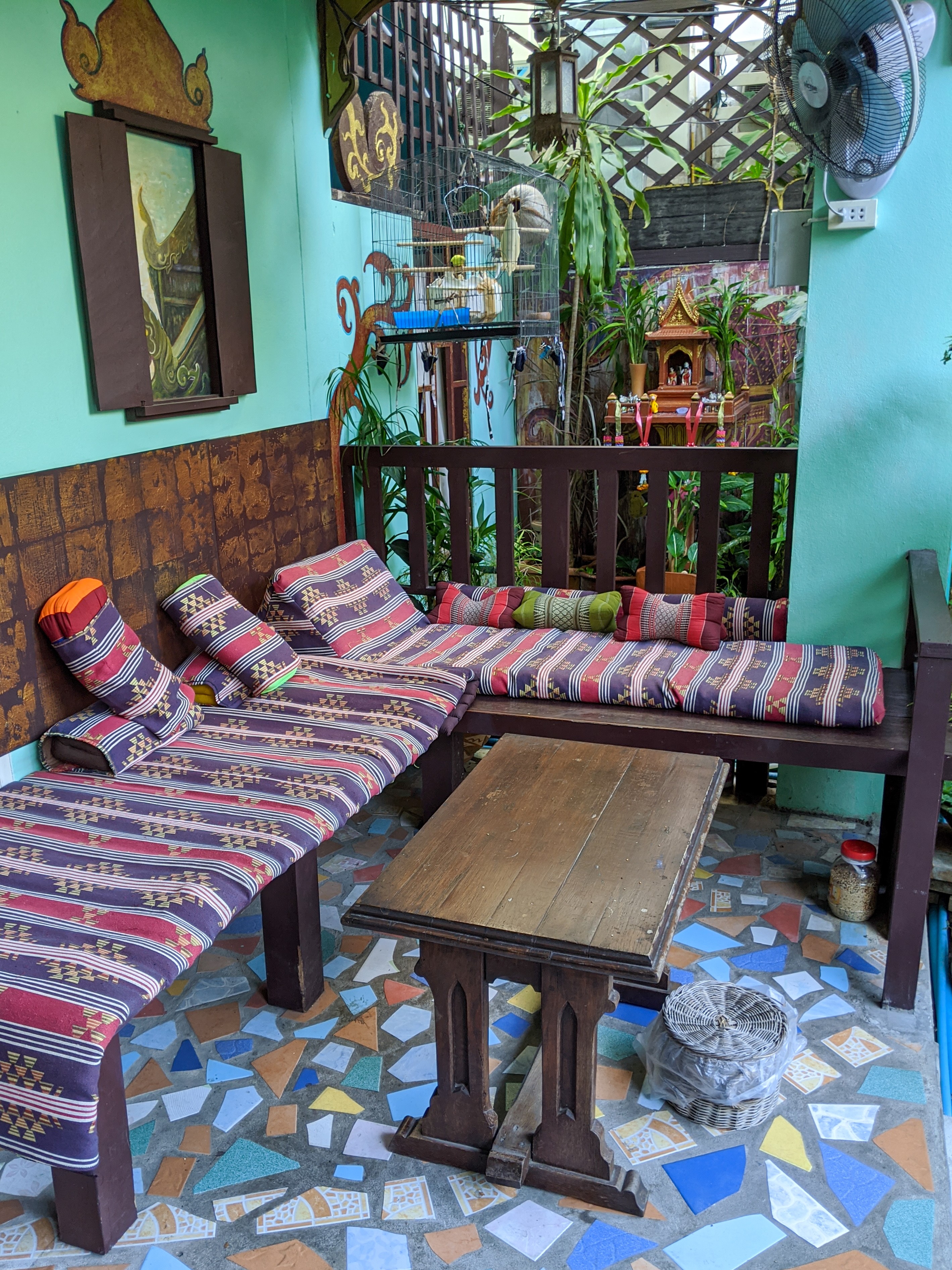
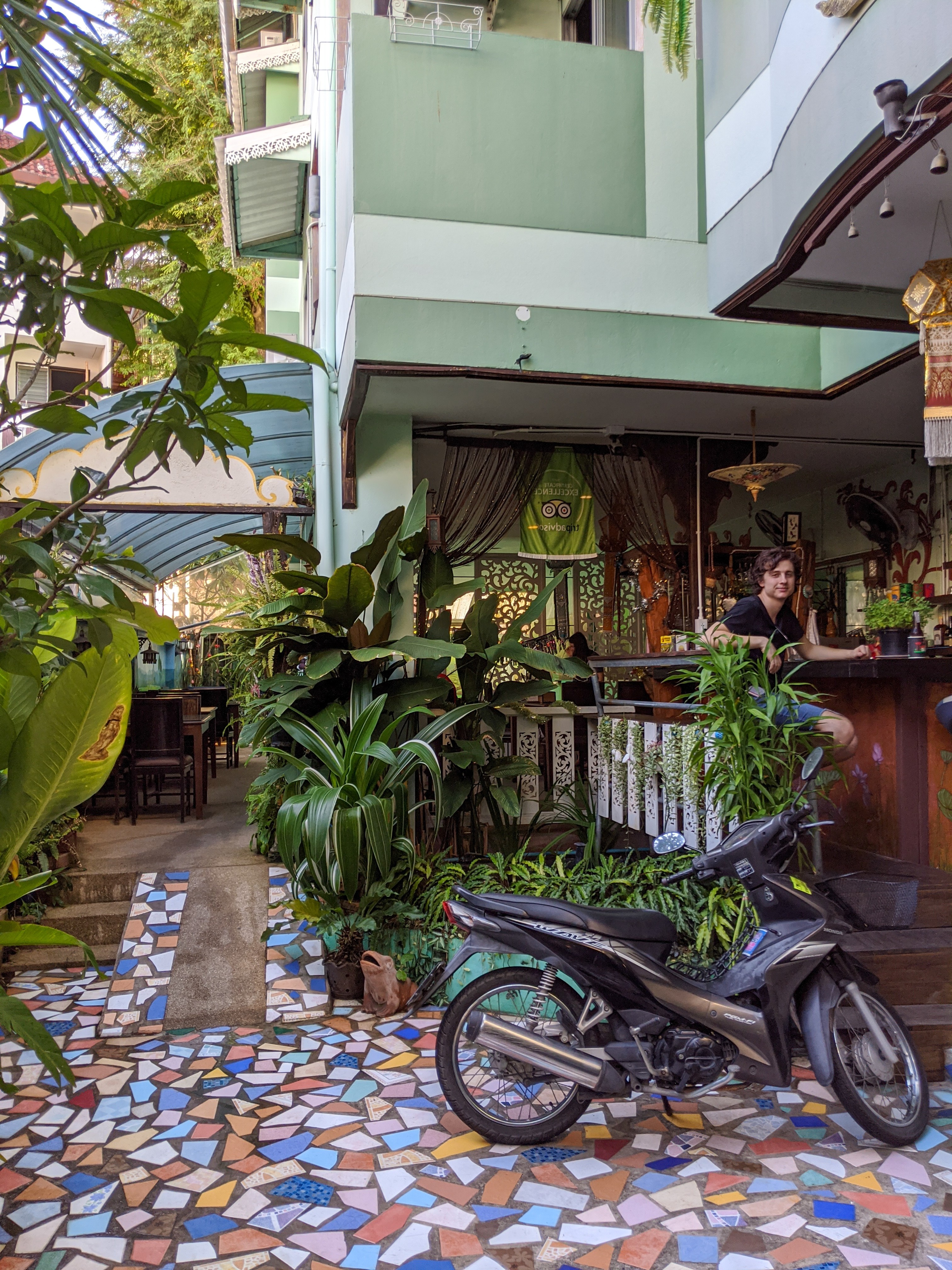
We landed in Chiang Mai exhausted and fussy. After a brief spat about whether our taxi driver was trying to rip us off (he wasn’t and I’m an idiot who can’t convert currency), we were taken to our guesthouse. A gated wall surrounds the Awana House, so we got a bit of a reveal moment when we walked into its courtyard. A white wire cage with two bright budgies was hanging over some corner benches adorned with piebald throw pillows. To our left, a wooden bar, with a small concrete pond behind its stools. To the back, a swimming pool with a tropical mural painted around it. It wasn’t fancy, but it was perfect. We smiled at each other and instantly forgot that we were exhausted and fussy. But I was hungry and we were both eager to take in more of the city, so after checking in we set off for Graph Cafe in the hopes of getting a snack and some much-needed caffeine.
There was a study I read about a few years ago examining the aromatic profiles of cuisines from around the world. The researchers found that there were two kinds of flavor palettes: analogous, which drew from aromas that have many chemical components in common, and contrasting, which drew from aromas that have few in common. French food, for example, uses an analogous palette. With its butter and chicken and cream, it draws mostly from the savory arc of the flavor wheel. Thai food, on the other hand, is contrasting. Basil and mint are mixed with ginger and chiles, fish sauce with lime juice, coconut with kaffir. Thai food relies on this melange to provide balance and interest to its dishes.
This is Chiang Mai. Not just its food, but its architecture, its smells, its people, its colors. It is lush, it is vibrant, and most of all, it is contrasting, in the same sense that a color or flavor palette may be. Interest and balance comes from the fact that it draws from opposite arcs of the life wheel. Restaurants are decorated in a jewel-toned rainbow, with splashes of bright pink or pastel yellow. Tin-roofed ramshackle guesthouses sit next to glossy modern spas and across from centuries-old temples. As we walked down one of it’s many winding lanes on the way to Graph, every few steps brought a new smell: the smoke from the barbecue of an open-air food stall, the spices of a curry, the intoxicating scent of jasmine, and a thousand other smells we couldn’t identify. Occasionally we’d catch a whiff of the city garbage smell that’s common in tourist areas around the world (if you’ve ever been to Bourbon Street or Times Square, you are well-acquainted with it), but it was always quickly replaced by herbs or grilled meat. Even the birds were contrasting. Tropical bird twitters harmonized with cooing pigeons and a very insistent rooster. And everything was verdant. In fact, going forward, imagine the gaps of every description I give in this post filled with palms and ferns and bromeliads.
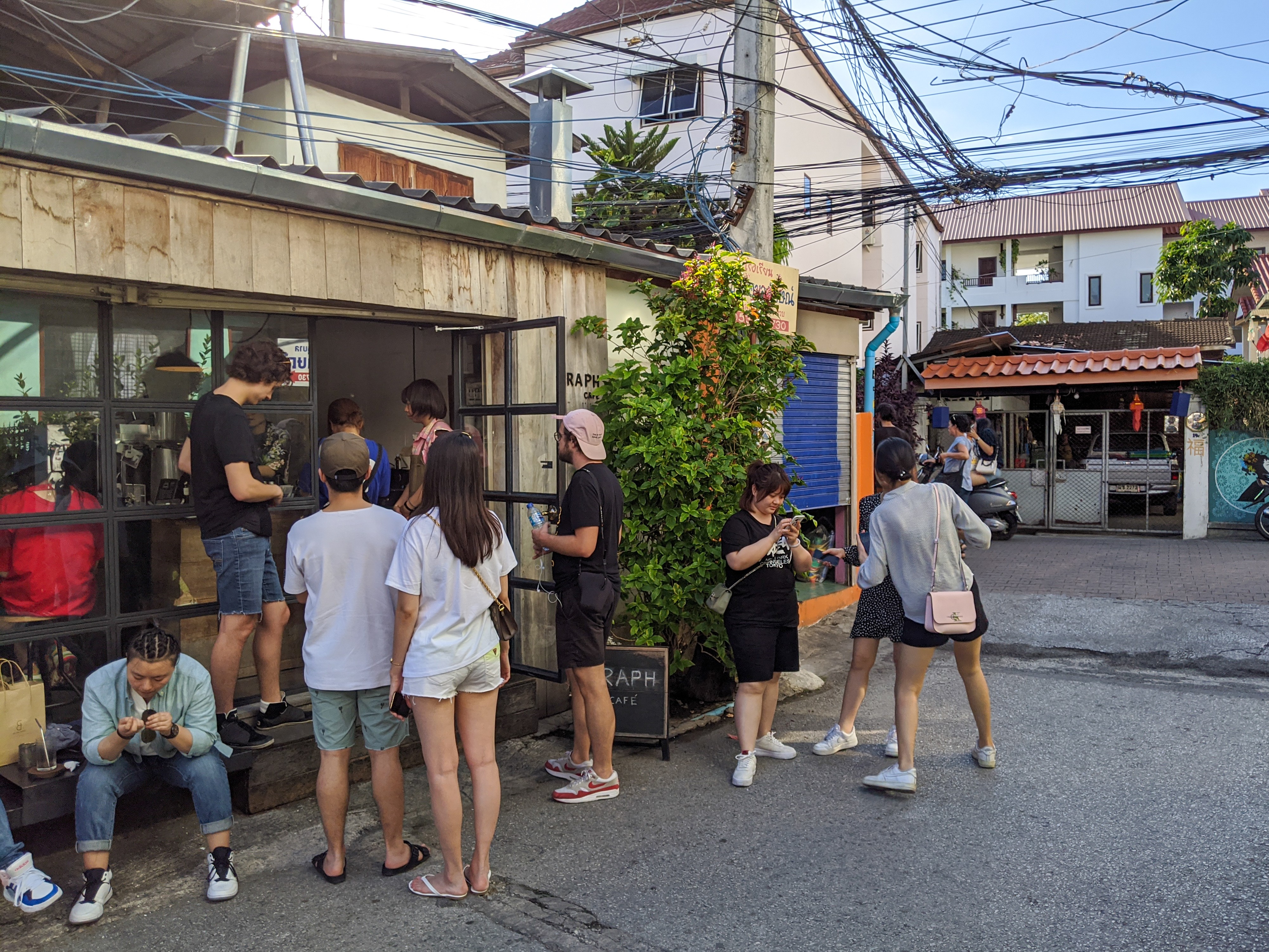
Graph was an industrial, minimalist hole-in-the-wall (and yes, this, too, was a bit of a contrast). A floor-to-ceiling window with thick black grilles served as the shopfront for the garage-sized cafe. Inside, the couple of tables that could fit were overfilled with people, and outside was a large group of loiterers waiting for their coffee. The menu was ambitious. Specialty drinks read like something out of a craft cocktail bar: nitro cold brew with orange blossom, latte with dried banana and cocoa, activated charcoal and vanilla with espresso. But it exceeded my expectations.Aaron and I agreed that our drinks were, as they say here, arawy (delicious). No food to be found except a small brownie, though, so we made our way back to Awana House and its restaurant.
After a yummy (and amazingly cheap) meal of stir-fried chicken with holy basil and chilies with a side of peanut-y spring rolls, Aaron went off to find a barber and I settled in to unpack and nest a bit. Our room is small, but romantic, with white sheer curtains framing the bed’s canopy net and dark wooden furniture. After several days of travel, it was both nice and necessary to set up a bit of a more permanent space for ourselves.
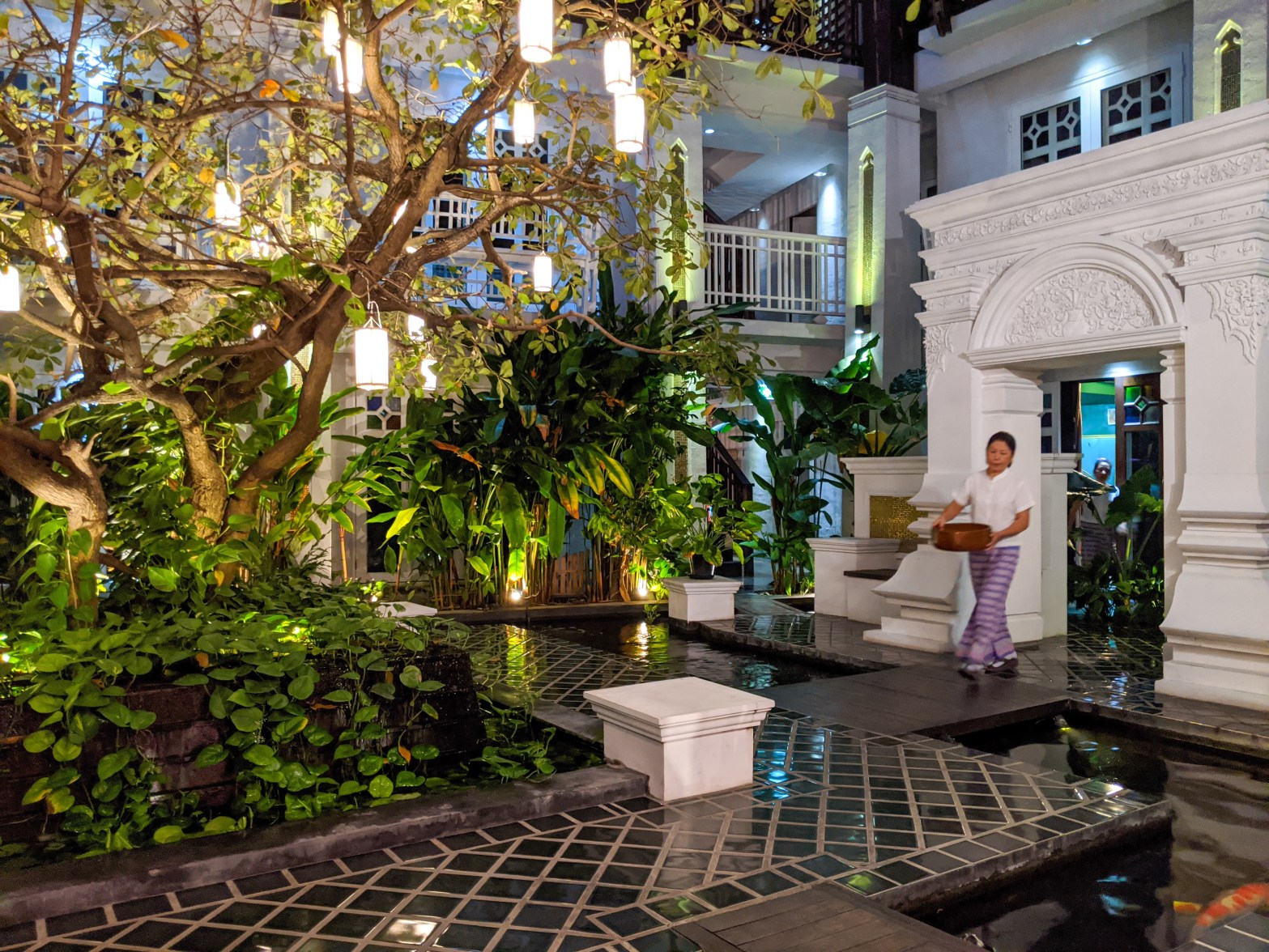
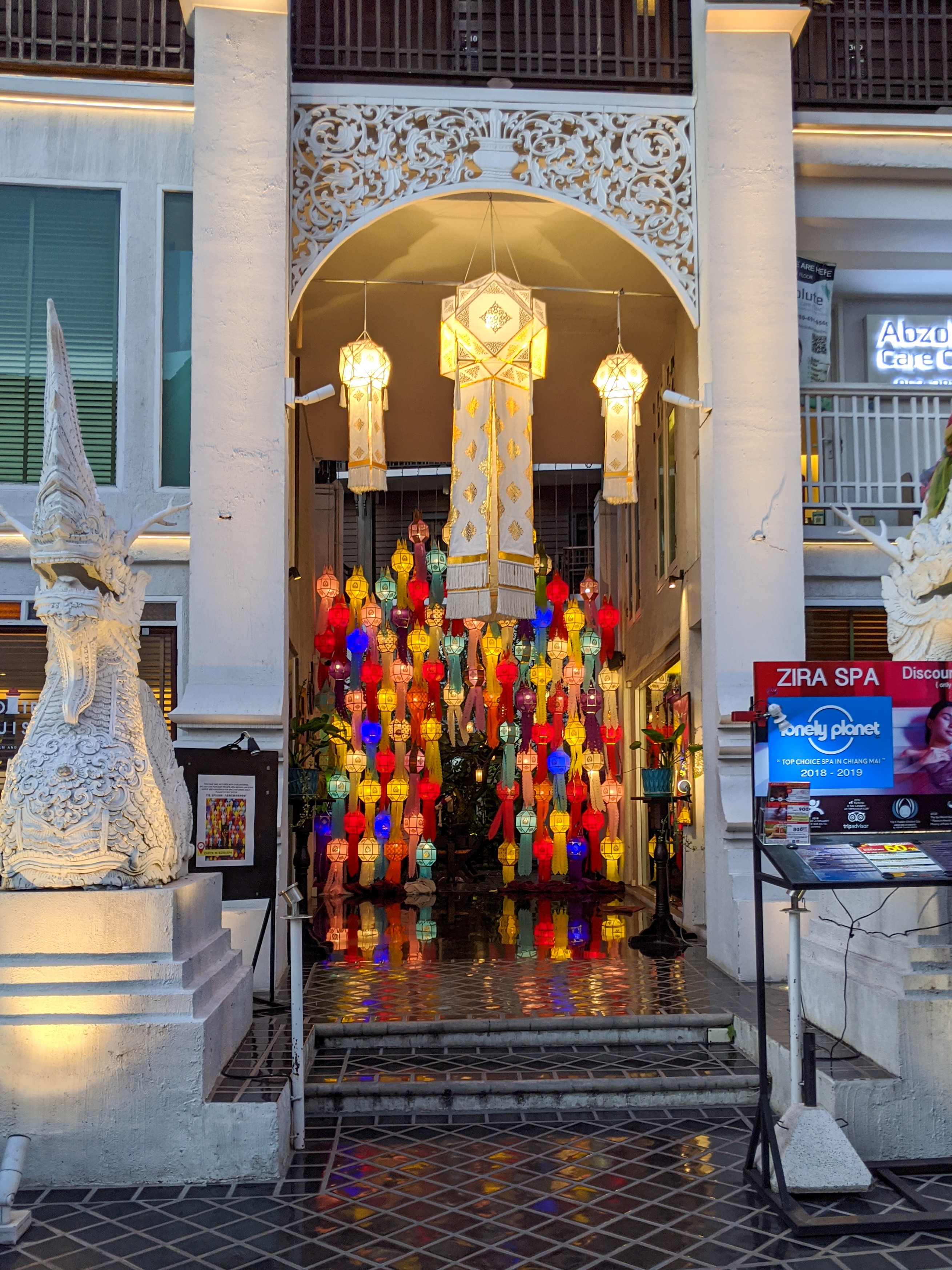
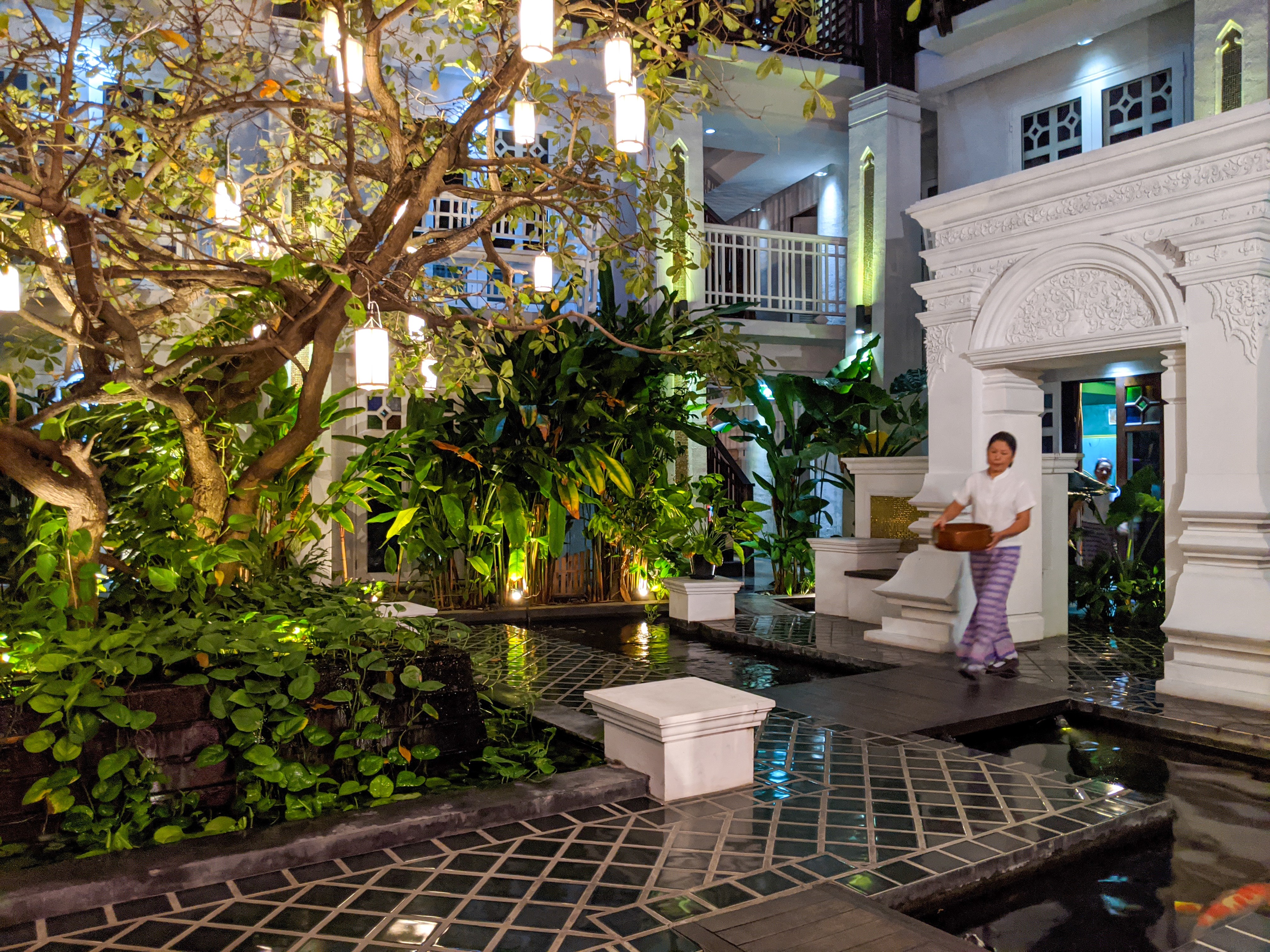
A haircut later, we walked to our appointment at the spa. I had booked us massages before the trip, knowing we would be cramped and tense from riding in airplanes for three days. I was more right than I could have predicted, so we were both extremely ready to be a bit pampered. Zira Spa was a grand, all-white complex with twin dragon statues guarding either side of its entrance. We were led through an archway of lanterns into an edenic, open-air courtyard. A tree hung with tens of white lanterns was surrounded on all sides by a giant koi pond (giant here refers to both the pond and the koi) crossed with wooden bridge pathways. We were told to sit on a bench facing this idyllic scene, and large bowls of hot water infused with rose, lime, and I-don’t-know-what-else-but-it-smelled-heavenly were brought to soak our feet in. Two expert masseuses washed and massaged our feet with a salt scrub before we were led to a room in the back of the spa. When we arrived, the lights were off (side note: everywhere here requires a key card to be powered, which is actually a really efficient way of making sure the lights get turned off when you leave). The attendant who showed us to the room literally sprinted to go get the key card when he realized the mistake. We changed into some cult-like uniforms complete with weird knitted underwear and were greeted by the same masseuses who washed our feet.
What I have not yet said was that the massages we booked were “traditional Thai” massages. I have had one once before, but Aaron had no idea what to expect. Thai massages differ from Swedish massages in a number of ways, my descriptions of which will surely give away my preferences. In my opinion, Swedish massages sort of push your skin around over your muscles. If you beg enough, occasionally the masseuse will work out a knot for you. Mostly, they are an excuse to put perfumed oils on you in fancy ways and charge you $200 for it. Thai massages, however, are intense. They are, at times, uncomfortable, and even, occasionally, extremely painful, but you can’t argue with results. The masseuses asked us to lay on our backs and went to work on our feet and legs. They were stretched, contorted, pressed, kneaded, and stretched some more. It’s like a combination of forced yoga and massage. They found pressure points I previously had no idea existed and worked out knots in muscles I didn’t know were cramping until they got to them. At times, the pressure was so much and the tension it was working against so great, that I squirmed my toes and exhaled sharply through my teeth just to get through the pain. But always, always, when they were done working with an area, it felt brand new. They moved from legs, to arms, to back, to neck. They pulled our bodies into pretzel-like contortions. They pounded, pushed and pulled us. I’m pretty sure my arms will be bruised from how hard she squeezed them. And I would do it all again in a heartbeat. I can say with confidence that I will never pay for a Swedish massage again. I’m embarrassed to admit it, but after such an eventful and prolonged journey to get here, the treatment brought tears to my eyes, and not from the pain. Aaron did not enjoy it as much as me (which he says is because his masseuse was harder on him, but I say it’s because women tolerate pain better), but he did love the afterglow. We checked out after partaking in some complimentary ginger tea and coconut custard pie: the entire one-hour treatment was only $20 each!
Last on the agenda for the evening was a reservation at Ginger & Kafe, which we were extremely late for. Our massage ran a bit longer than it should have, but there are certainly worse problems to have. In fact, we were so late that they cancelled our reservation, but were fortunately able to seat us. To be honest, dinner was delicious, but unremarkable. We had wine and laap and soft-shell crab and it was all great, but we were oh so tired (we’re still jet-lagged), and we faded fast. We collapsed upon our return to the room.
This morning, I woke up at 5:30am. My clock is slowly adjusting, but when I’m up, I’m up, so I spent some time writing this post and, once it was a more reasonable hour, meandered to a local coffee shop. Something notable about Chiang Mai is that it’s full of hidden courtyards. Every building has some sort of open-air, plant-filled space. You’ll walk into a store or cafe that seems somewhat unremarkable, only to be led by an extremely friendly (and they are all extremely friendly) attendant into a secret walled garden. Coffee Plus was no exception to this rule. In line for a latte, I made small-talk with a kind, Canadian man who enumerated the names and ages of the many soi (street) dogs that wander Old Chiang Mai. Billy, a white dog that is roughly Bob-sized-and-shaped (ugh, my heart) I’ve seen walking around with a little sweater on. Apparently, many of these dogs are sort of adopted by the street they live on, and on cold nights (or at least cold for Chiang Mai) someone will dress them. I headed into the florid courtyard. Aaron met me here when he woke, but unfortunately missed the moment when a monk came by collecting alms in the form of rice from the devout Buddhist owners (who were, by the way, extremely friendly). Once Aaron arrived, we had coffee together and agreed that Chiang Mai was paradise and we were going to have to figure out a way to live here someday (sorry, parents), then set off to saunter aimlessly.
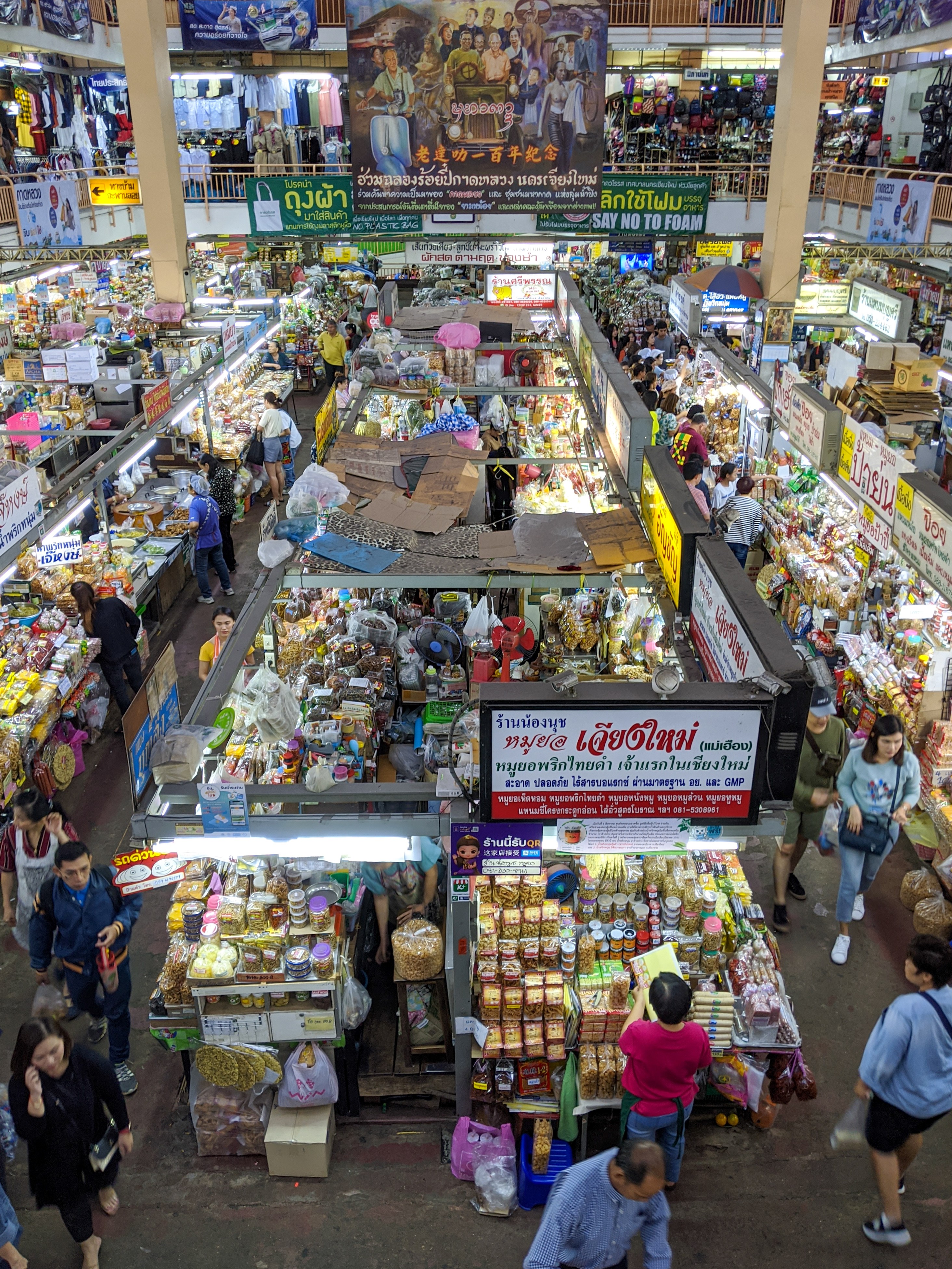
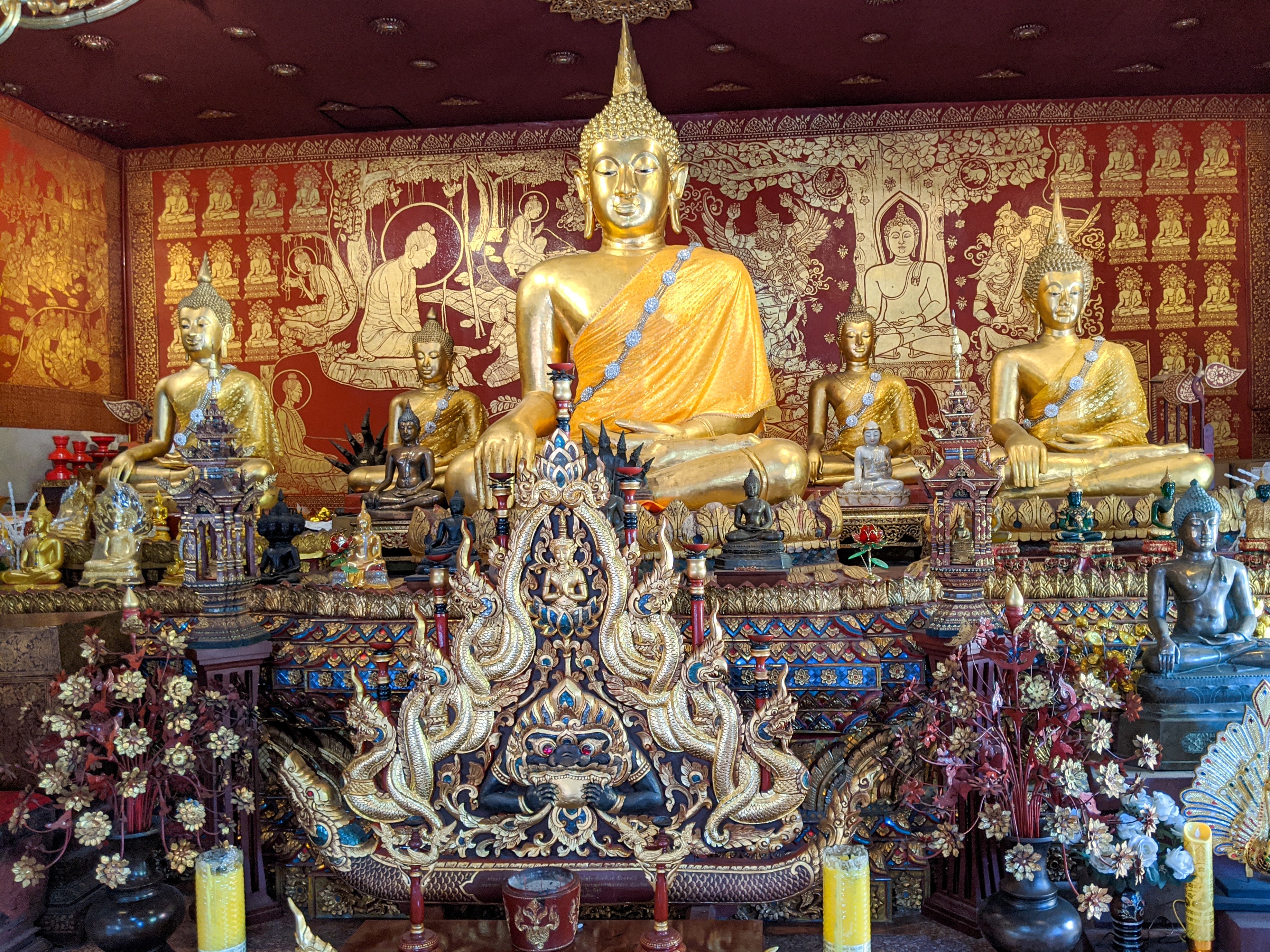
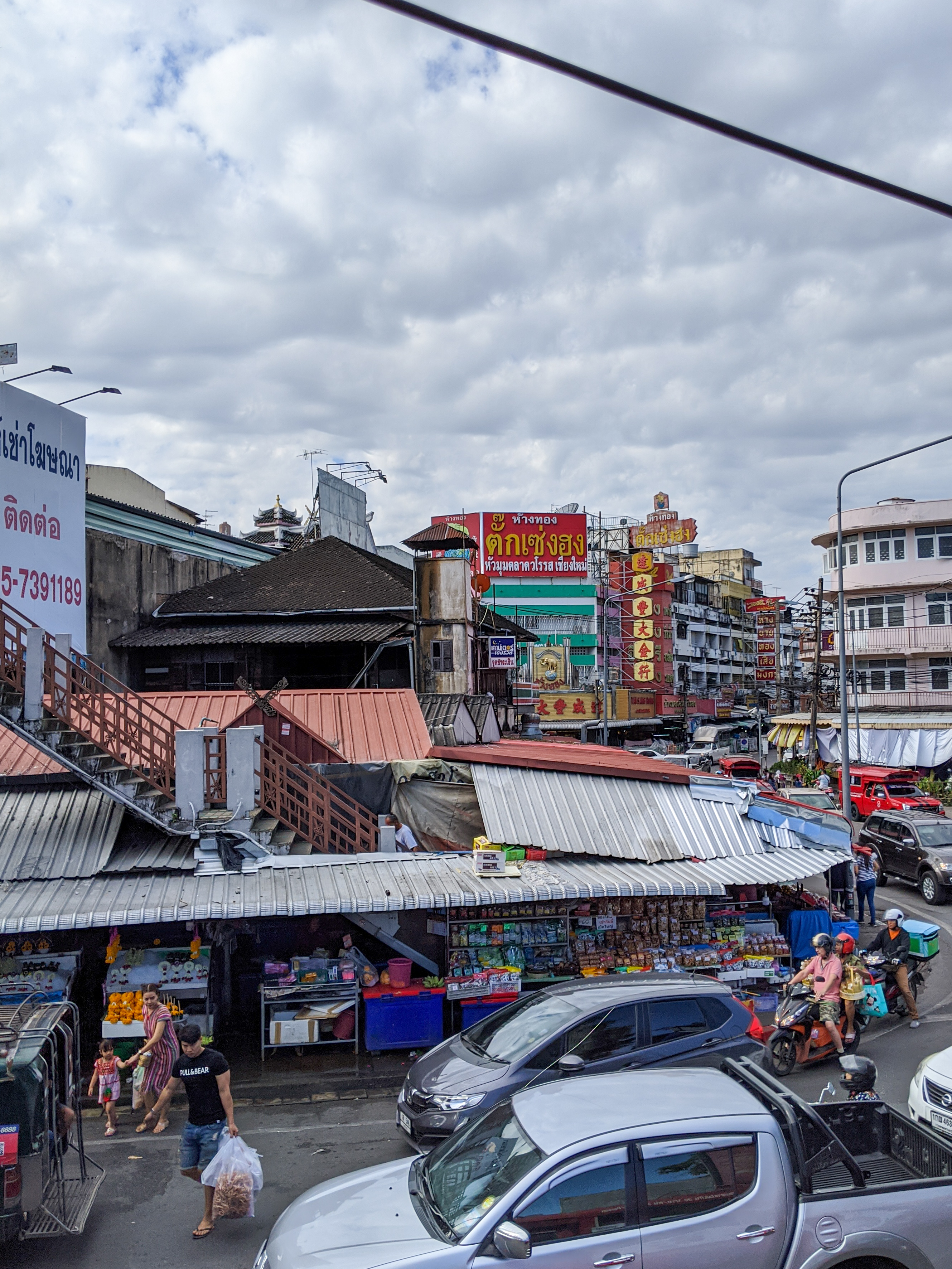
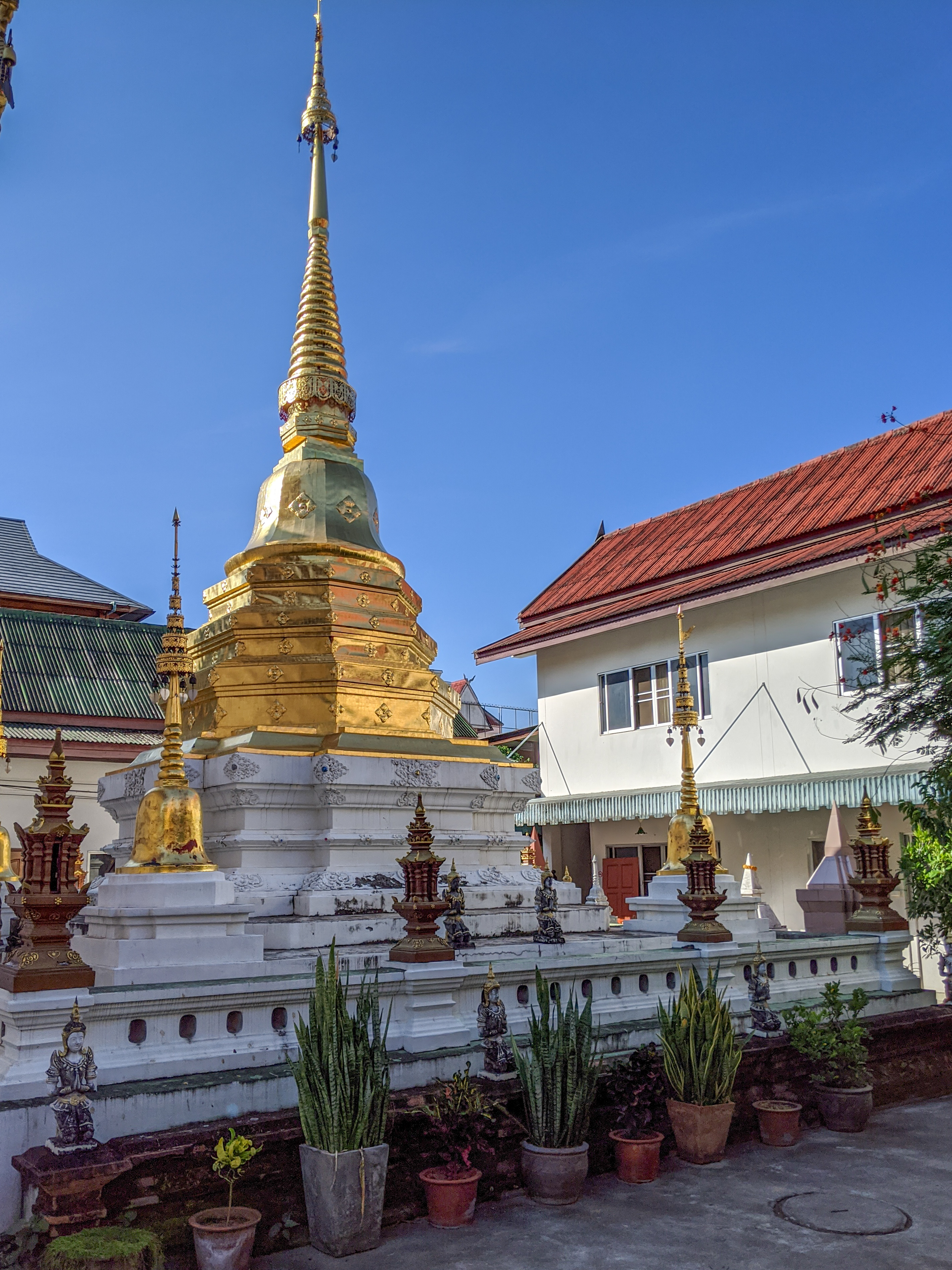
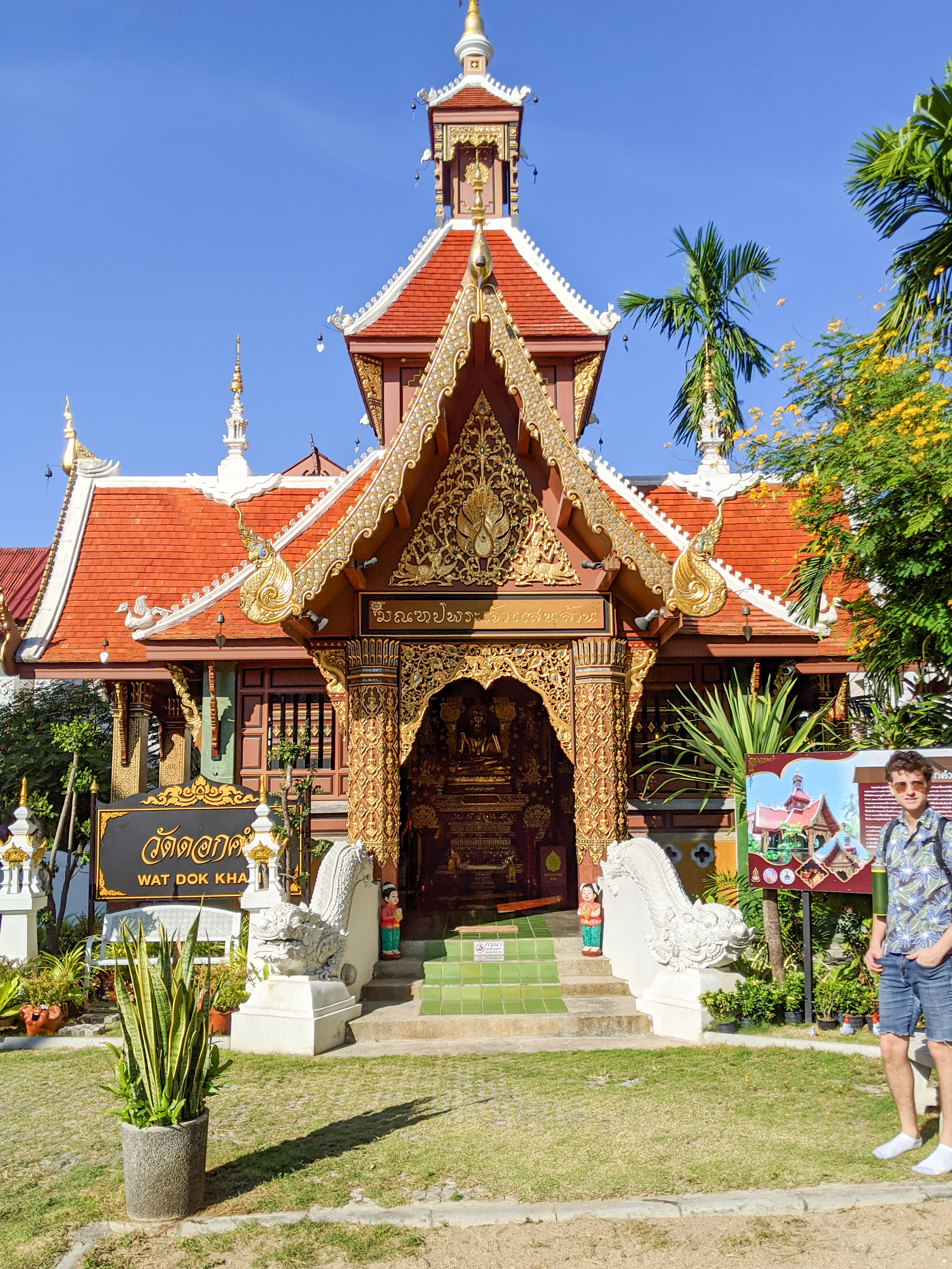
Well, not entirely aimlessly. We knew where we wanted to have lunch, but lunch was still hours away, so we decided to leisurely stroll our way to the restaurant and stop at whatever seemed interesting. Only three or four blocks into our stroll we happened upon a temple, replete with golden chedi and sitting Buddha statue. We took ten minutes for silent meditation, but cut it short when we heard a band marching down the street and decided to follow. We never figured out what it was, but no matter. A few more blocks down we winded through Talat Warorot, the central market. Hundreds of street vendors set up here daily, selling dried and fresh fruits, hand-sewn clothing and accessories, sausages, shoes, spices, and trinkets. Tourists and locals alike flock here for deals. It was sensory overload, so we bought some promising-looking fruit that Aaron thought might be ground cherries and crossed the Ping River to get away from the market crowds.
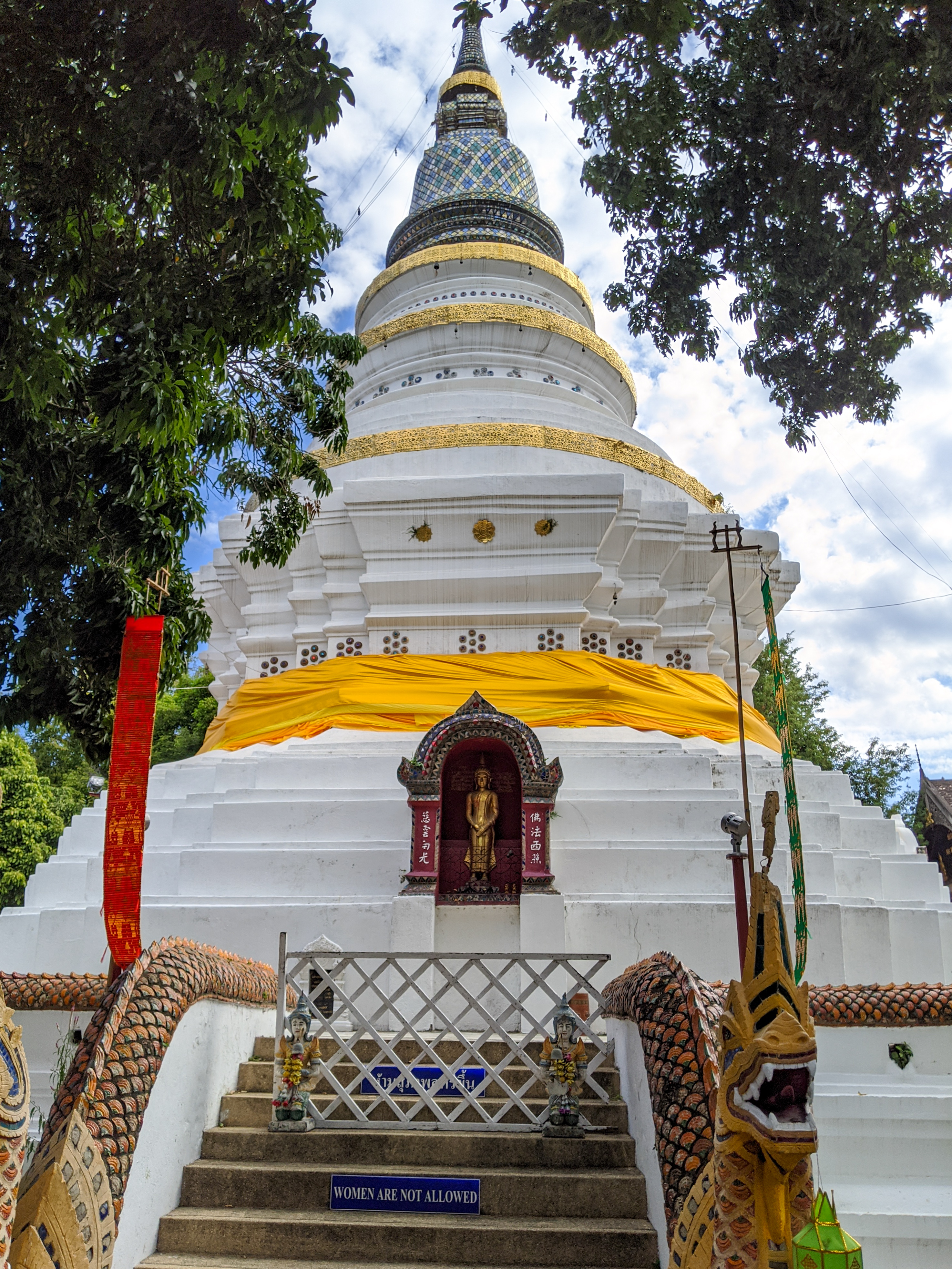
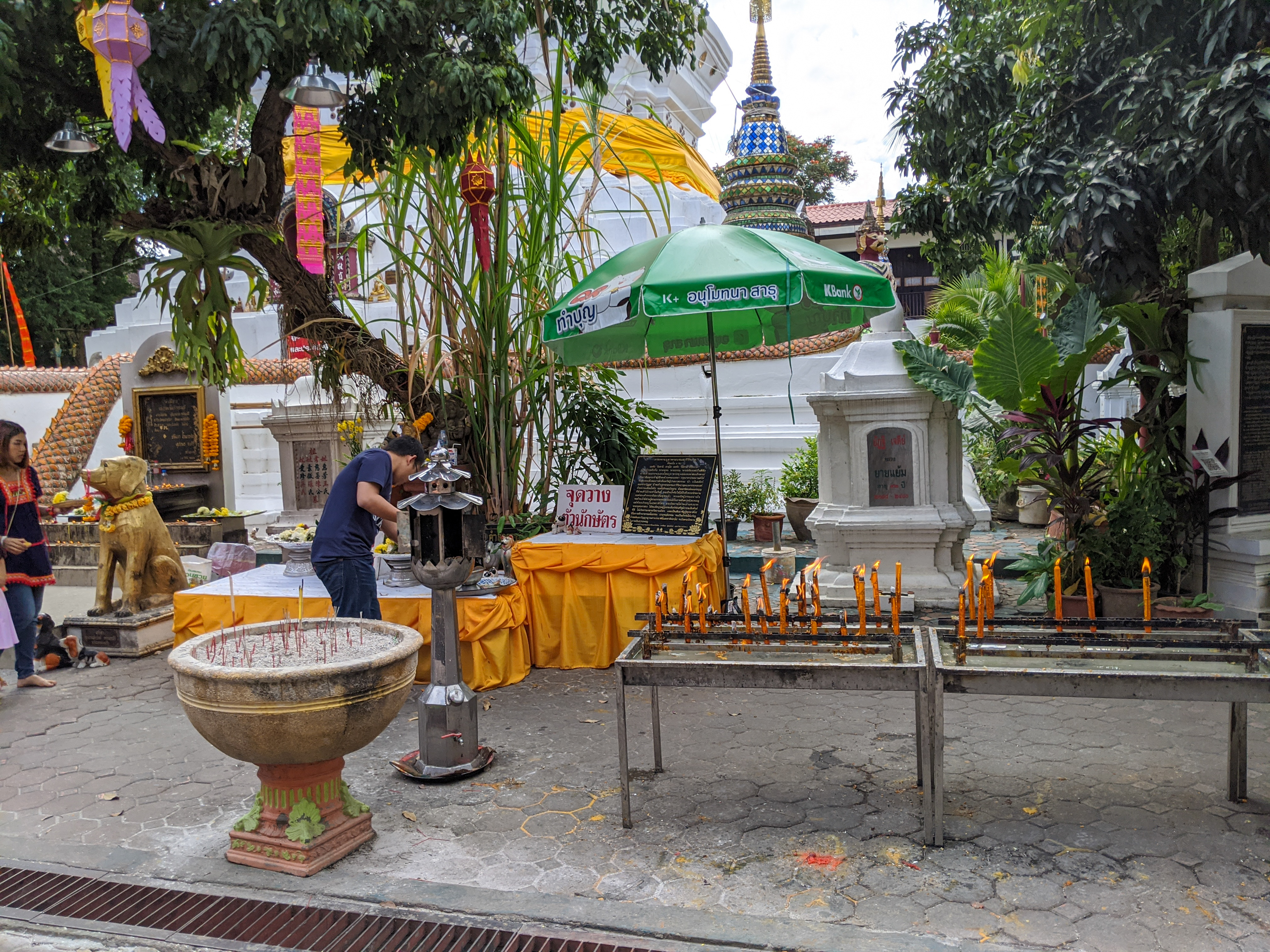
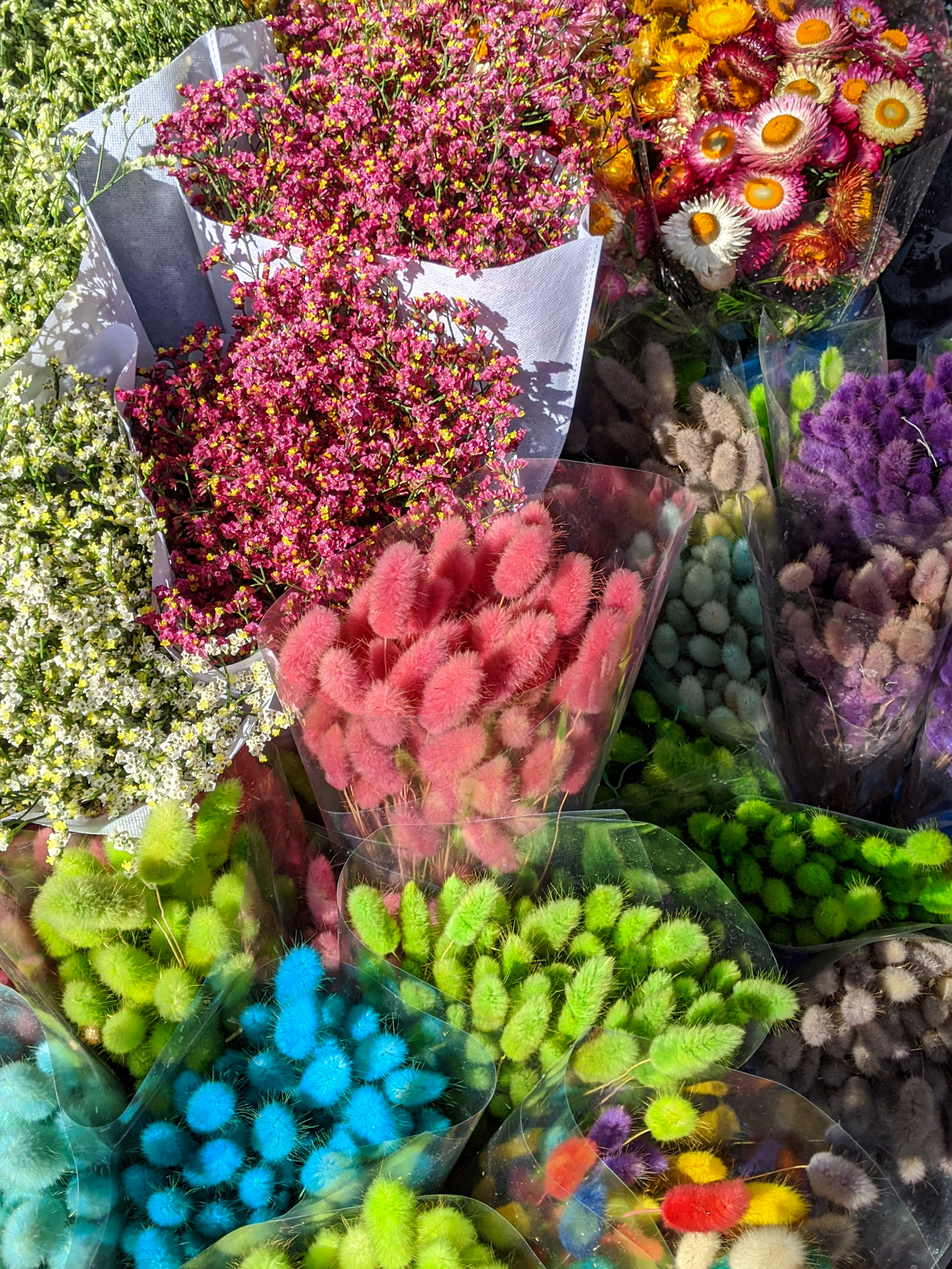
The bridge let out in front of yet another temple that wasn’t in any of the guidebooks. Sidenote: Chiang Mai is so full of temples that many of the giant chedis don’t even make it into the guidebooks. Incense burned in a cart in front of this particular chedi, and a sign told me that women weren’t allowed to approach it. In solidarity, Aaron refused to approach it, too. Whoever said chivalry was dead? We were thirsty, so we stopped in a little tea house that didn’t look like much. Of course, we were then led to the gorgeous secret courtyard in the back. After some refreshingly complex fruit tea, we decided to backtrack to the market, where we spent a lovely hour taking in the perfumes and kaleidoscope of its flower section. Finally, it was lunchtime, so we made our way back across the bridge once more to Woo Cafe, Market, and Gallery.
Woo was a maximalist dream, with pattern and color everywhere. Our Chiang Mai sausages and chicken rice were to die for, and we gobbled them up greedily. Our waiter, who was still learning English, asked us how to pronounce “dessert”, and we, in turn, asked him to teach us to say “excuse me”, which I immediately forgot. Finally, we returned to the hotel, where I finished this post.
And that was day 1 of Chiang Mai. Forgive me if it was too much detail. I am writing this blog as much for me to remember as for you guys to keep tabs.
 Hanoimoon
Wow! Your writing is as lush and colorful as Chiang Mai, Anna. I almost feel like I’m there. I’m so glad you’re both settled in and comfortable. I really love following your adventures.
By the way, I think I’d have to agree with Aaron, and go against your gender theory, I don’t care for even a deep Swedish massage!
LikeLike