My second rot daang negotiation went much more smoothly, thanks to googling the fair price and remembering to counter below where we wanted to end up. For those of you who are wondering why I, a westerner with money to spare, am haggling with these drivers and vendors: everything I have read have said it is the ethical thing to do. When tourists don’t haggle, it drives up prices and makes services less available for locals. Honestly, the drivers seem to enjoy it. They always give me a sly smile when I counter.
The drive to Nam Tok Bua Tong (Sticky Falls) was a very scenic 50 minutes, taking us beyond the city limits and past rice paddies and banana farms. Riding in the red truck was a lovely way to experience rural Thailand. Songthaews (another name for the type of vehicle; not all are red) don’t have air conditioning, but the wind is enough.
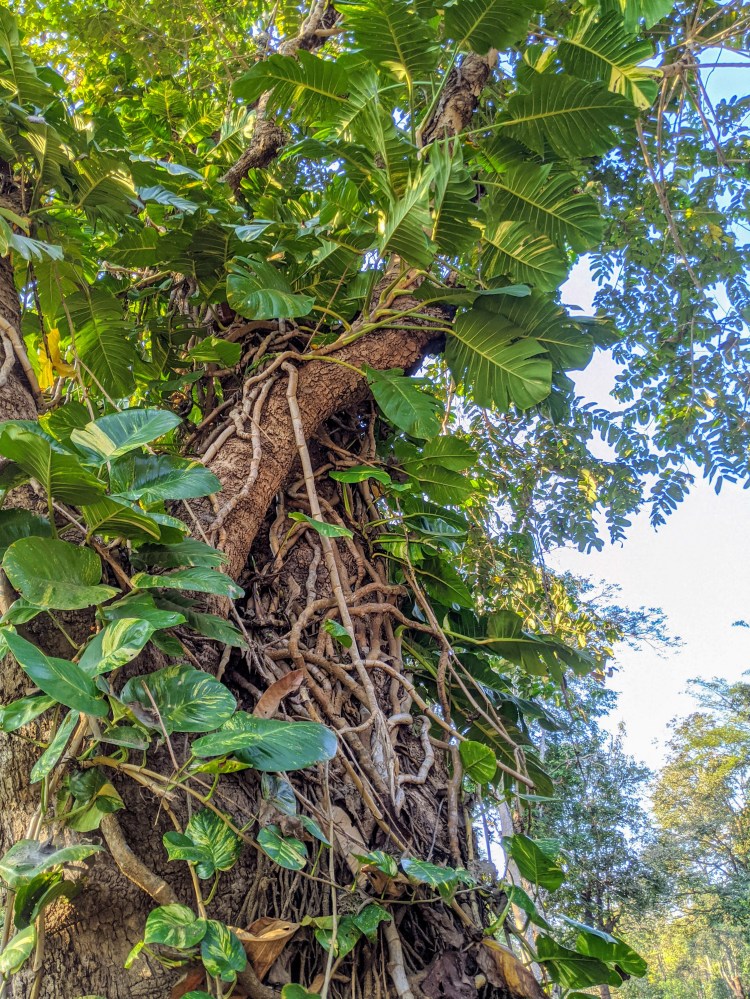
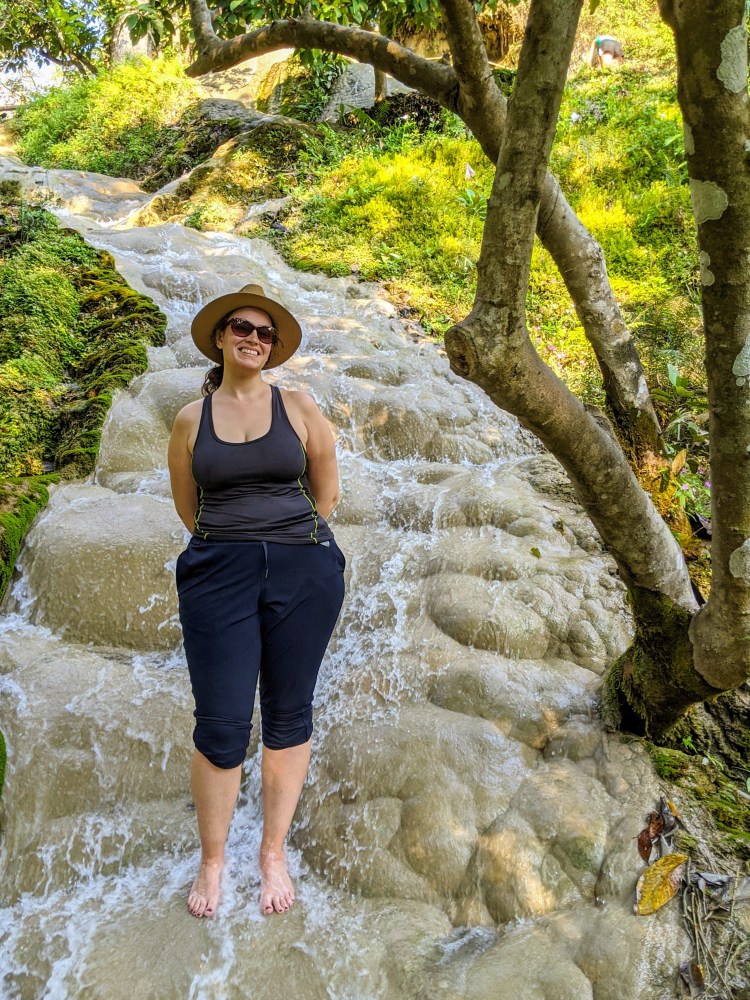
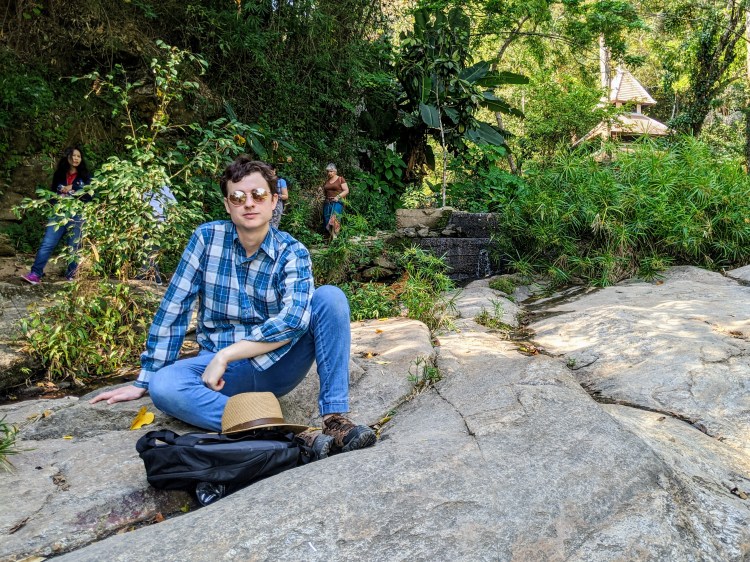
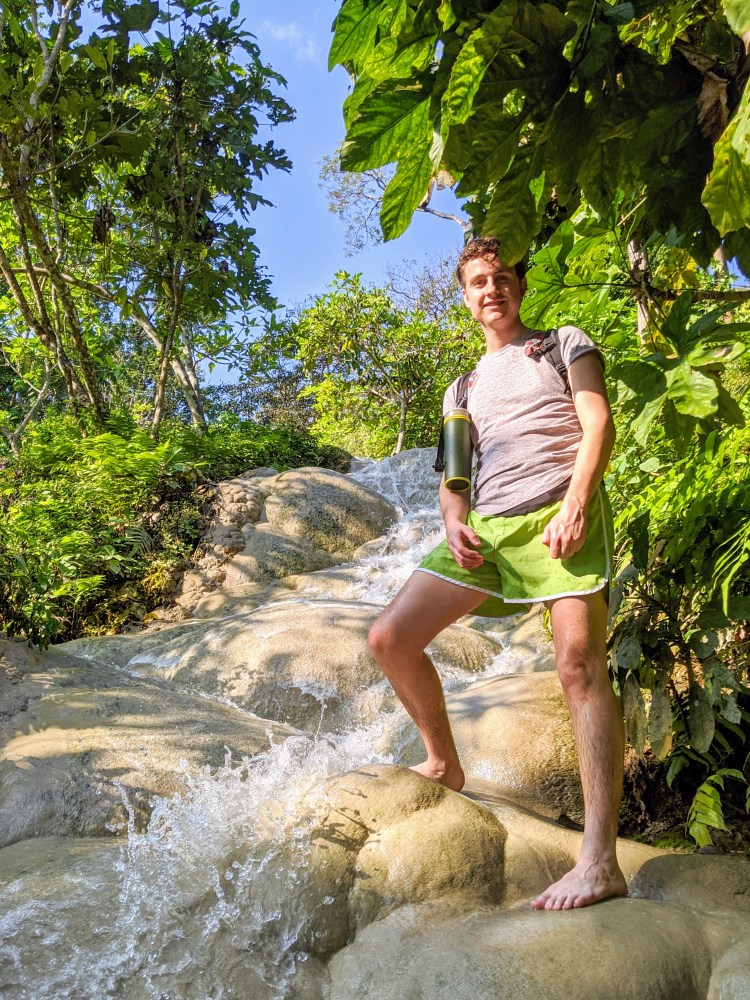
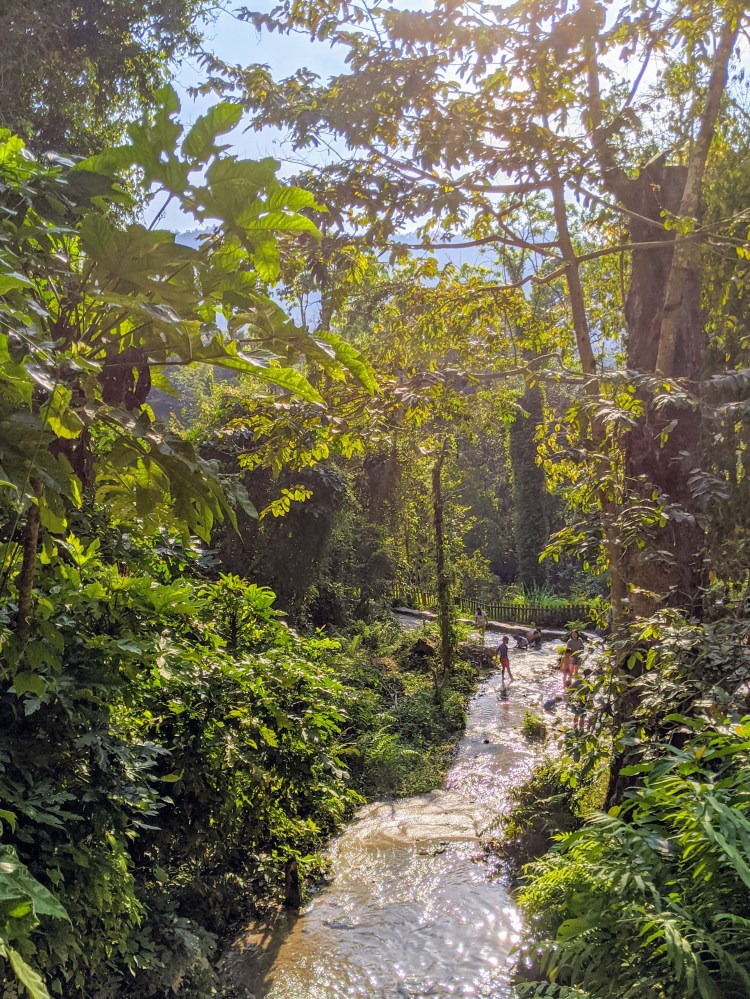
We arrived at the falls during the heat of the afternoon, so the cool water was a welcome respite. The parking lot is actually at the top of the falls, so we took the stair-trail to the first stop on the falls and began to climb. That’s right. We climbed up some waterfalls. The spring of the falls is rich with calcium, which deposits on the rocks below and prevents algae accumulation. Thus, the waterfall can be easily climbed. Well, sort of easily. As easily as some kind-of-steep rocks can be climbed. We had to kind of scramble-crawl up them, but it was both fun and a feast for the eyes. We were there for the golden hour, but I’m afraid my pictures do not do justice to the beauty of the sunlight dappling through the forest canopy and sparkling off the stream. We left, however, when a bee began chasing me around the falls, and my alarmed squeals started freaking all our fellow park-goers out. What can I say? Bees love me and don’t care if it’s unrequited. At first, Aaron didn’t believe me, but after several minutes and changes of location with an overly-friendly bee still harassing me, he admitted there was something weird going on with me and this bee. Neither of us wanted to see where it was leading. We got plenty of time at the falls, though, and spent an enjoyable hour on the ride back discussing the differences between Thai and American culture (see Aaron’s latest post on this blog).
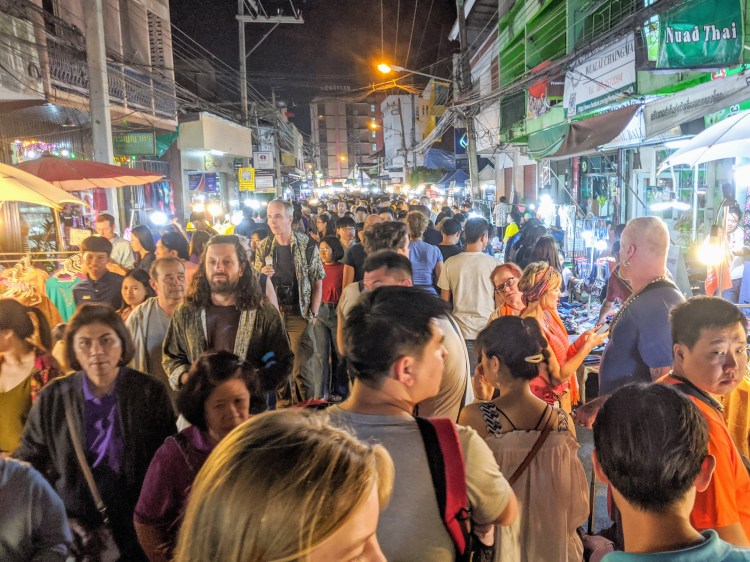
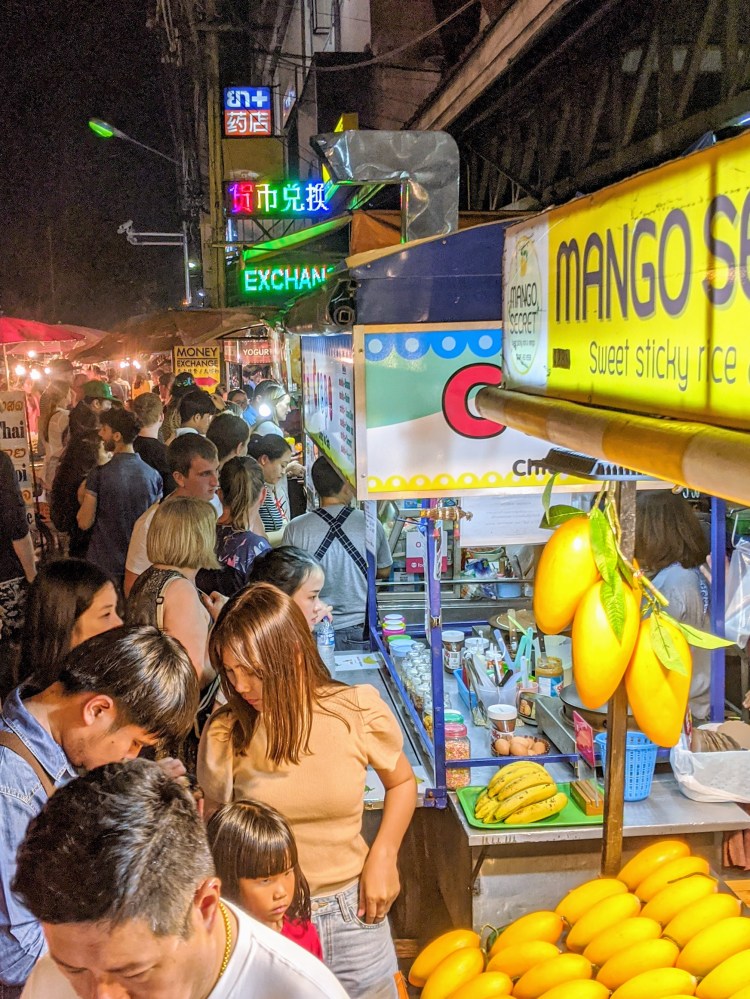
Last night, we checked out the street markets. The south gate of the city has a food market every night, and, on Saturdays, a souvenir and handicrafts market sets up across the river. Much like Talat Warorot, the sensory experience and crowds were a bit overwhelming, especially after such a long day, but we both loved the food. And you can’t beat the prices at a street market! Pork gyoza, mango sticky rice, coconut smoothie, another bowl of khao soi, and fresh passionfruit juice, all for under $7. The mango sticky rice was a highlight for me. You have not had mango until you’ve had it here. It’s as juicy as watermelon and as sweet as a peach. Paired with the slightly salty, slightly sweet sticky rice and topped with a drizzle of condensed milk, it’s perfection. After dinner, we took a short stroll through the handicrafts market, but we simultaneously decided to call it a night after a couple of blocks. Our feet hurt and we were sleepy and there were too many people and ugh.
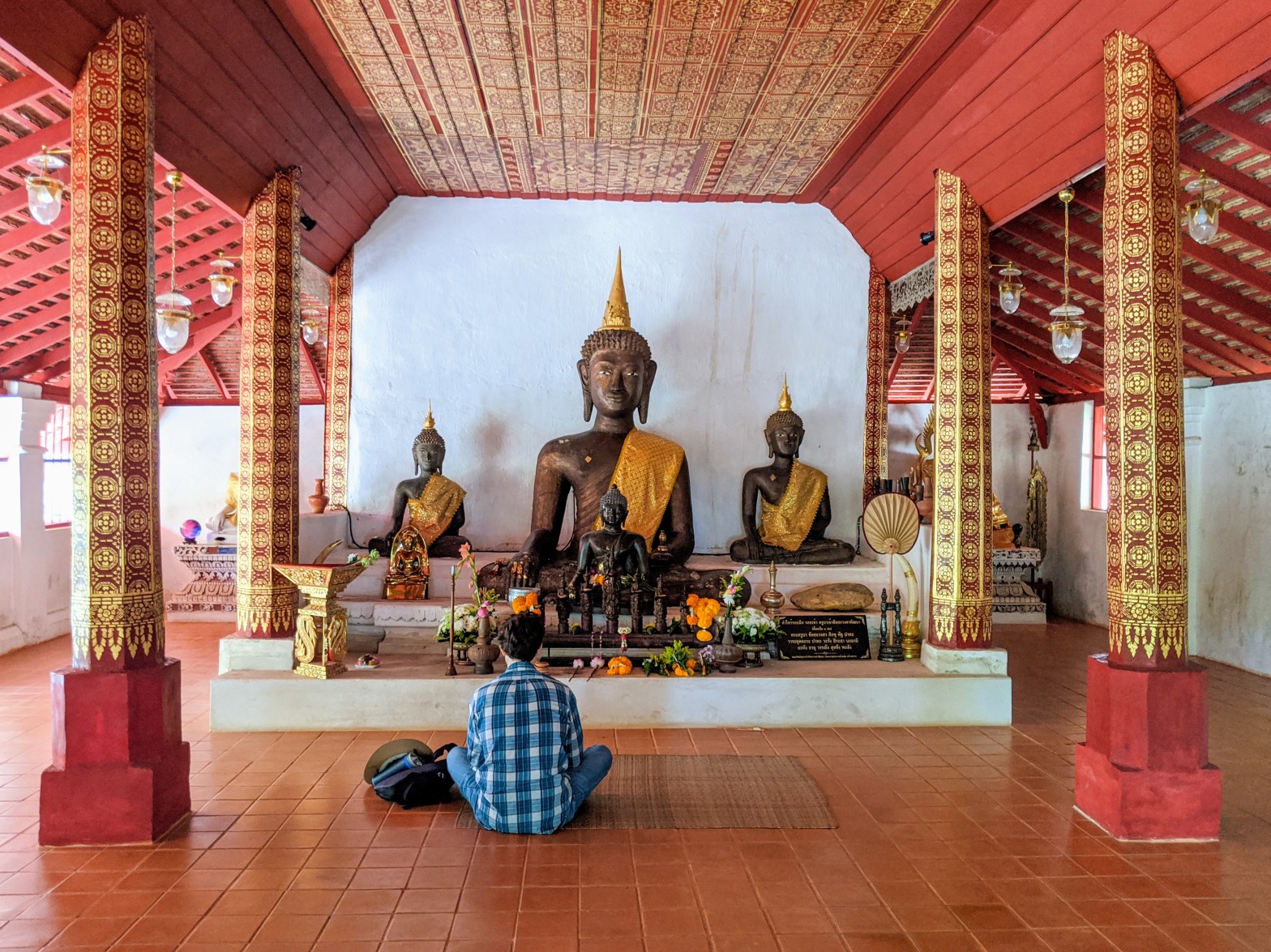
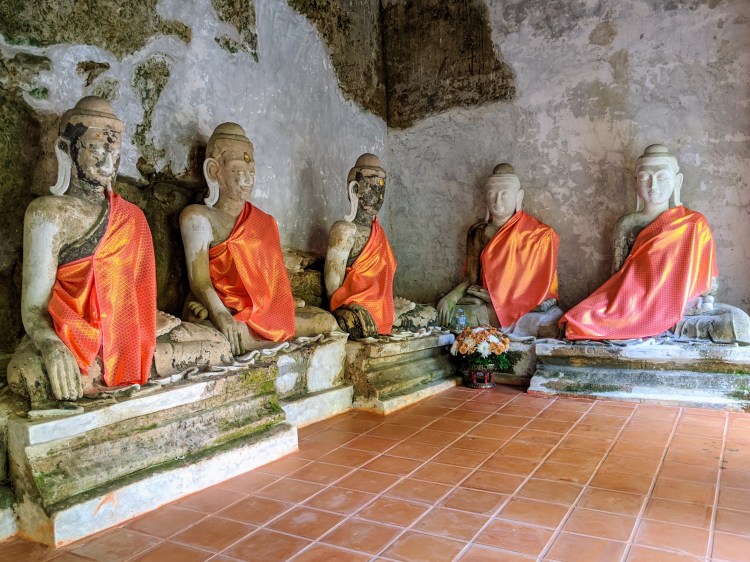
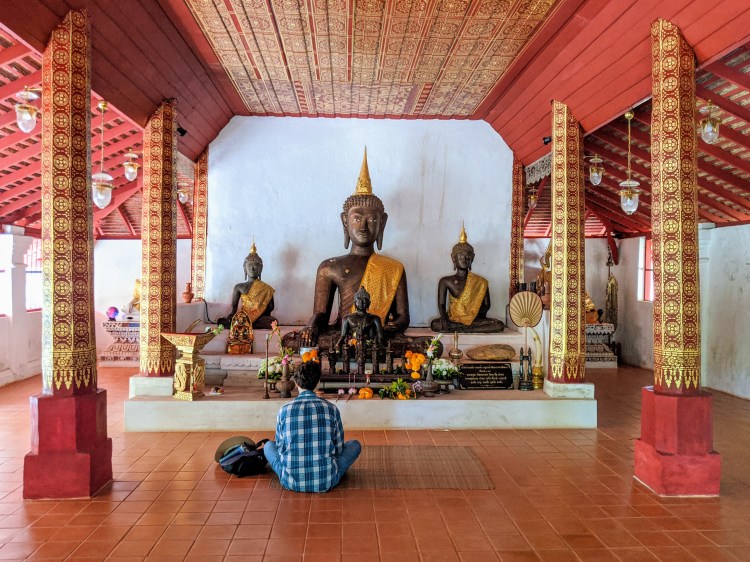
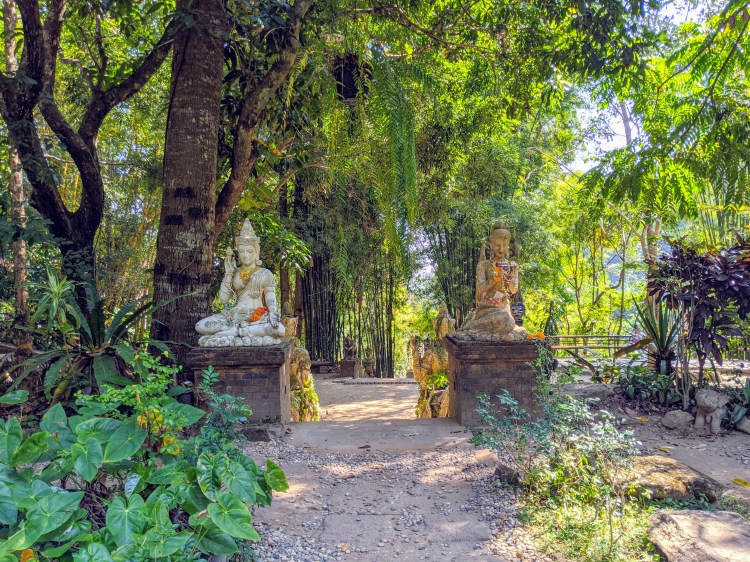
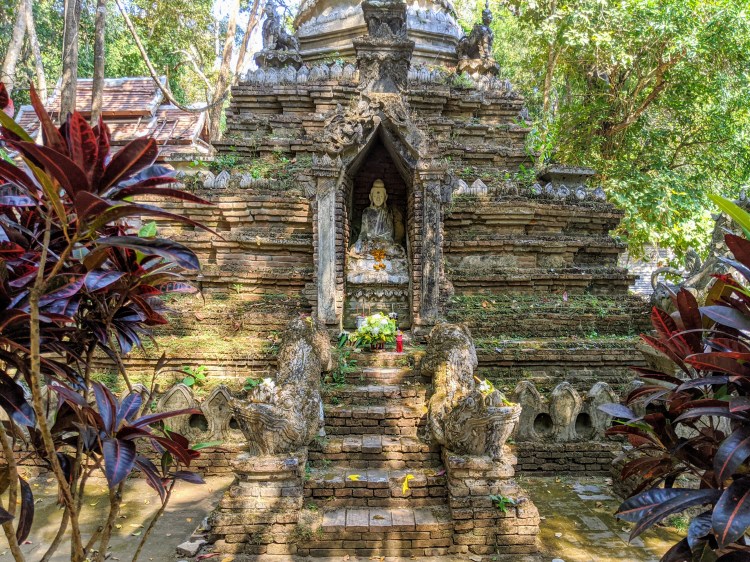
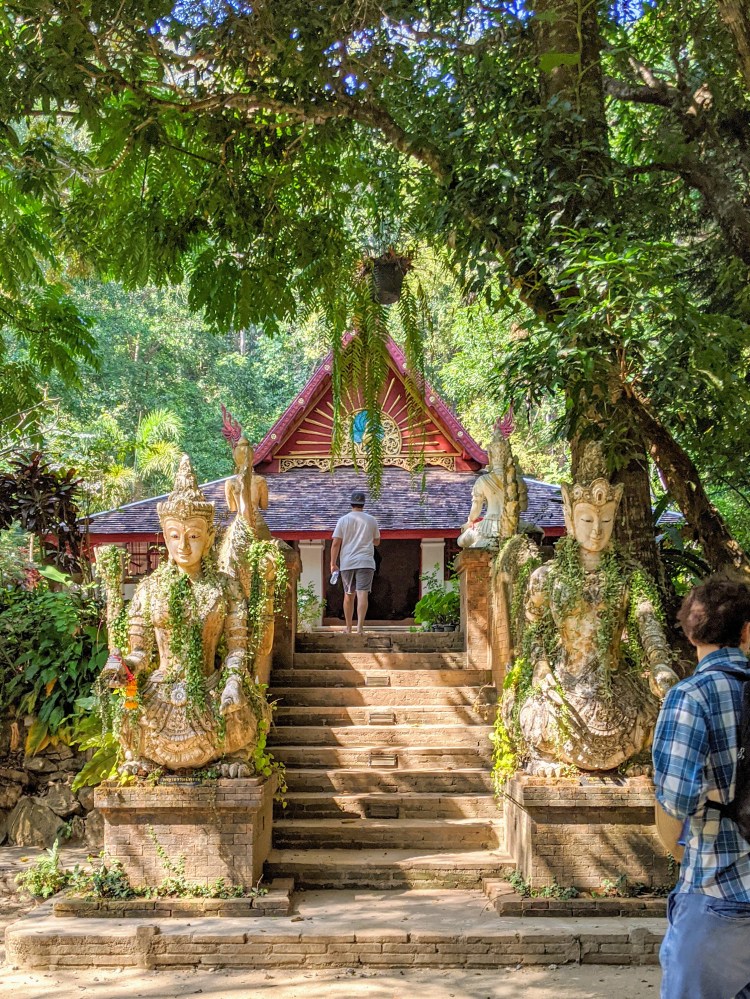
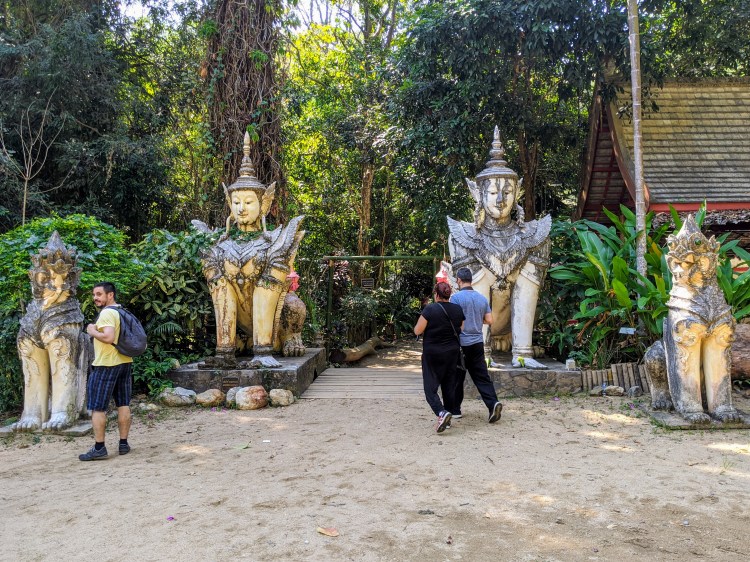
This morning, we caught another rot daang to the trailhead for the Monk’s Trail. The hike cuts a steep path up Doi Suthep (Chiang Mai’s neighboring peak) that serves as a way for Buddhists to “make merit” before reaching Wat Pha Lat at the top of the trail. And boy, did we make some merit. Aaron did fine, but I kept having to stop to catch my breath every few minutes. Editor’s note: Some might say this indicates that Anna is not better at tolerating pain than Aaron. Author’s note: Aaron is my editor. It was all worth it, though, in the end, because Wat Pha Lat was enchanting. It’s a bit of a local secret (though the secret is getting out), so it wasn’t nearly as crowded as it should have been. I stopped in the first structure for some metta meditation, which a sign informed me was what this particular space was for. Metta meditation, also called loving-kindness meditation, aims to cultivate benevolence and empathy for all beings. You may do it as follows: first, take several deep breaths and center yourself. Then, imagine a person (or animal– I often think of Bob) that you have very loving, positive, entirely uncomplicated feelings for. This last part is key; if it’s someone you would get jealous about, they’re probably not who you should start with. Picture this person happy, receiving all the love you have for them, and be mindful of how this love feels. Dig into it. Grow it. And continue to send it to them. Then imagine others you are close to, maybe even a group of them, like your family or close friends. Send them the love, too, and notice that, as you send out more and more love, it doesn’t deplenish– it grows! The more you picture these people you love, joyful and at peace and experiencing all the love you have for them, the fuller your love cup will be. So give it to more beings. How about your neighbors? Or co-workers? Then maybe your city. Don’t forget the non-human beings. They get that love, too. Multiply that love exponentially, sending it to more and more beings, until you are sending it to the entire universe. Note the feeling you have right now. This is metta: equanimity, benevolence, peace, empathy. It feels amazing. Now– and this is the hard part for a lot of people– send it to yourself. You, too, are a being deserving of love and peace. Finally, blur the lines. Realize that the love you send yourself is the same love you are sending everyone else, and that you, too, are part of this universe of love. Open your eyes and enjoy continued bliss as you go about your day. It’s all very hippie-dippy, but it really does feel great, and it puts you in touch with the best parts of yourself. This is what I did in that small shrine on Doi Suthep. The endorphins were hitting me from the arduous trek up to it, the mountain air was on my skin and in my lungs, the sound of a rushing waterfall was filling my ears, and another masterwork statue of a golden Buddha was watching magnanimously over me. It felt better than any drug (not that I have done or would ever do drugs, parents).
Aaron and I explored Wat Pha Lat for a couple of hours, ducking into its many structures and temples to admire its ruinous beauty and highland setting. As we were leaving, we stopped at a bamboo coffee stand and ordered two fresh coconuts. The vendor whacked the tops from all angles with a huge knife until the lid she was carving came off, then she stuck a straw in each and handed them over. I feel like I’ve had fresh coconut before, but I don’t remember there being this much liquid in them. It was filled to the brim with the desperately-needed, electrolyte-infused water. If I hadn’t watched someone whack them open right before our eyes, I would have assumed they had been supplemented with extra coconut water. The meat was sweet and helped to stave off hunger pangs, which we needed because we were about to go to the top of Doi Suthep to explore another temple. But that’s a story for another day. Tomorrow, specifically. See y’all then.
 Hanoimoon
Spectacular photos, Anna. I love the description of metta meditation, which I want to begin practicing myself. I eagerly await the next installment in Anna and Aaron’s Amazing Asian Adventures.
LikeLike
What beautiful thoughts. Sending you both all the love in the world.
LikeLike