Anna and others want me to contribute to this blog, but writing about travel is hard when you rarely even trek down to the real world. As such, I invite you to come get tangled in the neurons of Aaron’s Brain, Chiang Mai, Thailand, Earth.
Disclaimer for family, this post contains very personal and possibly upsetting themes (TW: atheism, sexuality, and leftist politics).
In Thailand, making an earnest effort to embrace the customs and codes of Thai culture, I’m finding myself reflecting about my own morals a lot. For those who know me well, this should be unsurprising. Like Chidi Anagonye sans PhD, I always seem to end up here.
I’ve always been a very moral person. I’m not saying I’m a good person–I very rarely live up to my own ethical standards–but I am deeply concerned with morals and values. My moral system is the foundation upon which my worldview is constructed. Some of you may take this for granted and wonder why it deserves mention. But you’ll be surprised to learn that there are people out there like my wife, for whom a worldview is constructed on the shifty beaches of truth, constantly washed over by the cruel waves of discovery, facts. Following Busdriver’s recommendation, I bought real estate and built my home in an imaginary place.
My morality has developed gradually over time, and it can be hard to determine exactly which beliefs came from where. Still, there have been a few major disruptions which have punctuated my otherwise gradual moral development, and forced me to dismantle and reconstruct my moral system. This trip may just turn out to be another one.
The first big shift I can recall was in ninth grade, when I gave up my religion. Raised Catholic, I don’t think it had ever occurred to me that there may not be a god until I started having fantasies about another boy (I hesitate, on principle, to explain myself further. But for fear of confusing family on my honeymoon blog, I’d say I landed at about a 1.5 on the Kinsey Scale). I’d always found eternal damnation very troubling, but I was pretty sure that at least it wouldn’t happen to me. Now, I was the one going to hell. After months of late nights and self-flagellation, I concluded, as so many have before me, that no righteous god would create sentient beings, fill them with temptations, and punish them eternally for choosing to indulge them now and then. His own self-indulgence in demanding gratitude for giving babies malaria and banishing them, unbaptized, to an eternity in hell was also pretty decisive. Anyways, I shed a few tears and decided that I was just fine without him.
In my freshman year of college, though, I had an existential crisis of epic proportion when I read Nietzsche’s (retrospectively, fairly problematic) On the Genealogy of Morals. Despite my earlier renunciation of Christianity for moral reasons, I’d somehow never questioned the existence of good and evil as universal truths–I’d merely shifted the bounds of good, letting homosexuality in and pushing that vengeful punisher out. But moral relativity really changed things for me. In short, moral relativity is the idea that morals are a social construct and have no basis in the material world, besides the many words written and neurons trained to them. I drank it up like antifreeze, my moral system unraveled, and I went through a couple of dark years as a pretty miserable and insufferable nihilist.
Slowly, over the next few years, I began to rebuild a moral system. I joined a Buddhist temple and began learning to practice compassion. I became involved with environmental activism on campus. I joined the International Socialist Organization, and lived and breathed class politics for several years. I worked through some pretty regressive ideas about women (I’ll probably be working at that forever), began to take racism seriously, participated in struggles and activism, and read, read, and read (one of my least favorite activities). Anna, too, deserves credit for greatly deepening my empathy, and helping me try to extend it to all living beings, not only those who share my political beliefs or are victimized by capitalism. I’m proud of the belief system that I’ve built for myself. Unlike the dissonant morals that I passively absorbed through my Catholic education and liberal upbringing, I’ve come to my present beliefs through consideration, research, and self-work.
As an American-21st-Century-communist-Buddhist-absurdist-humanist-atheist, I’ve got a few hills that I’d die on. First, no one should reap the benefits of others’ labor, except where disability or other conditions require it. Wealth and power should be distributed evenly among people, or at least as close as we can come to that while still incentivizing ingenuity and work. Second, individuals should be granted as much liberty as they can possibly have without directly infringing on the liberties of others. Most people would probably agree with this, but what counts as an infringement on others for me is pretty leftist. Expression of identity, okay. Discrimination, not okay (including discrimination against people with different political views, who, no matter how regressive, deserve compassionate persuasion, not disdainful othering). Consensual whatever-you-want-to-do, okay. Causing harm to others, not okay (except causing harm to others consensually, okay).
While in Thailand, realizing that the “Land of Smiles” is aptly named, deeply unequal, and governed by rules that many westerners would find oppressive, I find myself questioning the universality and independence of my moral system once again. Somehow I’ve lost the only worthwhile insight that Nietzsche gave me in 2011: morals are culturally defined and by no means universal.
Before I go on, a few more disclaimers are in order:
- The following generalizations are exactly that. Individuals vary widely, and many people, both Thai and US American would likely differ from these trends. Still, it seems to me that there are interesting differences on average worth examining in the social and moral systems of US American and Thai people.
- These generalizations are based on third-party studies. Though in many ways these trends present themselves obviously here, I’m not going around and questioning Thai people about their political and social beliefs. I’m a foreigner and a tourist, and it just isn’t really appropriate table talk, especially given the government. I’m using the Hofstede Cultural Index (HCI), as compiled by hofstede-insights.com. Geert Hofstede has received criticism for over-attributing differences to nationality and ethnicity, and those criticisms may not be entirely unfounded. I’m honestly less concerned with the validity of the specific trends than I am with the concepts of cultural imperialism and moral relativity.
- I’m not alleging any racial differences in belief systems. Southeast Asian cultures developed distinctly from European cultures, and different conditions led to the development of different belief systems. Thailand, in particular, has never been a direct subject of any Western nation (though it, like the rest of the world, listens to Western music, wears Western clothes, and genuflects in the Burger King’s court).
With all of that said, there are a couple of key differences between US American and Thai attitudes worth examining:
- Thai people are more willing to accept inequality of power and resources, given that they feel they are being appropriately cared for. Thailand, for all of its smiles, boasts the greatest wealth disparity of any country in the world, according to a report by Credit-Suisse. Other reports put it closer to the center; I’m not sure who to believe. But regardless of material conditions, HCI suggests that these cultural attitudes trend.
- Thai people accept a more rigorous social order, with seemingly more rules and regulations concerning individual behavior. I’ve certainly found myself dedicating a lot of energy to avoiding offensive behaviors: no shoes inside, no public displays of affection, modest dress (no short shorts for this boi), and never point your feet at the Buddha. But it’s difficult to compare the burden of rules, especially with your native culture. There are new customs and taboos anywhere you go, and they always feel oppressive. A Thai person visiting the US may find themselves retraining their middle finger to avoid offense. Still, HCI suggests that, in general, Thai people accept more restrictive laws and customs. Did you know that porn is illegal here? Did you know posting about pornography is illegal here? I hope this post doesn’t cross a line, and I’m sure glad we can all agree that porn should be illegal.
- “Masculinity,” questionably defined as “a preference in society for achievement, heroism, assertiveness, and material rewards for success” is less important here, with a preference for compassion, cooperation, and modesty. While I reject the notion that masculinity and femininity are antonymous and defined as such, this trend is very much in accord with my own beliefs. Men here are just lovely. More about this in a later post.
I’ve always been in favor of self-determination, the preservation of cultural autonomy worldwide. But, as a leftist, anti-imperialism is easy when your country consistently forces right-wing values on other people. I think a part of me assumes that, left to their own devices, people worldwide would eventually arrive at the same values as I have. But that just might not be true. If people feel that their political needs are being protected by a benevolent dictatorship, is that so bad? If women are okay with being told to cover up before entering a temple, if admitted at all, is that restriction unacceptable? Widespread female support for female circumcision (not a Thai issue) offers a particularly troubling example, one for which the research was a bit too unsettling for this already queasy traveler’s stomach.
For me, above all else, the alleviation of human suffering (or rather, of all sentient beings) is the most fundamental good. I’d decided my own moral system offers the best hope of doing so. But the reality is that I don’t know if that’s true. I’m not presenting counter-evidence here. But it’s certainly conceivable that people would be willing to surrender certain personal freedoms to achieve stability, happiness, or whatever their moral predilections required. Inequality may be tolerable if accompanied by an adequate and sustainable social safety net. Not to mention, the alleviation of suffering might not be a universal measure of good. If the US military invented time travel and forced ancient Rome to renounce their gladiatorial traditions and routine slavery, would that be cultural imperialism? Perhaps eventually, science, philosophy, or something else will unveil some even greater moral good.
For now, I think the closest a moral good can come to universal is the alleviation of suffering (the most fundamental objective of Buddhism). What constitutes suffering is complex and personal, but what defines it is perhaps the simplest moral definition: it just feels bad.
I think the Platinum Rule is the best maxim we have: Treat others as they would like to be treated. Believe them when they tell you what that means. When faced with conflicting desires, I hope to choose utilitarianism, the satisfaction of the most beings.
On a societal level, this is even harder than it sounds. Some women in Saudi Arabia may have no issue with being forbidden to drive, while others may yearn for the open road. Some Native Americans understandably take offense at the name of the Washington Redskins, but the majority seem to be indifferent, if not supportive. In resolving our own conflicts of interest, Anna and I frequently rely on a scale of 1-10. Last night, I was a 7 on going to get a drink at another bar. Anna was a 9 on staying put. So we settled in and ordered another drink. This practice suits us well, even with higher stakes. We’re always adjusting our methodology and adding new tools for decision-making and conflict-resolution.
I’m hopeful that the people worldwide grow to concern themselves more with the alleviation of suffering and maximization of happiness, and that we find better ways of quantifying these metrics. Until then, you do you, Thailand. 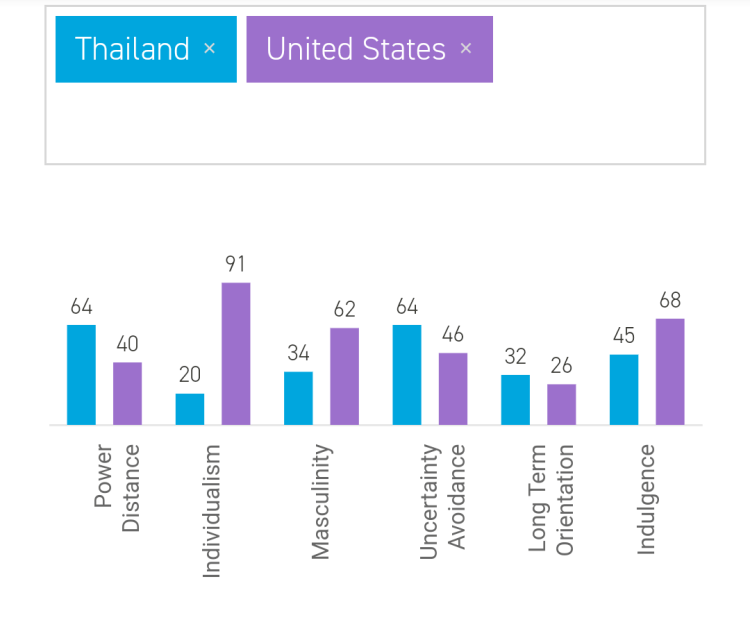
 Hanoimoon
Much food for thought here, Aaron. I truly love your writing. Thank you for being unafraid to share your core thoughts and values. Whatever you and Anna do in the future, I hope writing it a part in it.
LikeLiked by 1 person
Oops, I hope writing has a part in it, that is!
LikeLike