Aaron and I are both starting to “need a vacation from our vacation.” I know; I hate me for saying it, too. But it’s been very go go go and there hasn’t been a ton of downtime. Not to mention the fact that I’m pretty sure I’m getting a stomach ulcer from all the spice and acidity in the food. Our next stop is Luang Prabang, which I have been told is a romantic, but sleepy town, and that suits us just fine. Until then, though, we needed a break. We took an extended rest at our hotel and decided that for dinner, we’d eat something other than Thai to give our tummies a rest, too.
Good View was a restaurant on the river that supposedly served sushi, so that seemed to fit our needs. Once we got there, however, we discovered the menu was all Thai food. At least we were sat at a table by the river, far away from the live music. We shared some wine and the most palatable things on the menu: pad Thai and spring rolls. I have become the tourist I shaded only two posts ago.
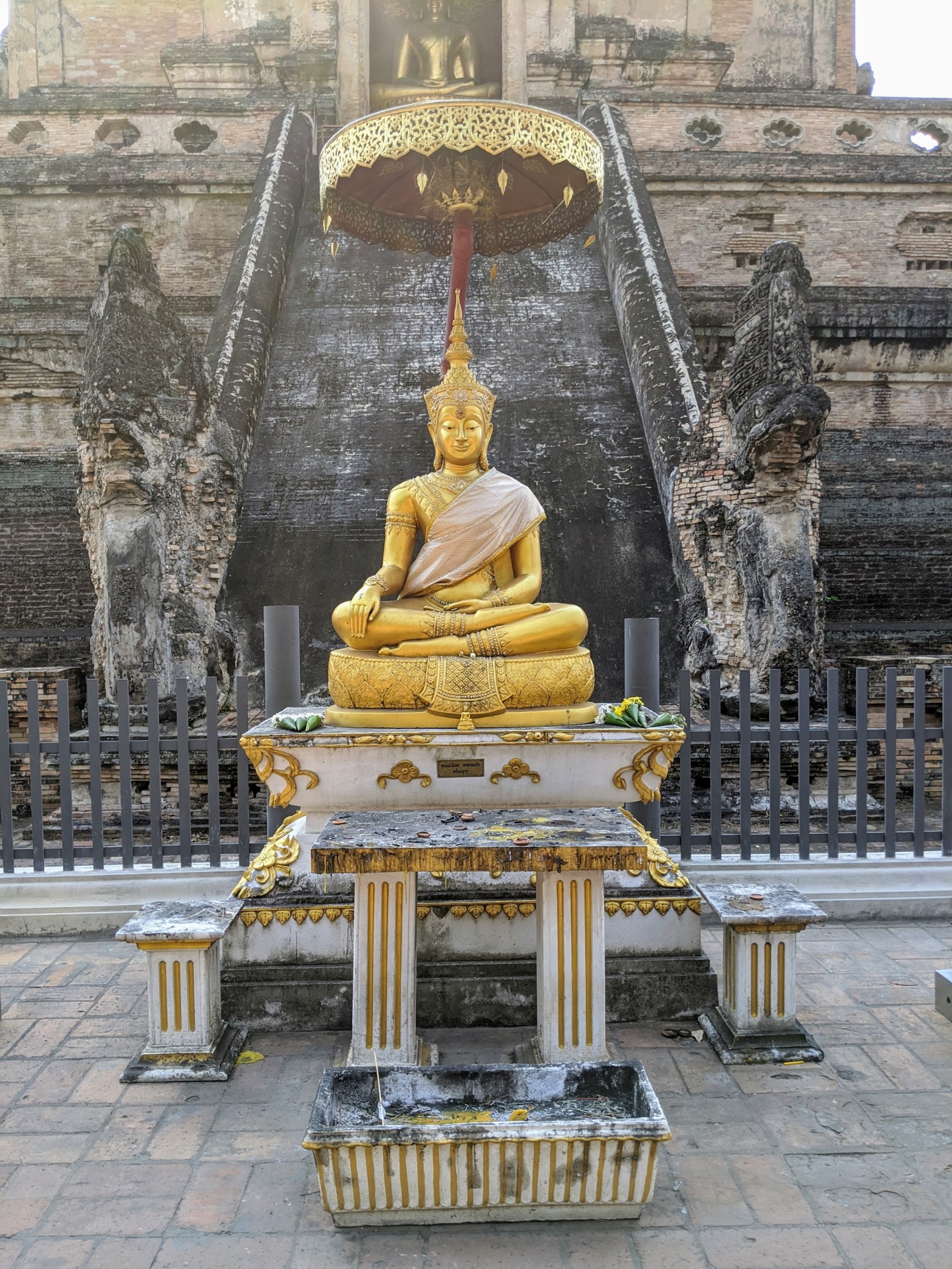
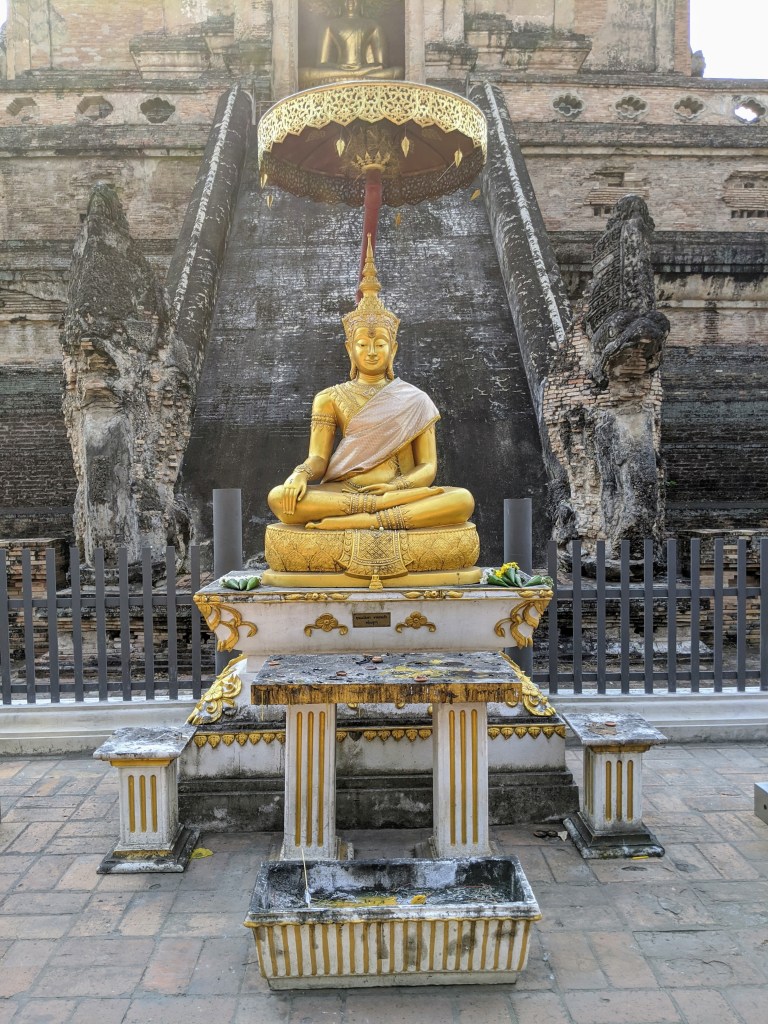
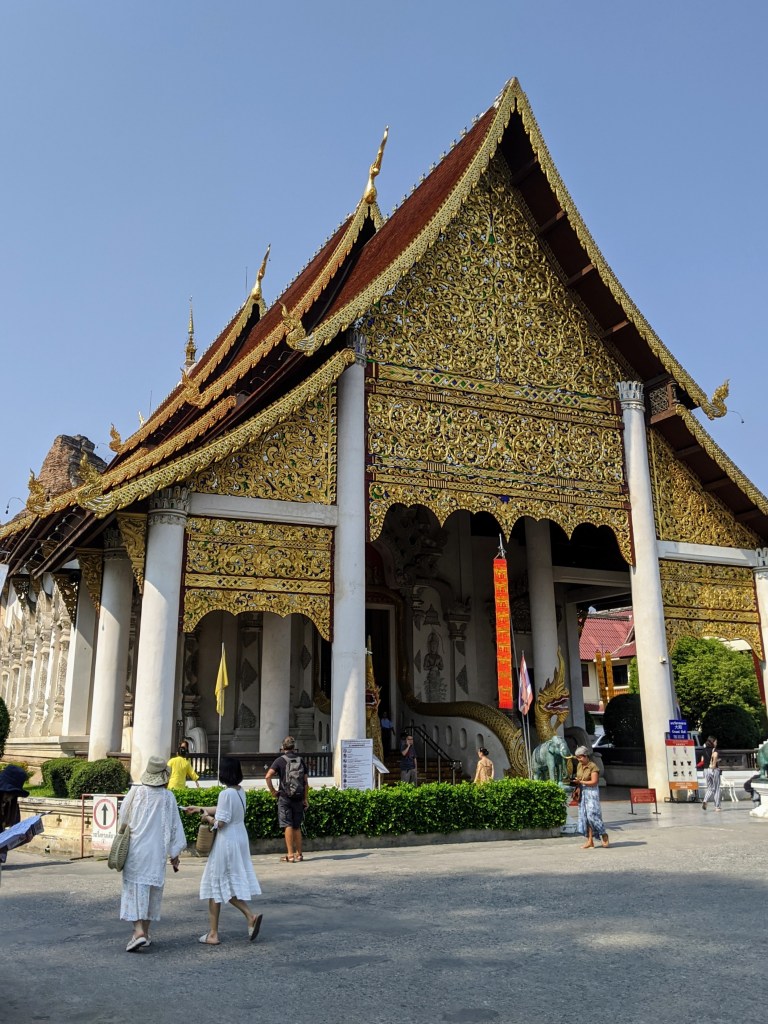
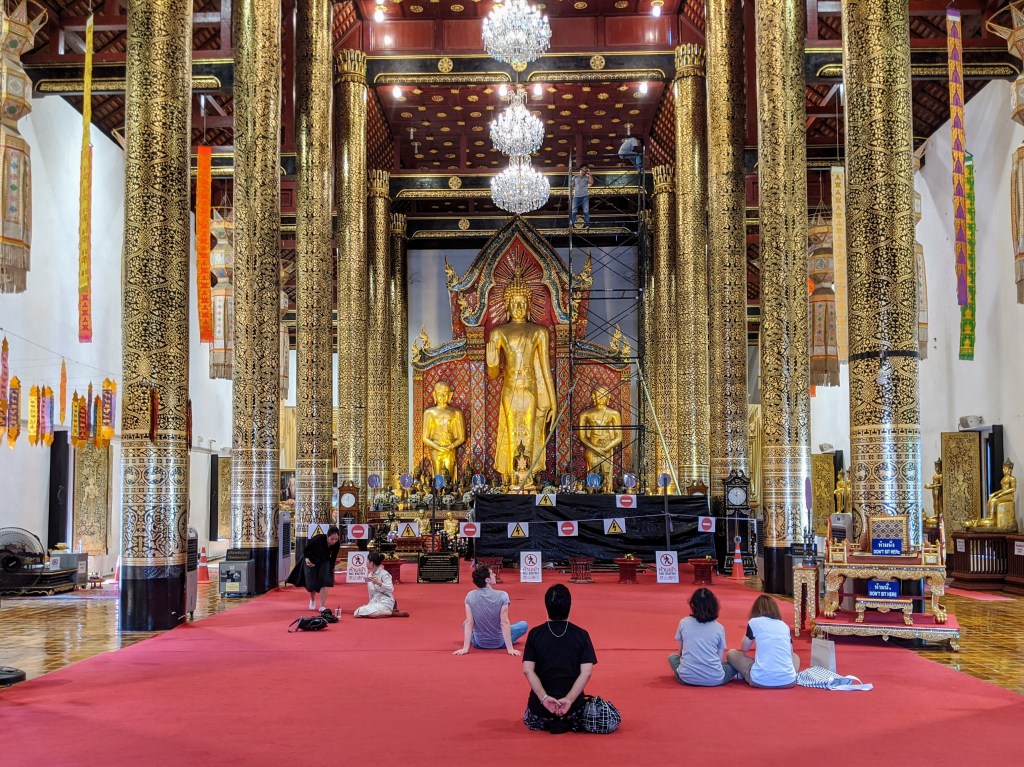
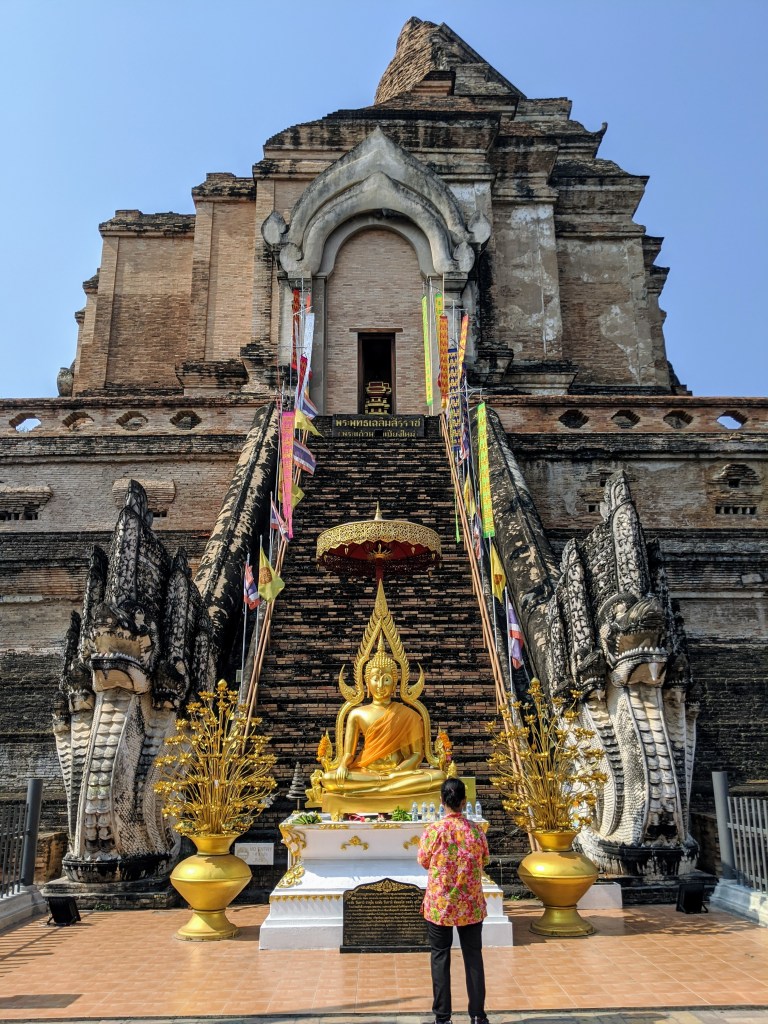
We had big plans to visit Doi Inthanon, Thailand’s highest peak, for our last day in Chiang Mai, but those were scrapped in favor of taking it easy and sleeping in this morning. We woke when we felt like it and broke our fast at the nearby Coffee Club. It was a bit overpriced, but we got to try a traditional Thai breakfast of congee (savory rice porridge) with egg, sausage, and ginger. Then we walked over to Wat Chedi Luang, which houses one of the oldest chedis in Chiang Mai. It’s a Lanna-style chedi, meaning it looks more like a building than a spire. Built in 1441, it’s bricks are now crumbling and it has a kind of decrepit charm.
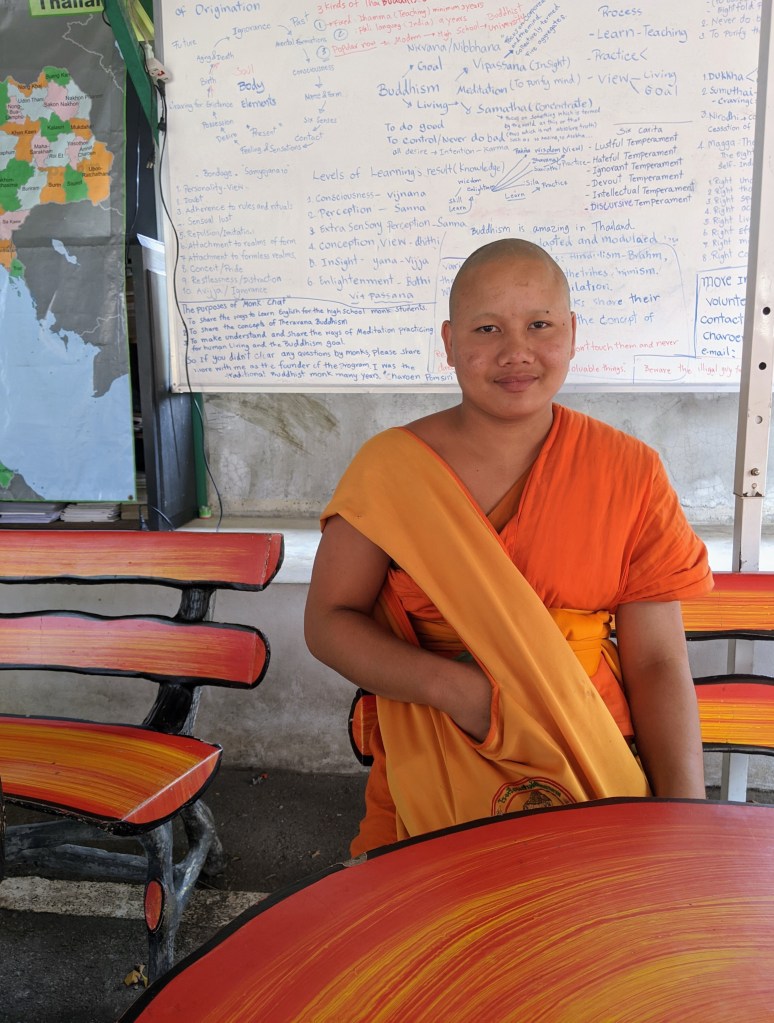
Chedi Luang is also known for its “monk chats,” which it hosts daily until 5 pm. The chats are a chance for tourists to learn a bit more about Buddhism and the Sangha (the monastic community). They’re also a chance for the young novices and monks to learn and practice their English. When we found the monk chat tables, gathered under a large tarp tent, only one monk was sitting at them. Next to him was a mid-50s-ish-looking Thai man wearing a polo shirt that said “Big Boss” on the sleeve. An Australian couple was speaking with the monk, teaching him how to say water. Big Boss, however, was doing most of the talking. We joined them and were handed a sheet of paper that listed some temples where you could learn meditation and a few questions you might want to ask. I started with what I thought was the most interesting: “is the Buddha a god?”
Now, I knew the answer to this question– at least, in theory. But religious scholars and religious laypeople often don’t have the same answers to questions about their religions of choice. Ask a devout Catholic if God is Jesus, and you might get a simple “no”. Ask a Catholic scholar and you’ll get a pretty academic discussion of the Holy Trinity. It was my understanding that scholars of Buddhism might have a different answer to the question of whether the Buddha was a god than many of the Buddhists I had met here. Big Boss didn’t put the question to the monk, which was all the same to us because he looked about 14 and didn’t know how to say water in English, much less discuss the Godhead. “In all forms of Buddhism, there is no God. I respect other religions, but to me, this is more reasonable. Buddhism is very reasonable religion,” Big Boss said. Aaron and I nodded our agreement. This guy was speaking our language, in more ways than one. “But,” Big Boss continued, “Thailand is very old country. First, we were animists. Then, we were Hindu. Some people, they still have aspects of these religions in Buddhism. Some people treat Buddha like god.”
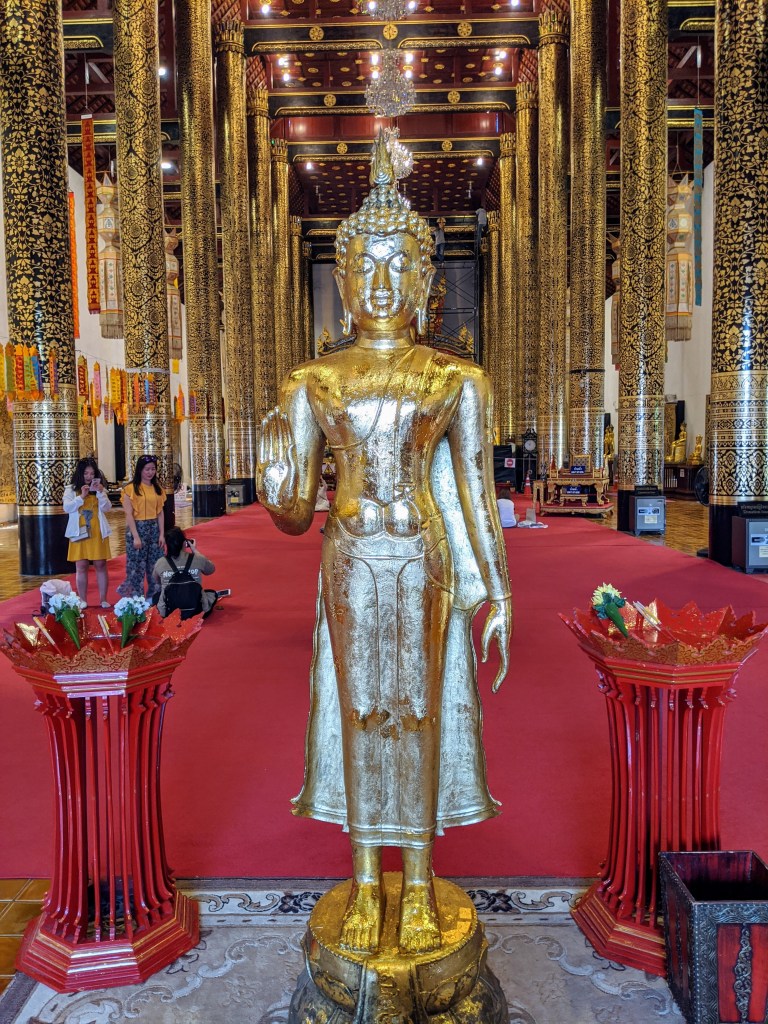
We passed a half-hour or so with Big Boss– who we found out was not currently a monk, but had previously been one. He started the monk chat at Wat Chedi Luang 15 years ago. The actual monk left shortly after we arrived, but Big Boss was the one answering our questions anyway. We asked about how we, as western Buddhists, could be respectful without seeming performative. We asked about the stages of meditation in Theravada, and about how meditation varies across the different sects. We asked about Theravada’s ban on female monks, why the monks wore orange robes, what the symbolic meaning of the incense and flowers were. Another American couple who arrived after us asked why some statues show the Buddha sitting, others standing, and others reclining. “Because, as I was just telling them” said Big Boss, gesturing toward us, “Buddha was a man.” We couldn’t always follow his English, but it was, overall, a very rewarding chat– even if it was not, technically, a “monk chat.”
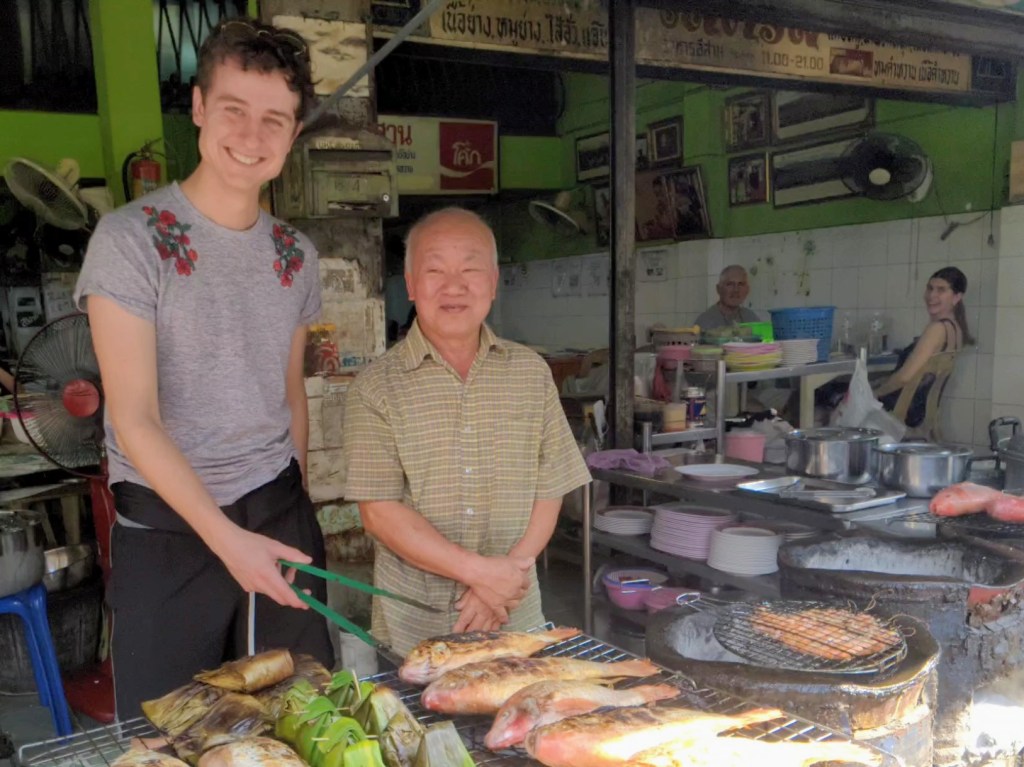
For lunch, we decided our stomachs were ready for some authentic Thai again. We ate at a place across from our guesthouse called Lert Ros. We had walked past it many times; it’s coal barbecues displayed red-scaled whole fish that smelled divine. Moi and Arm had recommended it, as had our guidebook. All of the above had mentioned the barbecued red tilapia, so we got that and some papaya salad. And then we got it again, just to be sure it was consistently as good as the first time. Aaron, who is still trying to force himself to like fish and who gets very icked out by fish bones and skin, wanted to order two of these whole fish. That alone should tell you how good it was. It wasn’t spiced or marinated, just stuffed with some alliums. But the meat was juicy and fresh-tasting and a little bit sweet.
Tomorrow, we head to Laos, but to prepare for another day of travel, we would need another massage first. Right? Only makes sense. I’ll tell you about it tomorrow.
 Hanoimoon