In order to get to Siem Reap from Ho Chi Minh City, Aaron and I had to take two seven-hour buses with an overnight layover in Phnom Penh. These buses had pretty inadequate air conditioning, so when we finally arrived, we were overheated and exhausted. Fortunately, the hostel that greeted us, once the tuk-tuk drove us from the bus station, was clean, comfortable, and well-appointed. Onederz Hostel is one of the best hostels in the world, and consistently makes every flashpacker list. It has everything: two outdoor pools, a bar, a cafe, a small restaurant, movie night, tours, and tons of other little perks and activities. Most importantly, it’s air-conditioned, which is never a guarantee in Cambodia. It’s also packed with young, hip travellers (like yours truly?). It seemed like a fun and happenin’ place to set up base.
Our first meal in Siem Reap was a short walk from Onederz, but even a short walk after dark is enough to get you sweating here. And after being on that hot bus all day, I wasn’t doing well. Mamma Shop was a cute little Italian restaurant, but it was also, unfortunately, full. The host told us we would be seated very shortly, though, so we decided to wait in the miserable heat. We weren’t even sure we would be seated inside once we did get a table, so we were mentally preparing ourselves to continue to be this hot. Then, a table freed up inside. The room was covered with signs about child safety. Child trafficking is a huge issue here, and the tourism industry can be a major contributor to it. Childsafe is an international organization that (in addition to a lot of other projects) gives out posters to hotspots educating tourists about the problem. “Children aren’t tourist attractions,” read one poster, which further explained that the majority of “orphans” aren’t actually orphaned and advised tourists not to visit orphanages. Another counter-intuitive poster explained that giving money to panhandling children contributes to child slavery, and offered alternative ways to help. It felt good dining in a place that was so earnestly trying to contribute to a greater good. We had some handmade blue cheese gnocchi (amazing!) and a stuffed flatbread with smoked mozzarella and mushrooms (less so), then we went home and collapsed.
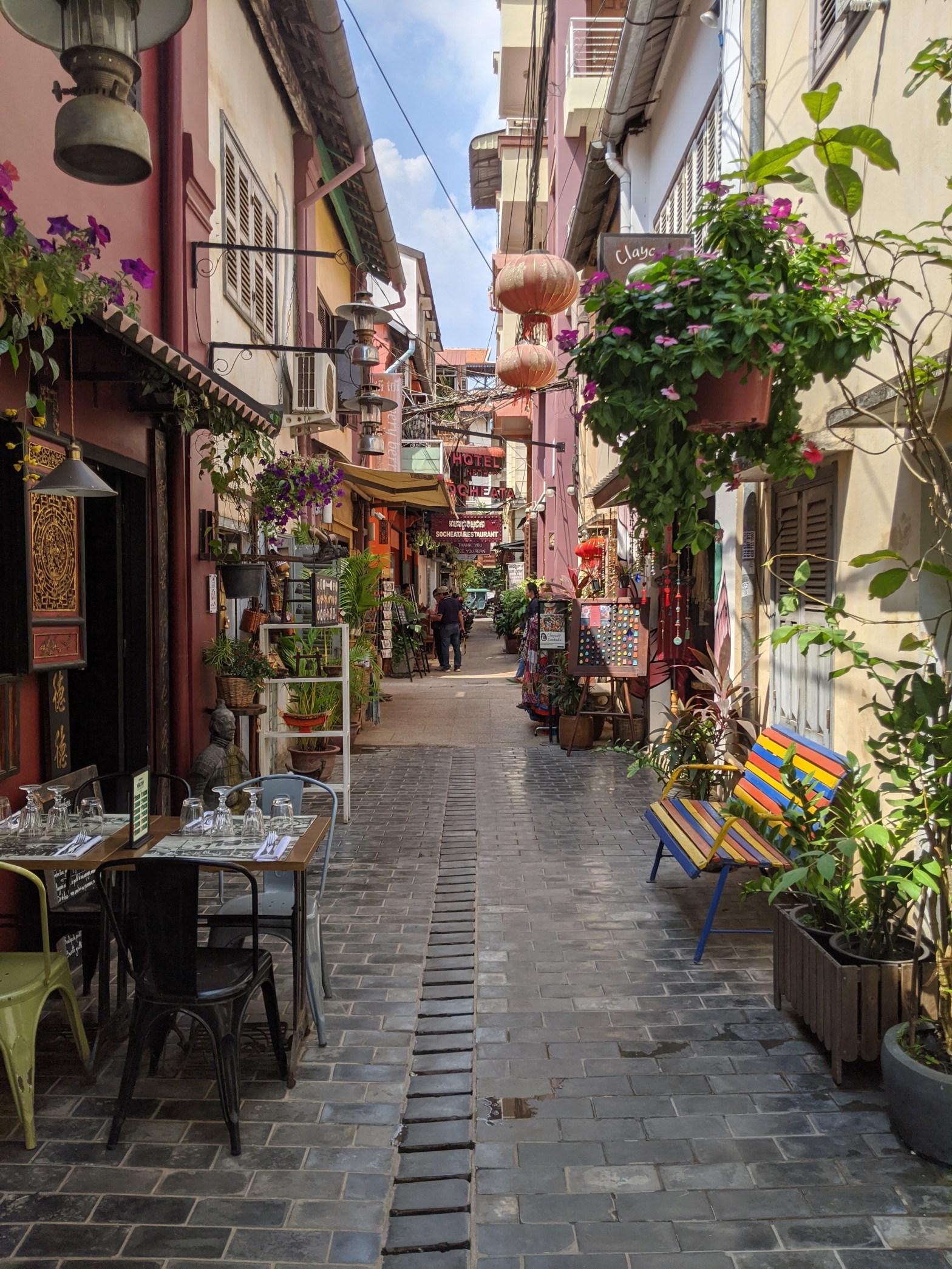
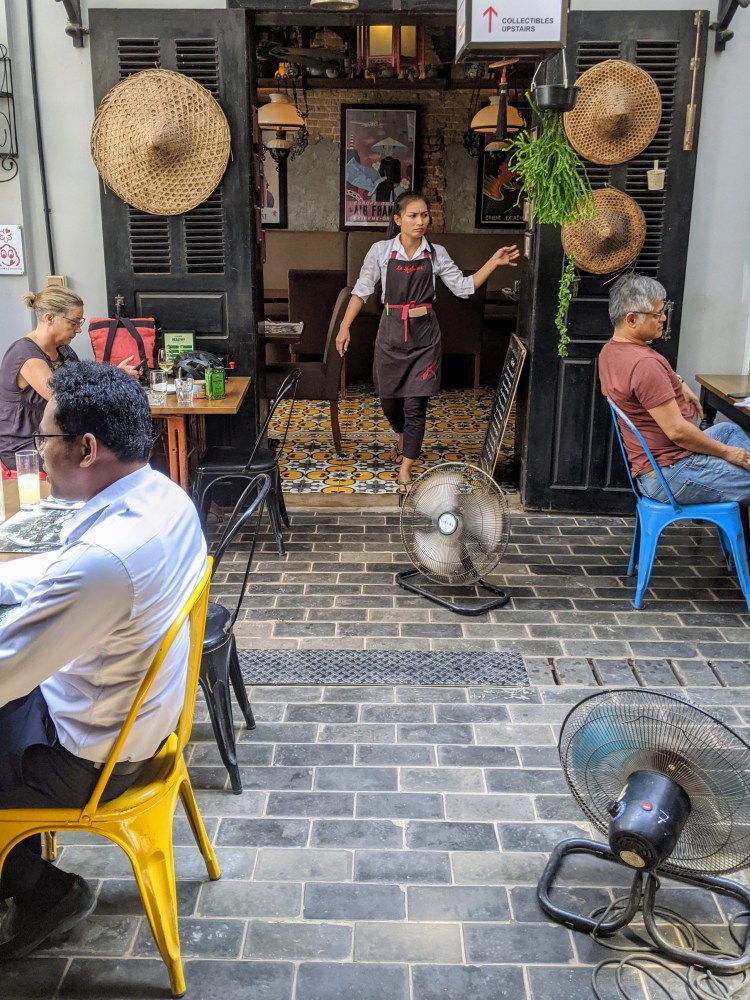
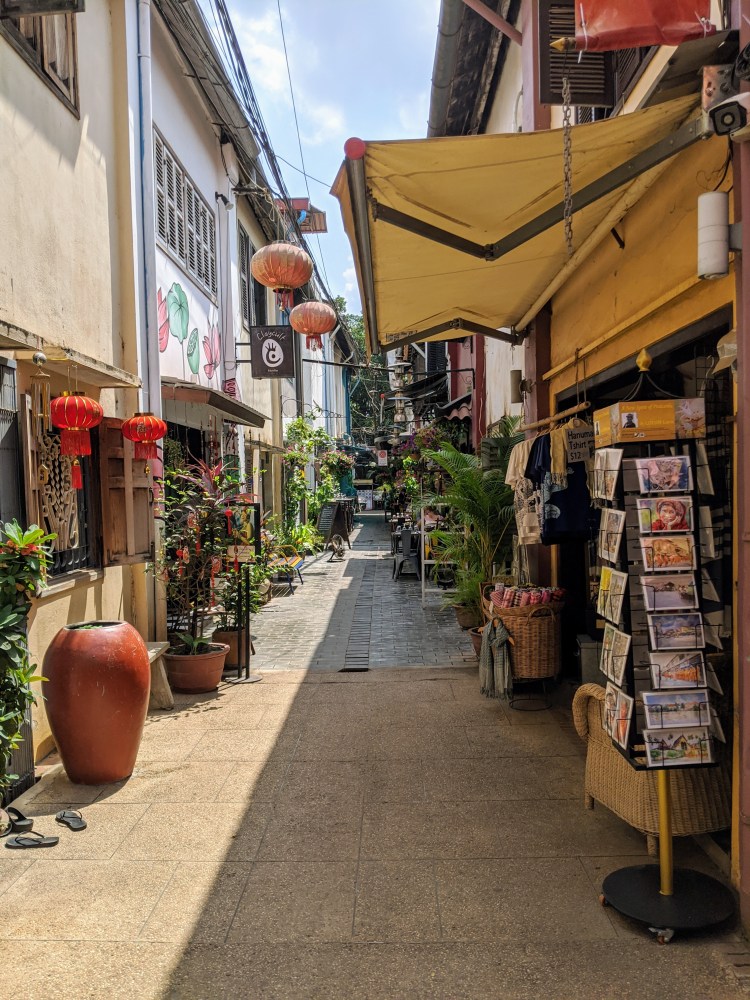
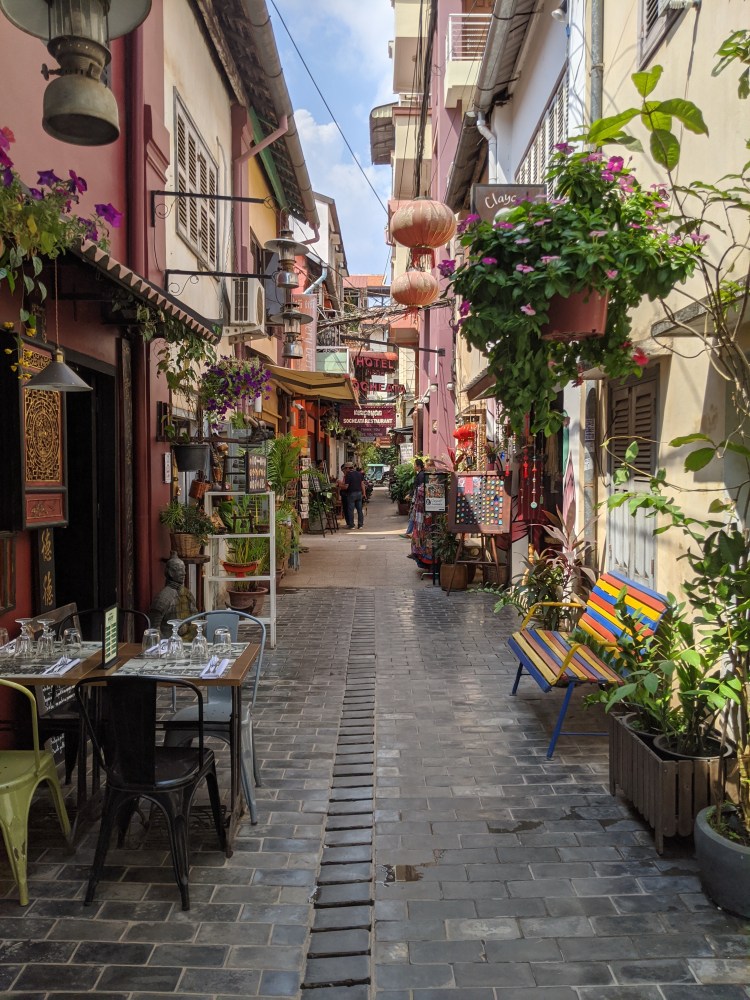
The next morning started with some very decent hostel lattes, then a walk down an adorable, very-French-looking alleyway to our chosen lunch spot, Le Malraux. The alleyway was the perfect setting for this international cafe. We chose a spot inside, but, like most places here, it wasn’t air-conditioned. The food made up for this oversight, though: goat cheese croutons in a salad with mustard vinaigrette and salmon cooked perfectly en papillote (in this case, banana leaves). I also had a four-dollar bottle of sparkling water, which Aaron gave me no end of grief about. Four dollars is a lot here. You can get a beer for 50 cents. Paying four dollars for a sparkling water here would be like paying twenty dollars for it in the US. I was thirsty, though, and I knew we would somehow manage to weather that financial storm. When it came time to pay, though, our card was denied. This has happened every single time we have tried to use this card. After we lost our first credit card, we had Visa send us an emergency card. They sent us a card 1) with no chip, 2) that expires in one month, and 3) that apparently gets flagged every time you use it. I have spent more time on the phone with Visa than I have with both of our parents combined. Sigh.
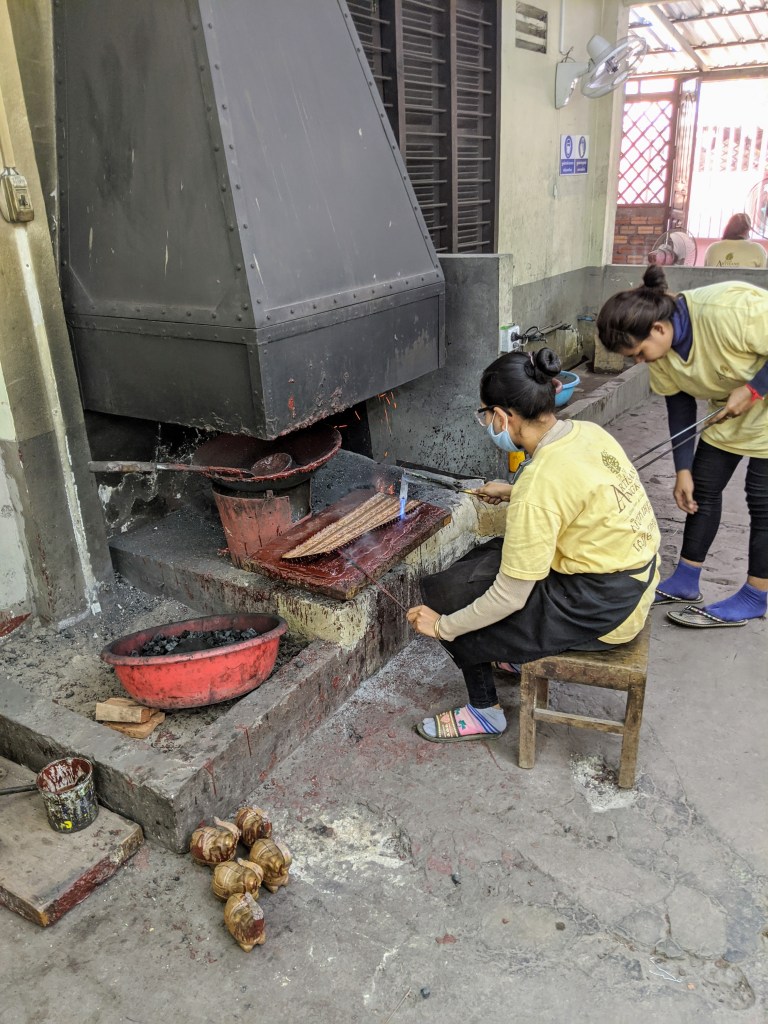
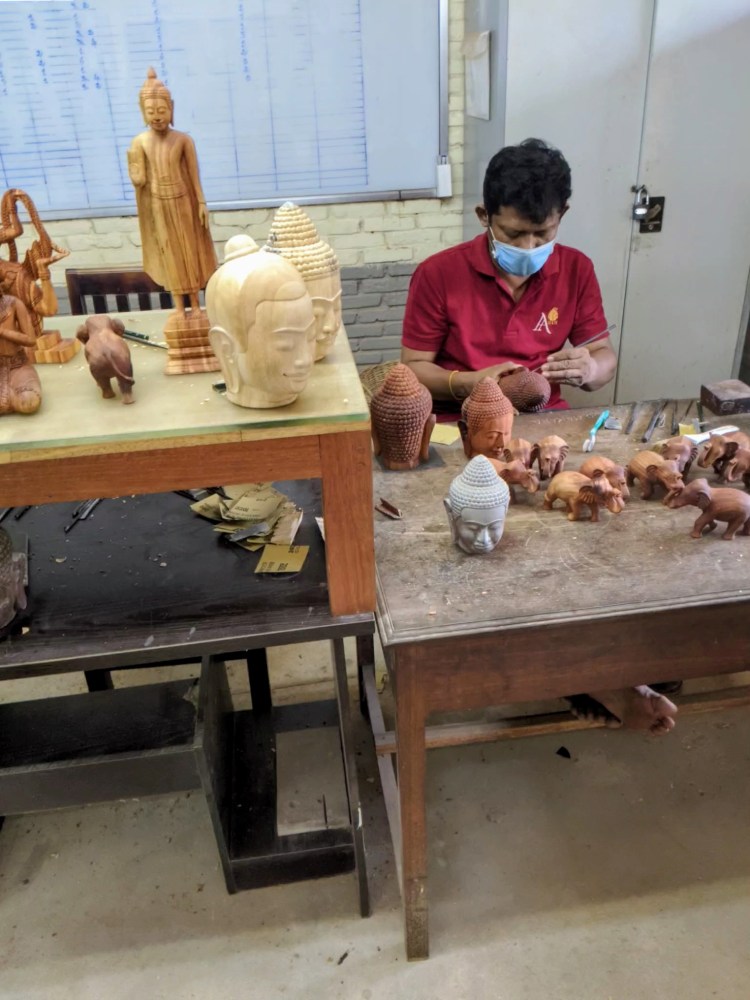
After lunch, we strolled over to Artisans Angkor, a shop and several studios run by an organization that teaches locals traditional craft techniques. We were given a free tour of the studios, and were awed by the skill and diligence of these master craftsmen. We saw woodcarvers freeing elephants from their rosewood cocoons, and silkweavers dying ikat designs onto thread and then using a traditional loom to weave that thread into a gorgeous scarf. We saw painters smearing acrylic banyan trees onto delicate silk canvasses. We saw wooden boxes leaved with gold and lacquered with black borders. It was a really rewarding and interesting tour, but it was also hot as hell. The tour ended in the shop where all those goods we saw being made were sold. The shop was indulgently frigid–a clever ploy to keep you shopping, I think. But we’re the kind of people who complain about paying four dollars for a water bottle, so it didn’t work on us. Besides, we had two pools to return to.
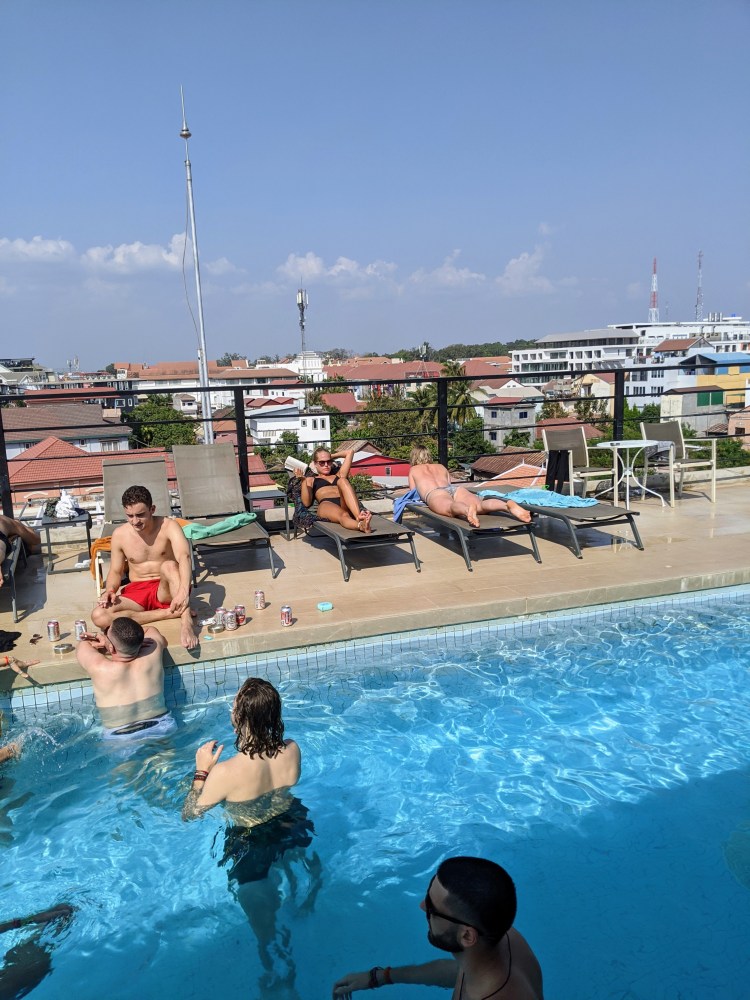
The rooftop of Onederz is six floors up, and there’s no elevator. It wasn’t until we got up there that we realized the only bar was on the bottom floor. But Aaron was a good sport and made the hike a second time in order to get us a six pack. We cooled off with our cheap Cambodian beers in the rooftop pool and decided where to go to dinner.
 Hanoimoon