When we finally made it back from our temple tour, I was suffering from heat exhaustion. I could feel my pulse in my forehead, and each thump was agony. My face was red–not pink, red. I was sweaty and gross and very unhappy. I felt nauseated and tired and sick. So, you can perhaps understand why I chose to sit it out for a day. By the next morning, I was definitely feeling better, but I was still coming off of being sick from the week before. I still had the cough. And on top of that I was dehydrated and not 100% recovered from walking around a temple in the late afternoon sun for hours. Day three was, essentially, spent in bed resting.
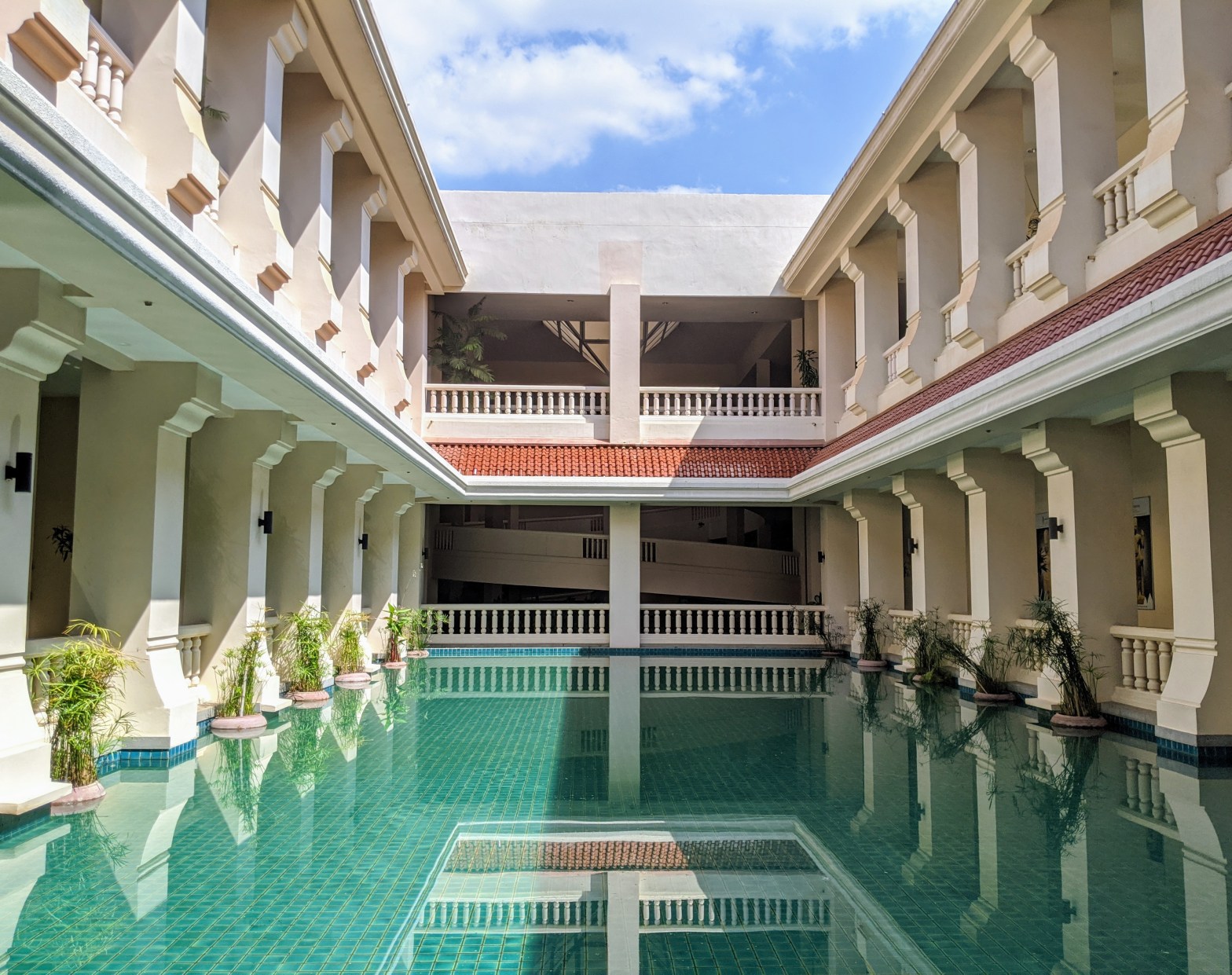
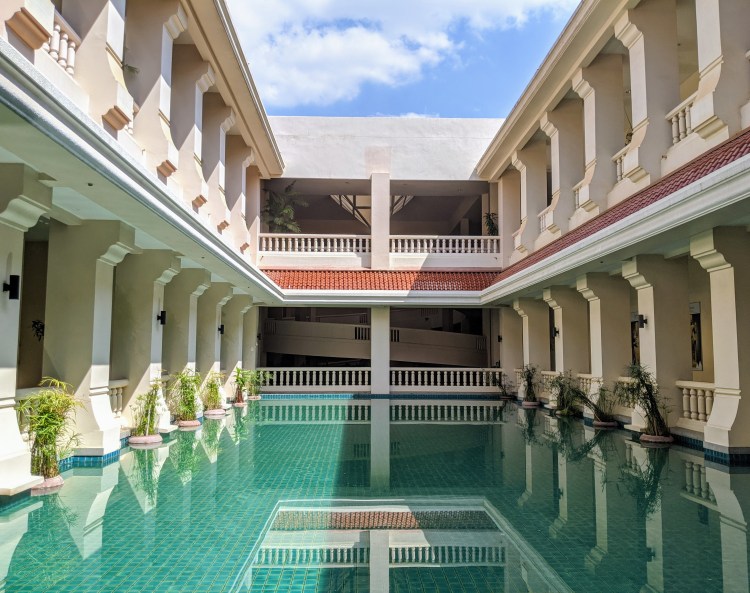
I did manage to make it to brunch, at least, at Sister Srei. It ended up being one of the best meals we’ve had here: eggs benedict and potato rosti. But after that, I decided that I needed A/C on me for a full day. Aaron joined me when he felt like it, and went out to the pool or to get coffee when he didn’t. He brought me food, because he is an actual angel. And by day four, I felt good as new.
We kicked it off with breakfast at Little Red Fox. It’s a small, two-story cafe that’s known for its specialty coffee drinks and bagels, so we got both. Aaron had a vegan, cinnamon-coconut mocha drink and I went with a lemongrass and ginger coffee. Both were addictively delicious. As were our bagels, which we shared. The bacon-and-egg bagel was salty and filling, but the asparagus-and-snap-pea bagel with pesto cream cheese was on another level. Fresh and herb-y, it was the sort of bagel you appreciate in a hot, hot, hot place like Siem Reap.
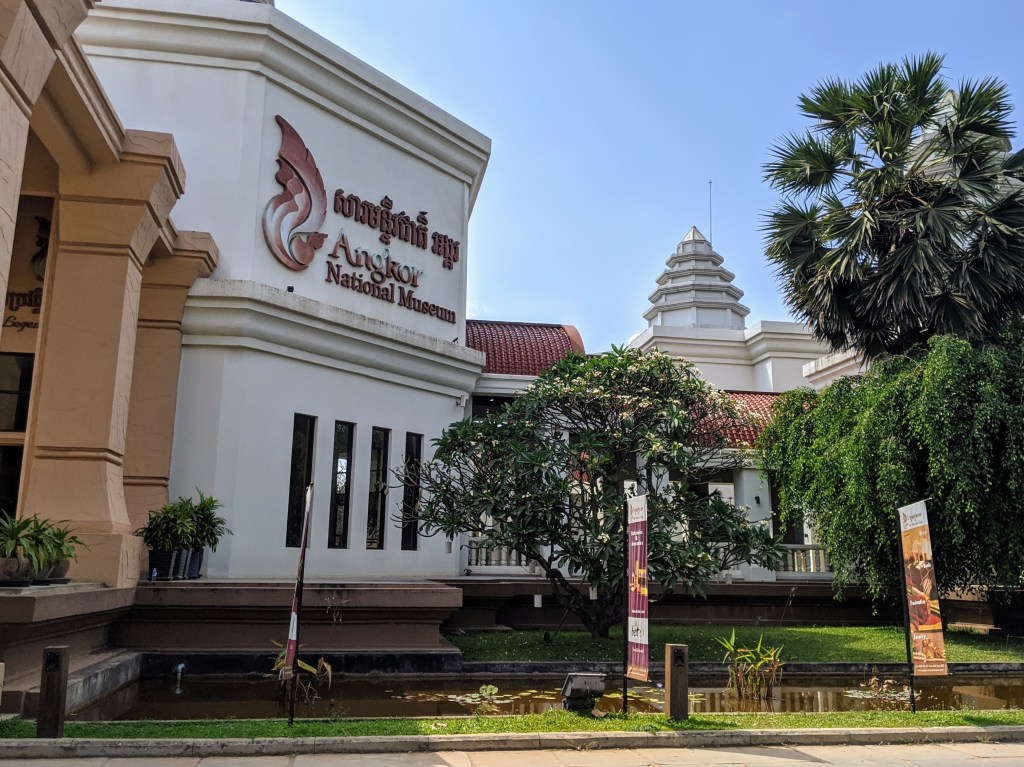
After breakfast, we Grabbed (capitalized because we used Grab, an Uber-like Asian app) a tuk-tuk to the Angkor National Museum. We watched a largely-uninformative introductory video. Then, we were let loose on the museum, which spans three different floors and several galleries. The first was also the best: the Thousand Buddha Gallery. It contains one thousand ancient Buddha statues. Or at least, I think it does, given the name; I didn’t actually count them. We took our time choosing our favorites from among our thousand (probably) options, and learned about the different types of statue. The majority of Buddha statues can be classified by his bodily position and hand gestures. There are sitting Buddhas, which are usually used to depict moments of meditation or teaching (hands resting palm up=meditation, hand touching earth or forming a circle with the fingers=teaching). There are standing Buddhas, which are usually depicted with their palm out, indicating a warding off of suffering or fear. And there are Buddhas in repose. These are rarest, and depict the Buddha’s death. Most of the seated Buddhas have a many-headed, hooded serpent cradling the Buddha. This is Mucalinda, king of the naga, who sheltered the Buddha from the elements during his achievement of enlightenment. Serpents have a completely different role in Hinduism and Buddhism than in Christianity. Every temple we have visited has had naga guarding its entrance, for example.
The Thousand Buddha Gallery led to a few galleries detailing the Khmer empire’s history, religious beliefs, and kings. There were also galleries devoted to Angkor Wat, Angkor Thom, steles, and the apsara (beautiful, heavenly, dancing nymphs who adorn the Angkor temples.) We strolled through all of them, stopping every now and then to pick a favorite or read the plaques. I learned a lot about the Hindu pantheon and iconography just from looking at all the statues. There’s Vishnu, with his four arms, each holding a different symbol of his Godhead. There’s Shiva, with his five faces and bow. And there’s the elephant-headed Ganesha, the monkey-king Hanuman, and the eagle-faced Garuda. All of these icons make several appearances in the temples, as well. Aaron and I resolved to do some Wikipedia scanning, when we got the chance, to learn more.
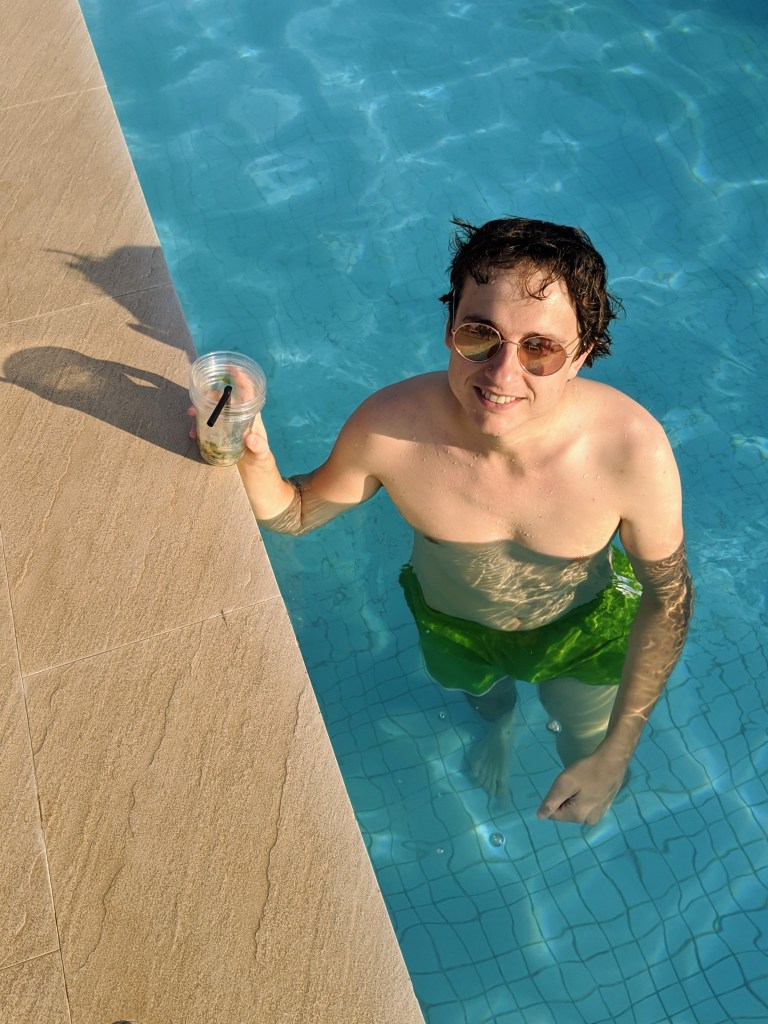
We ended our afternoon with a dip in the rooftop pool and a can of cold beer in our hands.
 Hanoimoon