Aaron and I were feeling a bit lazy this night. We’d spent all afternoon floating in the pool, after our visit to Apopo, and we weren’t about to change our pace. We walked two buildings down from our hostel for some very decent sushi at Shin Sushi. Shin is a thin, long restaurant, and from what I could tell, the only seating was at the bar. So, I ordered a wasabi martini, because when in Rome… Asian music videos were playing on a TV behind the bar, and I was entranced. Aaron kept trying to talk to me, and I’d get distracted by an extremely ethnically-ambiguous man in a polyester shirt half-rapping and dancing at me. To be honest, I was probably a little over-served. That wasabi martini was only the latest in a series of drinks that started at the pool. I confessed to Aaron that I was feeling a bit tipsy, and, like the bad influence that he is, he suggested another bar.
We strolled through the night market on our way to Asana Wooden House. It was the tamest night market we’ve been to, but most of the stalls were more like shops than actual street stalls. It reminded me of the French Quarter in New Orleans: some authenticity mixed with a lot of tourists and tourist-centered businesses. In fact, Siem Reap has reminded me often of New Orleans. It’s got a very hot, very humid climate, its people are fun and friendly, it’s maintained its charm despite the tourists, and it’s heavily French-influenced. Well, all that and there’s a big drinking culture.
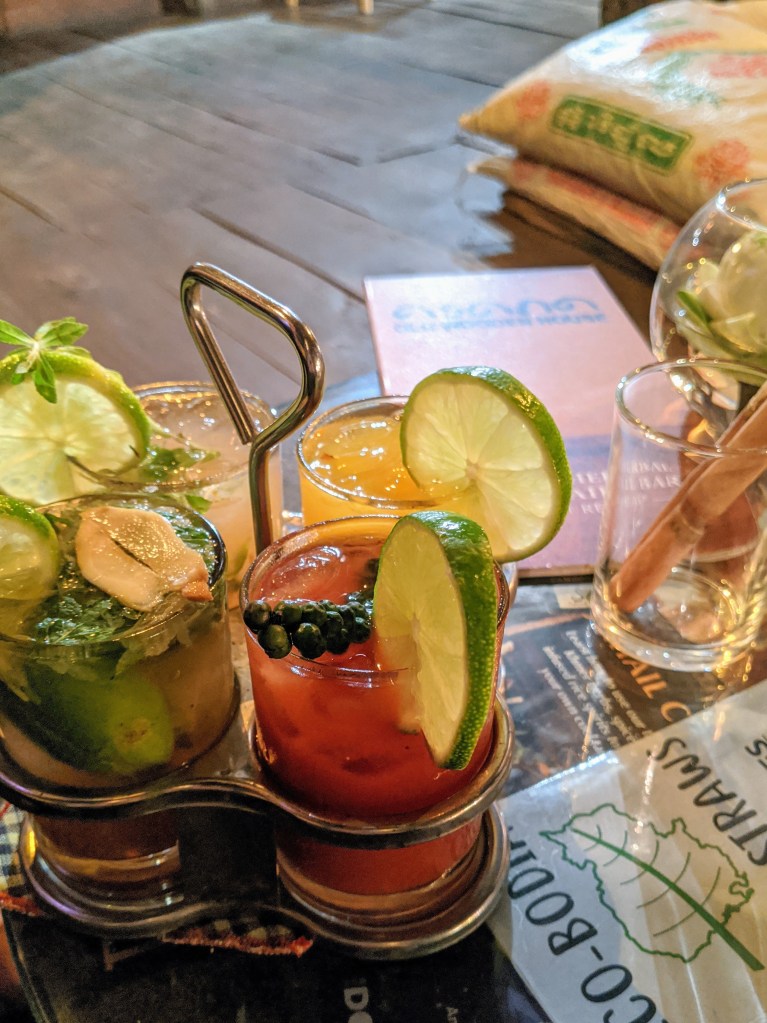
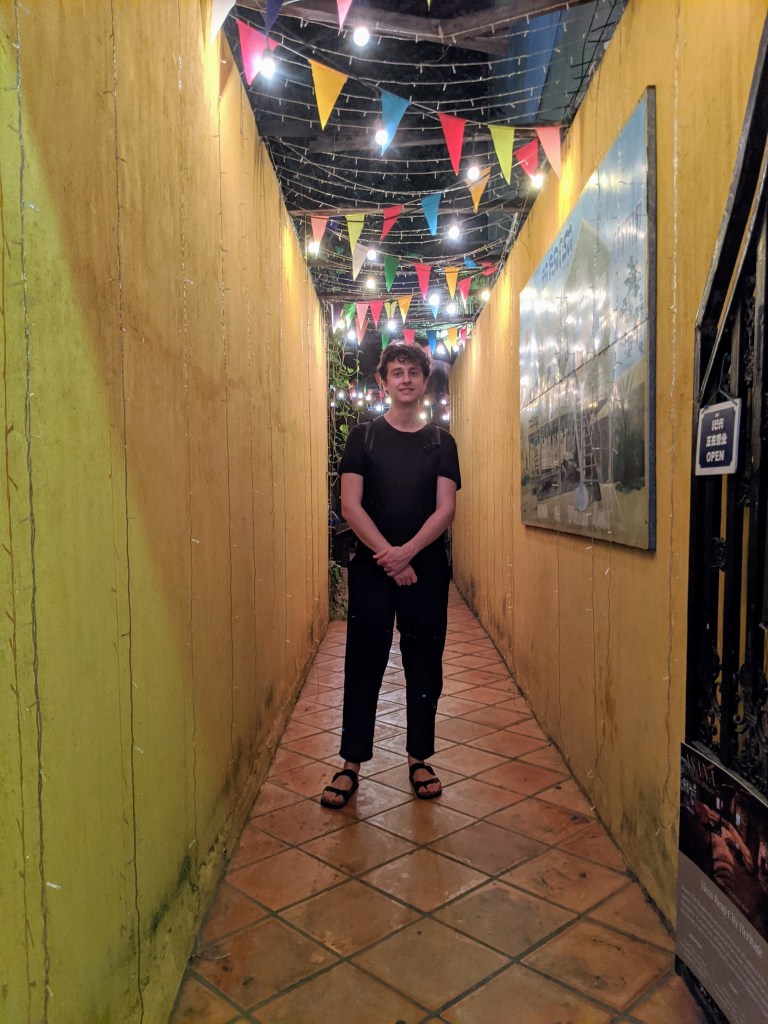
Asana Wooden House is aptly named. It’s a traditional wooden house, with both an upstairs and downstairs bar. Aaron and I found a cozy corner upstairs, near a window opening. Like many places here, Asana didn’t have air conditioning. The aesthetic of the traditional wooden house added a lot to the atmosphere for me (the tipsiness didn’t hurt). Aaron and I ordered a Khmer Cocktail Sampler, which included four different cocktails with a Cambodian twist (think bloody mary with kampot pepper). But, they were half the size of normal cocktails, and we split it. Really, if you think about it, we only had one more cocktail each… They were delicious. We let loose in a way we haven’t done in a while, having silly, half-drunk conversations about knowledge, philosophy, and books we were reading (file under “you know you’re a nerd when”). It was a lovely evening in a lovely place with a lovely person.
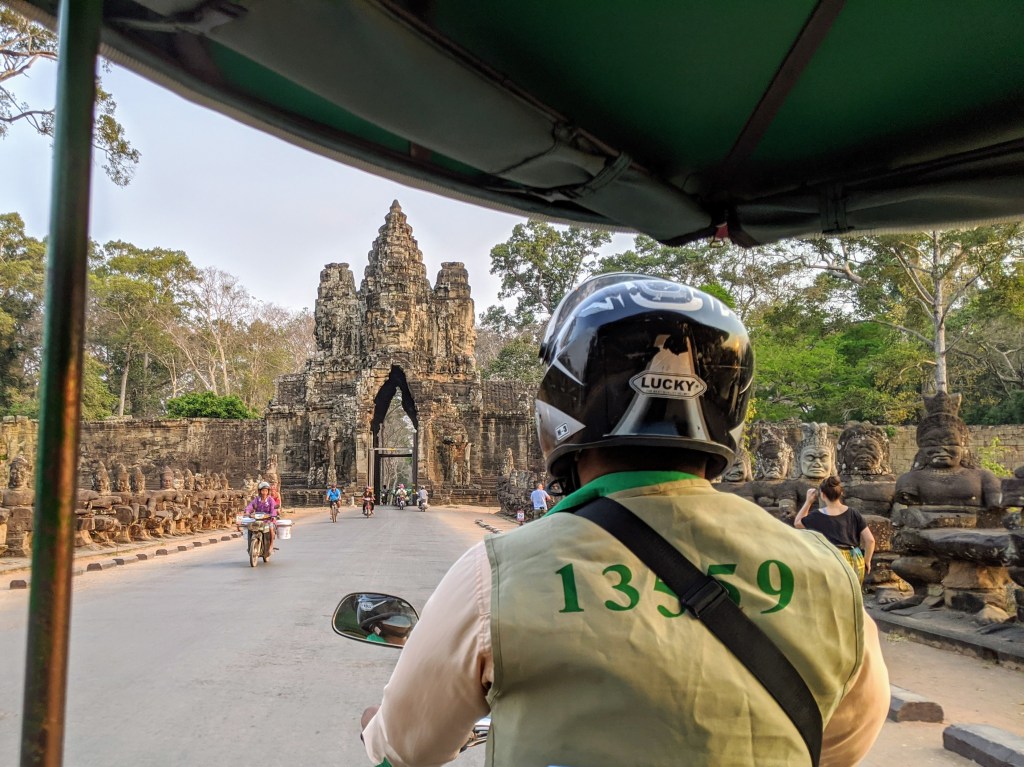
We arranged to have a tuk-tuk pick us up at 6:30 AM. Fortunately, despite the fact that it had been a bacchanalian night, it had also been an early one. Not to say we got a full night’s sleep or anything, but we were both able to marginally function. We needed to wake early, because we had a full morning of temple-touring before us, and we wanted to be done by the time the temperature started breaking 90 degrees.
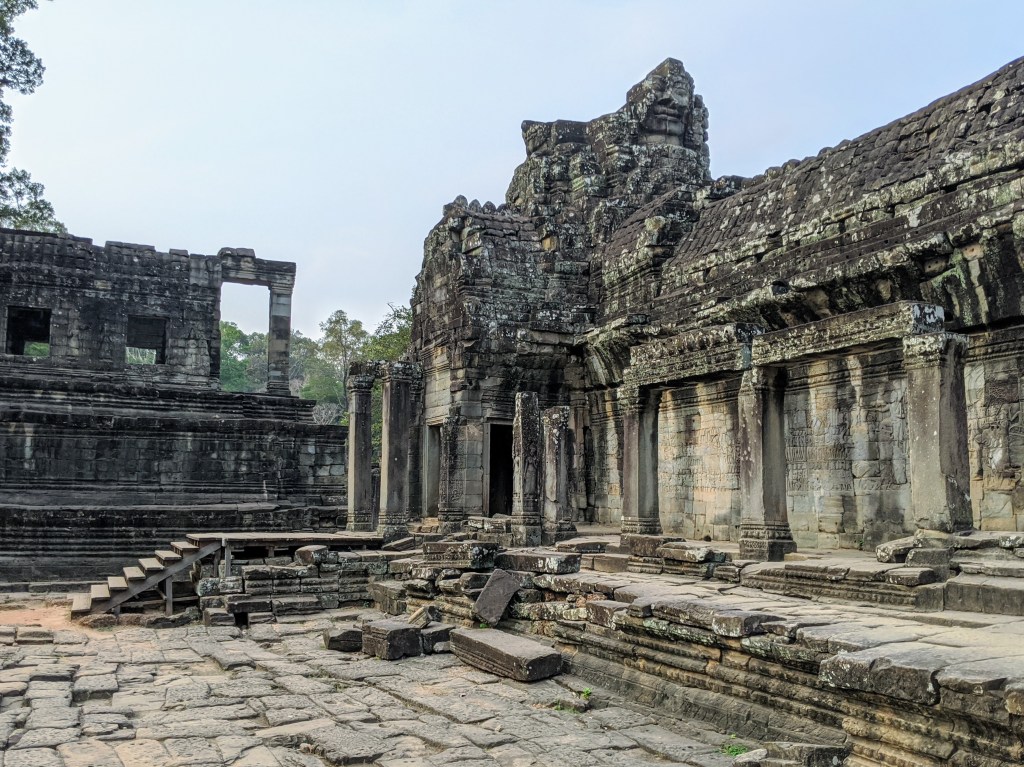
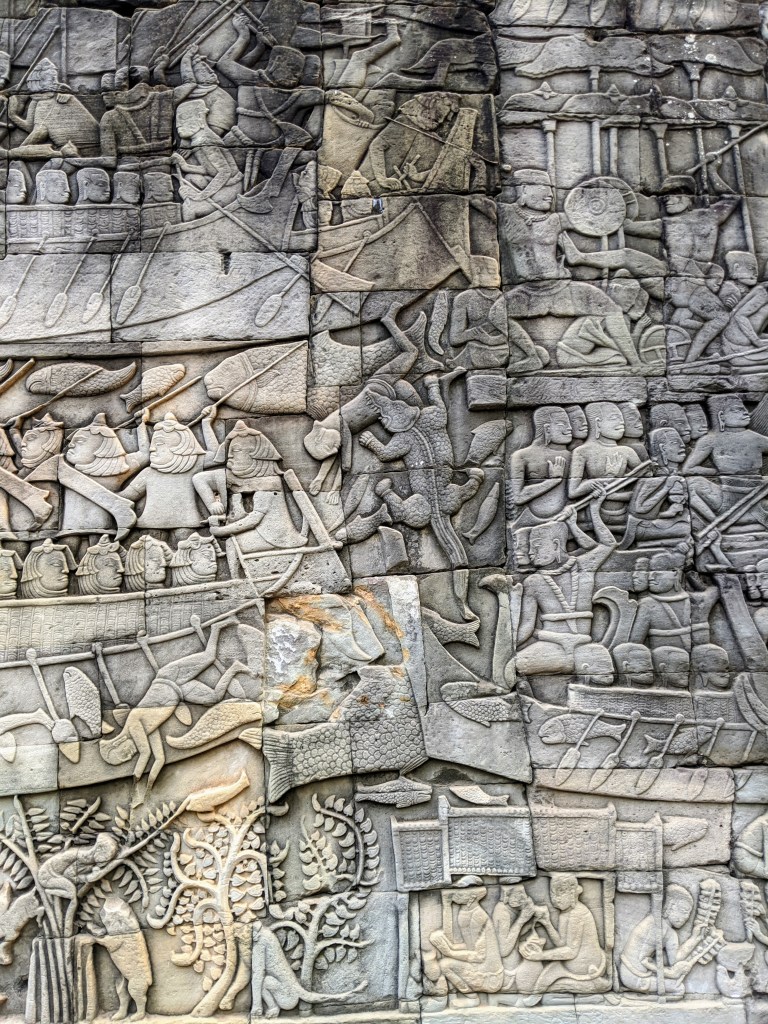
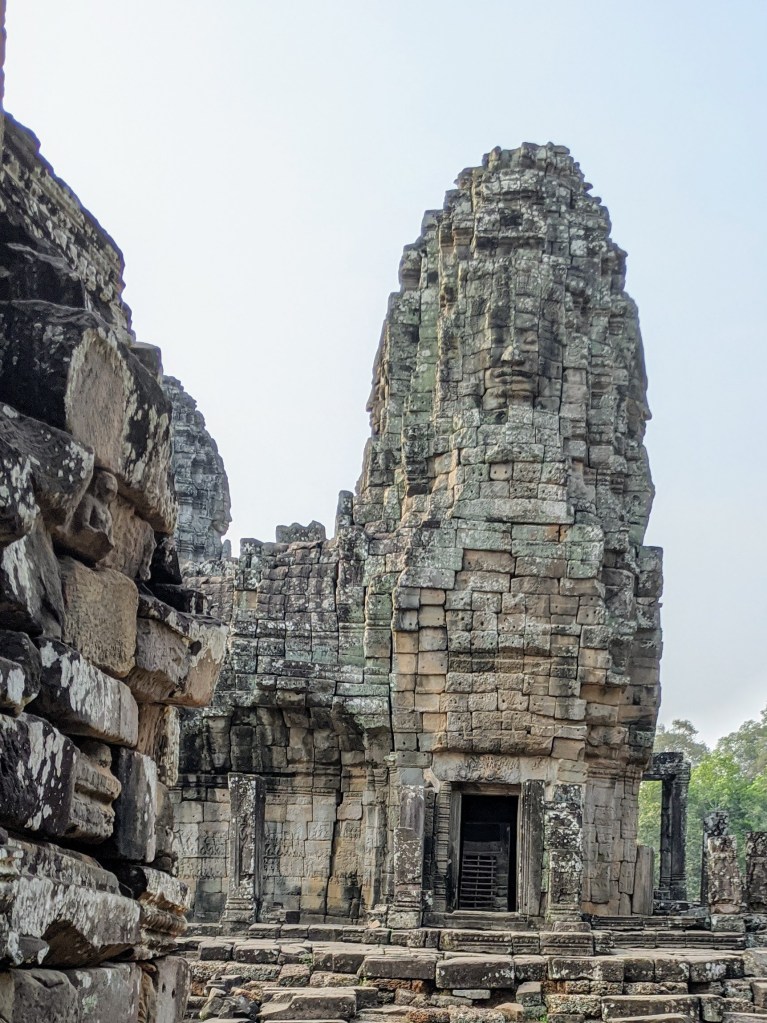
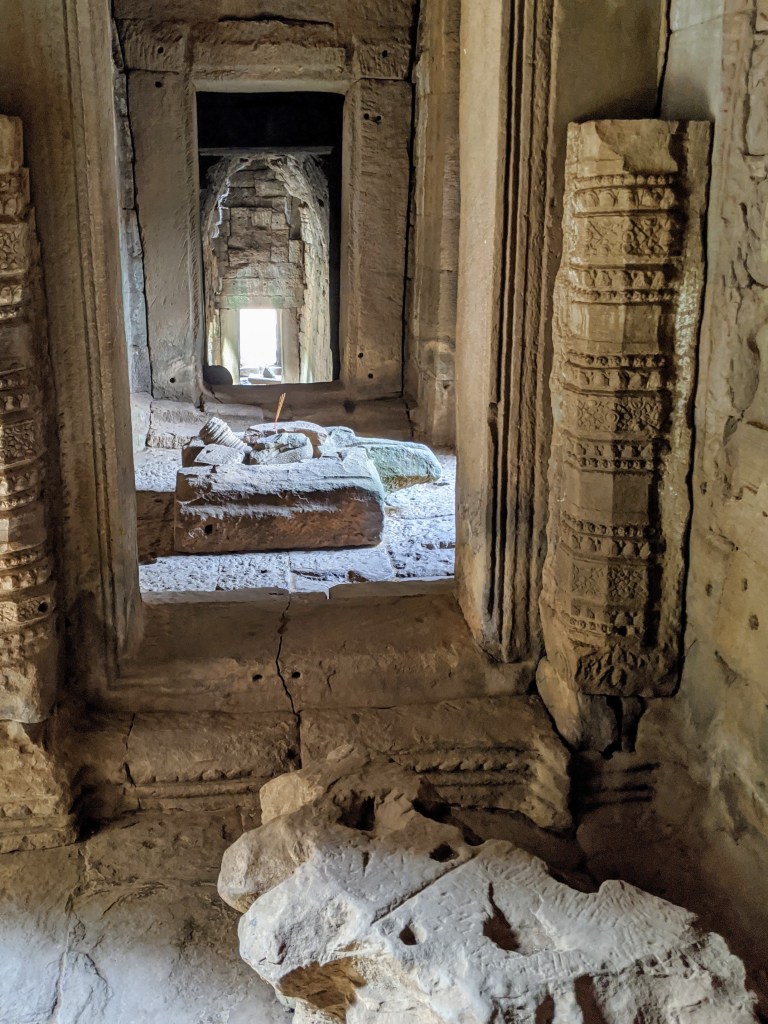
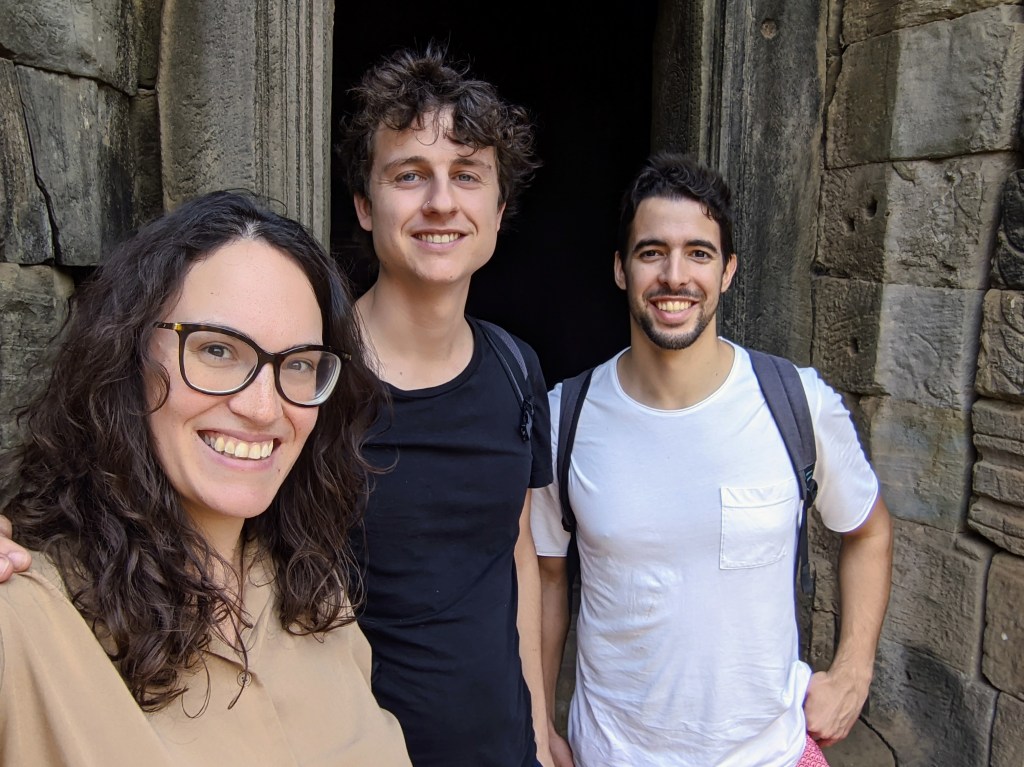
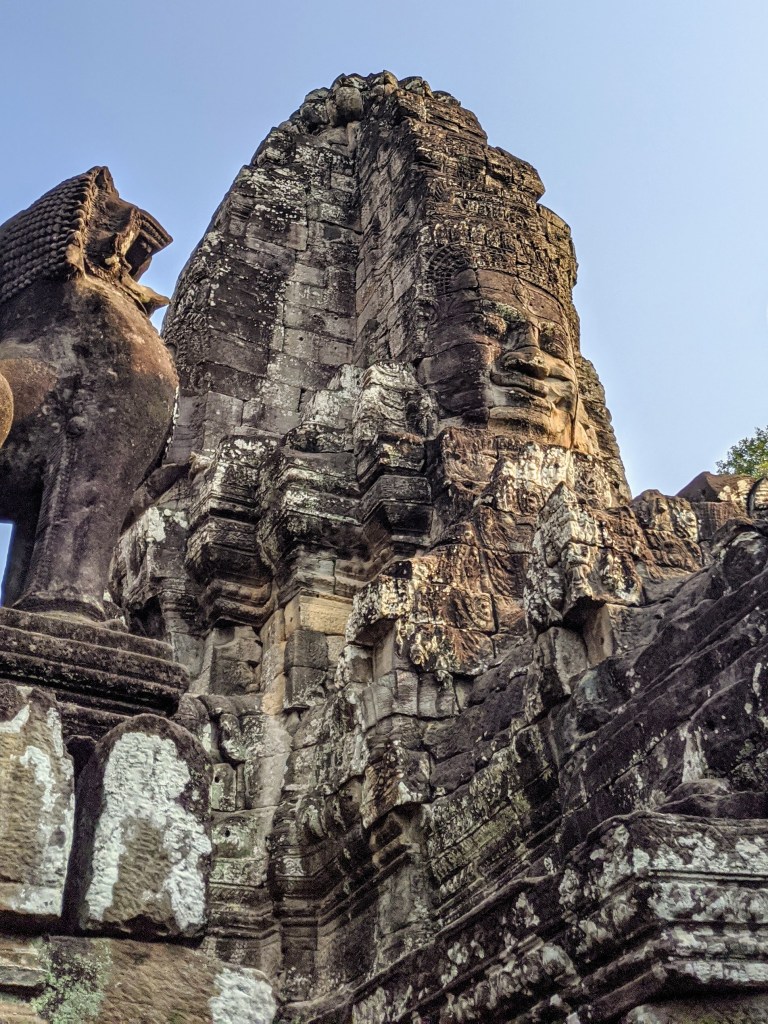
First up was Bayon, the second-most famous of Angkor’s temples. Bayon is also called the temple of faces, because it has over two hundred enormous countenances carved into its rocks, towering over its visitors. I was struck by their peaceful smiles, an odd expression for ancient carvings. Very few sculptures, carvings, statues, etc. are smiling. It was a bit unnerving. Aaron and I circled Bayon’s outer walls first, examining its bas-relief scenes. I read the short descriptions our guidebook provided for each, and we made a game of trying to find the figures the less-than-helpful entries pointed to. Often, along the way, we’d find something surprising that the guidebook was mum about. Some of the panels were more aesthetically impressive than others, but all of the carvings were marvels. Halfway through our self-guided tour of the bas-reliefs of Bayon, a young Portuguese dude approached us. He had overheard me reading the guidebook and wanted to know if he could tag along and hear the descriptions, too. The three of us found, in no particular order: a crocodile eating a man, a woman giving birth, a man lifting three dwarfs, a shrimp, “legions of concubines” (our guidebook’s wording), and a few Khmer soldiers getting drunk after a military loss. Then, we made our way to the main structure. The temple itself was less impressive, with many of its halls blocked off by fallen stones or “No Entry” signs, but the stones were cool and the structure shaded us.
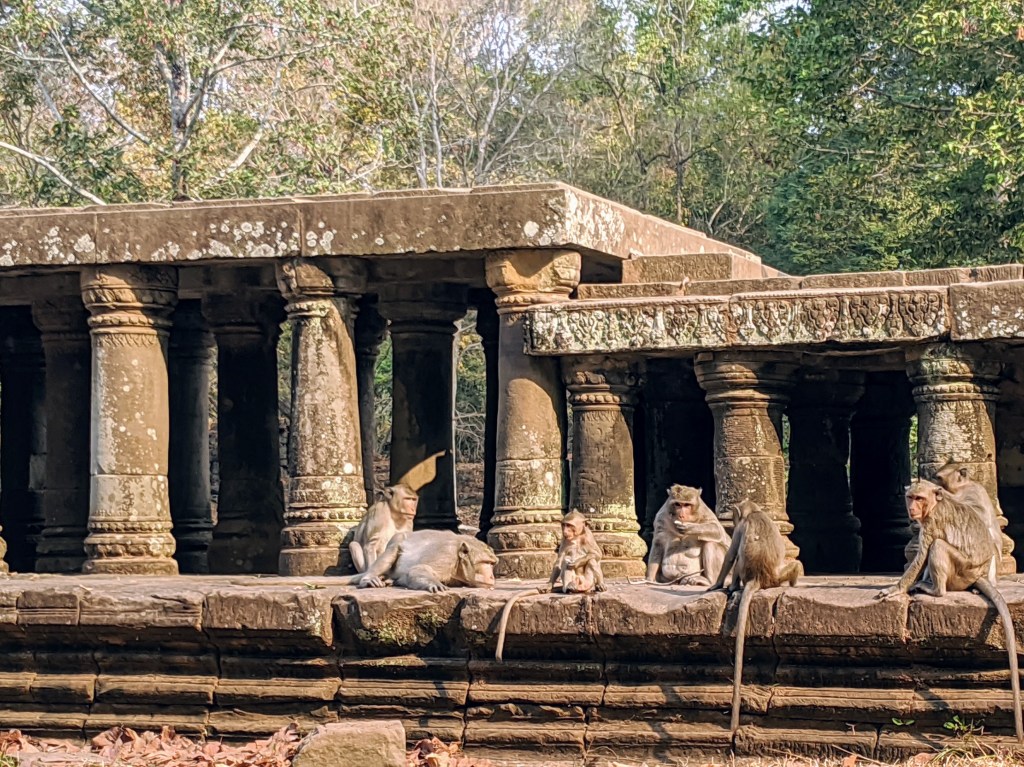
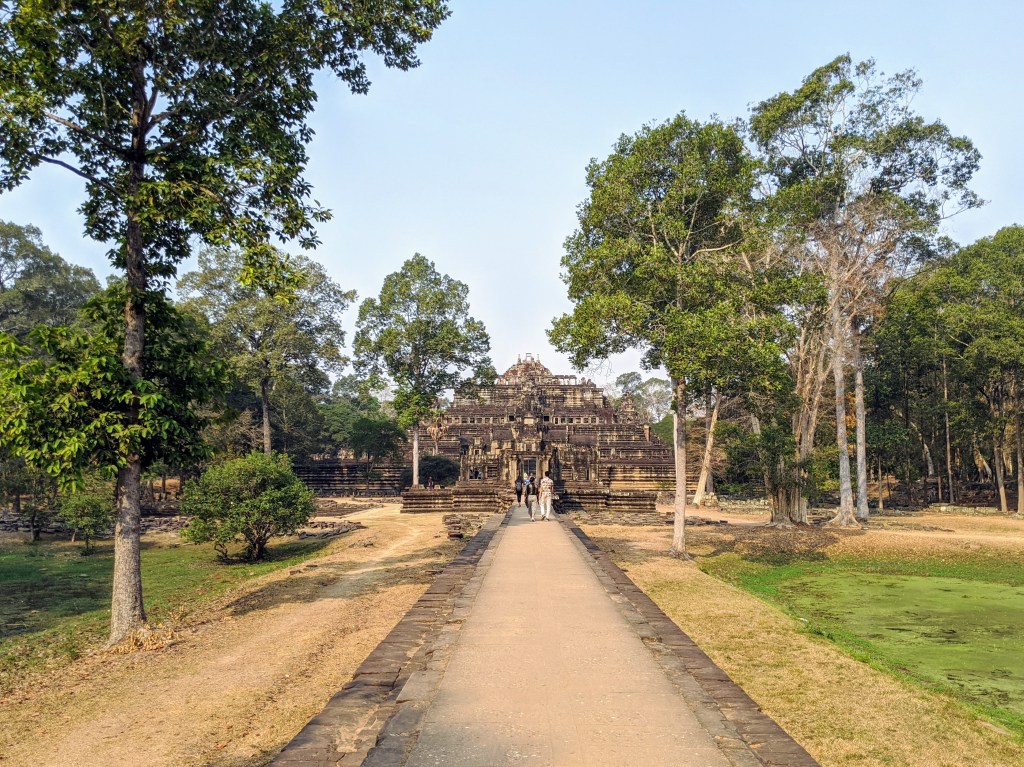
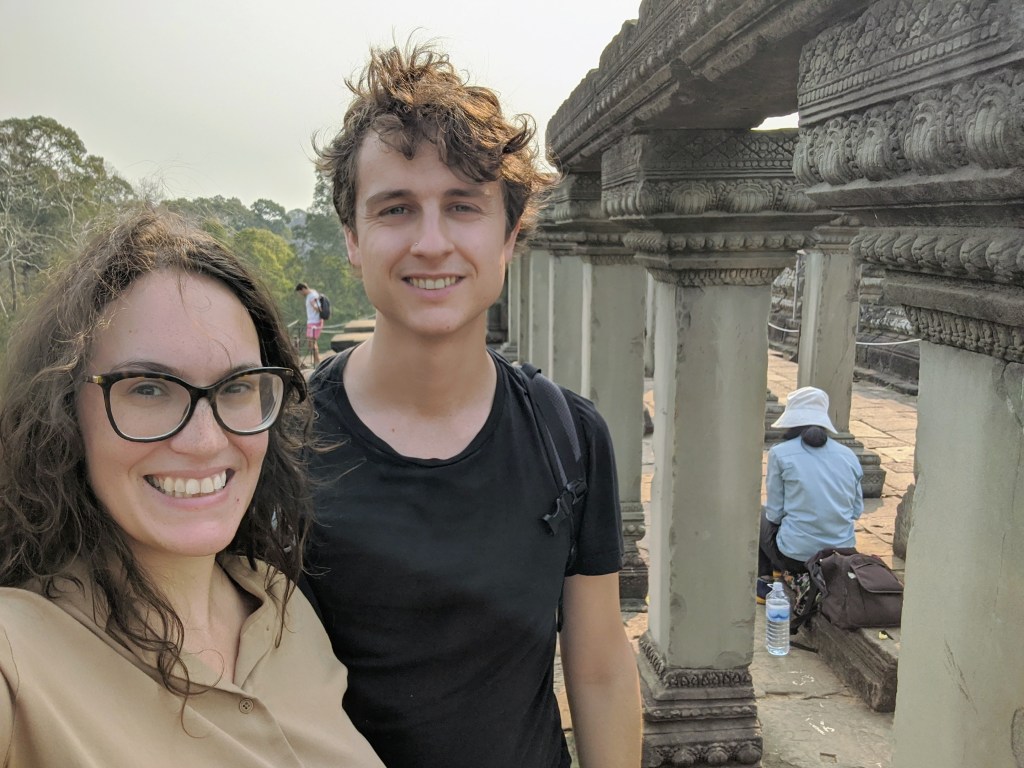
Just up the road from Bayon, still in the temple complex of Angkor Thom, lies Baphuon. Baphuon was partially reconstructed from over 300,000 stones after Cambodia’s civil war. From afar, it just looks like a few, very tall piles of rocks. We approached via a long, stone bridge that made walking there feel like a pilgrimage. On either side of the bridge, a troupe of monkeys groomed and caused trouble. “Hold on to your wallets,” our Portuguese friend Bernardo warned us when he saw them. Monkeys in tourist areas have been accidentally trained to steal, by tourists who offer them treats in exchange for their iPhones back. What starts as curiosity becomes ingrained by the reward of food. Our visit to Baphuon’s structures was brief and arduous. We made quick work of the first level, then climbed the steep, ladder-like stairs to its second level. We stayed long enough to catch our breath and take a selfie, then climbed back down. We had another, more hotly-anticipated temple to get to.
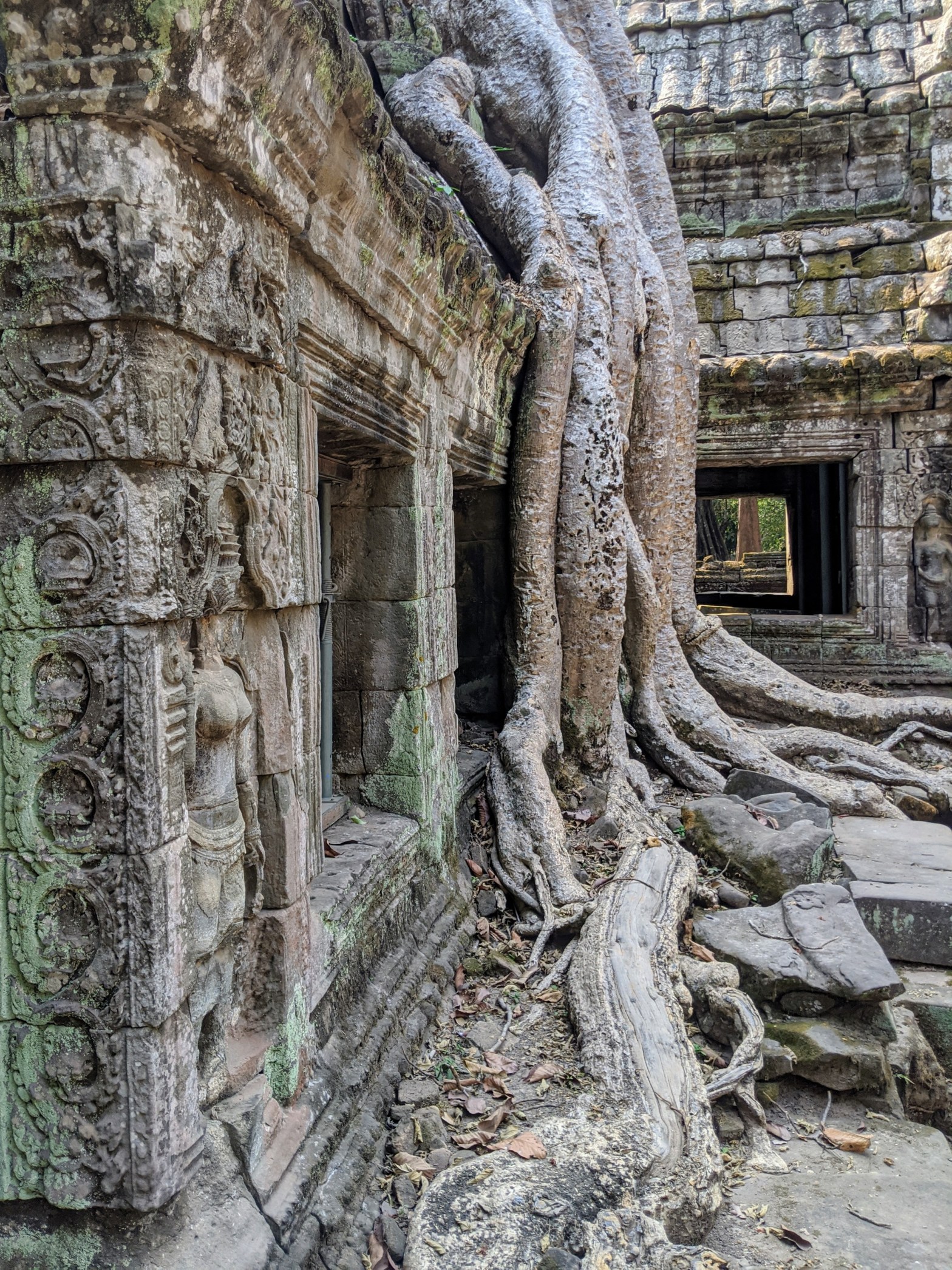
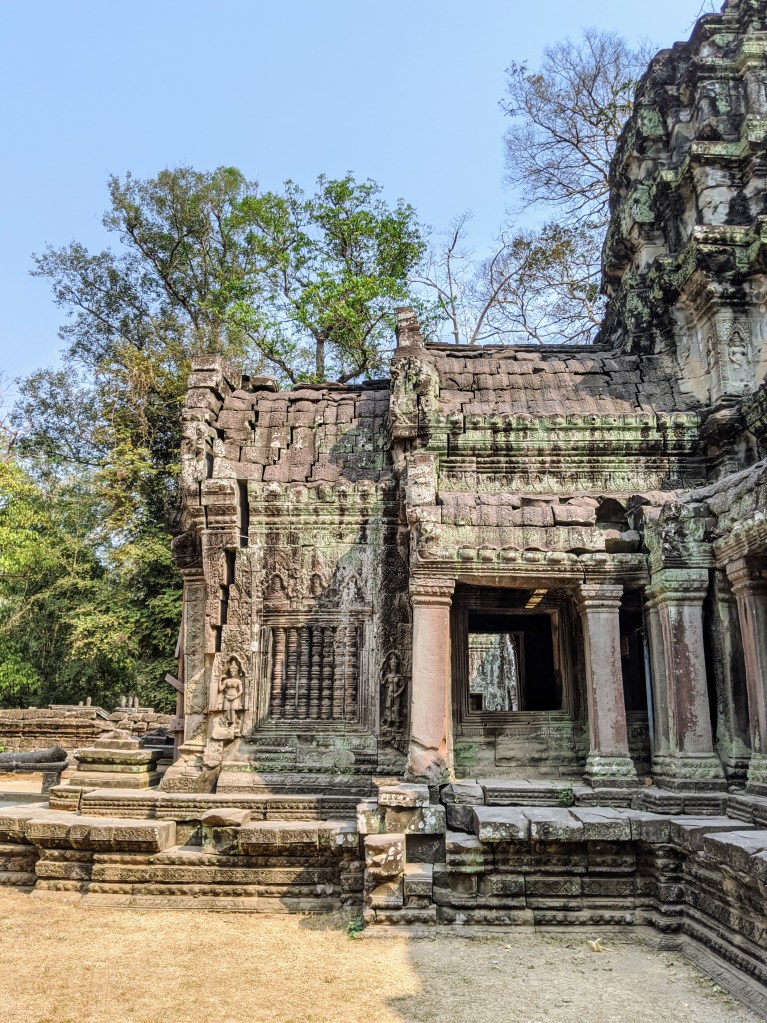
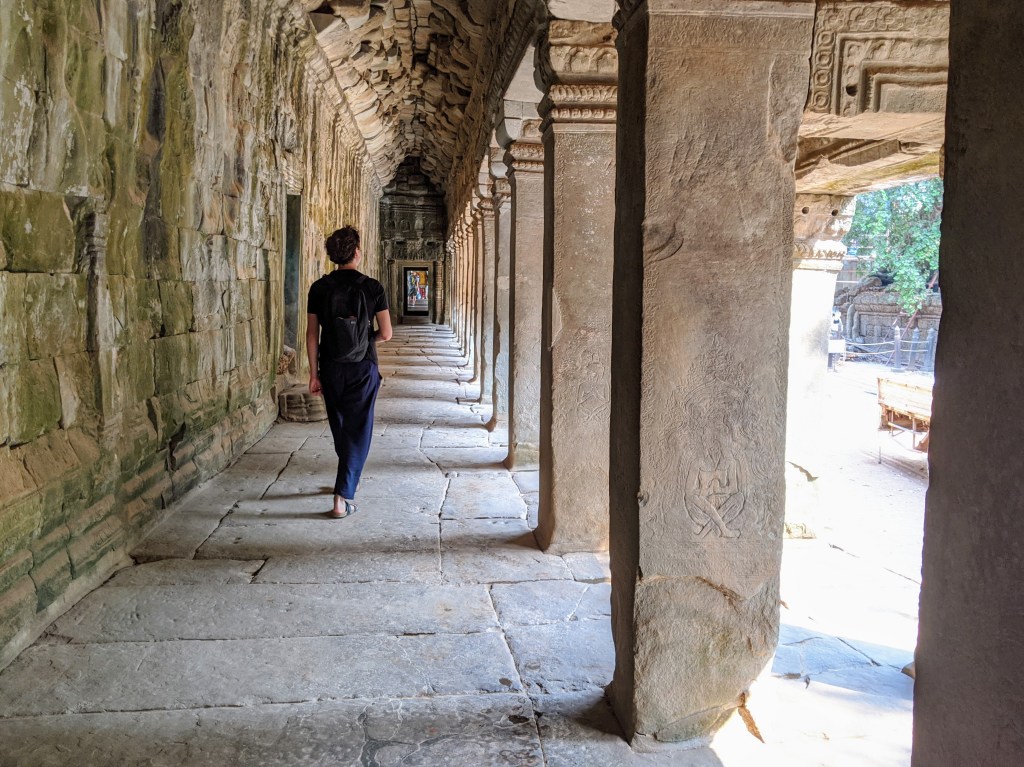
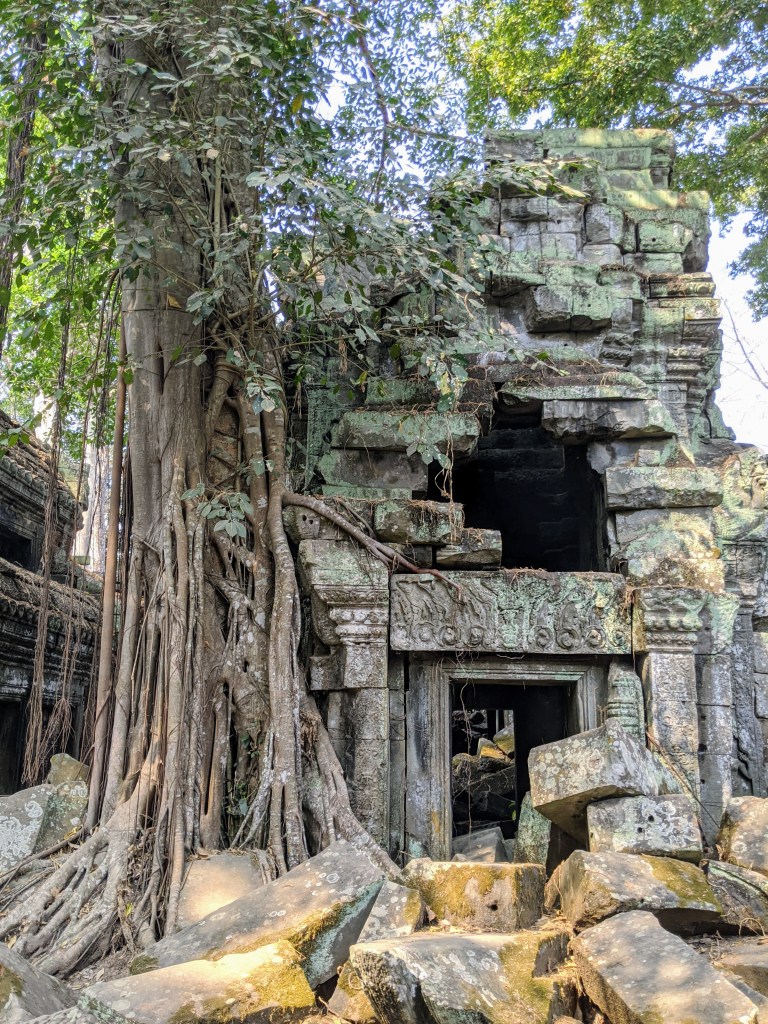
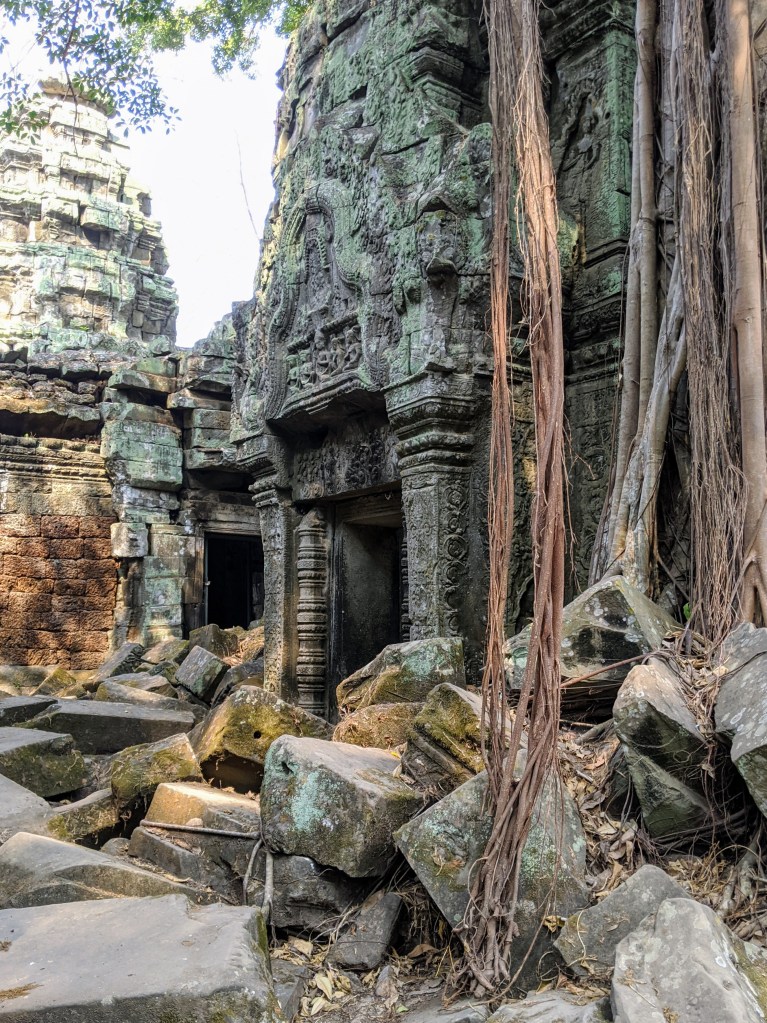
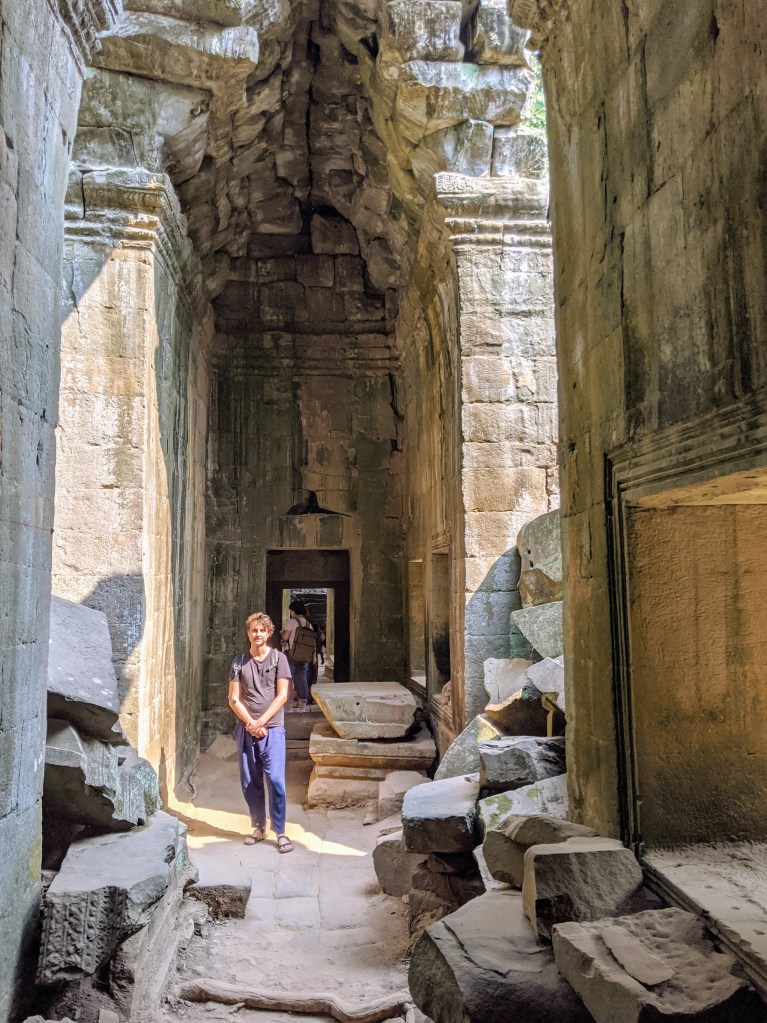
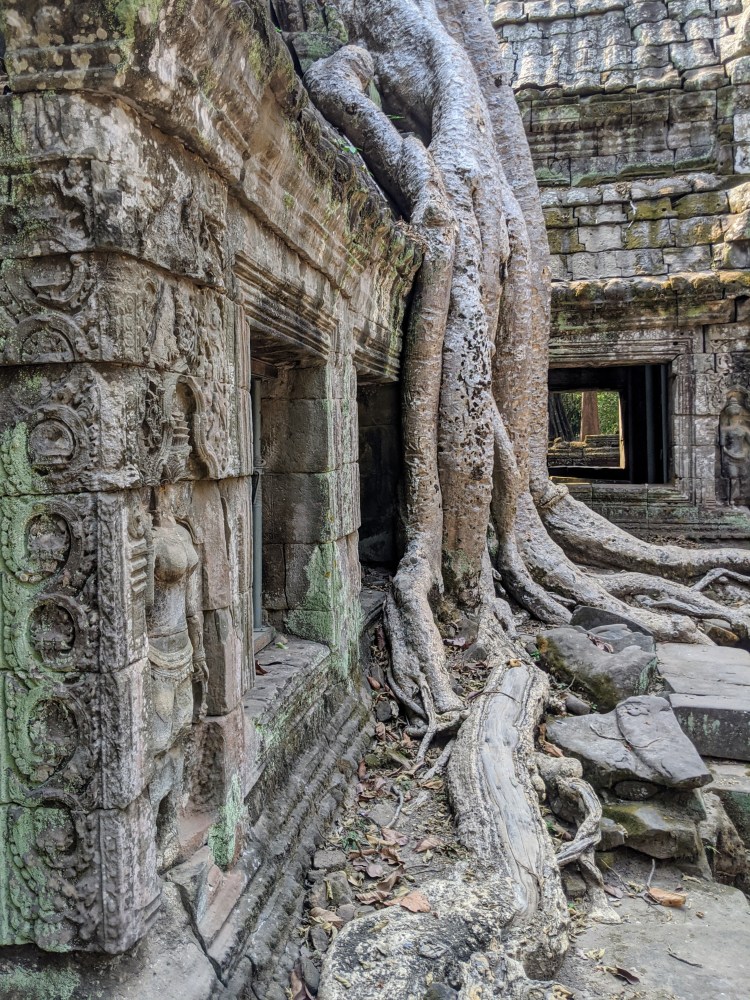
Ta Prohm is called the “Tomb Raider Temple,” because–you guessed it–parts of the movie Tomb Raider were filmed there. The temple is a testament to the triumph of nature over man’s best laid plans. Ta Prohm was once one of the largest temples in Angkor, requiring over 80,000 attendants. Now, giant tree roots strangle many of its fallen stones, and lichen smothers its door-jambs. It’s a ravished, romantic ruin. It is also, unfortunately, not a secret. It may have been a function of the time of day, but there were significantly more people at this temple than Bayon, and Bayon is, I think, the more famous of the two. It’s large and labyrinthine enough, though, that with a little effort, you may find a secluded corner to explore on your lonesome. The many trees that have taken root in its halls make it one of the shadiest temples in Angkor park. However, we were fast approaching the hottest part of the day, and temple fatigue is all too real; Aaron and I left after a short, albeit adventurous, exploration of its towers and halls.
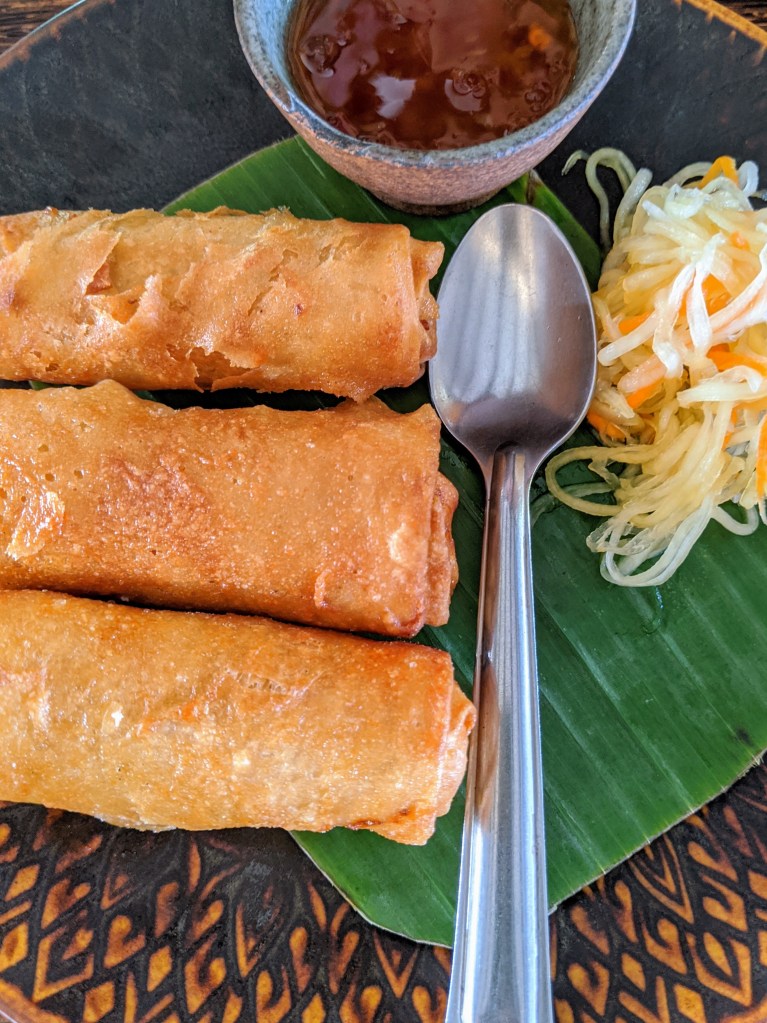
All that temple exploration had really worked us up an appetite. We had our tuk-tuk driver for the day, Thorn, drop us at The Sugar Palm for lunch. The Sugar Palm had a gorgeous front courtyard, with a stepping-stone bridge across a koi pond, leading to its bamboo interior space. We ordered the vegetarian platter. As we’ve travelled, we’ve discovered that, for the large part, we both find meat kind of gross. The platter was a sampling of some of their signature dishes: eggplant with fermented soybeans, vegetable amok (a Cambodian traditional dish involving curry cooked in banana leaves), and spring rolls. Aaron didn’t like the fermented soybeans, and I didn’t really like the amok, but I think that had more to do with personal taste. The meal was prepared and seasoned well, and the spring rolls were excellent.
After lunch, we walked back to our hostel for some much-needed R&R after such an eventful morning.
 Hanoimoon