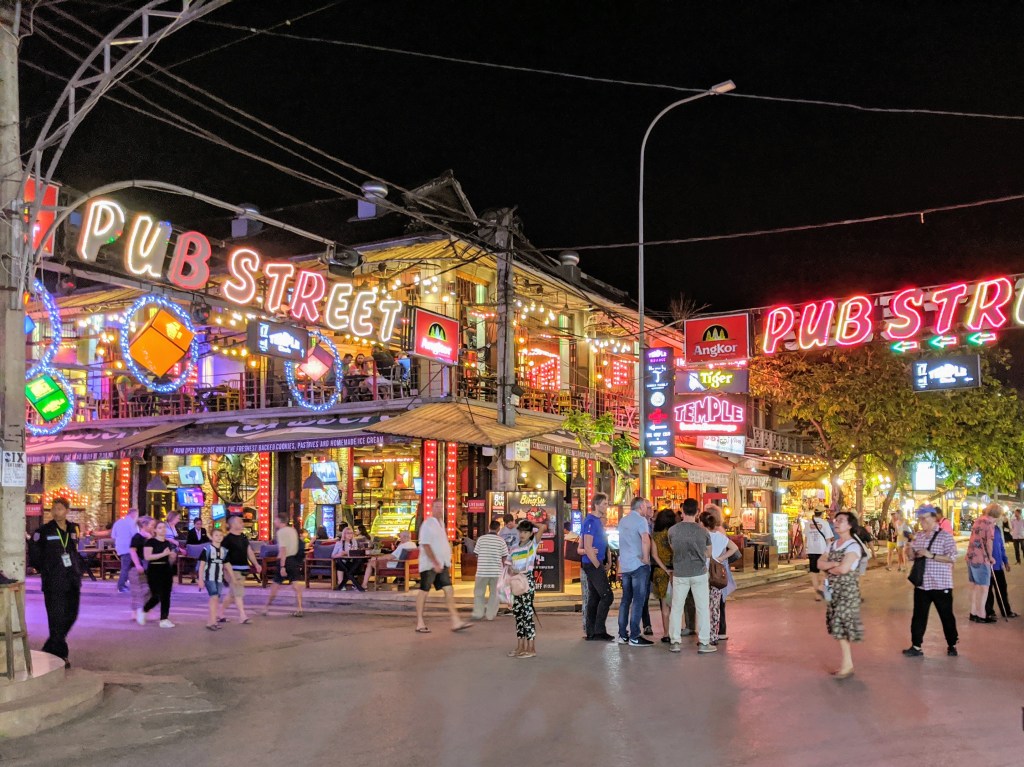
We took a nice long rest after our visits to Bayon, Baphuon, and Ta Prohm. The best strategy here, we’ve discovered, seems to be to go out early in the morning, and then hide in the pool or air-conditioned room until the sun leaves you alone. It was dinner-time before we finally decided to venture back into Siem Reap.
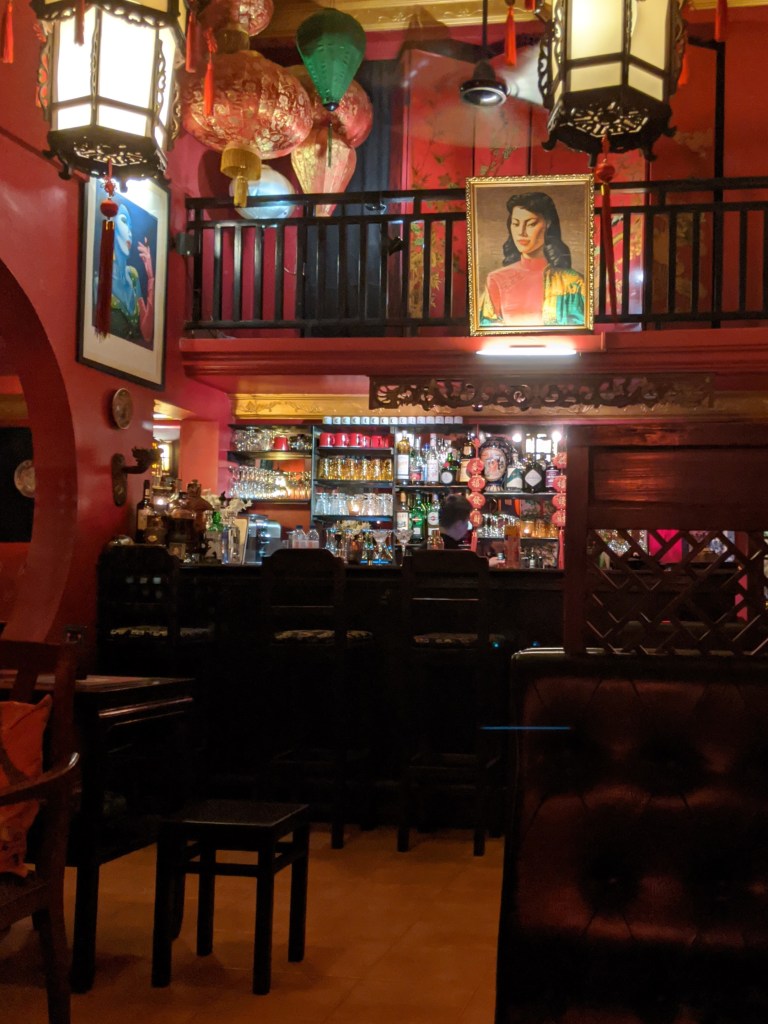
For dinner, we decided to check out Miss Wong’s. It’s actually more of a cocktail bar, but they serve dim sum as well. The interior was lit red by Chinese lanterns. Reproductions of Chinese Girl and the eponymous Miss Wong by king of kitsch, Vladimir Tretchikoff, hung high on its walls. The vibe was what I’m going to call “Singapore camp.” The dim sum menu was printed on fans. Our cocktails were a perfectly executed mojito and Moscow mule. The dumplings were so-so. All-in-all, I would say Miss Wong’s was well-worth the visit just for its decor. We went straight home to bed after, because we had another early morning planned the next day.
Thorn, our tuk-tuk driver from the previous day, picked us up at 6:30 again and drove us once more to Angkor National Park. This time, we were there to see Preah Khan and–the crown jewel of Angkorian temples–Angkor Wat. Thorn offered that Neak Pean was on the way to Preah Khan, so we asked him to drop us there first. I’m glad we went on a lark.
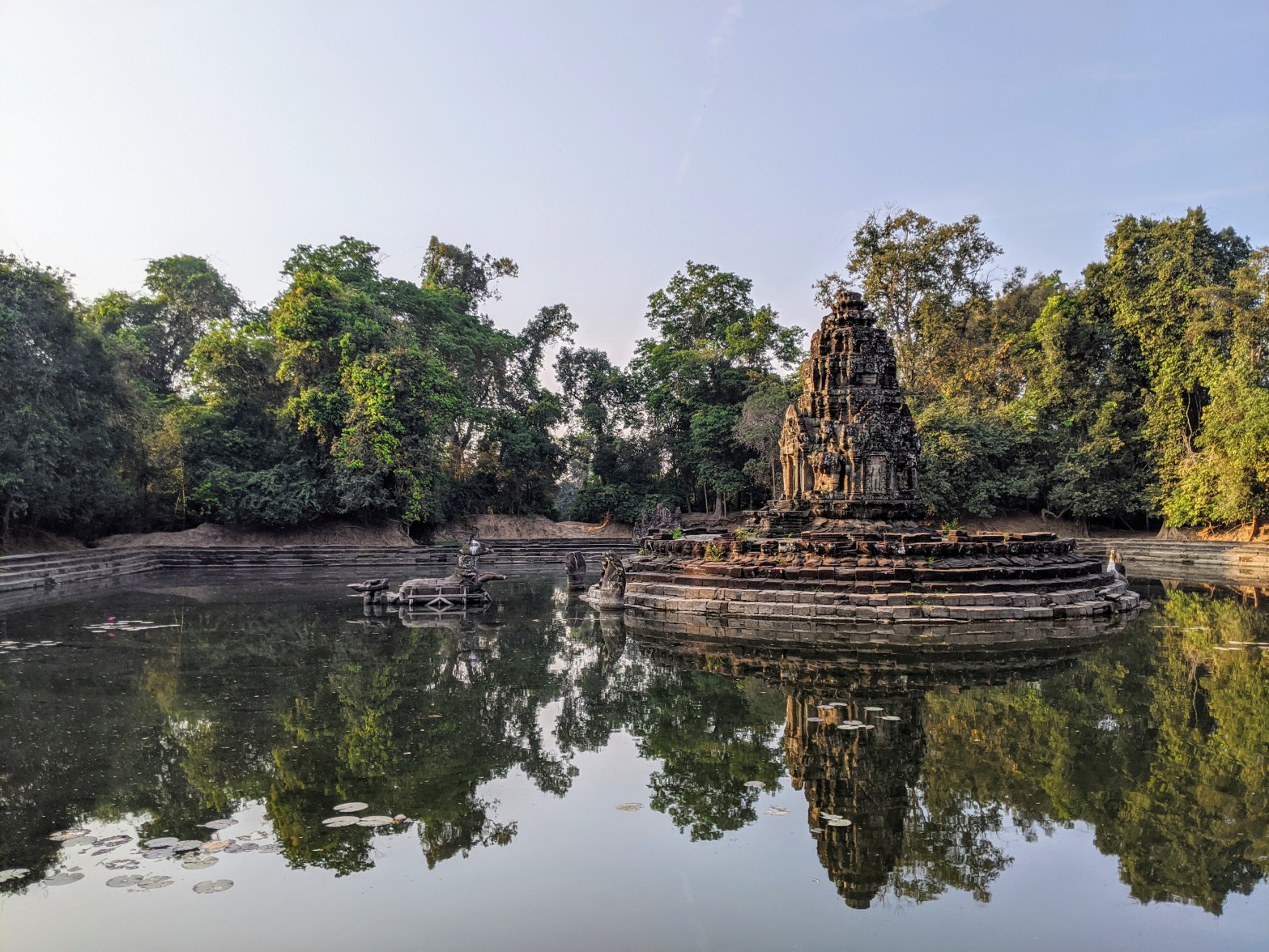
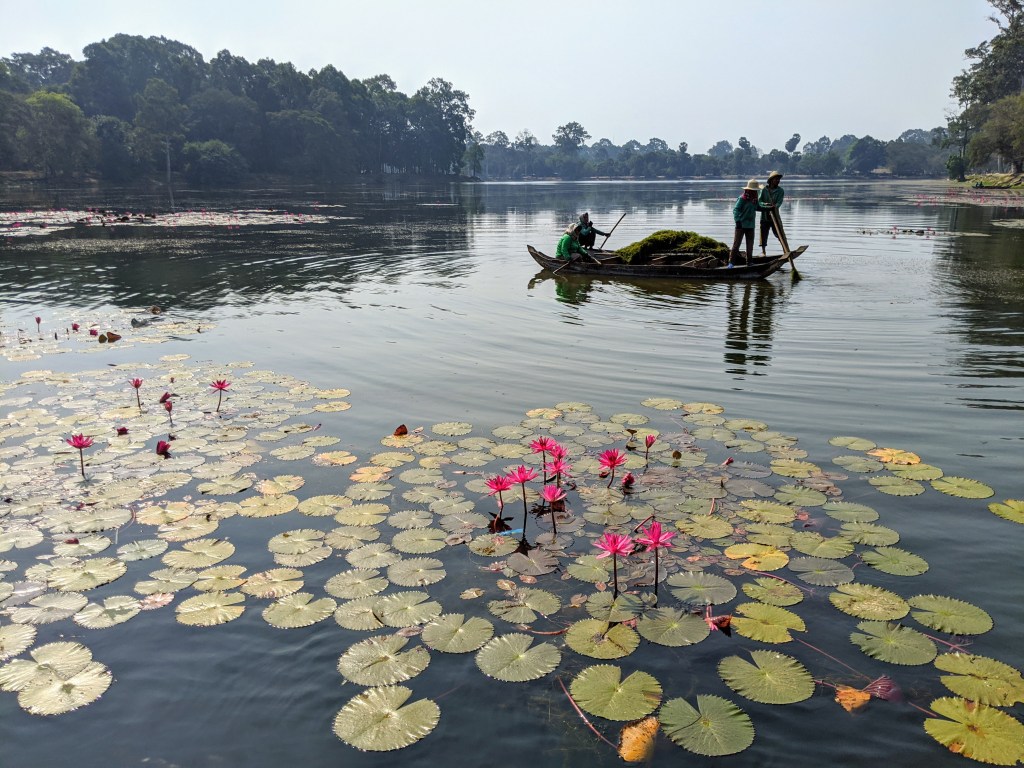
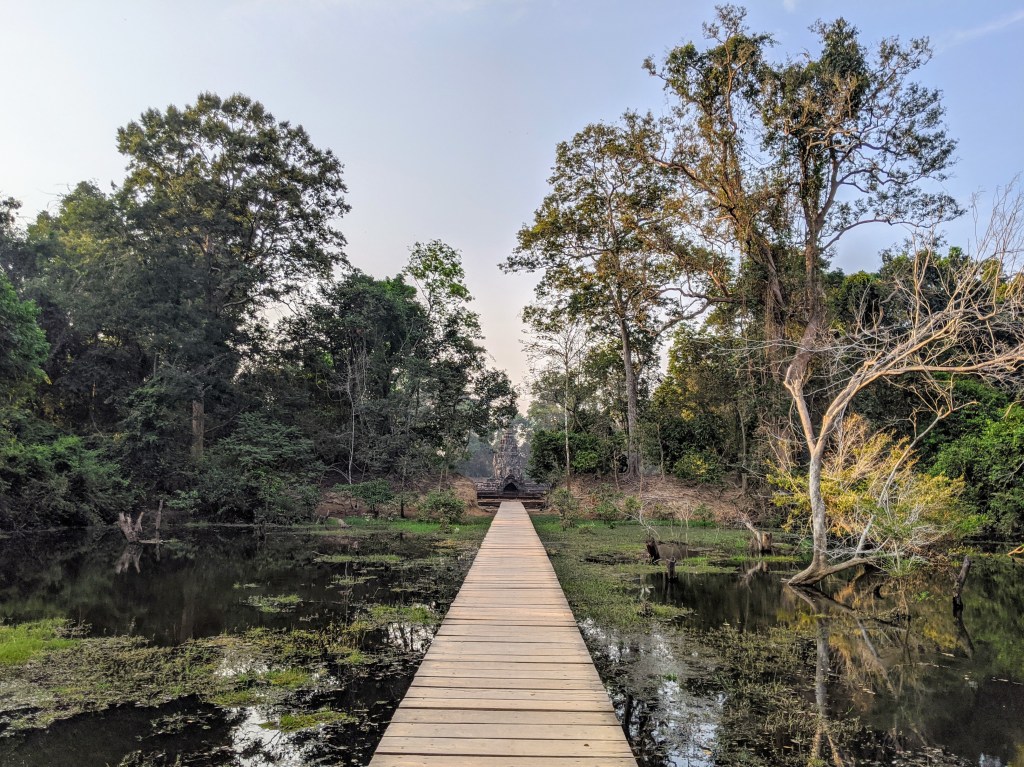
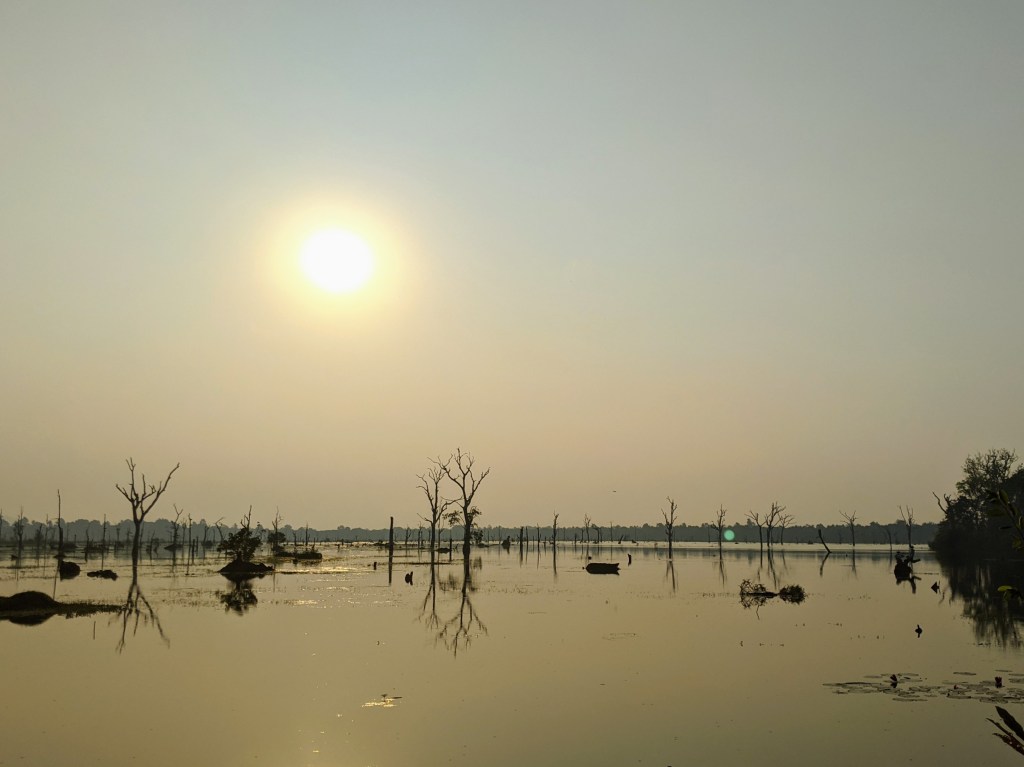
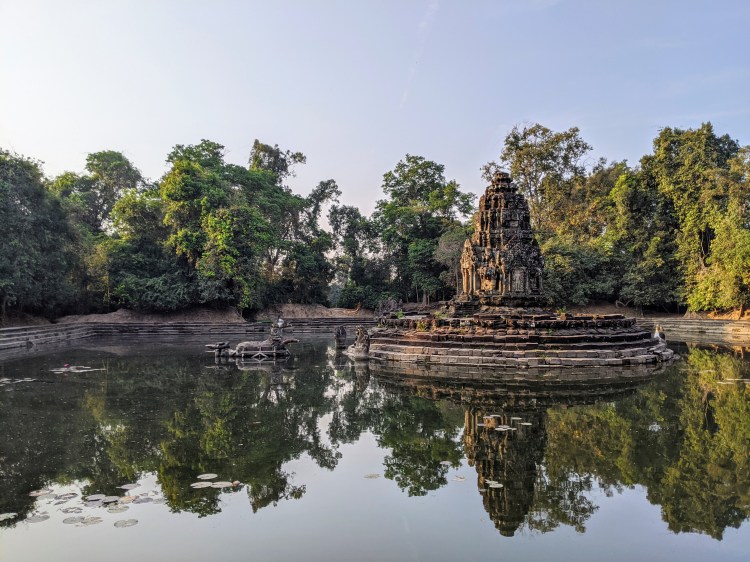
To get to Neak Pean, you must walk a dirt bridge that spans its enormous moat. Dead trees spookily dotted the distance, half-drowned in the murky water. The man-made moat was as big as a lake. It being early morning, we could hear a thousand different birdsongs in every direction as we crossed. Neak Pean is centered in a smaller, circular pond, surrounded by four rectangular pools in each of the cardinal directions. Visitors may only look at the small stone tower from the edge of this pond–no paths approach. To its right, a sculpture of a horse rose out of the water, with a real bird perched on its back. This is the last remaining of the four animal guardians that used to encircle the temple. Aaron and I were the only two people here, aside from a park worker sweeping the paths with a large besom and her two children. We stayed long enough to enjoy the solitude and see a few birds bathe in the temple’s many pools, then we walked the long bridge back across the moat to our tuk-tuk.
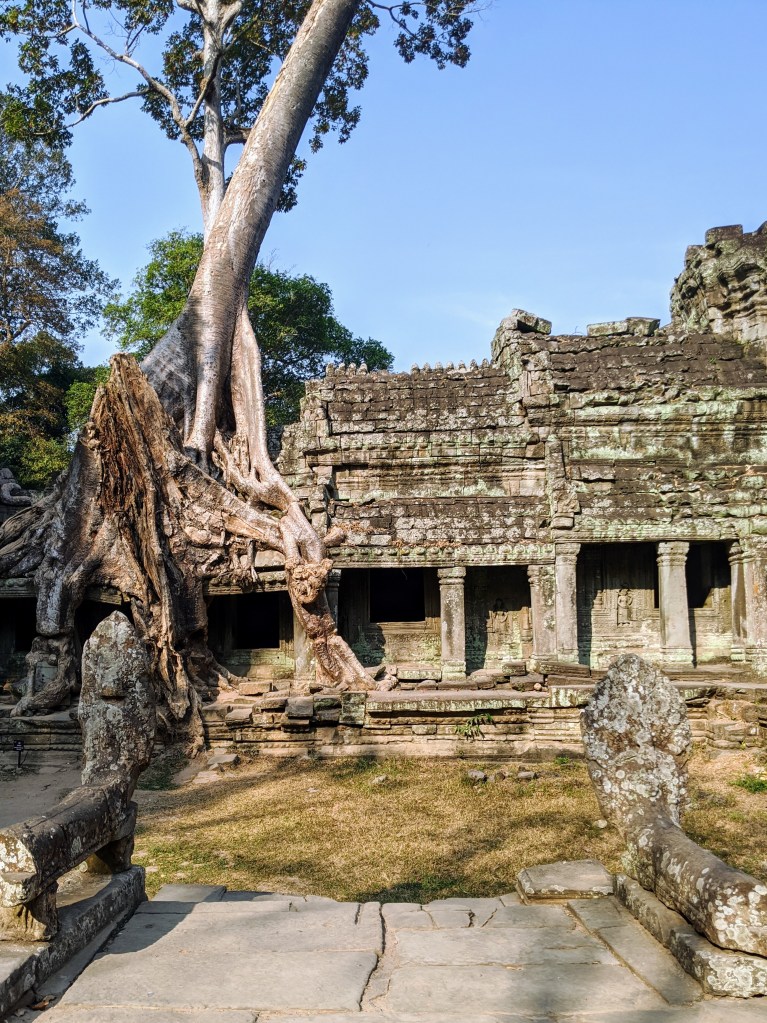
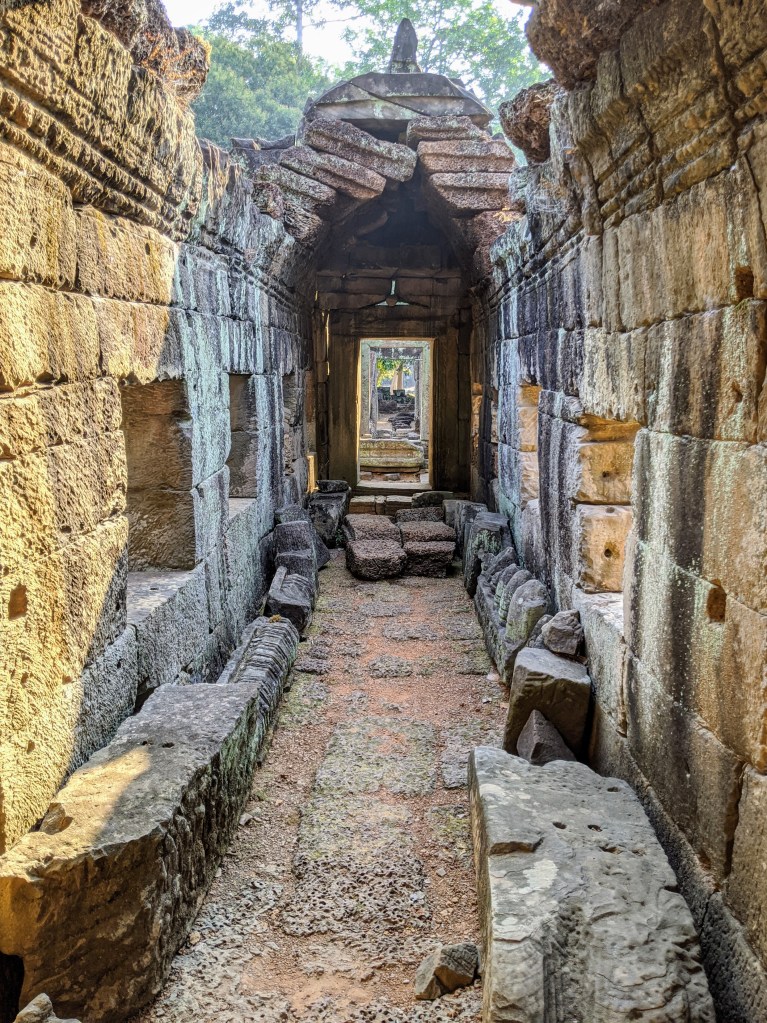
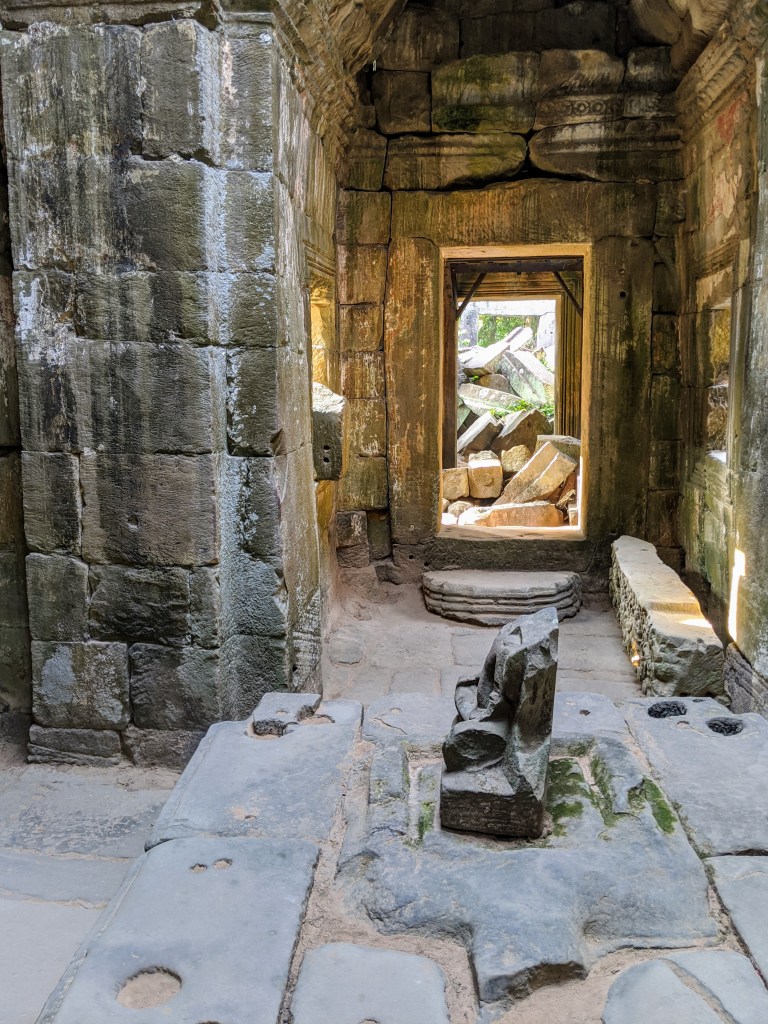
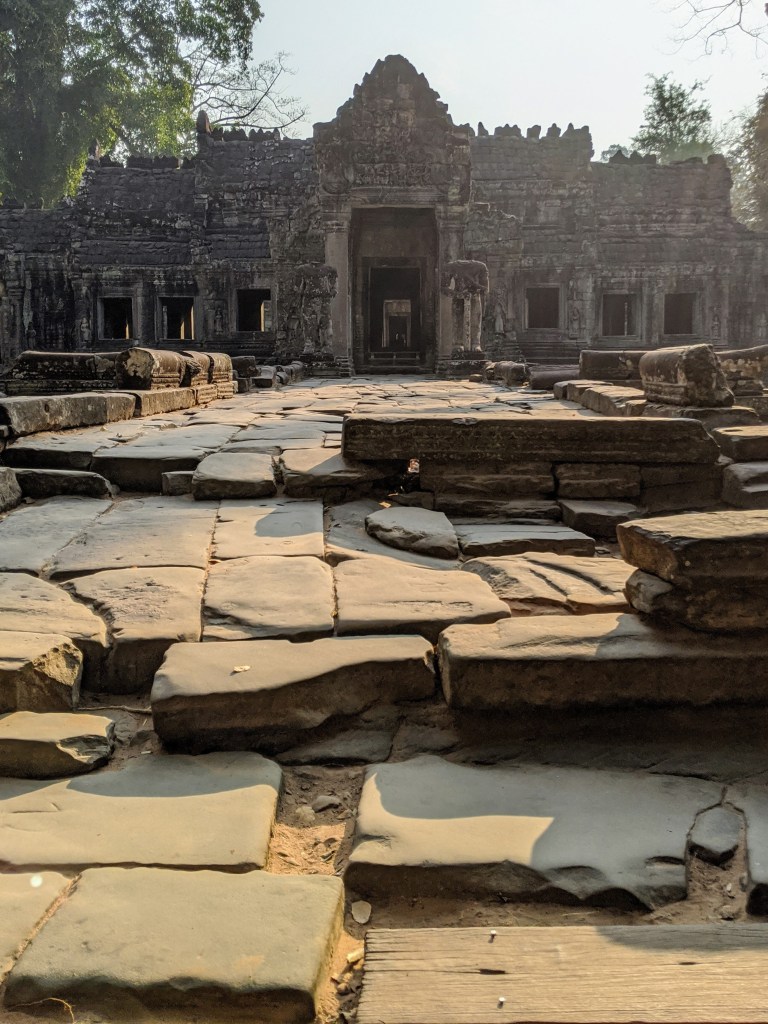
A short ride later, we arrived at our first scheduled destination: Preah Khan. This temple was built in the 12th century by King Jayavarman VII, who was responsible for the construction of many of Angkor’s most famous temples. Preah Khan is large and mazelike, and unlike other temples, there is as much to explore inside its halls as outside. Like nearby Ta Prohm, Preah Khan has been encroached on by nature. But, like Bayon, much of its original structure is still standing. Aaron and I spent a few hours here. We took awkward, high steps over the tall sills of its doorways. We hopped between the stone lips around its tomb-like inner structures. We found bats on the ceiling of its remotest corners. We explored in the truest sense of the word–and we did it together; I felt like a kid playing make-believe with her best friend. We had to cut our fun short, though. We needed to ensure we had enough time to fit in one more temple, before the heat became unbearable.
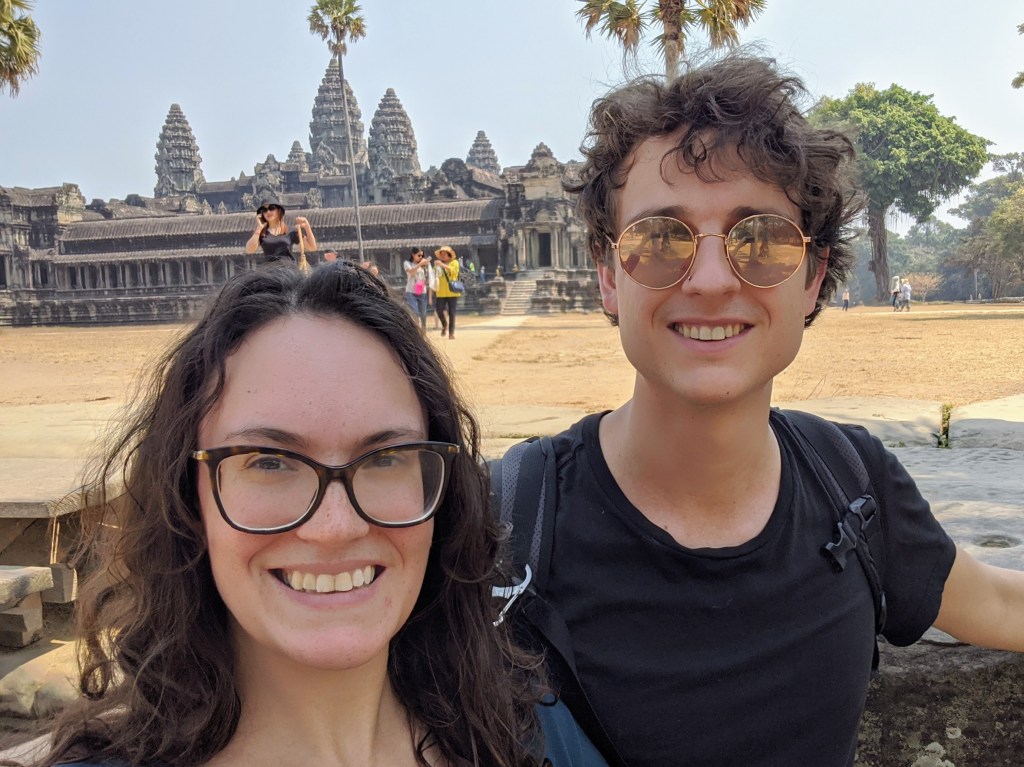
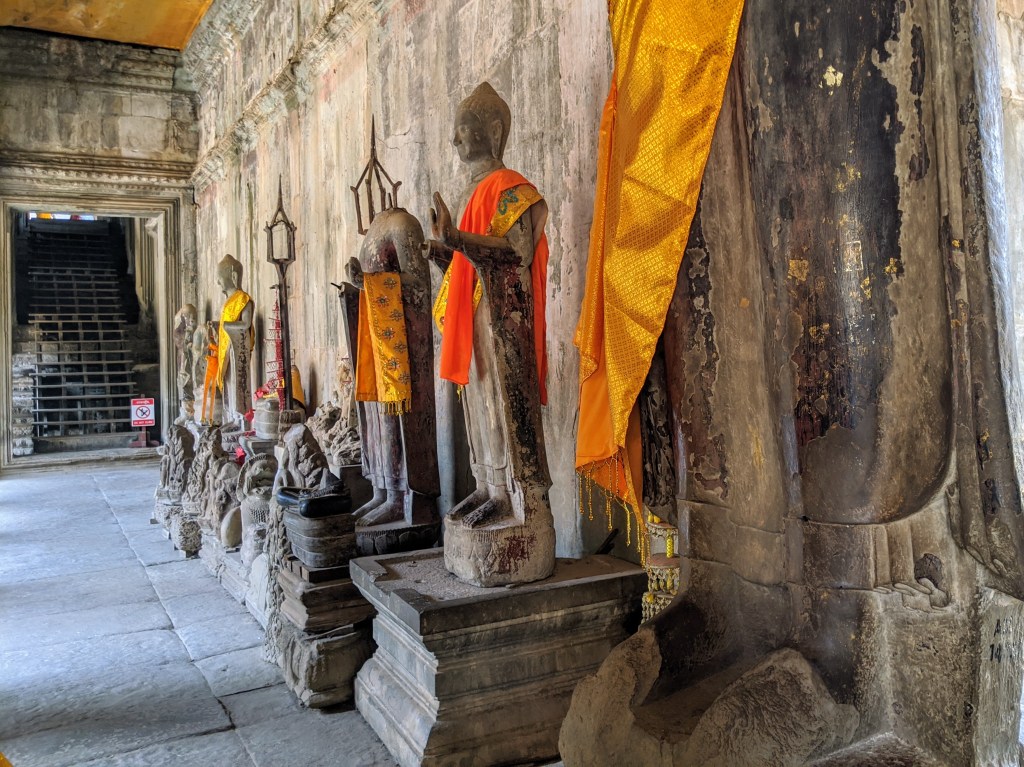
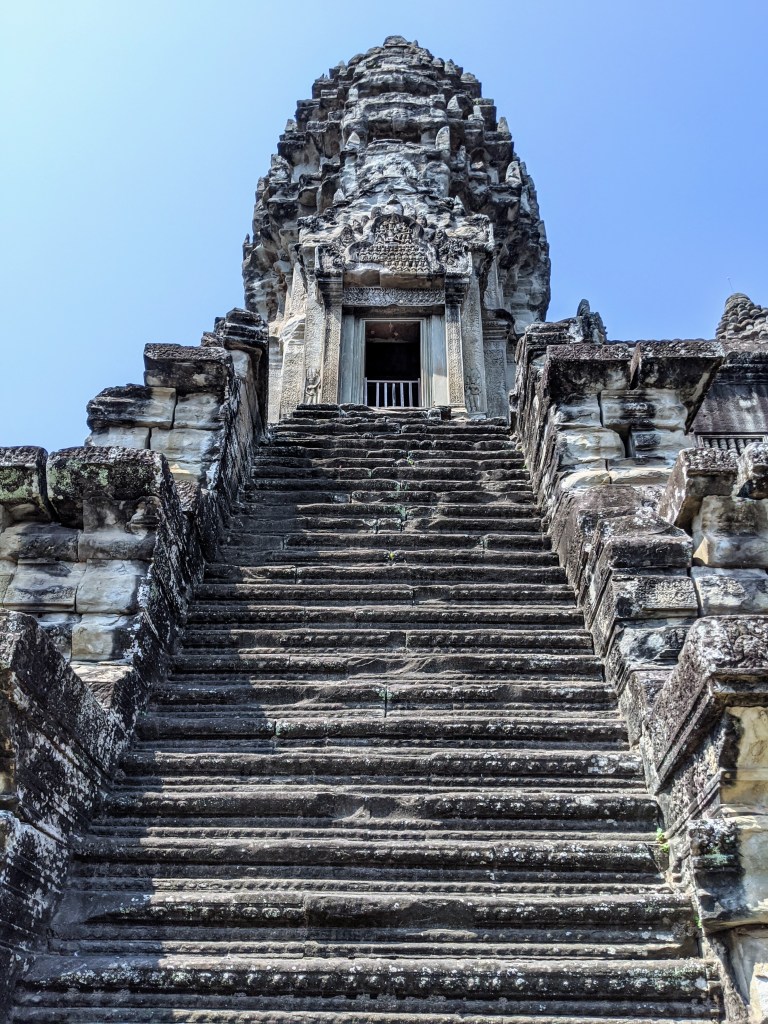
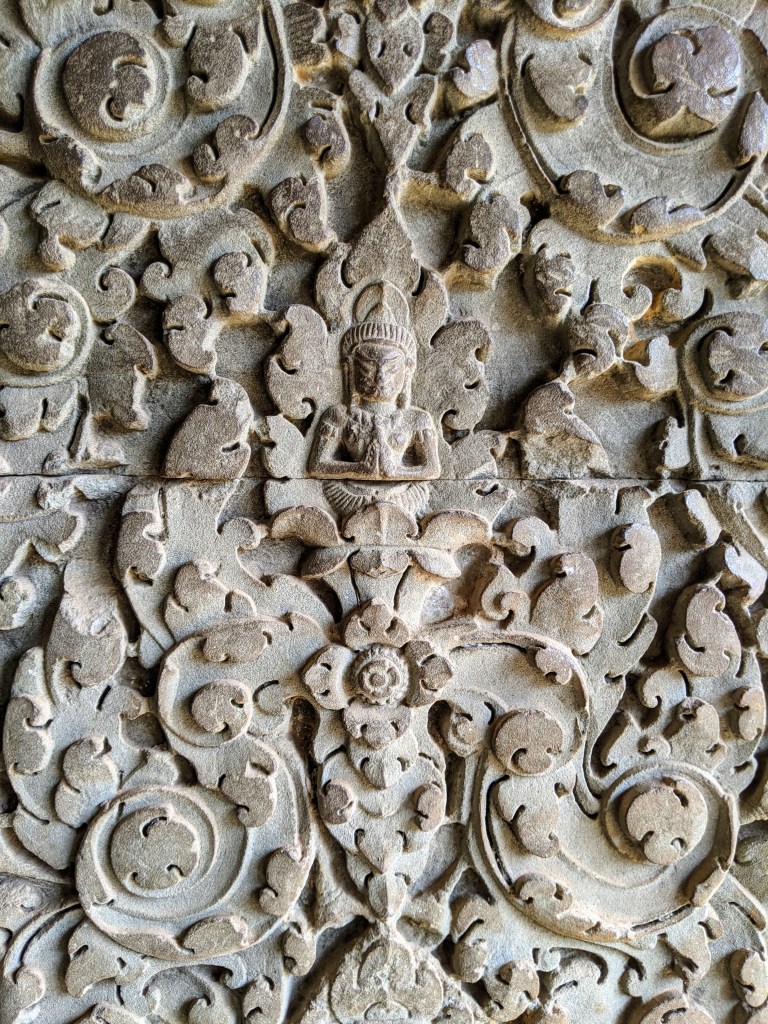
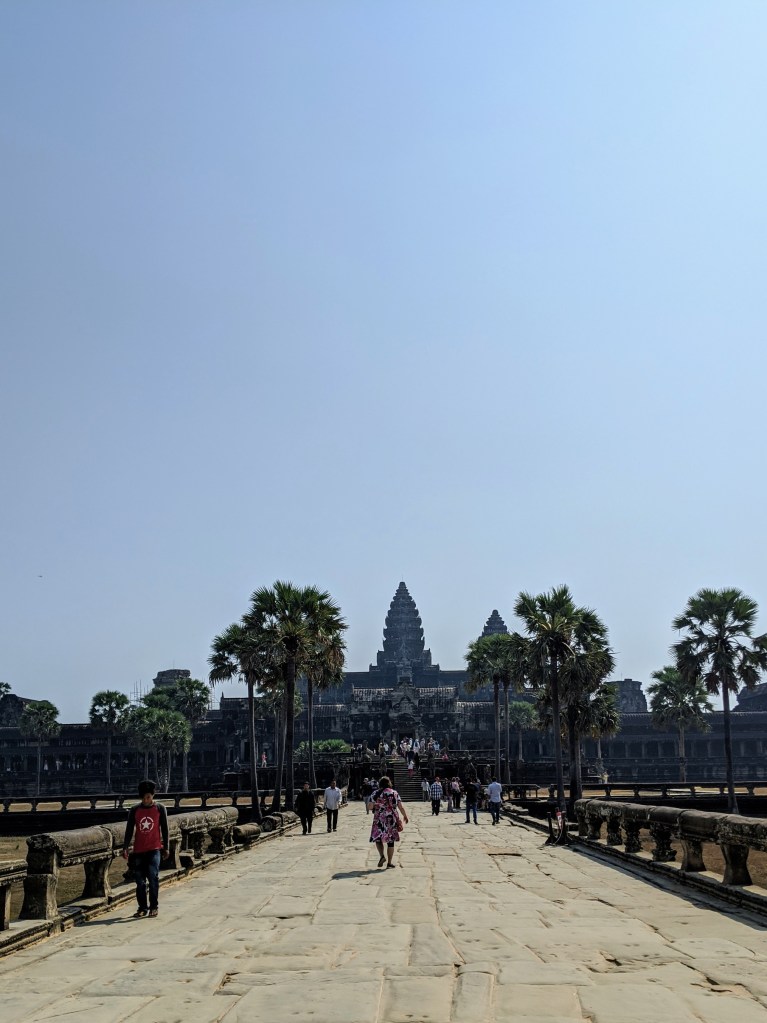
We saved, if not the best, then certainly the most famous temple for last. Angkor Wat is the largest religious monument in the world. The temple is such a source of fierce national pride for the Cambodian people that they put it on their flag. It has been continuously attended to since the 15th century. Two-and-a-half million tourists visit Angkor Wat every year. And I thought it was… ok. As with many over-touristed sights, it was a bit disappointing. It was crowded. It was hot. It had neither the derelict allure of Ta Prohm and Beng Mealea, nor the artistic merit of Bayon and Banteay Srei. We walked along its outer wall, examining its unimpressive bas-reliefs, some of which looked like they were done by children. I know I sound like a spoiled brat, but this is what Siem Reap does to you. I’ve been spoiled by the abundance and quality of the city’s other temples. Some of the bas-reliefs were much higher quality than others, a function of the fact that the temple has been through several phases of construction throughout its centuries. Aaron and I spent more time with these, playing the same “spot the guidebook’s description” game as yesterday. Then, we explored its vast interior and unsheltered courtyards until we were too sweaty and tired to continue. We certainly didn’t see every nook and cranny of this temple, but I think we saw enough to get the picture.
Lunch was at Spoons Cafe, a two-dollar-sign joint that serves as a training facility for EGBOK, or “Everything’s Gonna Be OK”. EGBOK is an international non-profit that empowers underprivileged youth with vocational training, mostly in the hospitality sector. We ordered some coconut and corn dumplings that were a bit too sweet for my taste (others would find them scrumptious, I’m sure), and fried red snapper with mustard vinaigrette that was very much to my taste. Even fish-hating Aaron enjoyed it, I think. After lunch, we returned to the hostel to recover.
 Hanoimoon