Hanoi: Day 6

I wish I could tell you that we’ve taken advantage of every second of being here. But for one full afternoon, Aaron and I stayed in our room at Cocoon Inn and watched Rick and Morty. I don’t regret it, but I am properly ashamed. As our time in Hanoi draws to a close, we’re exhausted. Hanoi is a lot. Walking is a high-stakes obstacle course involving dozens of moving vehicles. People approach you on every corner practically shoving their wares into your face, following you as you tell them no. And then there’s the barbecued, whole animals (I won’t list which animals, because it is genuinely, gratuitously upsetting) that will just be right there next to you when you least expect them. It’s a lot. It’s a whole lot. And we were drained. We were sick of dodging scooters that seemed indifferent to our mortality, we were sick of saying no over and over to panhandlers and peddlers, we were sick of food with fish sauce and chili and meats that were not processed until they were unrecognizable as meat. We needed to rest and watch cartoons, and we needed to do it for several, lazy, useless hours. And then we needed pizza. 

Pizza 4 P’s is a kind of expensive, kind of fancy, totally worth it restaurant. Sometimes, especially after a couple of weeks of eating some very pungent foods, you just need pizza. It was the only place we’ve been to on this whole trip that had a wait, so I’m guessing we’re not the only westerners that needed a break. Our pizza was a classic, Italian-style pie topped with chorizo and salami on one side, and four types of mushrooms on the other. In any circumstances, it would have been delicious, but it really hit the spot for us. I don’t know if it was one of the best meals on the trip, or if it was just stars aligning at the right time in the right place, but this pizza was perfect. We followed it with some respectable panna cotta and fruit sorbet, then walked home and watched more Rick and Morty until we fell asleep. It wasn’t an adventurous day, it wasn’t a memorable day, but it was a vacation day. 

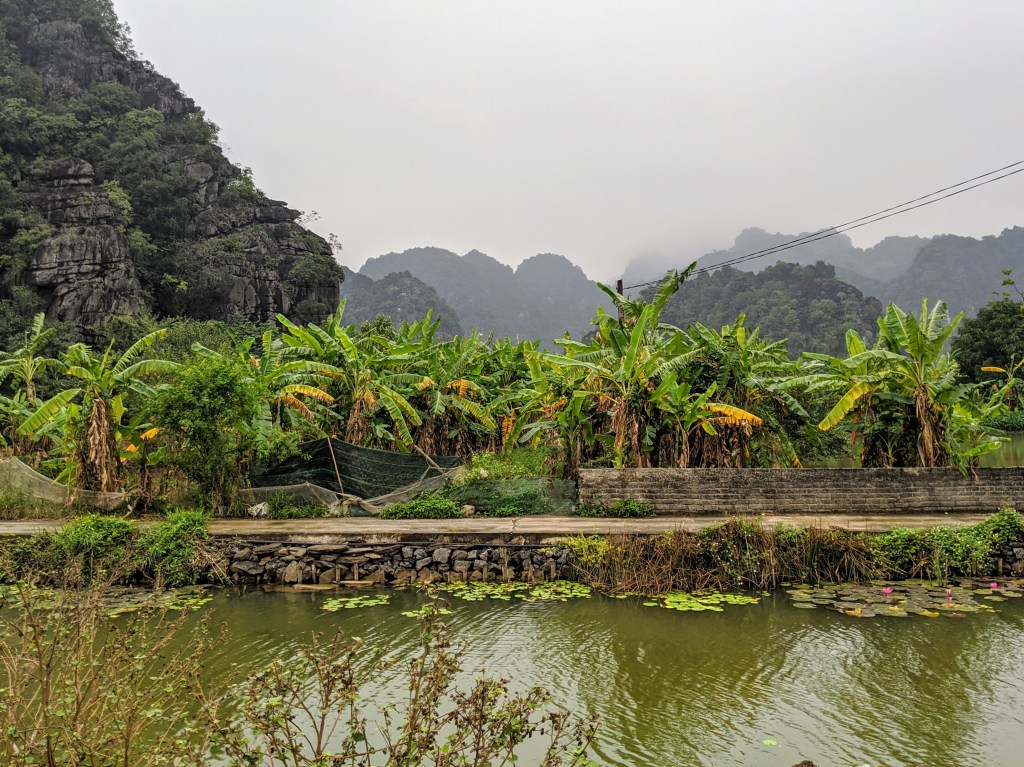
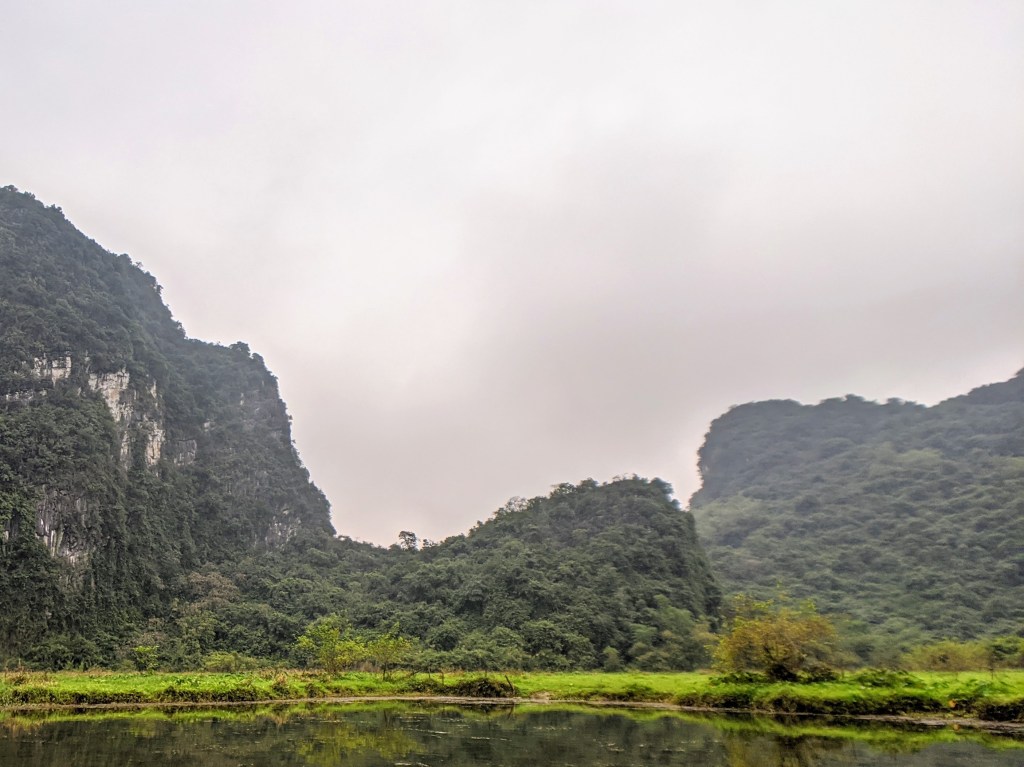
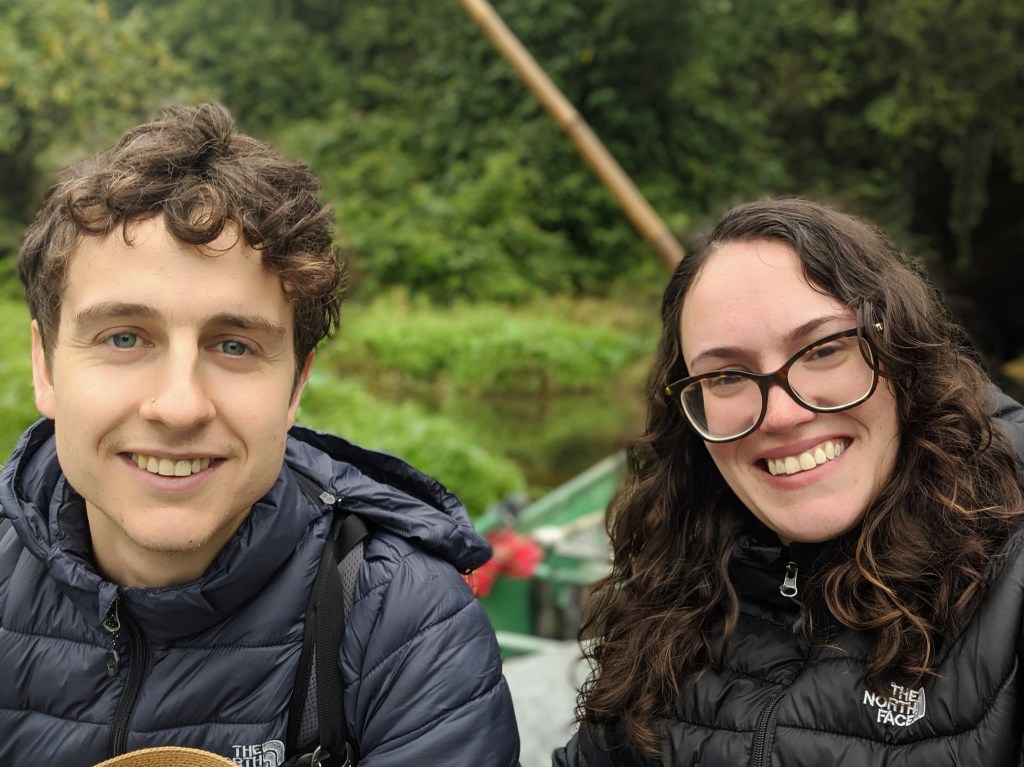
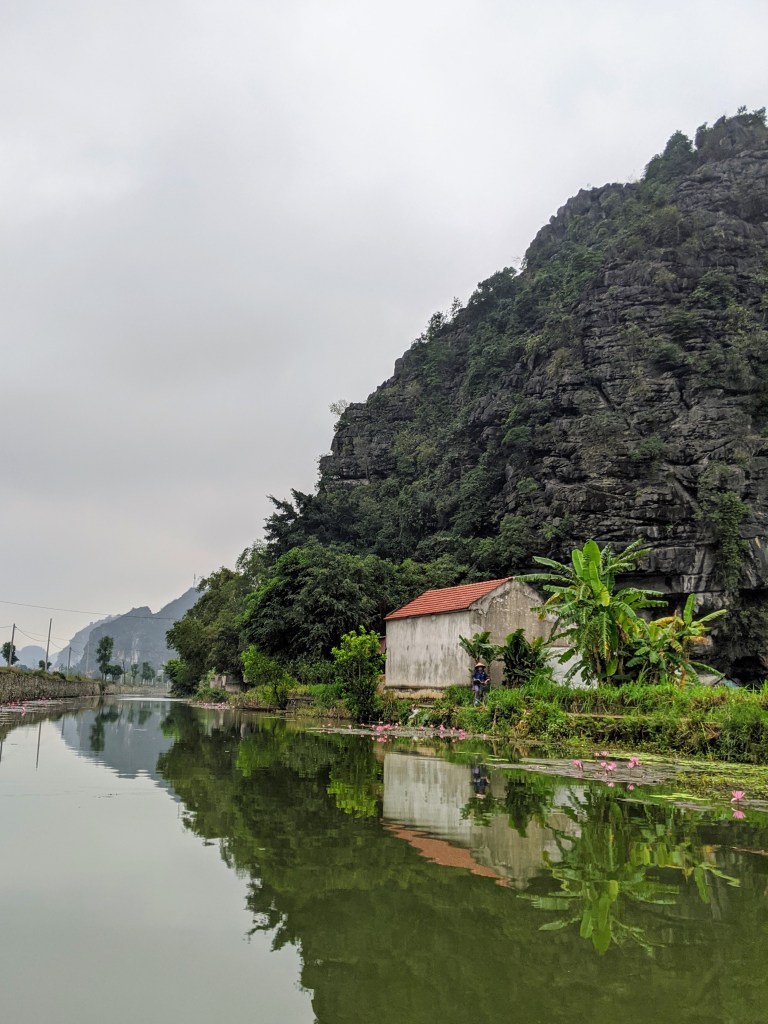
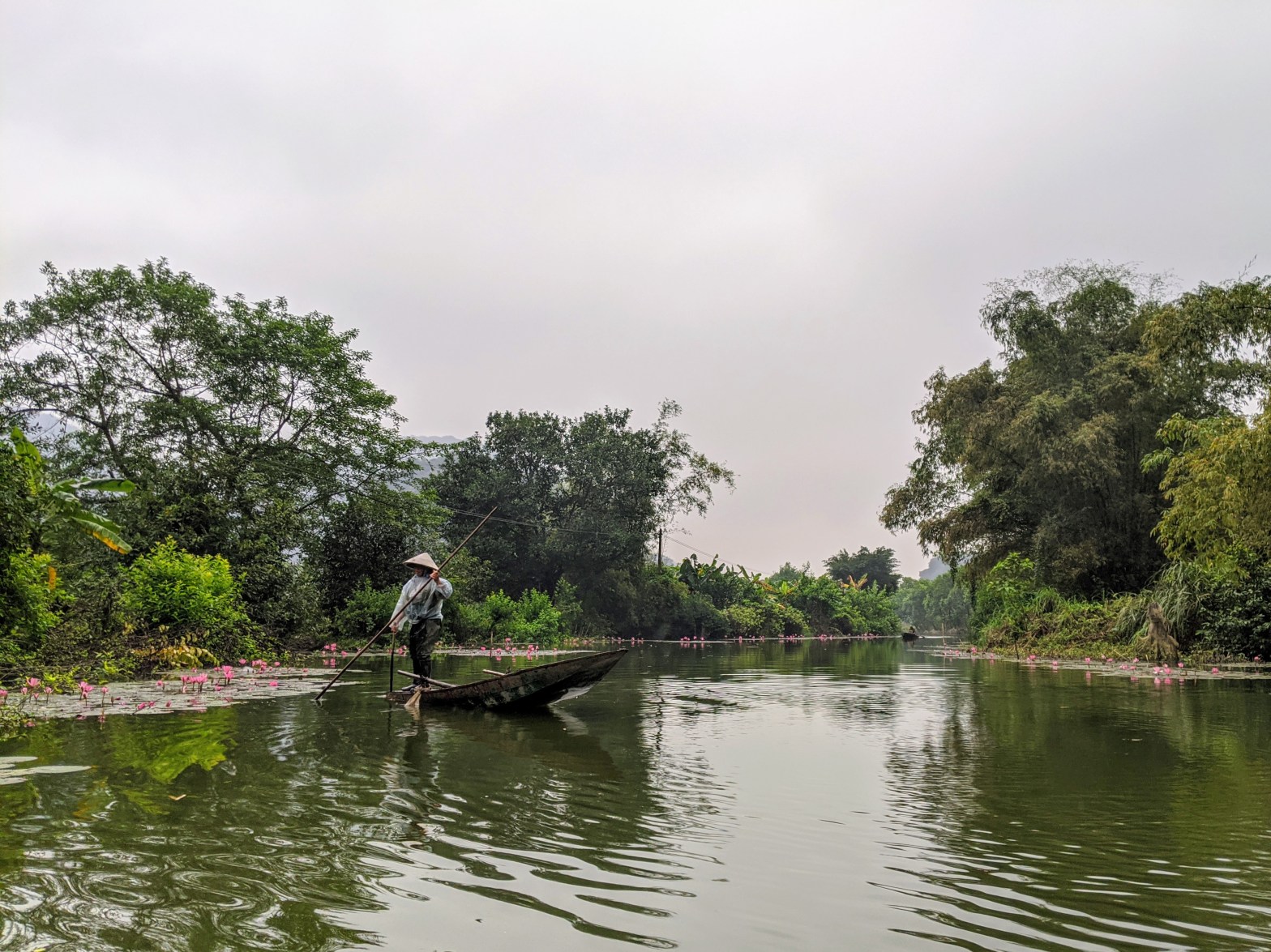
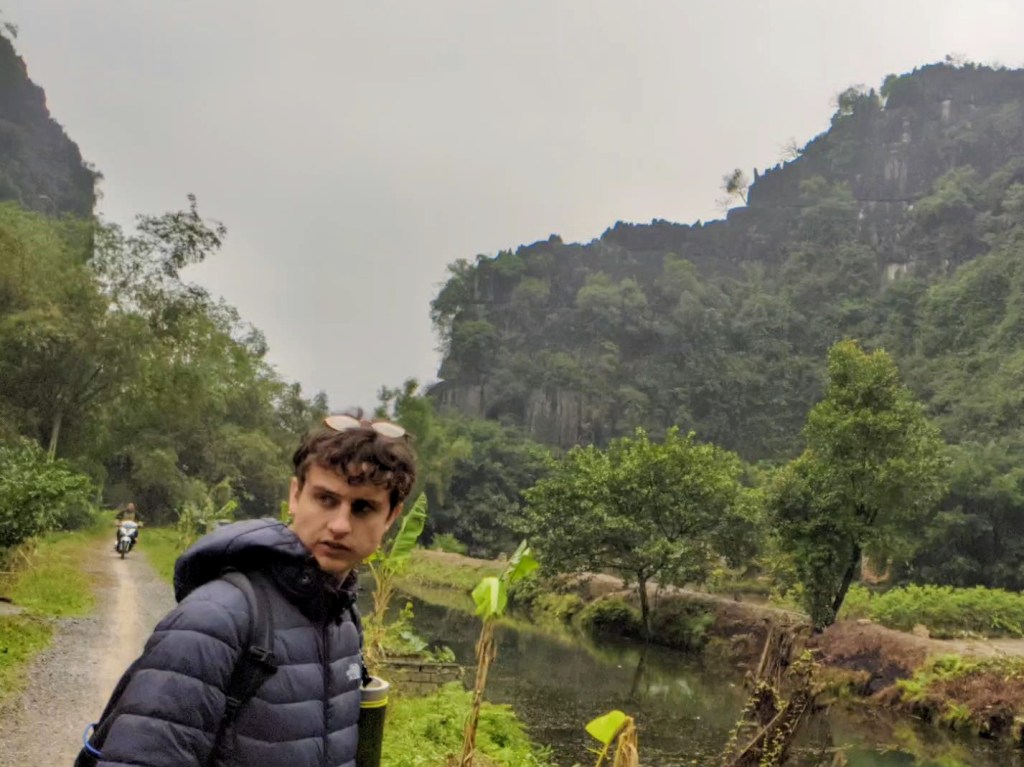
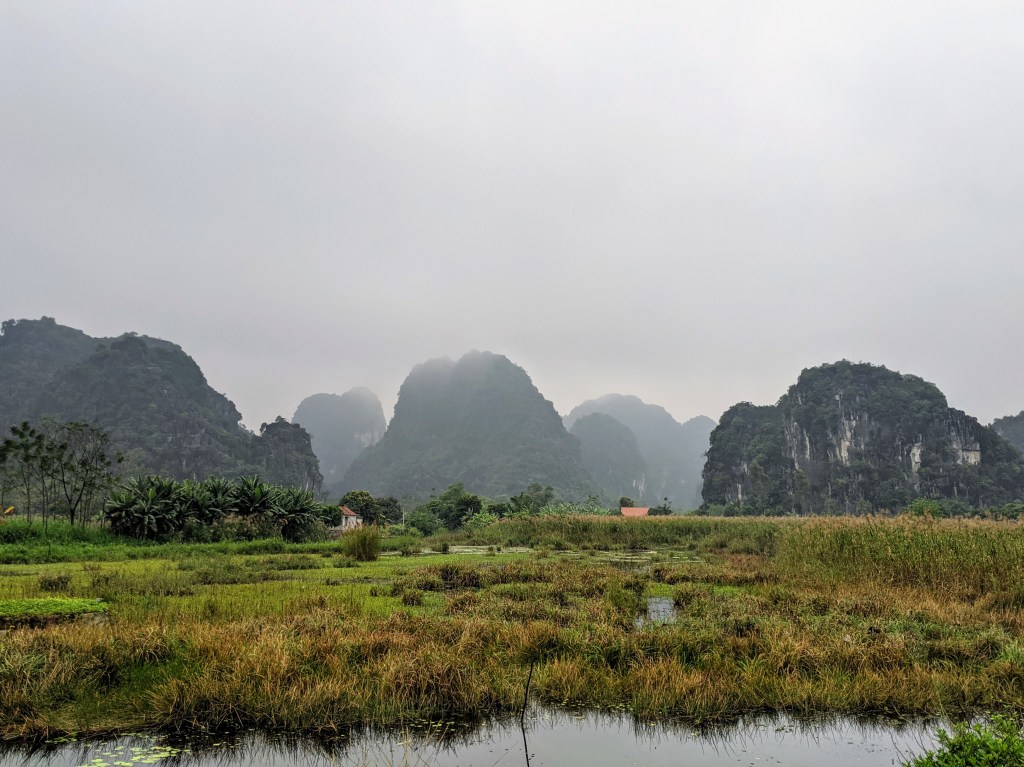
Besides, the next morning more than made up for it. We were picked up early by Ethnic Travel for our tour of the Red River Delta. The Red River is one of the largest rivers in Vietnam, running from Yunnan in China through Hanoi and out to the Gulf of Tonkin. Several beautiful towns and provinces surround the area south of Hanoi, above where the river lets out. We were set to visit Binh Minh province and Trang An, both known for their magnificent, towering, limestone karsts. The van trip took 2.5 hours, with a stop for us to buy some overpriced The North Fake (not a typo; they claim to be North Face, but they’re not fooling anyone) jackets. The weather had turned cool and a little rainy, so we didn’t mind shelling out some cash for a jacket that could keep us from being miserable on our entirely outdoor itinerary. The van dropped us at a walking trail with our guide, Yin. Yin told us about Vietnamese culture as we walked, and asked us a bit about American culture as well. What did we eat for breakfast? What did they feed their dogs? (Rice and meat.) What fruits were available in our markets? What eggs were available in theirs? (Duck, goose, chicken, and quail.) When did we get married? When did they get married? (18ish.) It was nice having an exchange, rather than just the one-sided explanation you would expect from a guide. The path was flat. It meandered through karsts and rice paddies, finally ending up next to a canal.

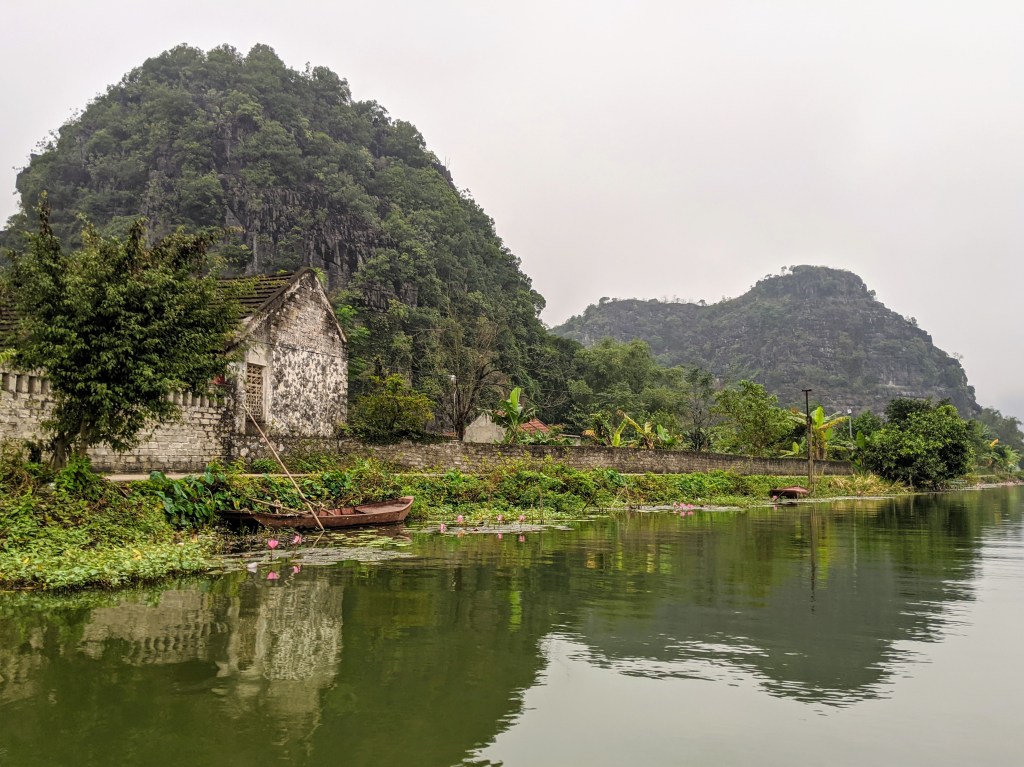
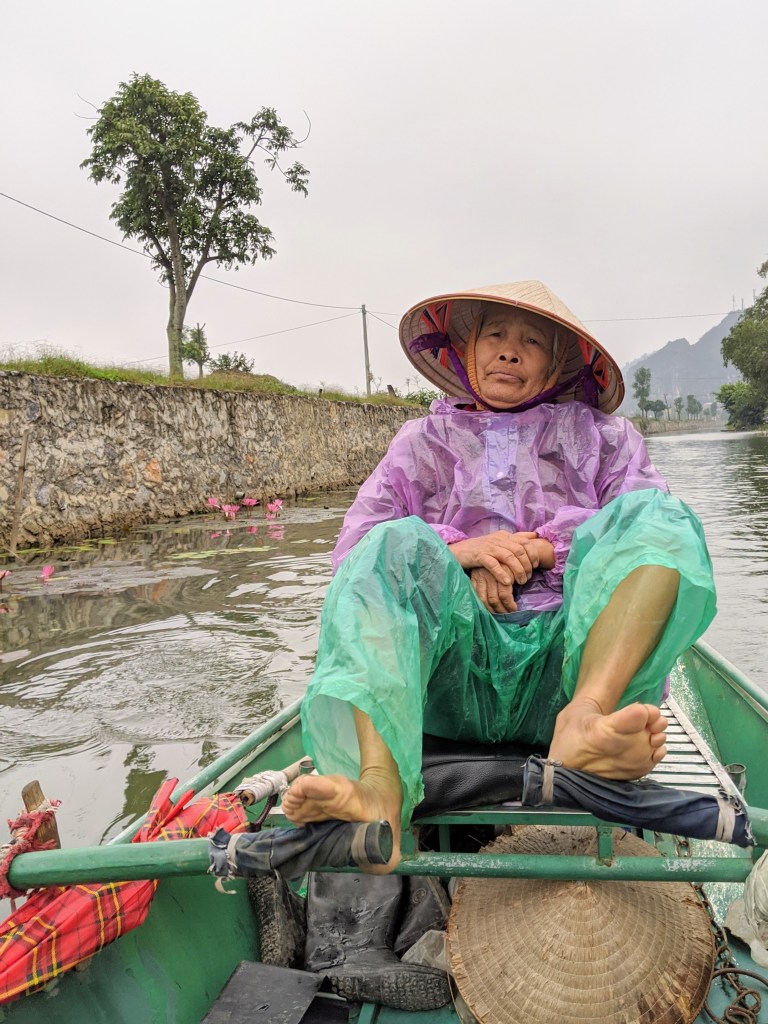
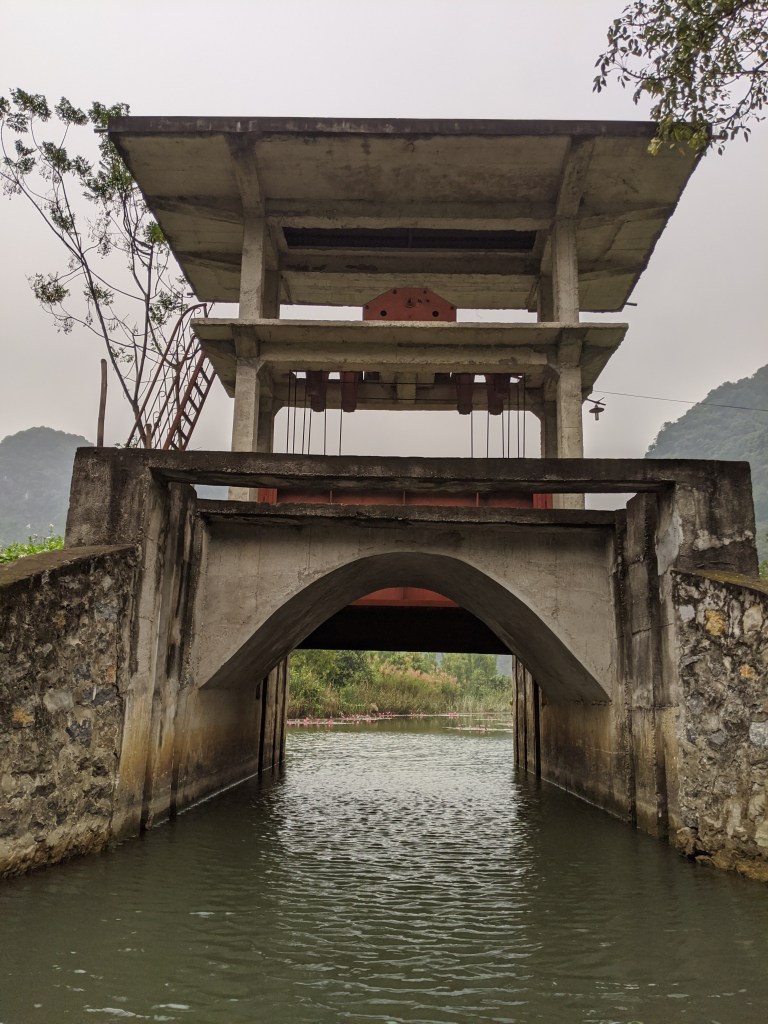
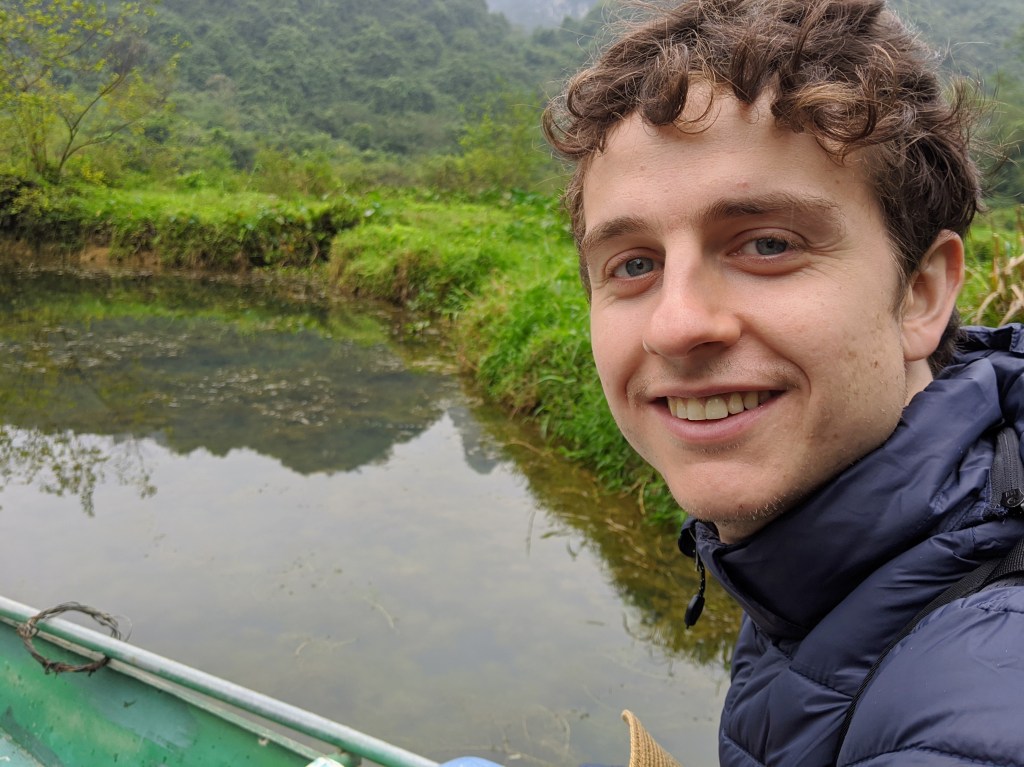
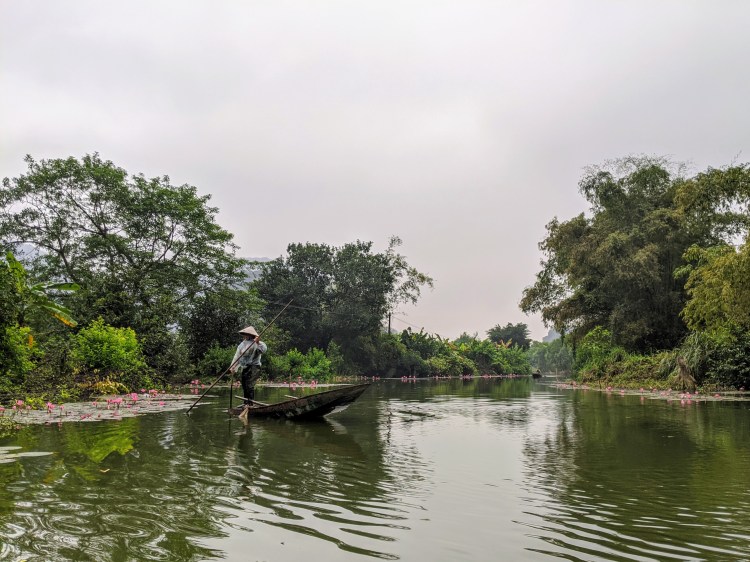
The canal was our next stop. We were taking a rowboat down its green waters. We got in before we realized Yin was not coming with us. He was leaving us in the care of the boat’s rower, an older-looking Vietnamese woman. She spoke French fluently and English not at all. I was too busy looking at the canal and its many fuchsia water lilies to notice the most interesting thing about her, though. Aaron clued me in; she rowed the oars with her feet, pushing them forward with the pads, then pulling back with her toes. We rowed leisurely past houses with a picturesque, old-world look. We rowed through tall, reedy grasses and under a Japanese-influenced dam gate. We rowed until the narrow canal opened into a wide river, filled with ducks and shaded by giant karsts. 

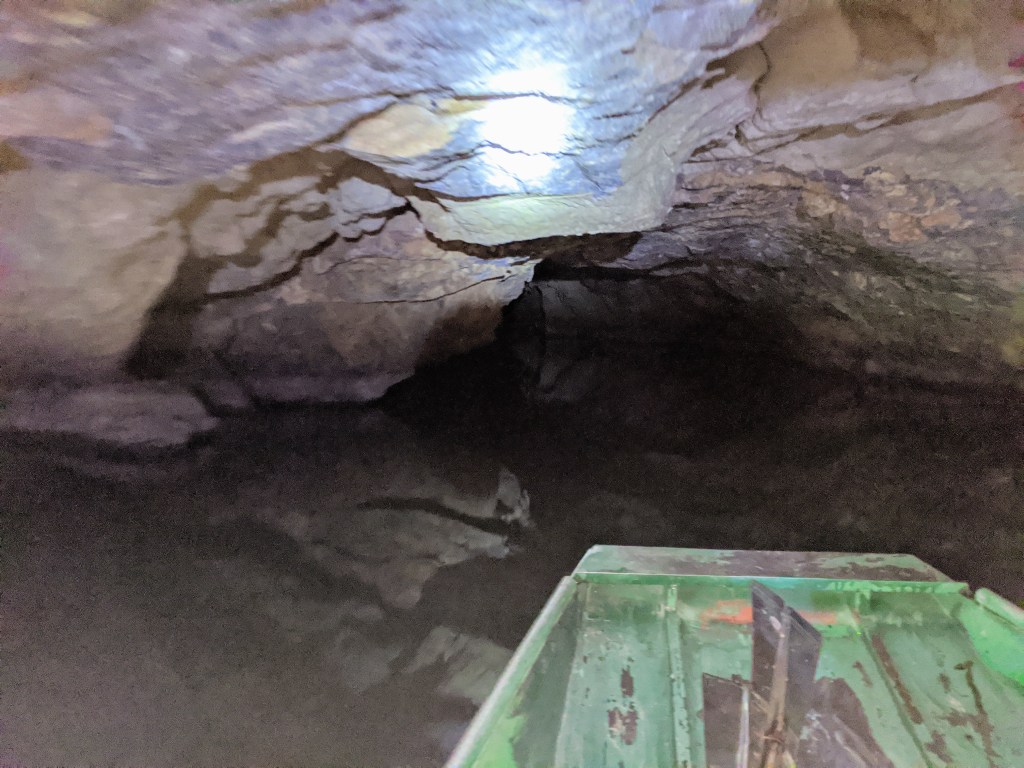
We came to the end of our journey at one of these limestone behemoths– or at least, that’s what I thought. Our rower (row-ess?) was trying to tell us something in French. I looked from her to the karst in front of us, trying to figure out what she wanted. Why was she pulling out a headlamp? Wait, was she rowing us into that pitch-black hole in the karst formation? Would we even fit? We ducked our heads as she pushed through, continuing down the river that wove through the cave. 

Inside, the lone light came from her headlamp. Hitting the water, it reflected the stalactites and crevasses of the cavern’s roof. We were floating through an eerie mirror-world, ourselves at the center of its perfect, horizontal symmetry. I was torn between gawking at the cave’s welled walls and looking out for potential concussions, but I managed. We rowed through two of these limestone caves and both times it was thrilling, spooky, and unforgettable. 

The second cave birthed us into an edenic cove, slowly revealed to us as we traversed from our dark wonderland. The cove was walled on all sides by limestone thrusting from the earth, blanketed in lush, green growth. Sun gilded the grass. The air was still as stone. The water was glass. The quiet gathered around us like mist– palpable, soft. Everything, at once, felt exactly as it should be. No atom in the universe was misplaced. I took Aaron’s hand, inhaled the silence that smelled like sea-grass, and felt the sweet sting of tears welling in my eyes.

I don’t know how long we stayed there– it was somewhere between 10 minutes and an hour. Eventually, our rower began to take us back through the cave from whence we came. Before we could enter the karst’s cavity, though, the silence of our paradise was pierced. A chittering ruckus was coming from the top of the rock formation. A troop of monkeys had intruded into our natural temple. We stayed a few minutes more to watch them leap from branches and cling to vines, then returned the same way we came. 

For lunch, Yin took us to the house of a local family. It had two rooms, constructed of concrete, in addition to an outhouse. One room had two matress-less beds flanking a coffee table with a few chairs around it. Behind the table, centered in the room, was a fruiting mandarin tree. These trees are for Tết, traditionally symbolizing prosperity and luck because of their fecundity. The second room was a bare-bones kitchen. Outside they had a garden, appointed more plentifully than their indoors– with fruiting trees and flowering shrubs. This is where we took our lunch. The matriarch of the family brought us dishes until no more would fit on the table: buttered, slow-cooked cabbage, banana blossom salad, fried rice paper rolls filled with pork and seafood, glass noodles in broth, some sausages I was told were “only for Vietnamese people,” (fair enough; my stomach was too sensitive right now anyway), fried fish, stir-fried chicken, and glazed tofu. We capped it all off with a cup of green tea, patting our bellies satisfactorily, ready for the next part of our day.
Hanoi: Day 5

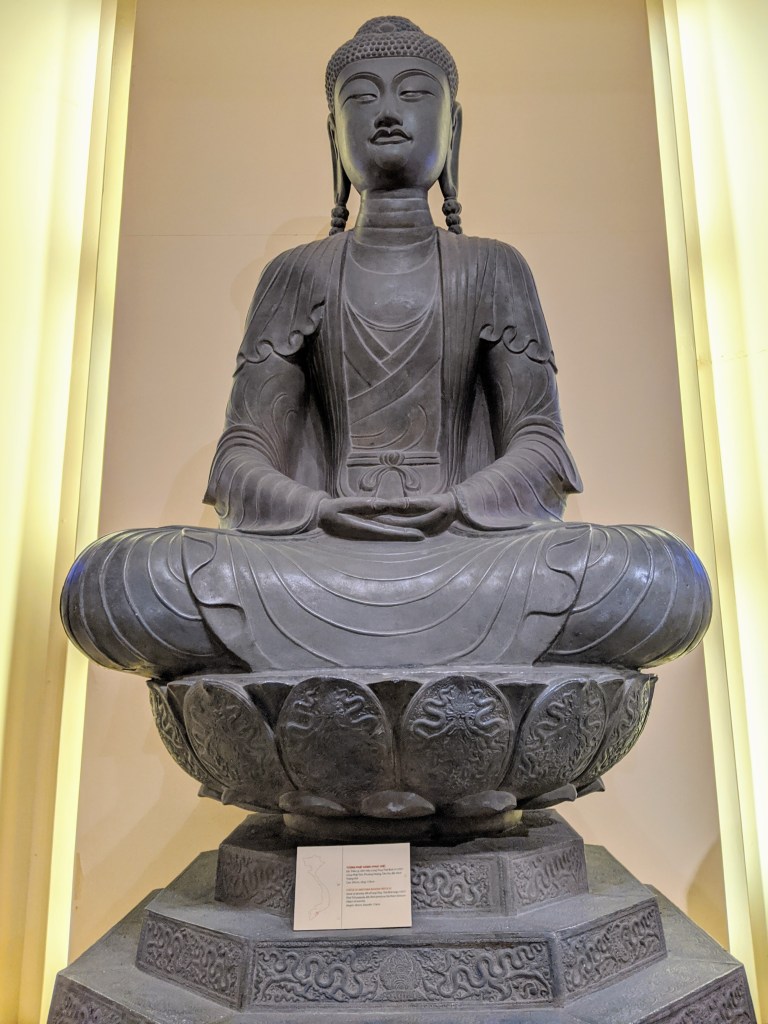
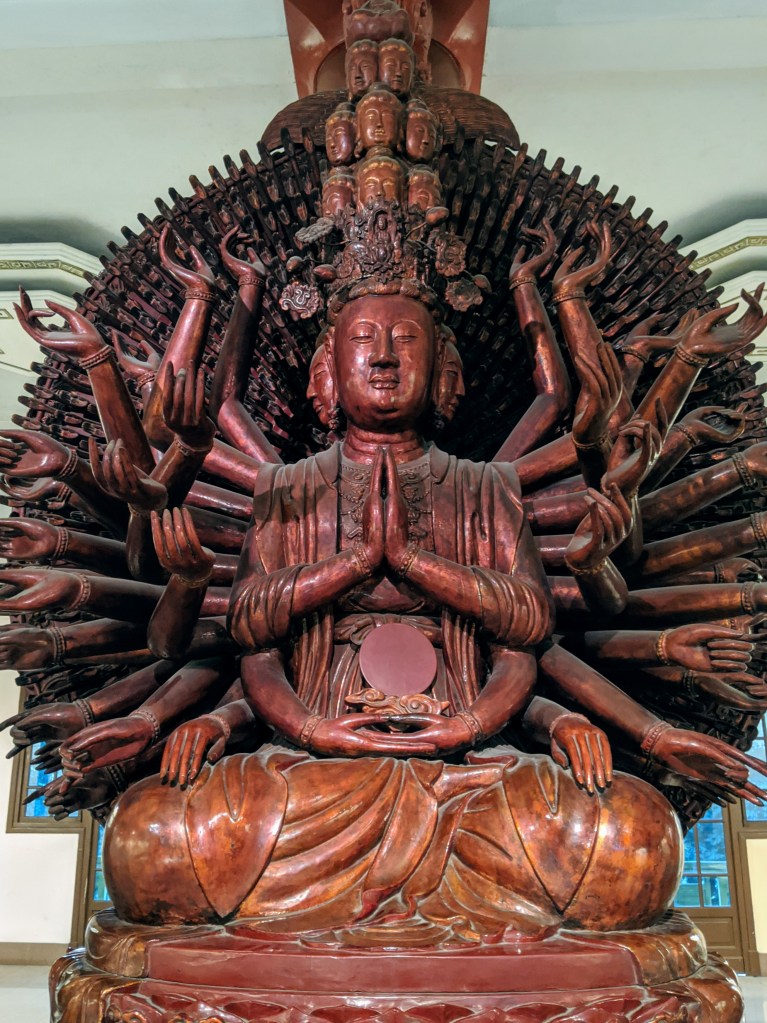
Museums here often close during the lunch hour (or two), so we had to browse in the museum shop for a few minutes before the ticket counter opened. The History Museum itself was small, but its collection was well-curated. On either side of the lobby were two avant-garde art installations that seemed out of place, but the main collection was full of beautiful art pieces and artifacts from as far back as 300,000 years ago. Aaron and I had the most fun gawking at the statues recovered from temples. We picked our favorites from the naga and dragons and, of course, Buddhas. One thing that struck me is how fantastical it all was. Art in the West didn’t get very surrealistic elements until late in the modern era. Or, at least, they were much less common (big ups to Hieronymous Bosch). Ancient Greek vases depict humans fighting or hunting, but ancient Vietnamese vases depict demon-dogs and flying dragons. 

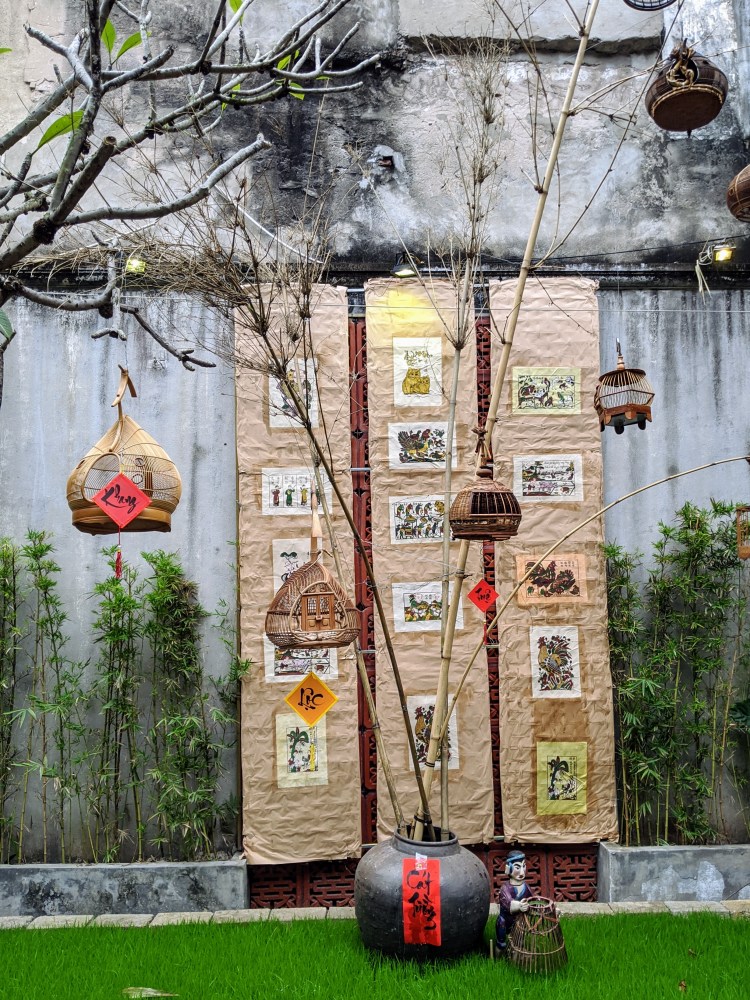
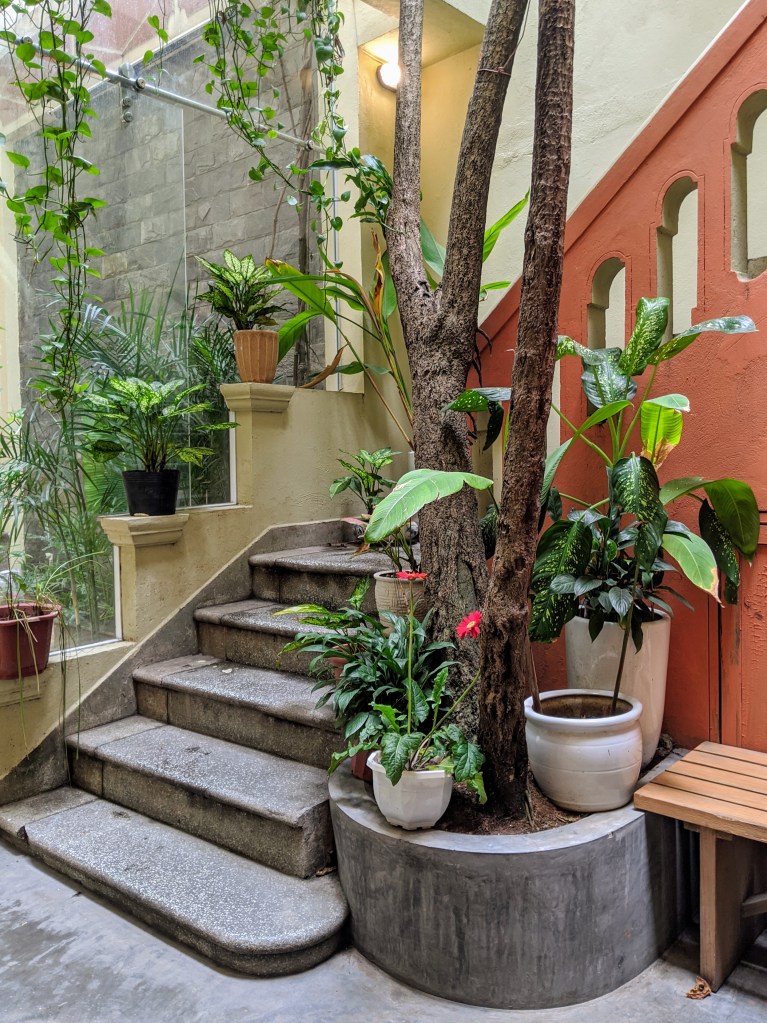
After the museum, on our way back to the hostel, we came upon a greenhouse. Or maybe it was a small, indoor botanical garden? Maybe a garden shop? Google had two entries for it: shopping mall and cafe, neither of which were immediately apparent answers to the question of what it was. When we asked someone inside they said it was a “tea shop,” but the ratio of tea that was being sold to plants that weren’t was ridiculously high for a tea shop.  We’re still not 100% sure where we went, but it had a beautiful garden. 

We went back to the hostel for our late afternoon rest. Lately, that rest seems to be getting longer and longer. I’m not complaining; travel is overwhelming and exhausting, in addition to being the most fun you can possibly have. Plus, Aaron and I had promised each other that we would put on our party pants and actually make a night of it, for once. Maybe even stay up past 10:30, who knows? 

We started by taking advantage of our hostel’s free beer hour and downed a few Bia Hois (Hanoi’s PBR) before hitting the town. Dinner was at Blue Butterfly, which was a cute place and I’m sure had excellent food, but I was getting kind of tired of meat. I ordered bun cha, but I don’t know why I did. I could only eat a little bit of it. To be fair to Blue Butterfly, what I did eat was very good; I’m just getting a little sensitive about the food I want to eat. I’m not used to having so few choices in terms of cuisines. Americans are spoiled with variety. We can have pizza one night, then sushi the next, then Thai, then Mexican, then New American (whatever that means), etc. In Hanoi, 90% of the restaurants are Vietnamese. Luckily, Vietnamese food is very good, but there are still nights when my stomach rejects the notion that it should eat yet another incredibly flavorful dish. That’s right– I’m getting sick of flavor. 

We popped into a Japanese convenience store for some peach gummy candy dessert. One was your standard gummy, but the other package we bought was more the consistency of noodles. By this point, it was actually getting kind of late. We’d made ambitious plans for the evening, hoping to end up at a dance club hosting a 00’s night on the outskirts of the city. Those were mutually scrapped in favor of one more drink at Hanoi Social Club. We tried our best, but, in the end, we’re an old married couple and there’s no use fighting it. Hanoi Social Club, like almost every place we’ve been here, had a small, garden-variety first floor with stairs leading to a fun, semi-secret second floor. The second floor here and everywhere else usually has a lot of old world charm. I’m really into these Hanoi second floors. We got tipsy and ordered a sandwich and made our version of a night of it. Who wants to get sweated on by a bunch of 21-year-olds when you can have a fascinating conversation in a small, secluded cafe with your philosopher-king of a husband? 

The next day was a lazy one. I’m ashamed to admit we were hungover– ashamed not because we drank so much, but because we drank so little. I’m getting old. We didn’t even get out of bed until 11 or so, and when we did, it was to get some really lame Western food. It was all my hungover tummy could take. After some extremely mediocre fish and chips, I was feeling up to several more hours of doing nothing.

Hanoi: Day 4

Yesterday was lazy, boring, and wonderful. Aaron and I passed several hours in our local favorite cafe, Coffee A. We sipped iced coconut coffees, wrote, and planned our trip. Coconut coffee is a Vietnamese treat that’s sort of like a Starbucks Frappuccino, but with coconut milk, condensed milk, and coffee that isn’t burnt to shit. We enjoyed ours at an indoor table on the second floor, the sound of traffic coming in from the open balcony doors. Honking here is more like a “hey, mate, just letting you know I’m here” than a “wtf are you doing?!” In fact, as I sit here writing this, I’m hearing at least one honk every two seconds from the street below. It’s almost a kind of white noise at this point. Road rage also doesn’t seem to be a thing here. I’ve seen people crash into each other (at low speeds, mind you), then just keep going like nothing happened. It’s kind of nice, even if Aaron and I struggle to maintain our cool as pedestrians. 

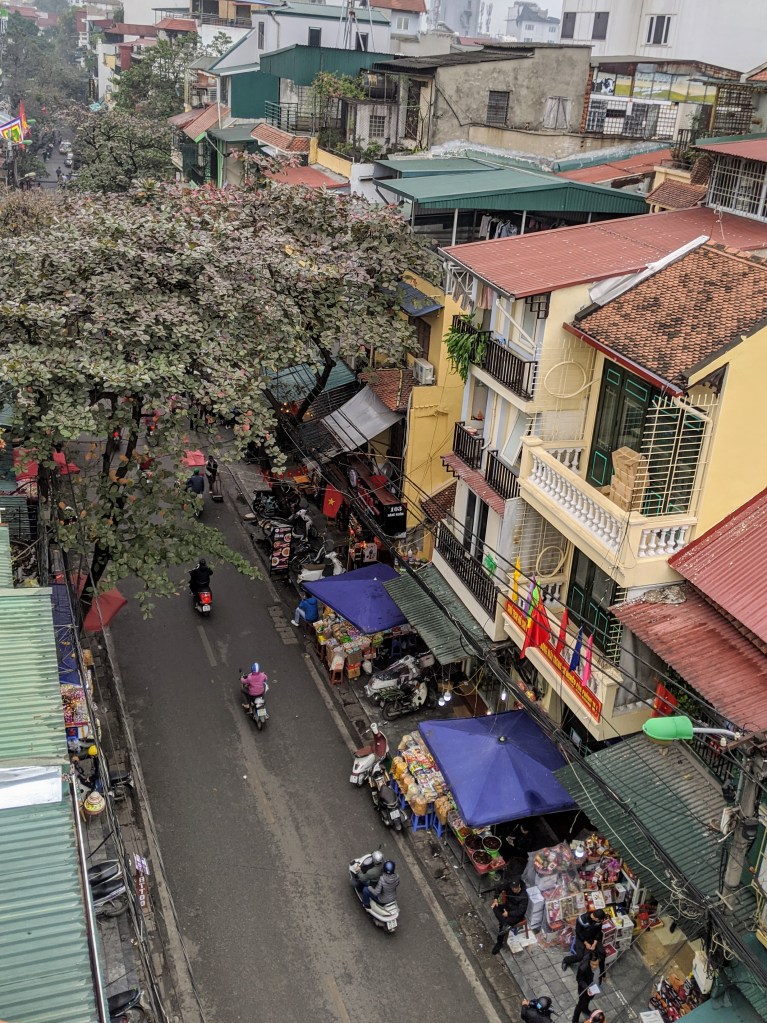
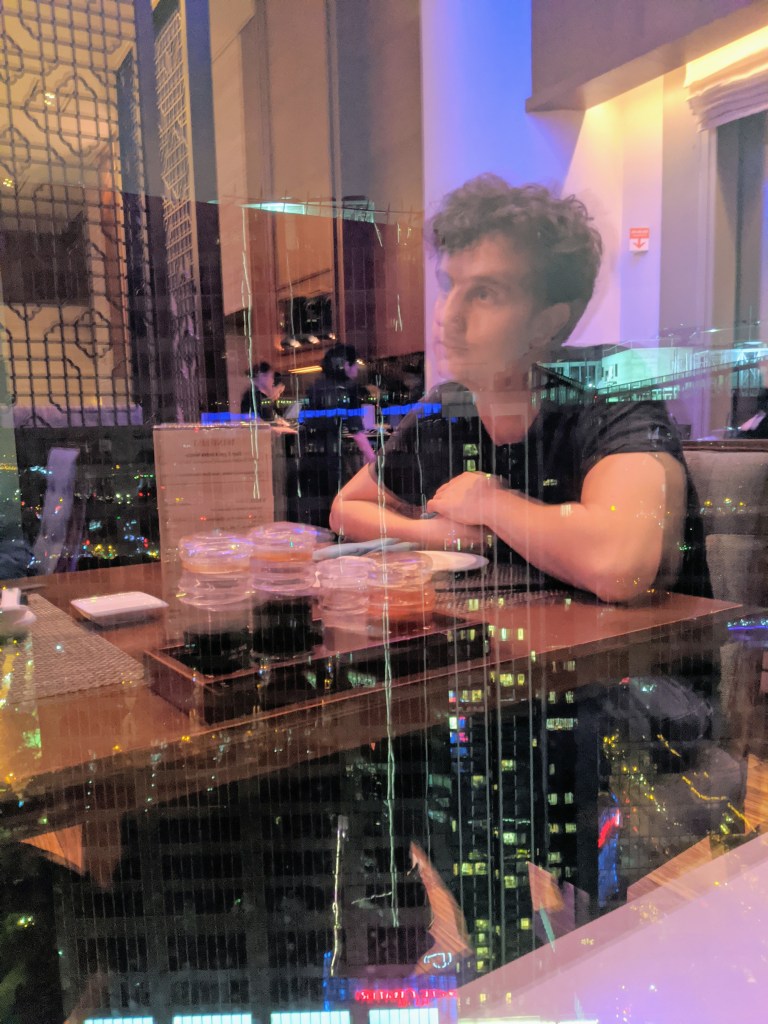
After our lazy afternoon, we decided to check out the scene from the heights of the Lotte building, where you can get a bird’s eye view of Hanoi. You may pay some exorbitant amount (at least, by the affordable Vietnam standard) to go to the viewpoint, or you can do what we did: book a window table at Tim Ho Wan on the 63rd floor. Tim Ho Wan’s flagship restaurant is in Singapore, where it got a reputation for its excellent dim sum. The restaurant in Hanoi is just as good as the view its floor-to-ceiling windows provide. We ate an unhealthy amount of BBQ pork buns (2 orders), fried sesame balls filled with sweet egg yolk, and shrimp dumplings, while we felt the zooming traffic below fade from daily stressor to pretty, faraway lights. We talked about language and the Sapir-Whorf hypothesis (the idea that consciousness is shaped by language). This led to an interesting experiment where we only spoke in the 1st person plural for the entire meal (it’s a lot harder than it sounds). It was a lovely date, and we returned to our hostel stuffed and satisfied. 

The next morning, we wanted to visit the Museum of History, but we accidentally navigated to the Museum of Military History, across the street from a gigantic statue of Lenin. I find military history both boring and upsetting, so we corrected our navigation and set off in the direction of the Museum of (Not Military) History. We stopped for a beverage at the nearby Atelier cafe. Aaron and I both got nitro cold-brew concoctions because, as in Chiang Mai, the coffee in Hanoi is excellent and the specialty drinks are masterful. Nitro cold-brew, for the uninitiated, is coffee that has been brewed by steeping in cold water for a long time (this, I’ve been told, produces a less acidic taste) and had nitro-carbonation added (like Guinness). As you can imagine, our drinks tasted more like fancy sodas than coffee: mine had notes of salted caramel, Aaron’s was citrusy and vibrant. 

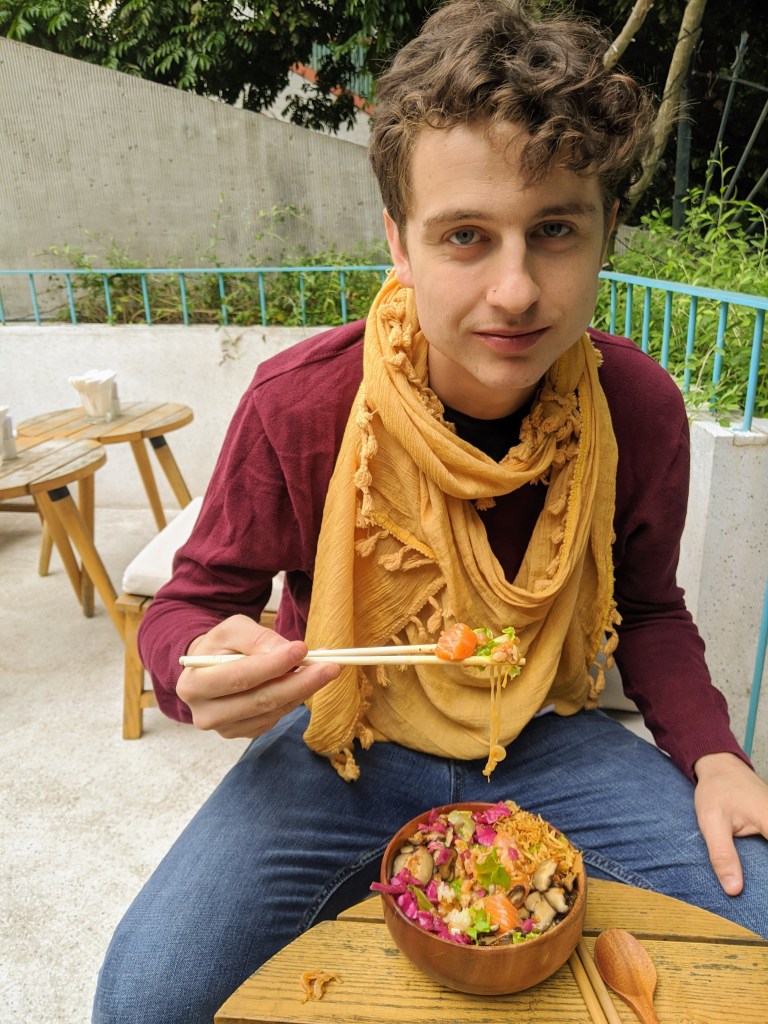
By this point, we were hungry. Since hunger had cut our last Ethnology Museum visit a touch short, we decided to go ahead and eat before we got to the museum. Poke Hanoi is a hidden, but modern, place on the second floor of a building overlooking Hoan Kiem Lake. If you blink, you’ll miss the sign, but squeeze through the narrow alleyway and make your way up the stairs and you’ll find yourself in a cleanly-designed, light-filled space. It’s like Chipotle, in that you choose a base, a protein, and toppings, but instead of building a burrito, you’re building a bowl full of raw fish. Aaron and I both got “The Savory”: spicy salmon, fried shallots, quail eggs, mushrooms, and pickled red cabbage on a bed of rice. The fact that Aaron, my fish-hating husband, said it might be his favorite meal we’ve had so far should tell you how good it was. The fish was buttery like avocado, but also sweet and tangy and salty. And I’ve now decided I like pickled quail eggs. We got to enjoy our bowls at the only table overlooking the lake. 

After lunch, we worked our way over to the History Museum.

Hanoi: Day 3

Apparently, Cocoon Inn was turning 3 years old. That’s what we learned when we rode the elevator to the bar after our naps. To celebrate, they were serving cake and fruit in addition to the already free beer they gave out at happy hour. Aaron and I did our part to join in the celebration by singing “Happy Birthday” to an accompaniment of the eponymous song that could only have come directly from a 90’s kid’s birthday party at Chuck E. Cheese. We drank our free beer and ate our free cake and decided this hostel was really growing on us. 

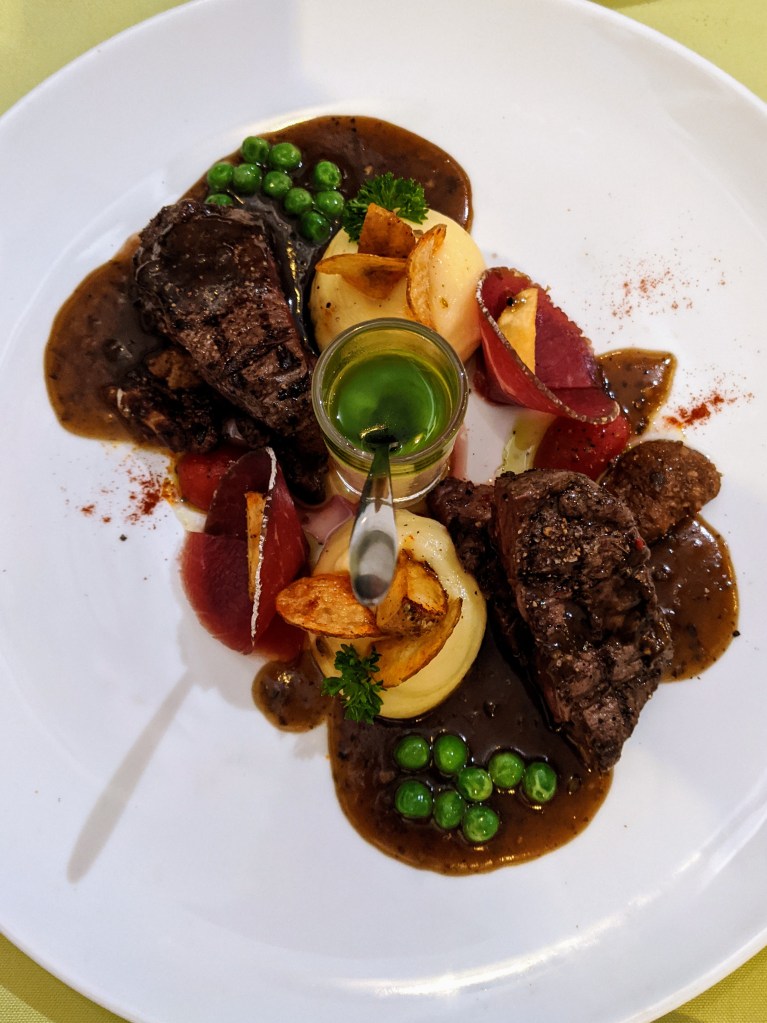
Dinnertime rolled around, and we grabbed a taxi to La Badiane. Today was laundry day, and the only clean clothes Aaron had were his nice shirt and pants. “If we’re going to eat somewhere fancy, can we do it today, so I don’t have to wear these dorky clothes again?” he asked. I obliged. La Badiane was that somewhere fancy. Inside, a live string quartet played “The Entertainer” to the white-tableclothed crowd. Artistic, black-and-white pictures of very sad-looking Vietnamese people were an interesting choice for wall decor, and our waitress tried at every opportunity to upsell us, but I thought the food was fantastic. It started with an amuse bouche pairing of pumpkin soup with a salty tomato salad, followed by a smoked salmon cannelloni (their name for it, not mine), and ended with a tenderloin steak with prosciutto, blue cheese, truffled potatoes, and a red wine sauce. I’m not really a steak person, but this was divine. Aaron shrugged. “It was fine,” he said. I got huffy– indignant, even. Why couldn’t he just make me happy and pretend to enjoy himself at one of these schmancy places? Wasn’t good art good art, no matter who its intended audience was? Wasn’t it just as snobby to turn your nose up at opera and wine sauce as it is to turn it up at tacos and punk rock? I sulked all the way home. 

Then, this morning, it hit me. He was trying to make me happy and enjoy dinner at the schmancy places I dragged him to. The mere fact that he was showing up and game was his way of showing that, and I couldn’t be mad at him for not being as impressed with the food as I was. It’s not like he pouted all the way through dinner or anything. I asked him what he thought of the food, and he gave an honest opinion. You can lead an Aaron to champagne, but you can’t make him drink. I chalked my mood from last night up to exhaustion and apologized. All was forgiven. 

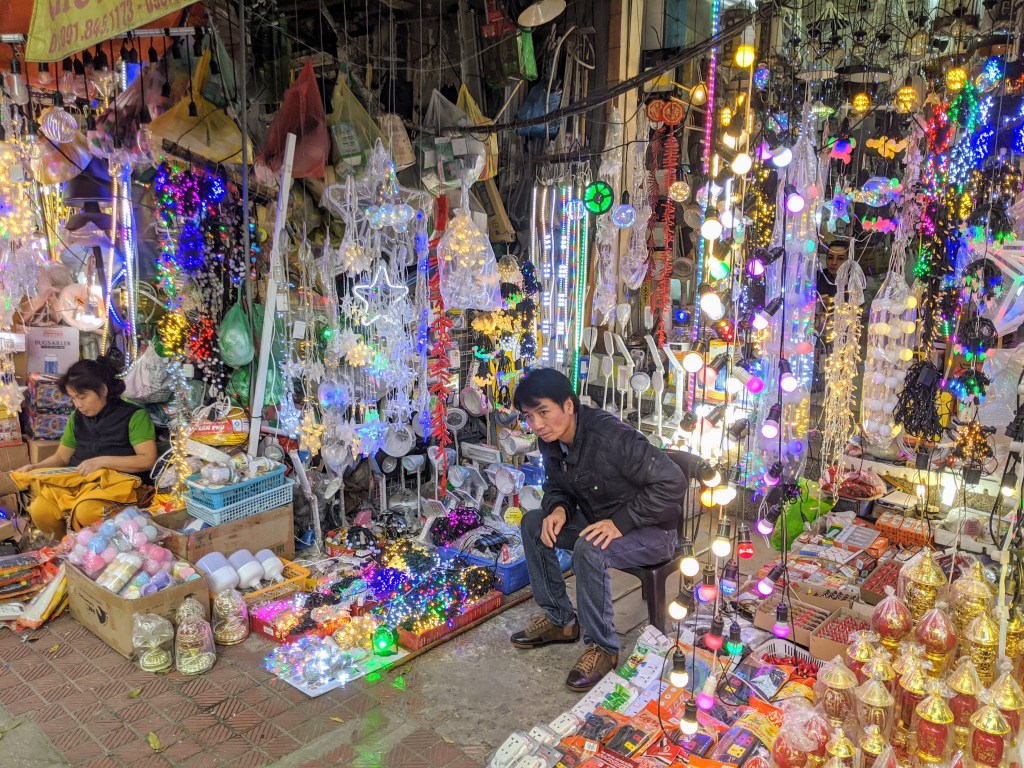
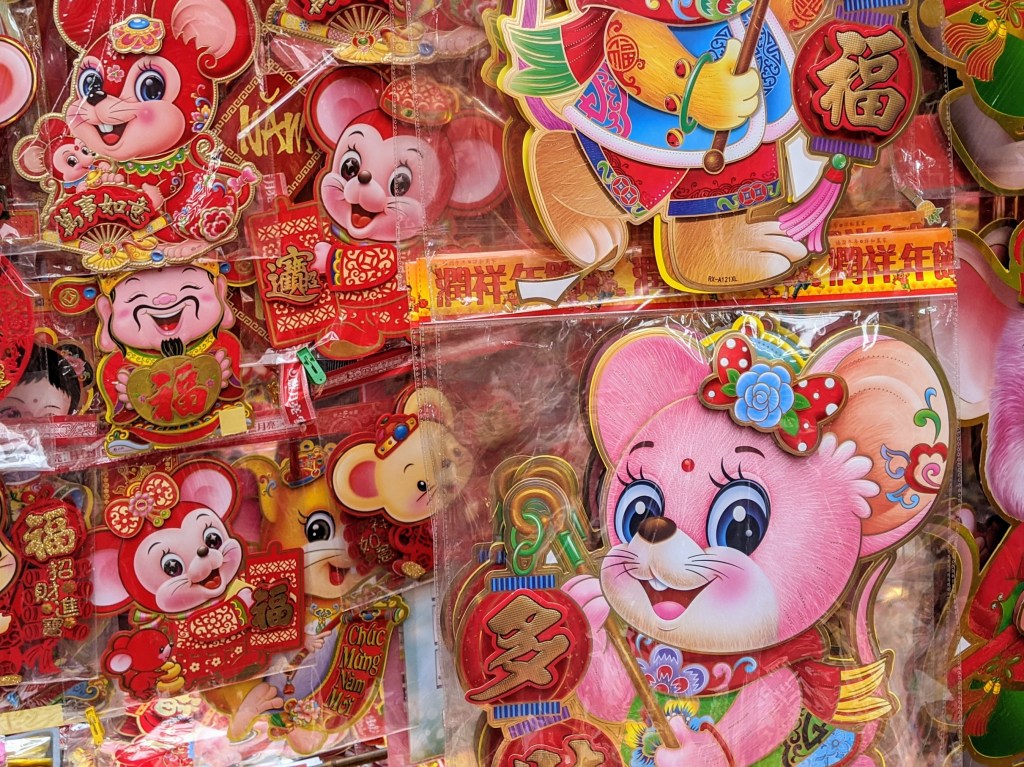
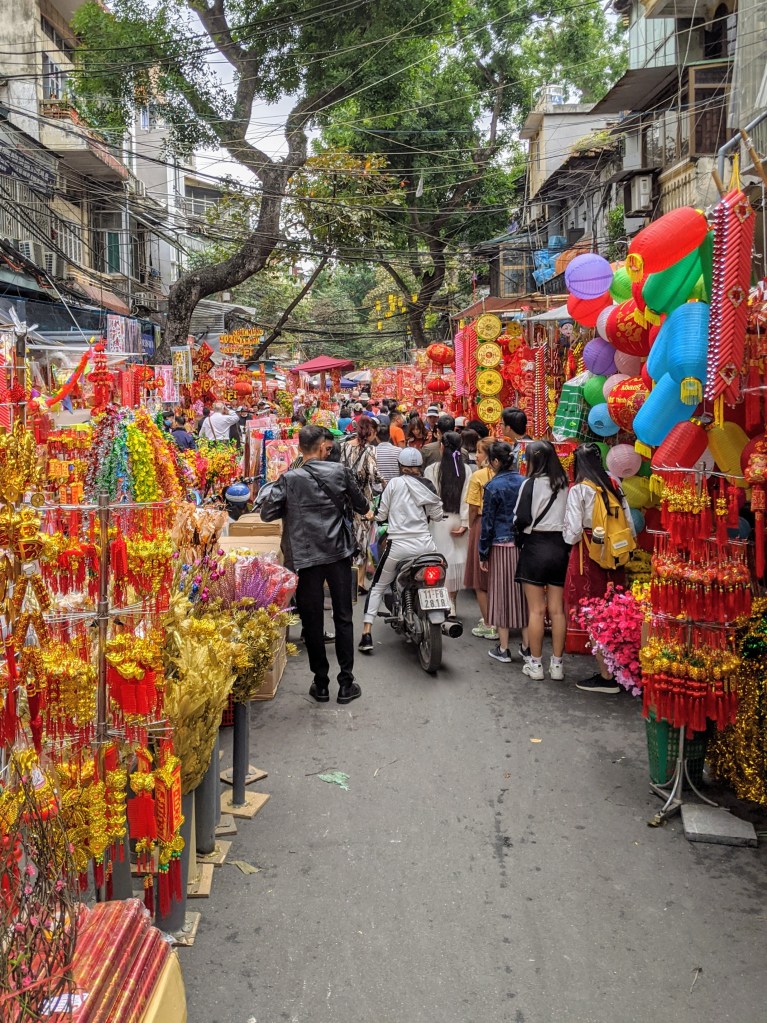
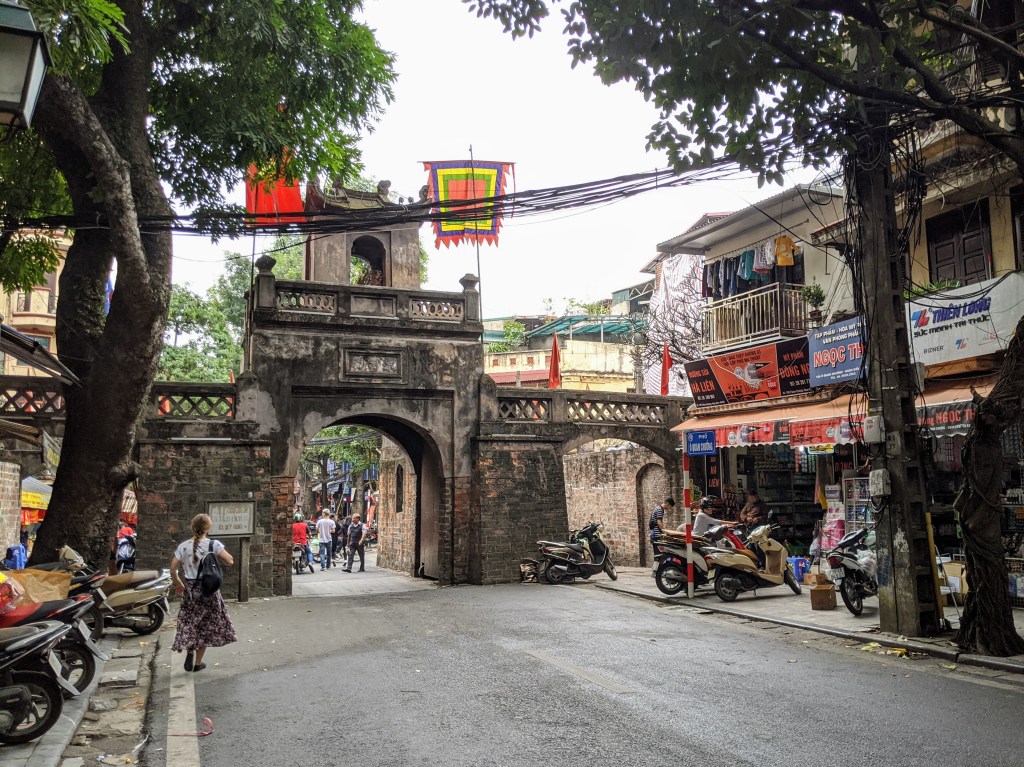
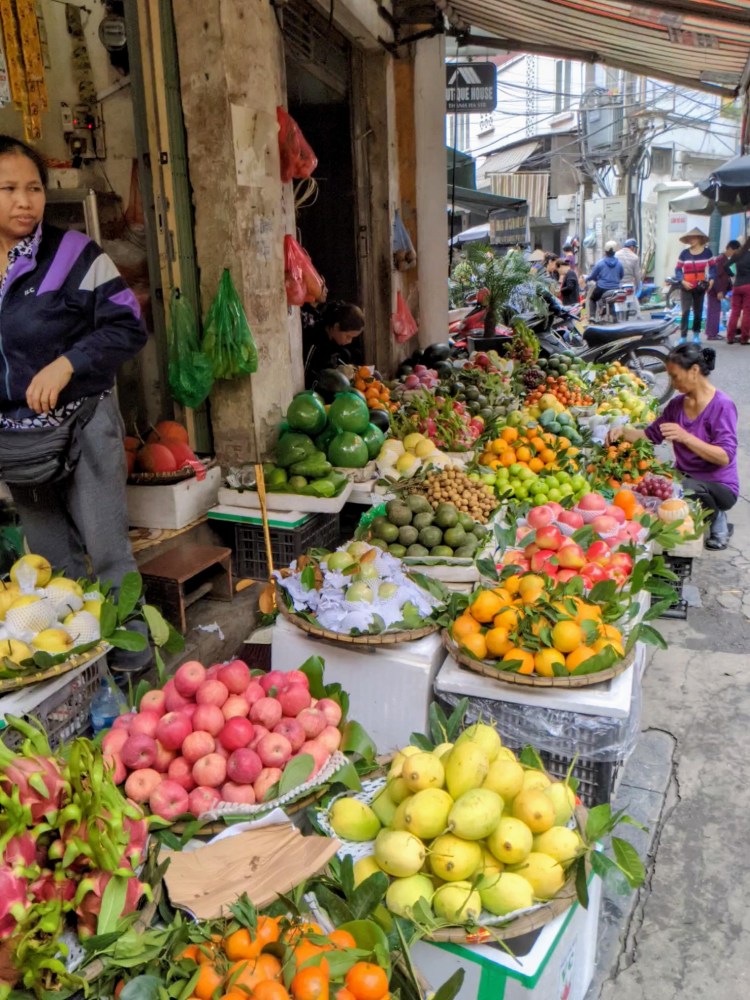
After another lackluster breakfast at Cocoon Inn (but hey, it’s free), we decided to continue our walking tour of Hanoi’s Old Quarter. We started at the Old East Gate, which was exactly what it said on the paper, then meandered through the various street markets. I’ll be honest: for me, the markets in Hanoi are upsetting. Dead animals, live animals being mistreated (watch this blog for Aaron’s thoughts on this), and very busy foot and car traffic leaves me stressed and sad. The New Year’s market, at least, was selling only decorations and gifts. The crowding and sharing of the street with scooters stressed me out. Still, all the red lanterns and cartoon rats (this upcoming year is the year of the rat) lifted my spirits. After a couple of hours of weaving our way through it all, though, we needed a coffee. 

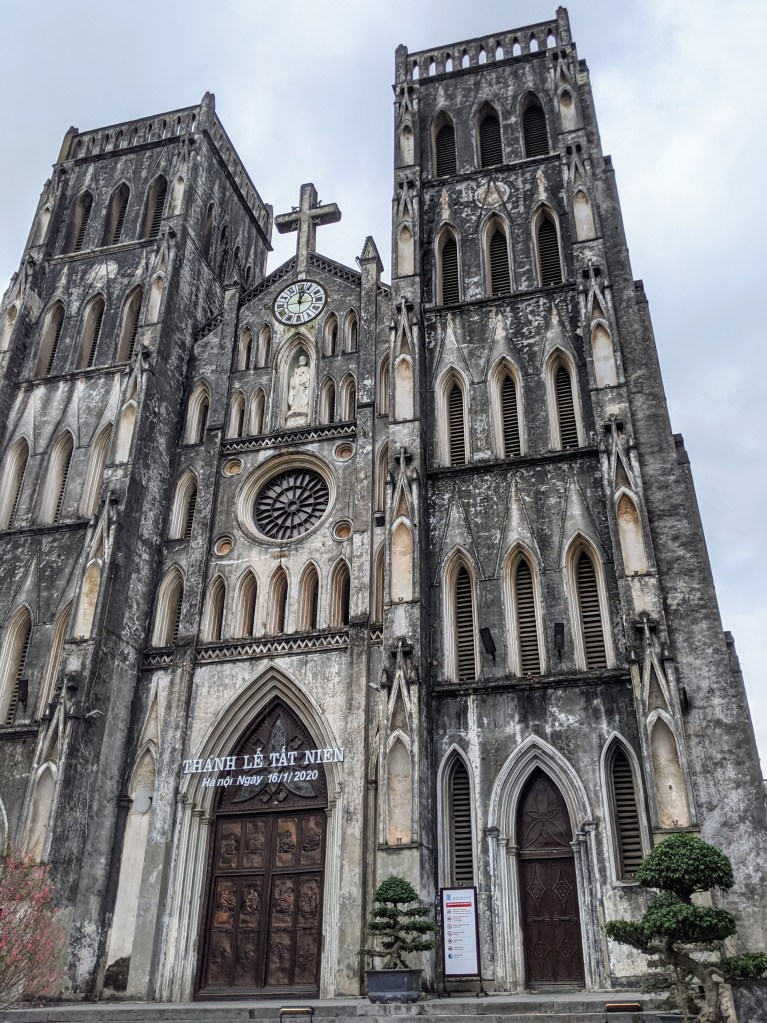
Google recommended the Blackbird Cafe. It was a cute, courtyard-ed building that clearly catered to western tourists. We unwound and re-charged, then made our way to St. Joseph’s cathedral. On the way, we stopped for another street stall lunch. This time, banh goi was on the menu. Banh goi is basically Vietnamese empanadas, filled with pork and vermicelli, that you dip in one of those broth-sauces I so love. Ours were delicious and uncomplicated. The cathedral was closed for another hour, and we’ve seen cathedrals before, so we walked back to the hostel for some r&r.

Hanoi: Day 2

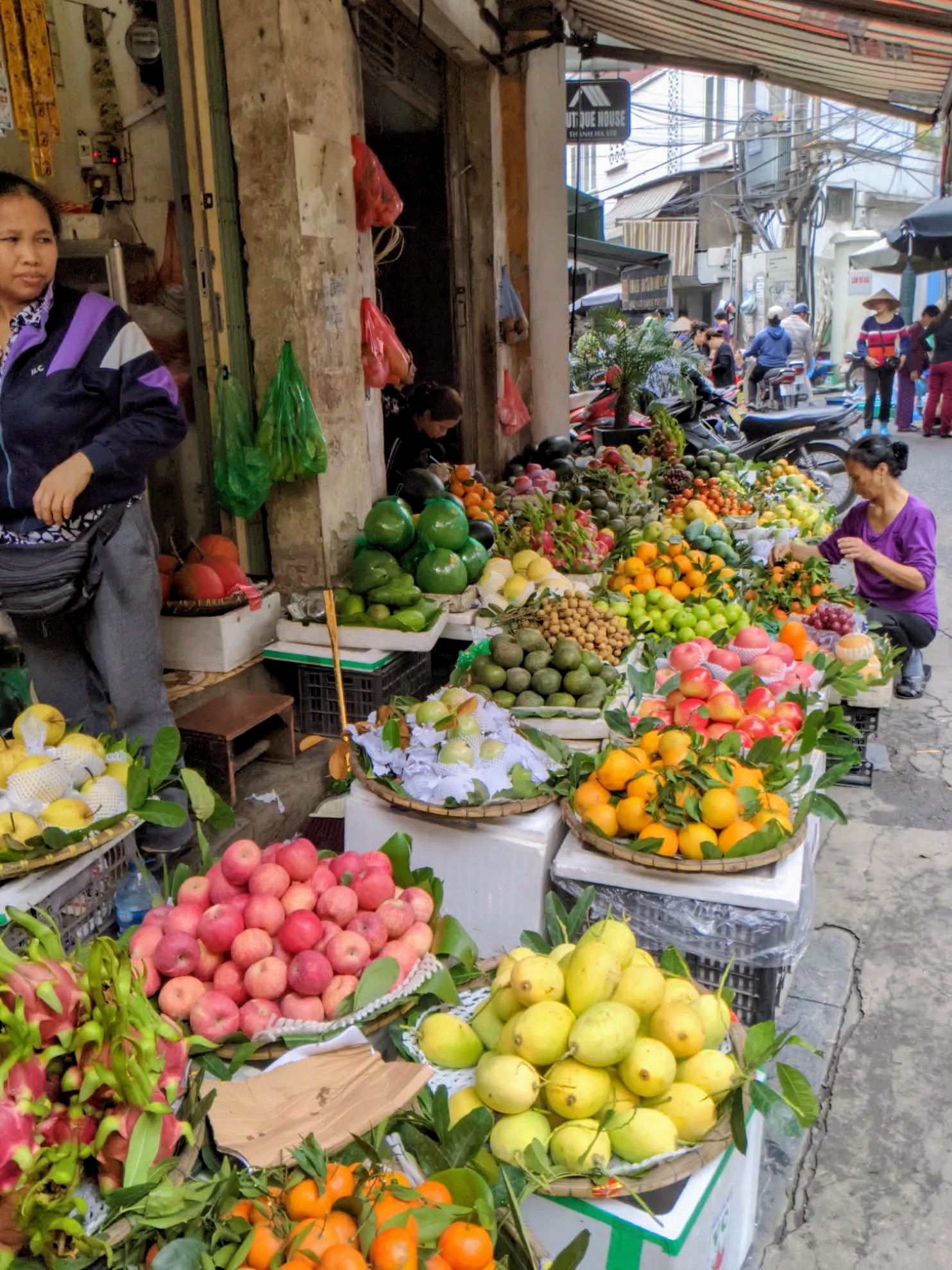
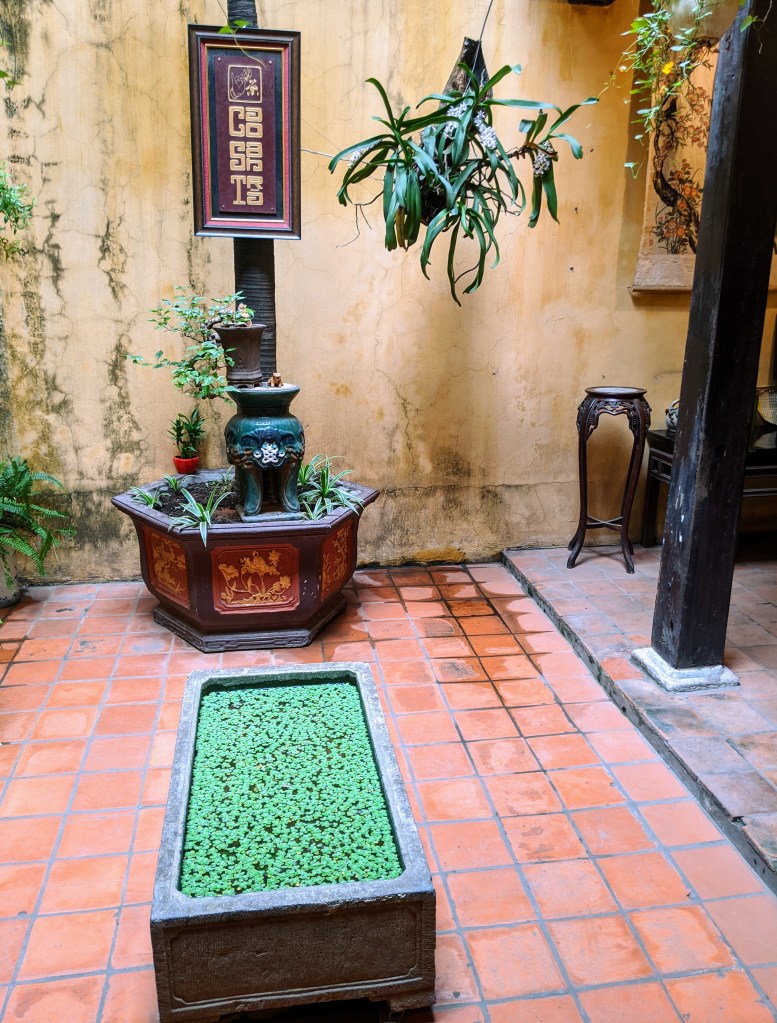
After fueling up at Garden House Restaurant, we were ready to chew some sidewalk– except Hanoi doesn’t so much have sidewalks as it has scooter parking and fruit stand space. Our first stop was the Heritage Tea House in Old Town Hanoi, a restoration of a traditional merchant’s home. It was small, but intricately detailed and historically accurate. It also had a lovely tiny courtyard. Why did we stop putting tiny courtyards in middle-class housing?

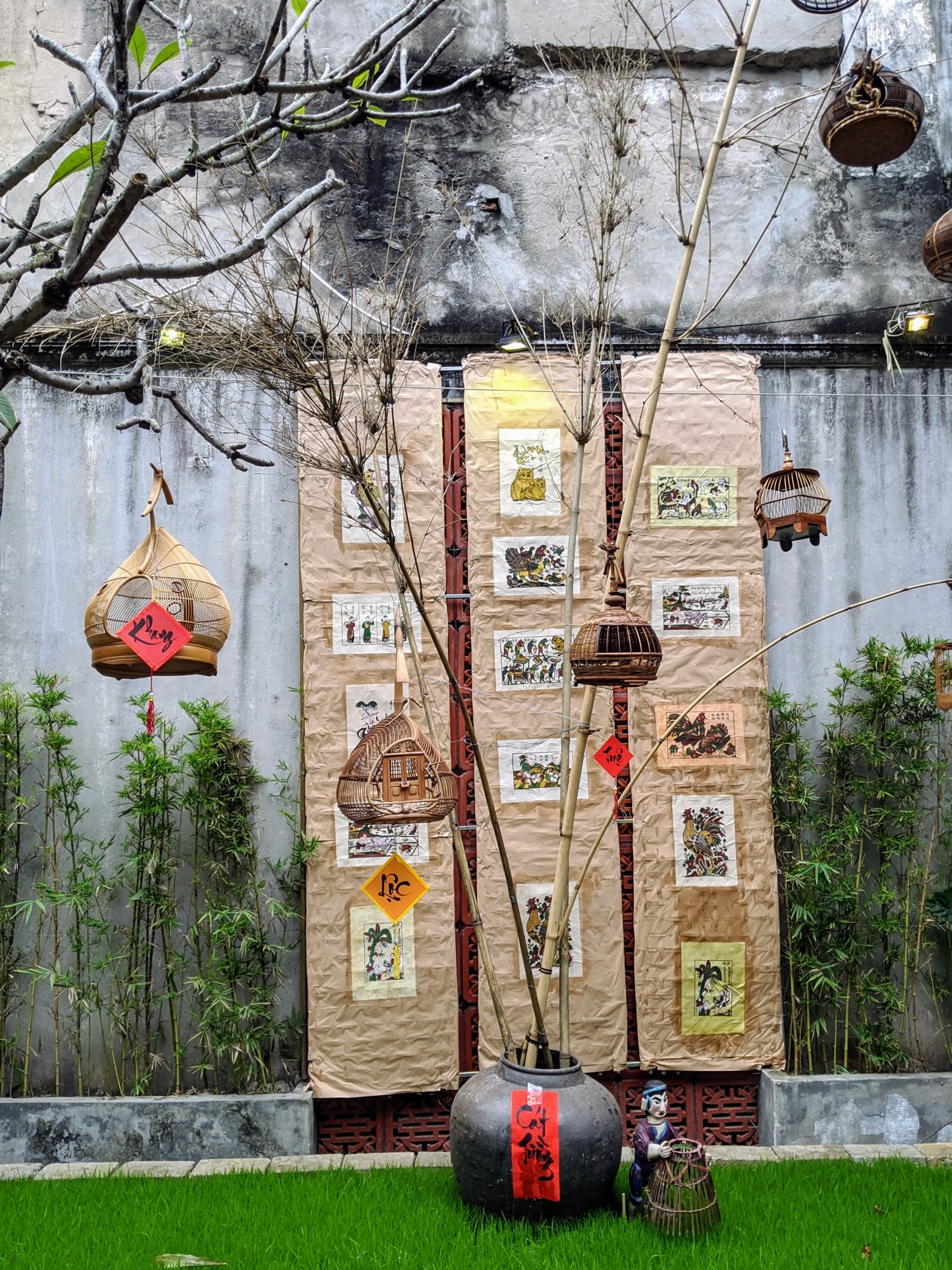
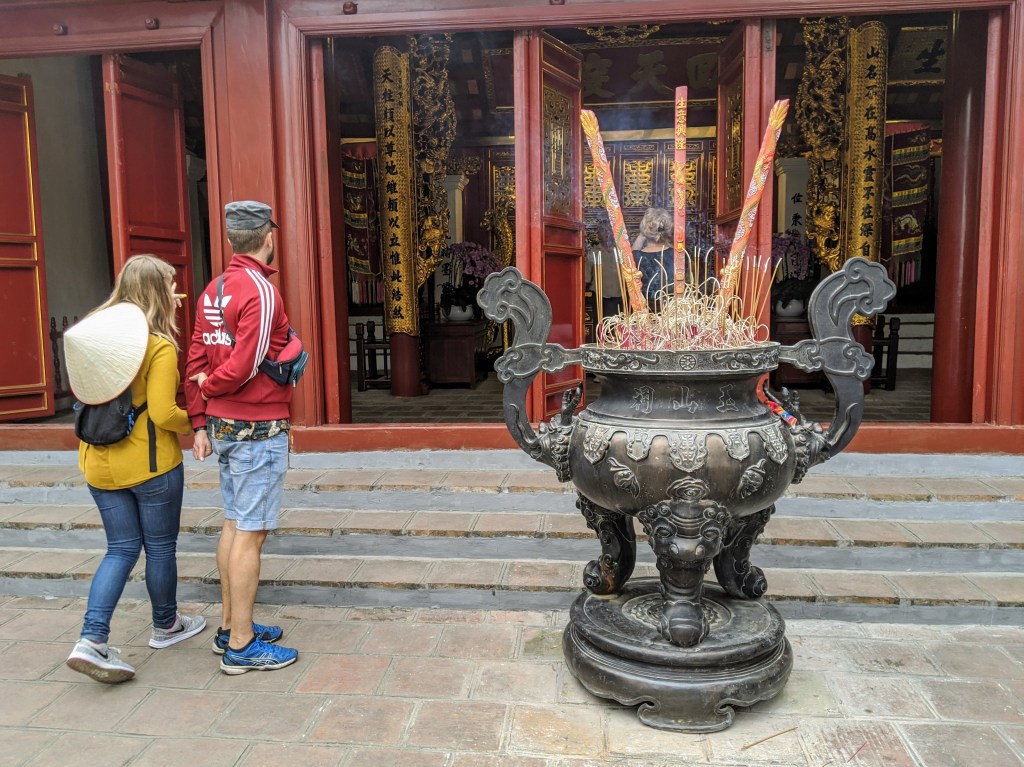
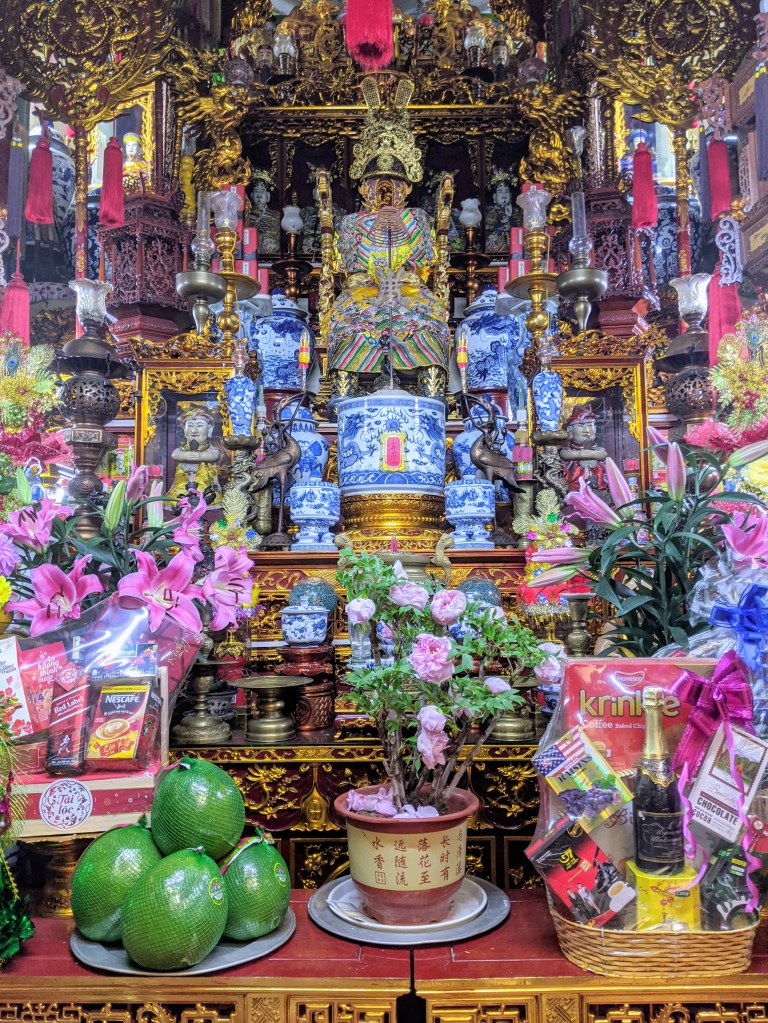
Next up was the temple at House 102, which is both a real house and a real temple. It was a bit hard to find, tucked behind buildings and only accessible through a narrow hallway/alley. When we arrived, there were several groups of people working on putting together decorations for Tết. Tết is the Vietnamese New Year celebration, and it’s sort of like Christmas here– at least in terms of importance, decoration, and the necessity to buy a lot of shit. Upstairs, we found the shrine. It was a tall, technicolor, tangle of statuettes, flowers, vases and candles. Once again, I was not 100% certain that I knew who or what the shrine was for. Definitely need to do a bit more research on the local religious beliefs. 

Tạ Hiện is one of the famous pub streets of Hanoi, and it’s where we headed next. It reminded me of Bourbon Street: flashy, ugly bars with flashy, bad drinks, an overabundance of tourists, and some very pushy panhandlers. Fortunately, we were able to find a  bar serving craft beer a bit away from the hubbub. The Hill Station Bar was quiet, but we still had to deal with several shoe-shiners approaching us as we sipped our passion-fruit wheat beers outside. We were pretty beat after a morning of playing real-life Frogger with scooter traffic, so we headed back to the hostel. 

For dinner, I wanted to check out Binh Minh Jazz Club. Apparently, jazz is kind of a thing in East Asia, and many of the cities we’re visiting have popular jazz bars that fill every night with locals and tourists alike. I wanted to beat the crowd, so we headed over early to eat dinner and wait for the show. The earliness was entirely unnecessary; the joint was completely empty when we arrived, and apparently the band did not start until 9. They served us mediocre Italian. The red sauce was sweet and Caesar dressing could have just been mayo. But we did get to have an interesting conversation with our waiter about the 53 ethnic groups that make up Vietnam. He told us about his village and his people, the Mường. They are the third largest ethnic group, and they live in the mountains of North Vietnam, though not in the highlands. In fact, the Mường’s name for themselves means “people who live in the middle,” to distinguish themselves from both highlanders and lowlanders. 

When we finished dinner, it was still an hour before the show would start, so we thought we would grab a drink at nearby Tadioto and wait. Tadioto’s vibe was very bohemian, but also, very affected. A page-long introduction to the menu described the poets, artists, and academics who started it all. I could have done without all the pretension, but the rum and passion-fruit cocktail they made me was dangerously drinkable. Aaron and I agreed that passion-fruit was an underappreciated fruit.  We decided to grow some at our house in North Carolina when we got back, and put it in all our cocktails. By the time we finished our drinks, it was after 9, but we were also pretty tired. We made a deal: if we returned to Binh Minh Jazz Club and the band was playing hot jazz, rather than the easy-listening cool jazz that neither of us are really fans of, we would stay. No such luck. We heard the first few notes of a Kenny-G-like sax solo and hightailed it back to our hostel. 

In an effort to return to the hip, young selves we previously were– rather than the jet-lagged, bed-at-9 losers we had become– we forced ourselves to stay up for one more drink at the Cocoon Inn’s always-happening bar. We met another couple on a similar holiday as us, and traded stories and recommendations. Our hostel may not be as Instagrammable or hospitable as the previous lodgings, but it’s a great place to meet fellow travelers. There’s always someone in the cafe-by-day-bar-by-night lounge. 

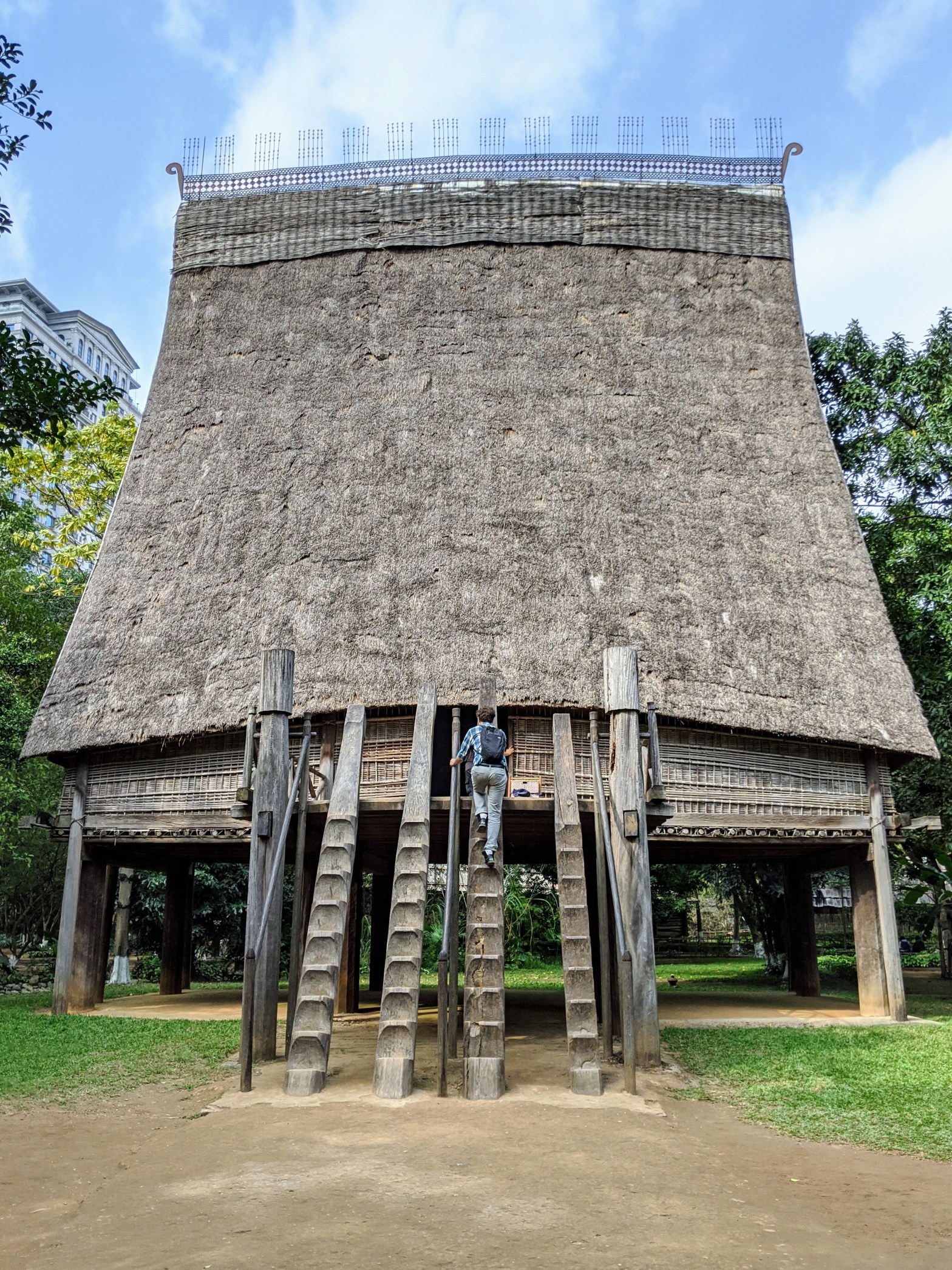
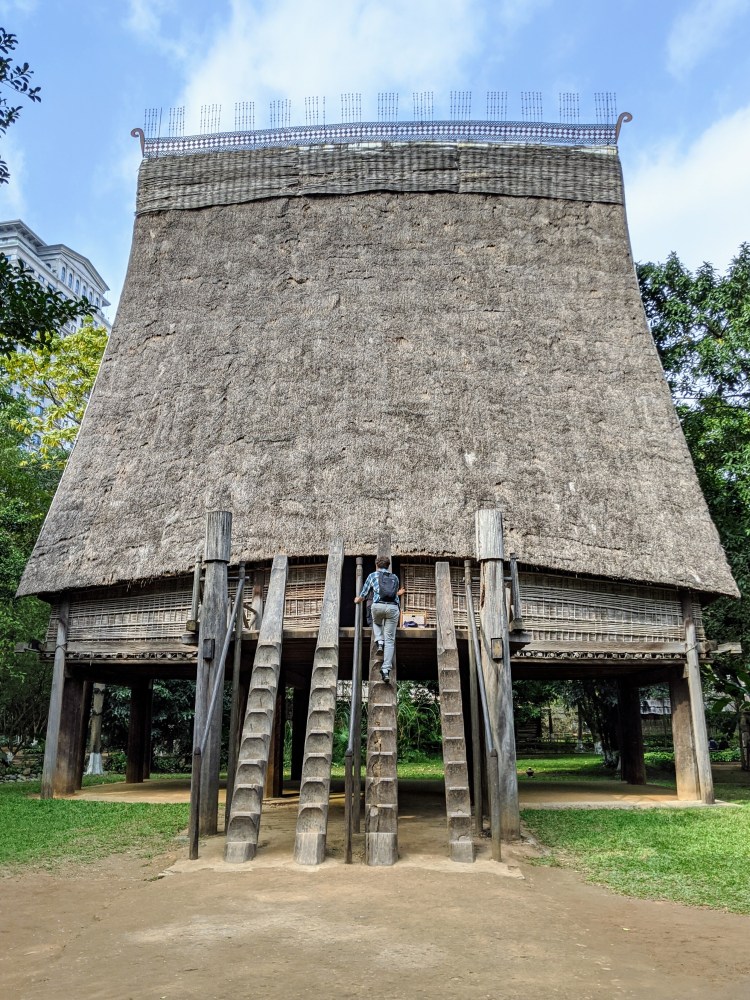
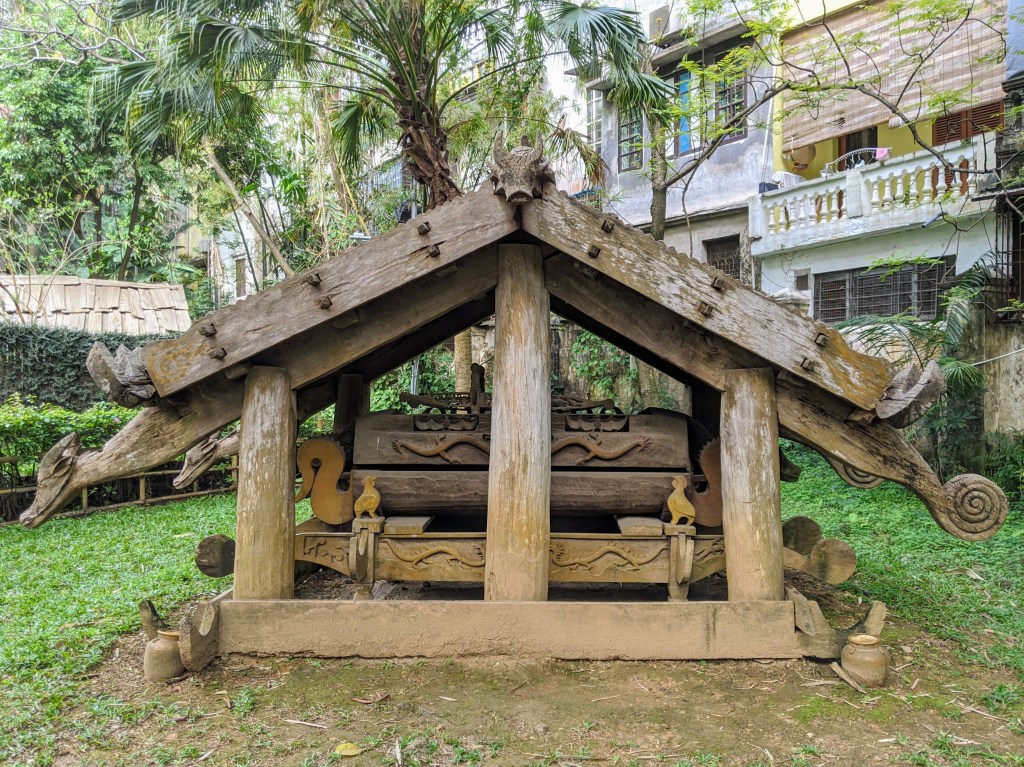
We got a late start the next day. Both of us had become accustomed to a routine of one glass of wine, then bed, that we dared to violate the night before. Now we were both paying for it. Nothing some Aleve and a nap wouldn’t take care of, but that would have to wait, because this morning we were going to the Vietnam Museum of Ethnology. After at least an hour searching for an ATM machine, we finally gave up and decided to just share one audioguide. The museum had excellent signage, anyway, for its impressive collection of artifacts, outfits, crafts, and ritual trappings. We learned more about our waiter’s group of Mường. We marveled at the traditional garments of shamanic and funerary rites. We learned how different groups wove different kinds of baskets. My personal favorite artifact was a giant wooden phallus that the Tay people attach to themselves during a ritual dance meant to scare off female ghosts. Because, as we all know, female ghosts cause all the problems in the world and are also terrified of penises. Behind the main museum building, they have full-scale representative houses and communal spaces for many of the larger ethnic groups, built by the groups themselves using traditional methods. We climbed into the stilted, extremely tall-roofed communal house of the Bahnar and the long, bamboo-floored house of the Ê Đê. The trip was both educational and fun, and I recommend it to anyone who visits Hanoi. 
For lunch, we had a driver take us to the street stall of Bun Cha 34. Bun cha is the unofficial (or maybe it’s official?) municipal dish of Hanoi, consisting of ground pork meatballs that are charred over a grill, rice noodles, and broth. I keep having to say broth here, and it really doesn’t do justice to what the Vietnamese can do. When I say broth, you are probably thinking of the kinda savory/kinda salty water we use as a base for soup. Vietnamese broth is to our broth what our broth is to water. Vietnamese broths are explosions of flavor that are downright addictive. You could have nothing but a bowl of this broth and be entirely satisfied that you had eaten a full meal. I could probably eat nothing but this broth for the rest of my life and be happy. That is how good this broth is. With the grilled meatballs and the sticky rice noodles, it was a faultless meal. As Aaron put it, it was, in a word, “dope.” We made our way back to the hostel for that nap and Aleve, and prepared ourselves for the evening’s adventure. 

Hanoi: Day 1

Our introduction to Hanoi was fitting for the city. It was sketchy, a bit scary, a little crazy, and, in the end, totally groovy. Let me explain. We exited the terminal looking for a cab. Our data was not working on our phones, so we couldn’t use Grab (the Asian Uber). We were waved over by a smiling Hanoian. “Taxi?” he asked us. We negotiated a price, and he led us to the parking lot… which was not where the cabs were. Red flag #1. Then, the driver dropped a wad of cash out of his pocket as we walked to the car. We picked it up and tried to give it back, but he looked at us like we were crazy. He didn’t speak English. We were very insistent, but he just wouldn’t take it. “What kind of weird grift is this where we get free money?” I thought. The Hanoian man we negotiated with caught up to us, and we finally got the driver to take his dropped money when the Hanoian translated. Red flag #2. Once in the car, our navigator, the Hanoian, was very friendly. His English was spotty, but he kept giving us suggestions for things to try and repeating “happy new year!” in a warm, excited tone. 

“Need money for highway. 15. Pay us now,” our navigator said, as we passed a toll booth. “Huh? 15 what? Is that part of the price we negotiated?” Aaron asked. “No. 15. 15!” He was getting very insistent. Aaron handed him some money. “So it’s more than we negotiated?” Aaron asked. “No. Big money!” our navigator said. “Too much or too little?” I asked. “Yes,” he answered, “big money! No.” In the end, we just handed him all our cash and hoped for the best. He took 20 thousand dong and gave us back 5 thousand. Which was odd, because the bill we originally handed him was 20 thousand. Red flag #3. By this point, Aaron and I were both a bit uneasy. We were texting each other in the backseat about what we would do if he tried to pull anything when we got to the hotel. In retrospect, I think I was paranoid, primed by all the warnings I’d read in my guidebooks. It didn’t help that the driving scene here is pure chaos. Scooters darted between our car and a bus next to us, bicycles cut us off, pedestrians seemed like they were trying to get run over, and vendors walked down the middle of the road selling donuts out of a basket. Of course, in the end, it was all fine. We made it to our hotel and paid him the pre-negotiated price. Turns out he was just a very friendly man whose only crime was not warning us about the small toll.

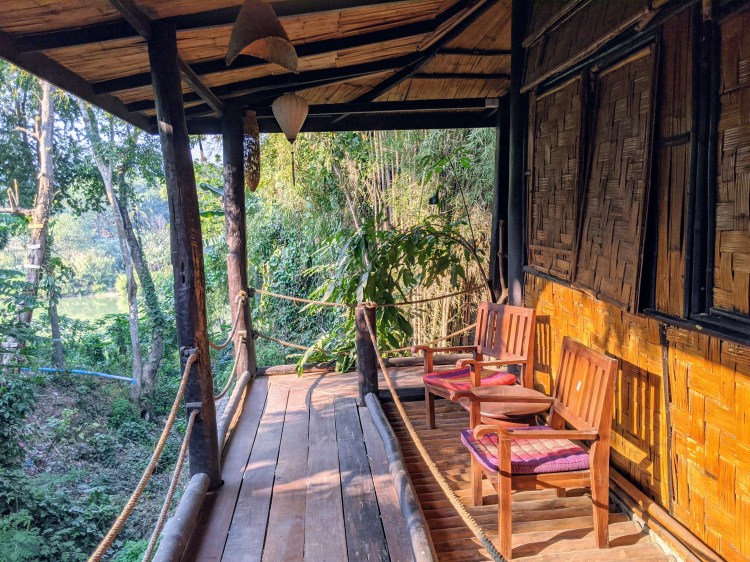
Our hostel, Cocoon Inn, was a fine hostel, as hostels go. It was probably the least cutesy of the places we’ve stayed, but it was clean, centrally-located, and had free beer for an hour every day. 
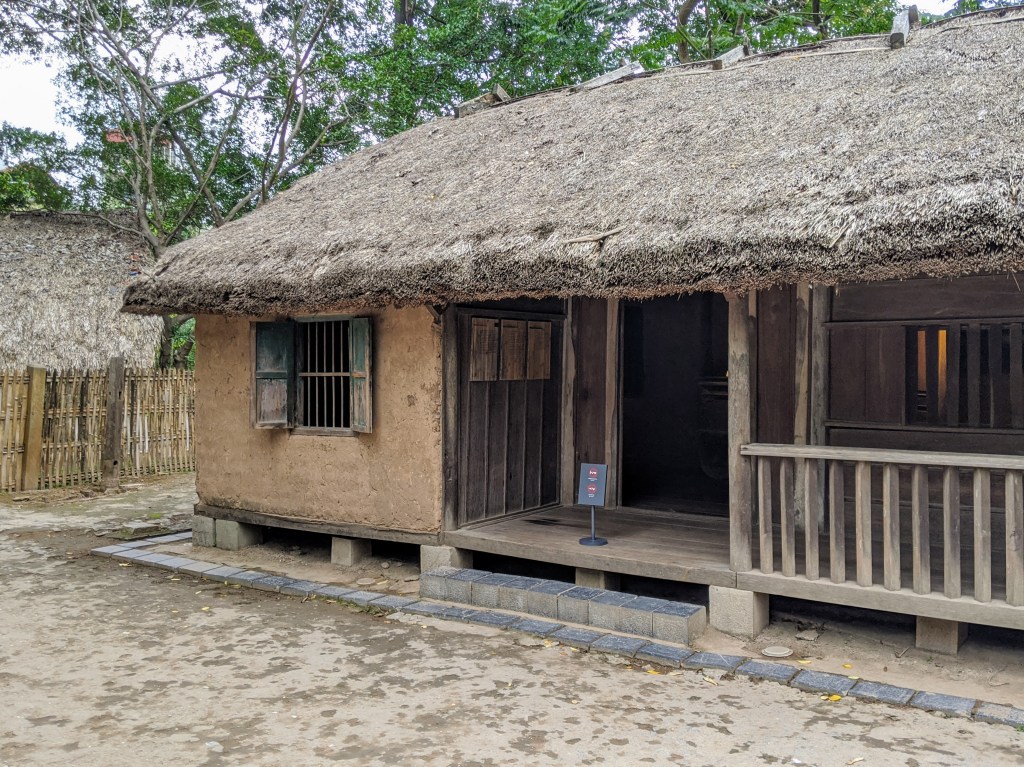
Now, it was getting late, we hadn’t had dinner yet, and the Cocoon Inn’s kitchen was closed, so we walked over to NOLA Cafe. No one there spoke enough English for me to confirm this, but I assume the name is a reference to New Orleans, Louisiana. They certainly did a good job of capturing the feel of a historic New Orleans cafe. Walls of deep orange and bright red surrounded cozy nooks. Tiled floors and half-crumbling plaster added to the European-meets-Caribbean appeal. 

The decor may have been creole, but the food was 100% Vietnamese– and 100% yum.  We both got spring roll dishes. Mine came with some sort of broth dipping sauce. Vietnam’s broth and sauce game is on point, I have since discovered. It was a great introduction to Vietnamese food, which neither Aaron nor I were sure about. We’ve only ever really been exposed to pho, which has way too much soap flavor for my taste (some people also call this flavor cilantro, but those people are in denial). 

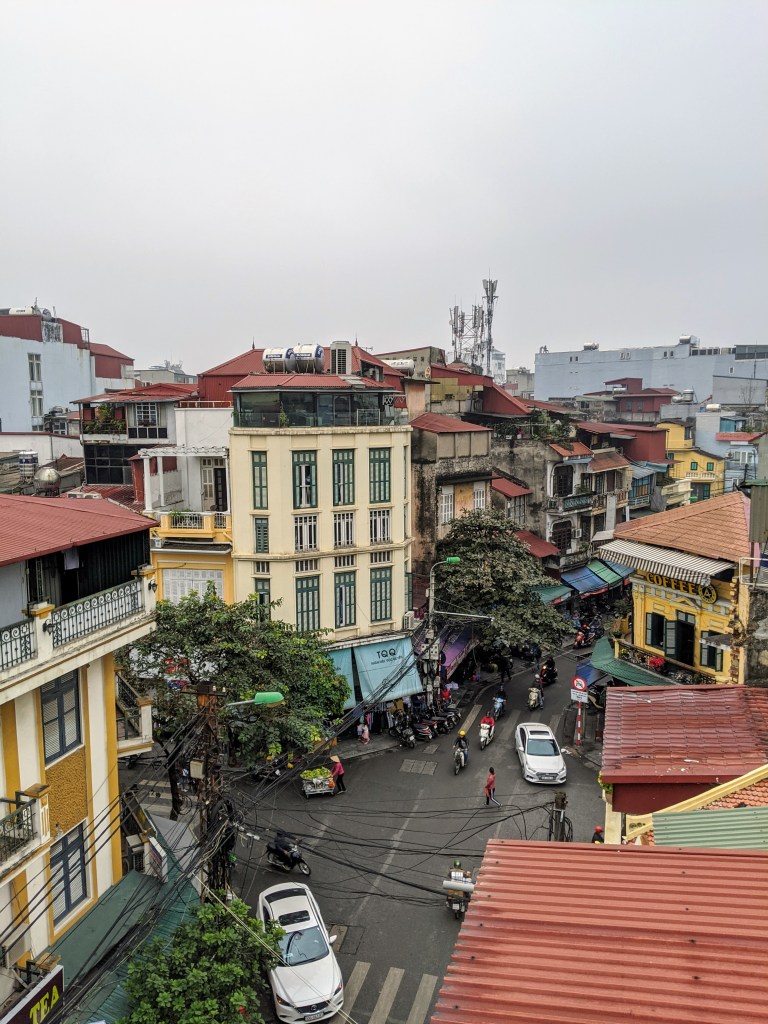
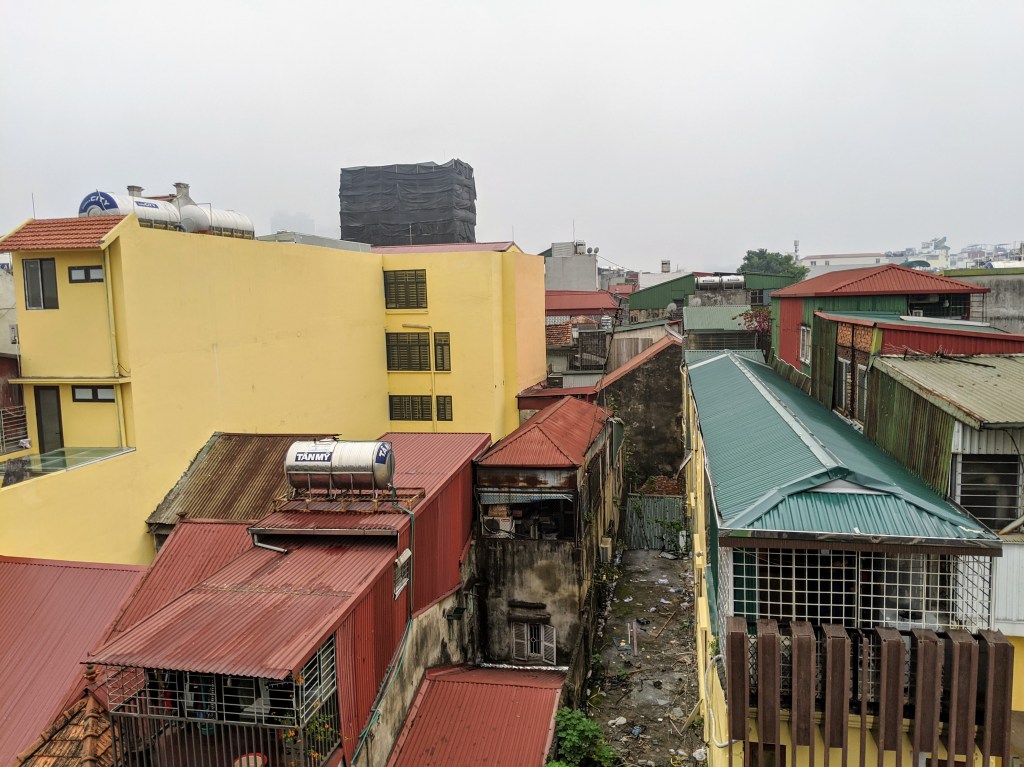
The next morning, we slept in, since that was impossible in Luang Prabang, with its 1000 roosters per square kilometer. We’d missed the free breakfast at Cocoon Inn, so we had coffee and banana bread on a balcony overlooking an extremely busy intersection. We tried not to yell “look out!” every five seconds. A large truck went the wrong way down a very busy one-way road. When I told Aaron about this, a nearby Scottish man said “I don’t think there actually are one-way streets here.” He was right; no matter what the signs and logic say, every street here is at least 5-way.
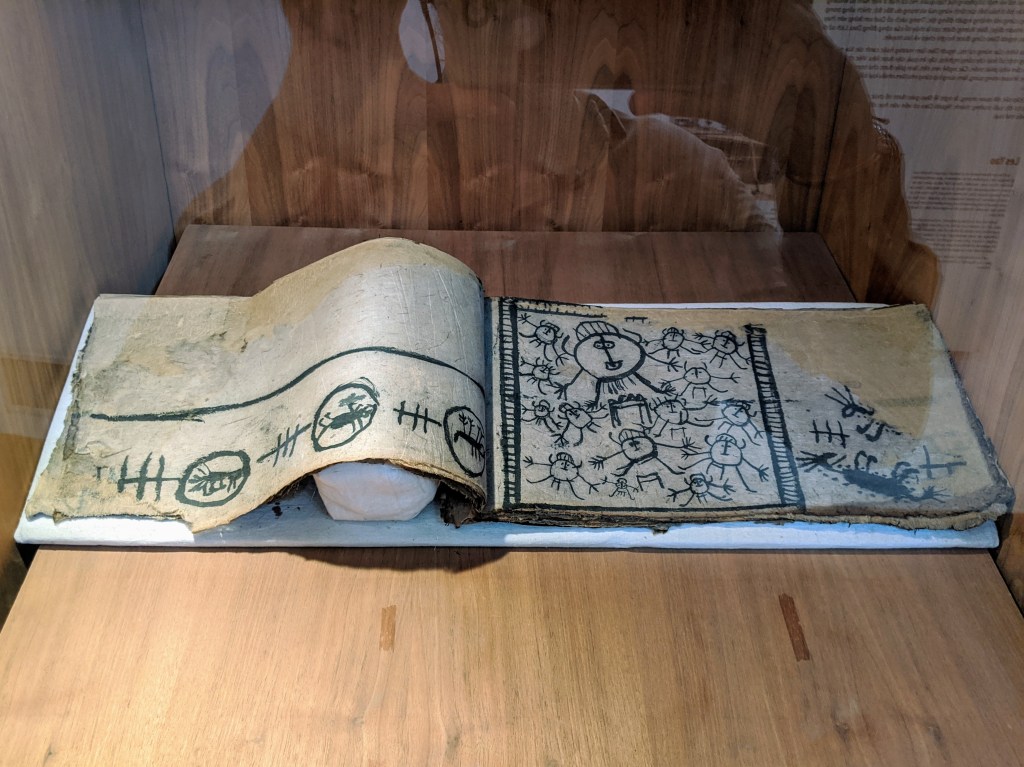
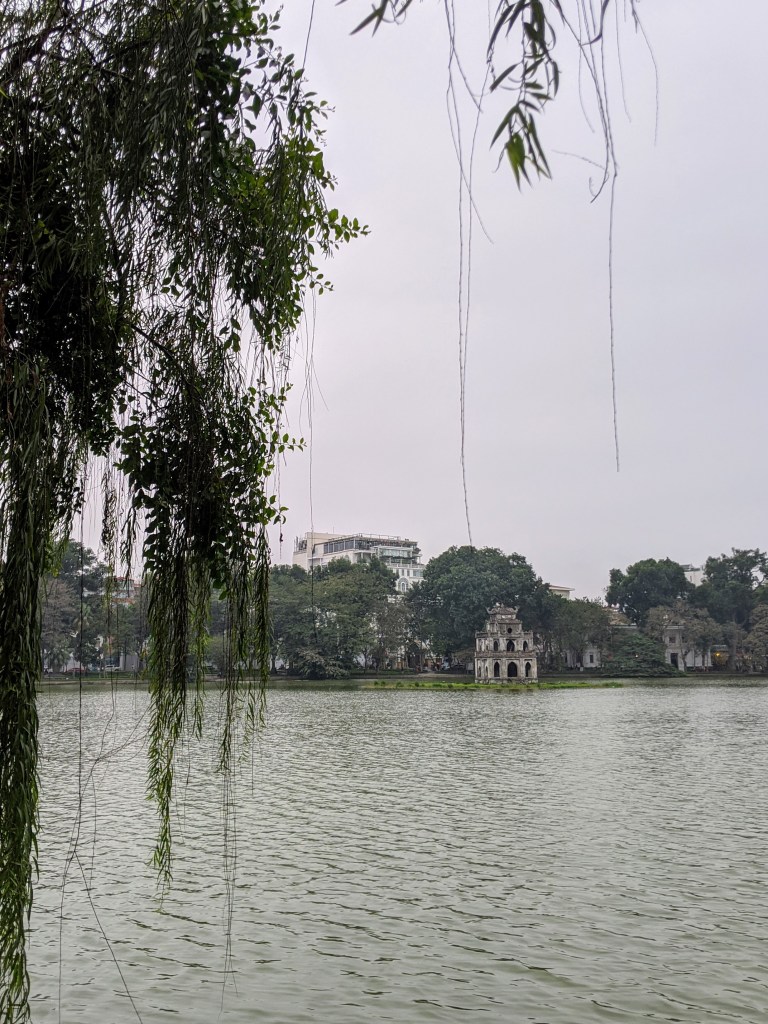
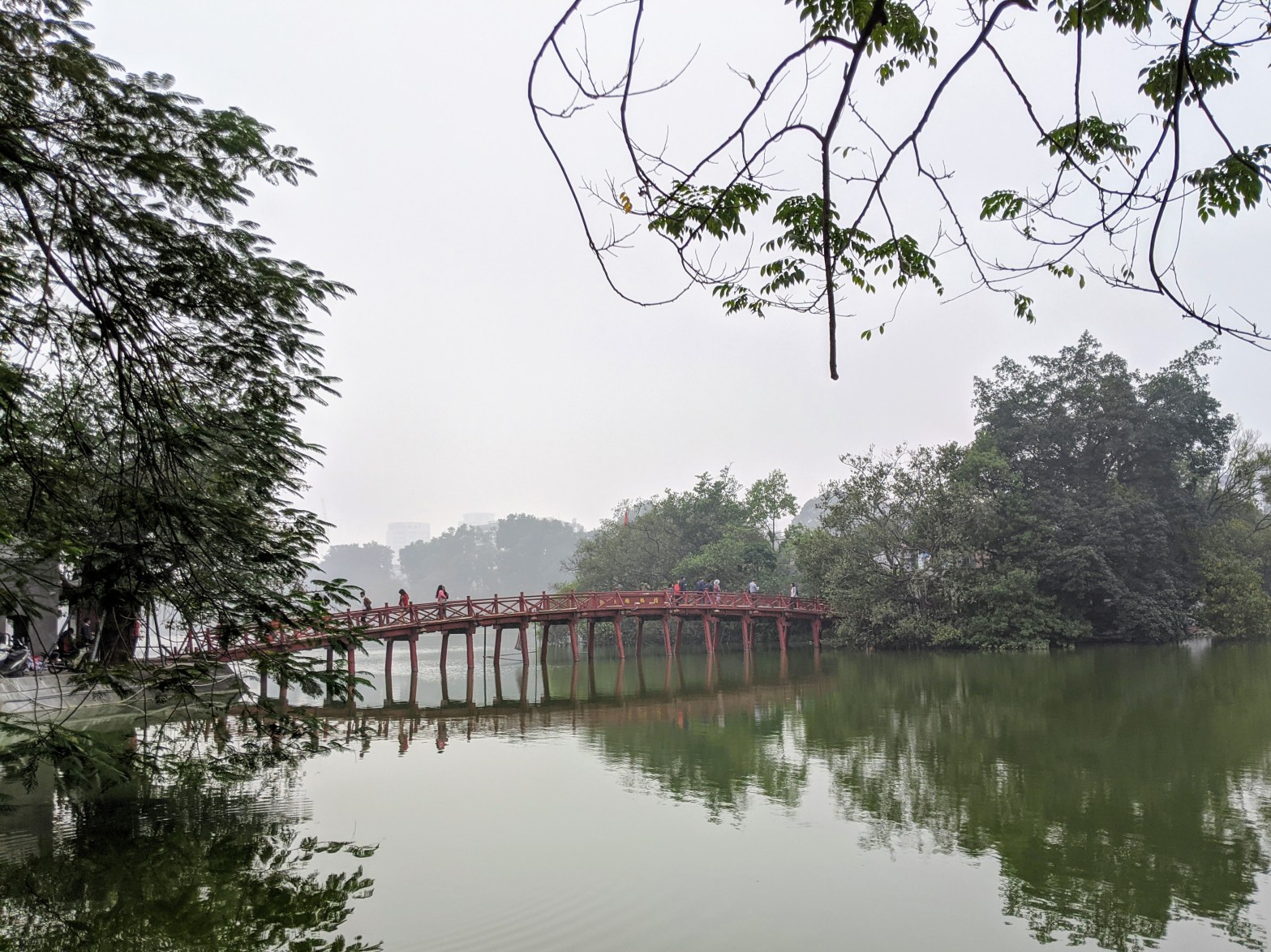
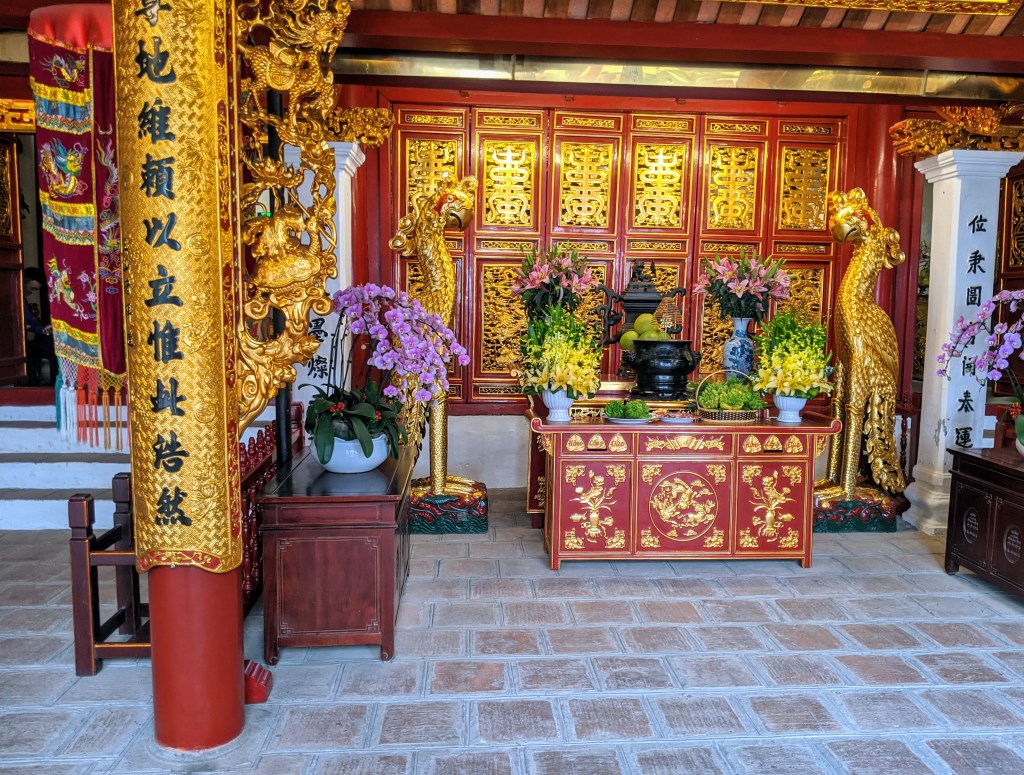
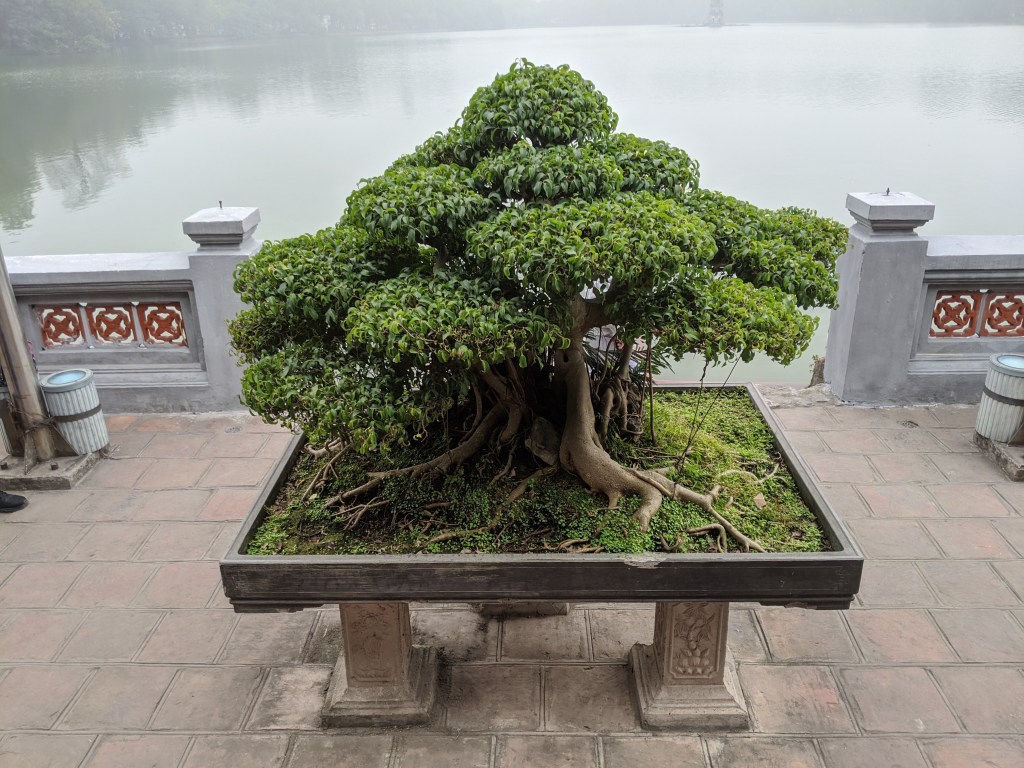
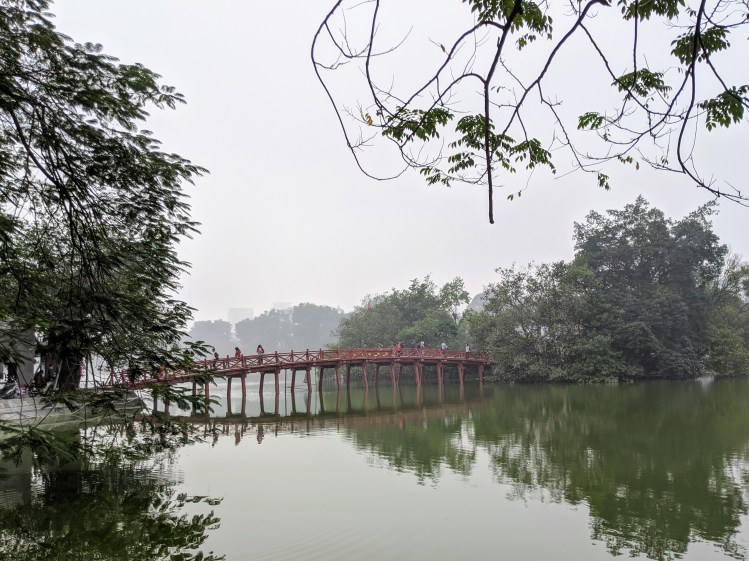
For our first afternoon here, we decided to do a little tour on foot, checking out some of the nearby points of interest. We started with Ngoc Son temple. It’s a shrine set in the middle of Hoan Kiem Lake, but I’m still uncertain on what it’s a shrine to. Something to do with a folk hero, but also Confucius? 

Lunch was at Garden House Restaurant. Our waitress gave us some recommendations, and I ordered without really knowing what I’d ordered. She taught me how to use rice paper to wrap my dish with some veggies, and dip it in the accompanying sauce. It was sort of like a DIY summer roll. Once again, the dipping sauce was addictive. And the stuffing, whatever it was, was great too. I really appreciate the Vietnamese commitment to putting veggies in everything. It’s a welcome change from the past week of meat-heavy dishes. Now we had the fuel we needed to continue our tour.

Luang Prabang: Highlights Reel

Best Experiences: Anna

  1. Watching the sunset on the Mekong while Sigur Ros filled my heart with sentiment and frisson during our Sa Sa River Cruise
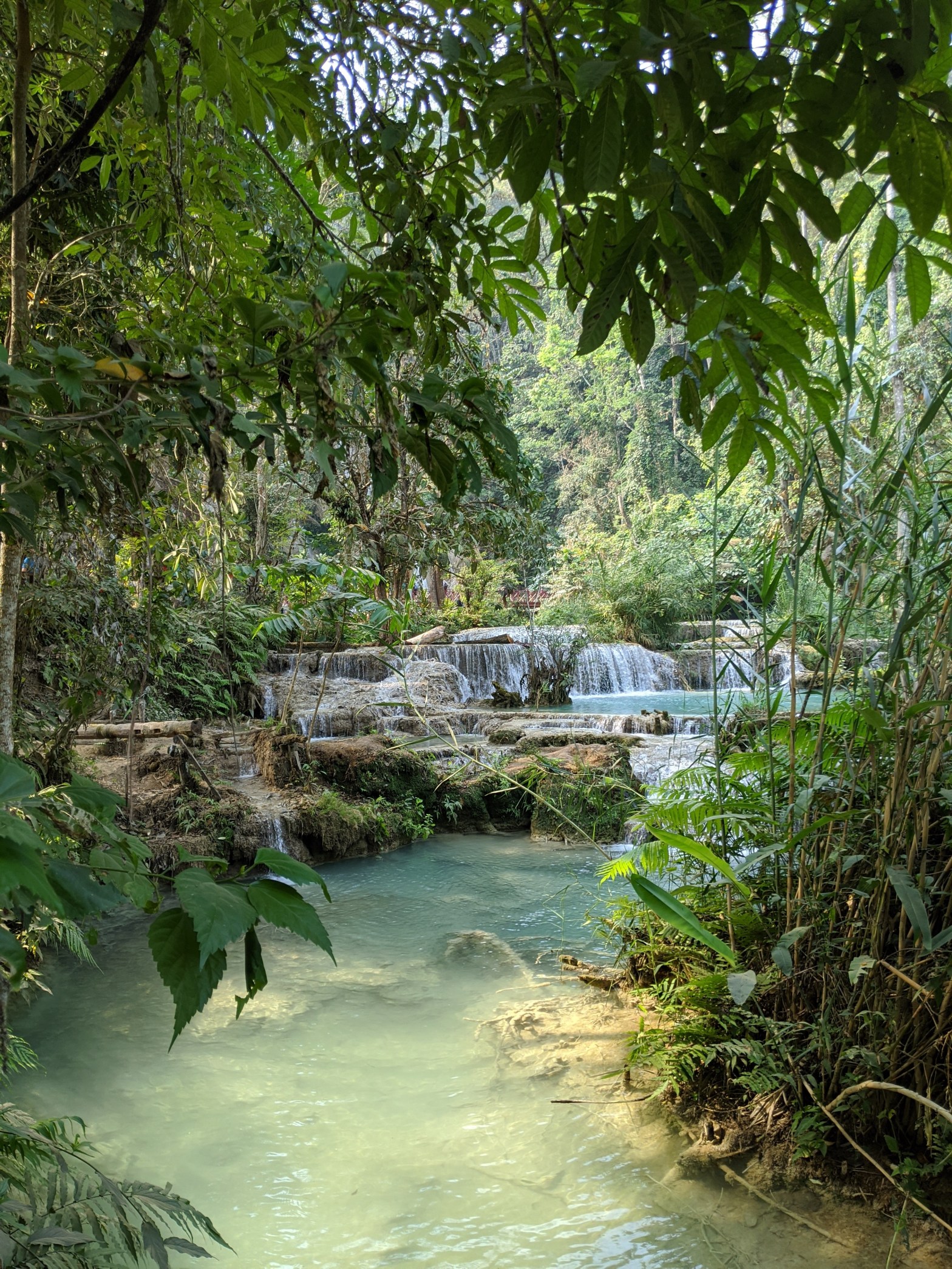
  2. Photographing the fantastical, forested falls at Kuang Si
  3. Quenching my thirst with fresh-squeezed sugar cane juice after a hard day of working in the paddies at Living Land Rice Farm

Best Experiences: Aaron

  1. Trying to keep pace with Susan the Water Buffalo while steadying a walking (running) plow at Living Land Farm
  2. Gawking at my beautiful wife while sitting atop the falls at Carpe Diem
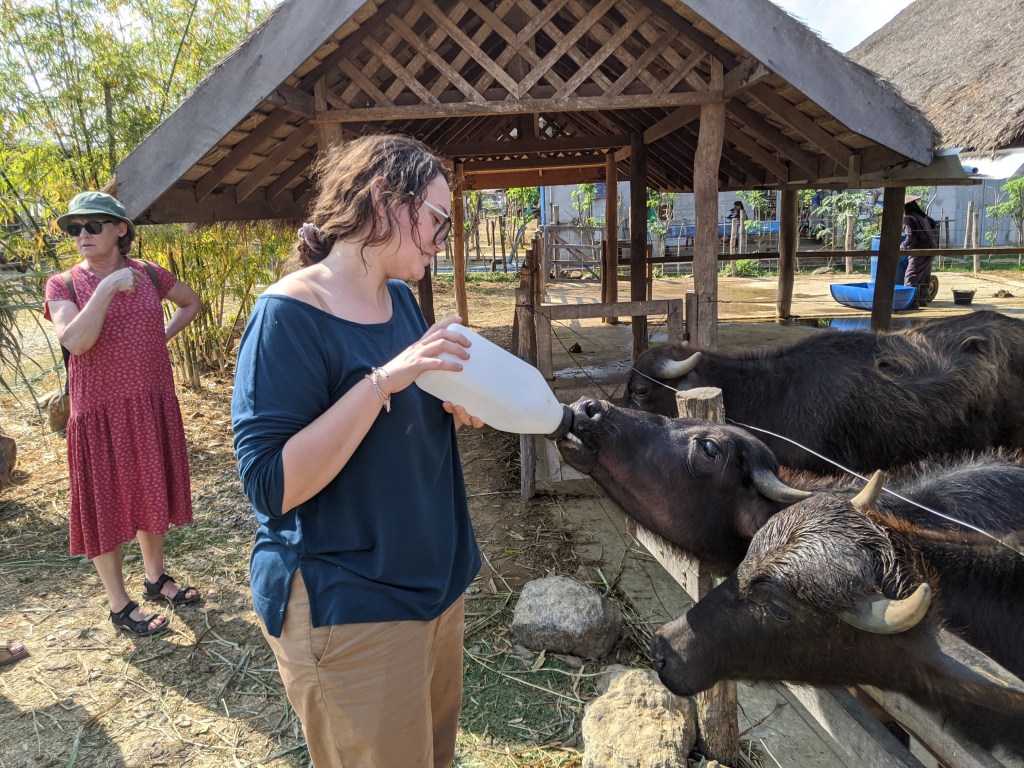
  3. Hand-feeding the hungry, slack-jawed buffalo at Laos Buffalo Dairy

Best Meals: Anna

  1. Cured eggplant salad at Paste: modernist cuisine worth every penny
  2. Shrimp ravioli in a parmesan cream sauce at Carpe Diem: we dined over a freaking waterfall!
  3. Muu haeng at Dyen Sabai: finally trying one of my favorite Lao dishes while actually in Laos

Best Meals: Aaron

  1. Deservedly pretentious small plates at Paste: modernist cuisine worth some of the pennies
  2. Muu haeng at Dyen Sabai
  3. Duck laap at Khaiphaen

Blooper Reel

  1. At Bouang, when Aaron asked for the check and the server looked as though Aaron had just told him that the food was awful and he was going to burn the place to the ground. Server asked if everything was okay and Aaron said “yeah, it was great.” Server never brought the check, so we’re not sure what he thought Aaron said.
  2. At Living Land, when we were learning how to husk rice, our guide told us that, traditionally, women who were unable to sort out rice husks would be unable to find a husband (which we all know to be a fate worse than death). Anna made an earnest and unsuccessful effort. When another woman was asked to try, she said “No, no. I don’t want a husband.”
  3. Literally every time Anna went to the toilet something bit her on the butt: mosquitoes, ants, something that left a bruise for some reason. Every. Single. Time. 
Luang Prabang: Day 4

After an afternoon rest, we thought we’d get a bit fancy for the evening and do a date night. I made reservations at Paste, the fussy modern fusion restaurant we had tapas at a couple of days before. First though, we would need to get some coffee in us, so we grabbed a latte and shared a chocolate croissant at Le Banneton Cafe. 

When we were on the rice farm, the bamboo weavers gave us bamboo rings. Aaron and I joked that they would be our wedding bands while we’re here. At Le Banneton, I fiddled with mine, and it went flying off somewhere. By this point, the inside joke had given the ring some sentimental value, so I was turning the place over looking for it. Aaron helped. Soon, the two cafe workers joined in, moving furniture and scrutinizing the sidewalk. I’m sure they thought I was crazy, because you can get them for a dollar at the market, but they were very helpful. Just as we were all about to give up, Aaron reached into his shoe and pulled out the bamboo ring. It had somehow landed in there after rolling off the table. The cafe workers must have thought it was a poorly-executed, time-wasting magic trick.

We took a stroll, making our way leisurely towards our reservation, turning down whatever sidestreets piqued our interests. We stopped in a temple to hear the monks chanting and quietly read a bit from the Pali Canon. On another street, a middle-aged gentleman tried to corral us into a flourescent-lit room. “Want to come teach English for ten minutes to some students?” he asked. I was so used to pushy vendors and tour salesmen that I was shaking my head no before I’d even processed the question. “Oh, no thank you. We have a– wait, what? Oh. Sure!” I said. He ushered me into a corner, with Aaron on the opposite side of the room, both of us surrounded by empty chairs. He disappeared for a minute, and returned with several young Laotians, many of whom wore the orange robes of novice monks. “Remember, as a woman, you cannot touch them,” he said, gesturing to my new monk student.

Three students joined me, a novice, an older boy who spoke very little English, and a girl who didn’t seem like she needed any lessons at all. They asked me questions about what I did and where I was from, and I asked them questions about where they were from and what they wanted to do. “Lao people,” said the novice, “don’t think about the future. Future is a headache.”

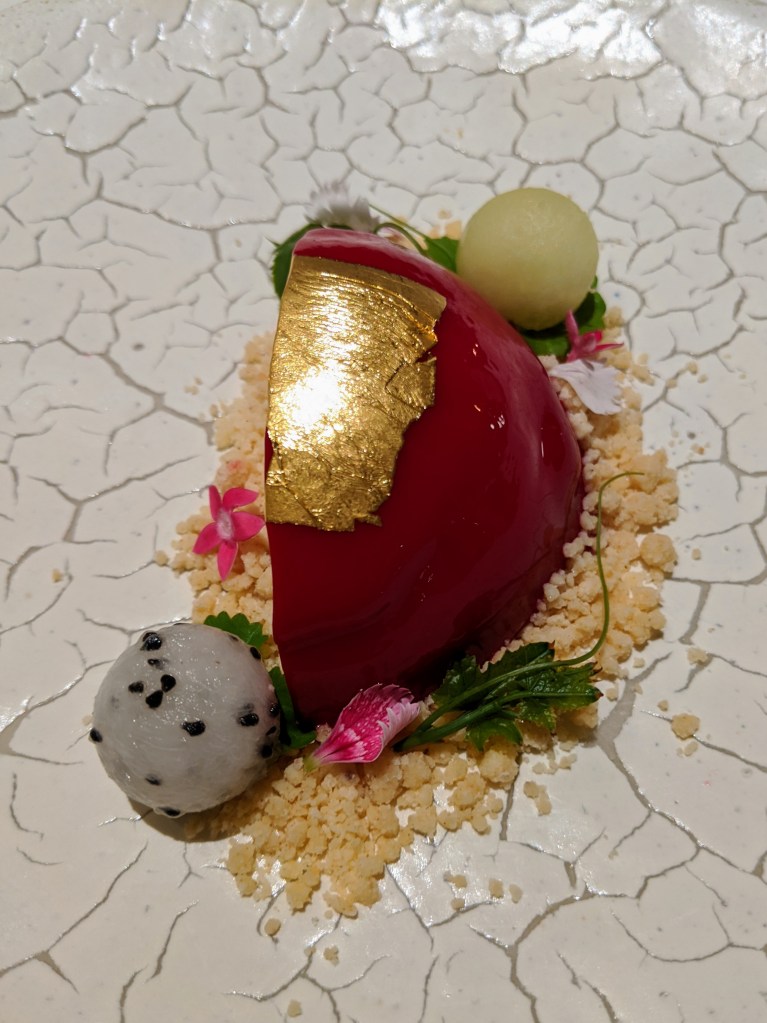
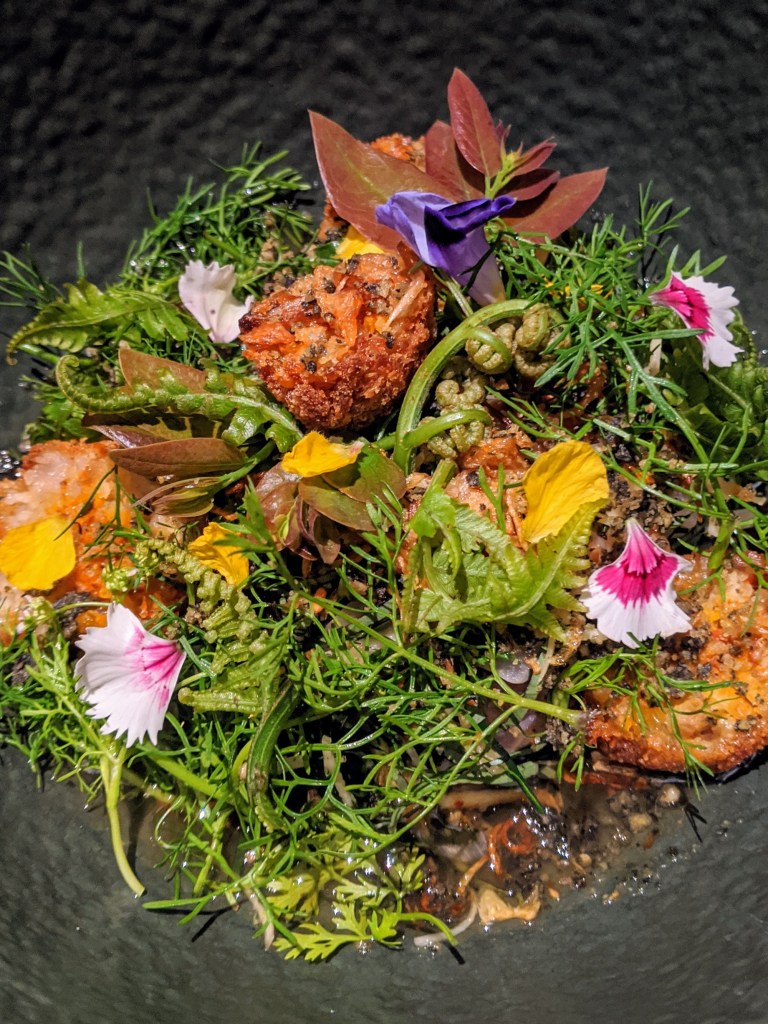
After a bit, we had to extricate ourselves to make our reservation. Paste was every bit as stuffy as the first time we went, but once again, the food was phenomenal: best meal on the trip. Aaron balked at them putting a napkin in his lap. “I don’t want to go anywhere where the presumption is that I want someone to put my napkin in my lap for me,” he told me later. But even he had to admit, the food was amazing. Little sparkling rose waters were served as a palate cleanser, followed by an amuse-bouche of river weed on a sesame cracker with crabmeat. For our meals, we shared a tasting menu: crunchy cured rice balls, sour fish soup, salty cured eggplant salad, savory fried glass noodles, and at least three other dishes my memory is not doing justice to. Dessert was a ruby red gelee with banana and gold leaf. Aaron was, understandably, pretty upset to learn that gold leaf was sometimes added as a decorative garnish. “Eat the rich?” I asked him. “Eat the rich,” he approved.

The next morning was spent packing and checking out. Today was to be our last day in Laos. I was a bit more heart-broken about it than Aaron. I found Luang Prabang romantic and charming. I had fallen a bit in love with her. And the food has been consistently unbelievable. But where I saw languid grace, Aaron saw sleepiness. He was eager to hit the busy streets of Hanoi. We had one last adventure planned before we headed out, though.

Parental advisory: the following paragraphs contain details that may not be suitable for some parents. If you’re our parents, we advise you to skip them. 

We rented a scooter. Most places are too busy and too crazy for such a thing, but the lazy, empty, flat country roads of the rural areas around Luang Prabang were perfect. In case you’re one of our parents and you ignored my warning: Not once did I feel unsafe, Aaron was an excellent driver, we didn’t go very fast, and we both wore helmets the entire time. We both had a blast on the hour long drive to Laos Buffalo Dairy Farm. We watched the rice paddies go by and stopped when we felt like it, nothing between us and the scenery but wind. 

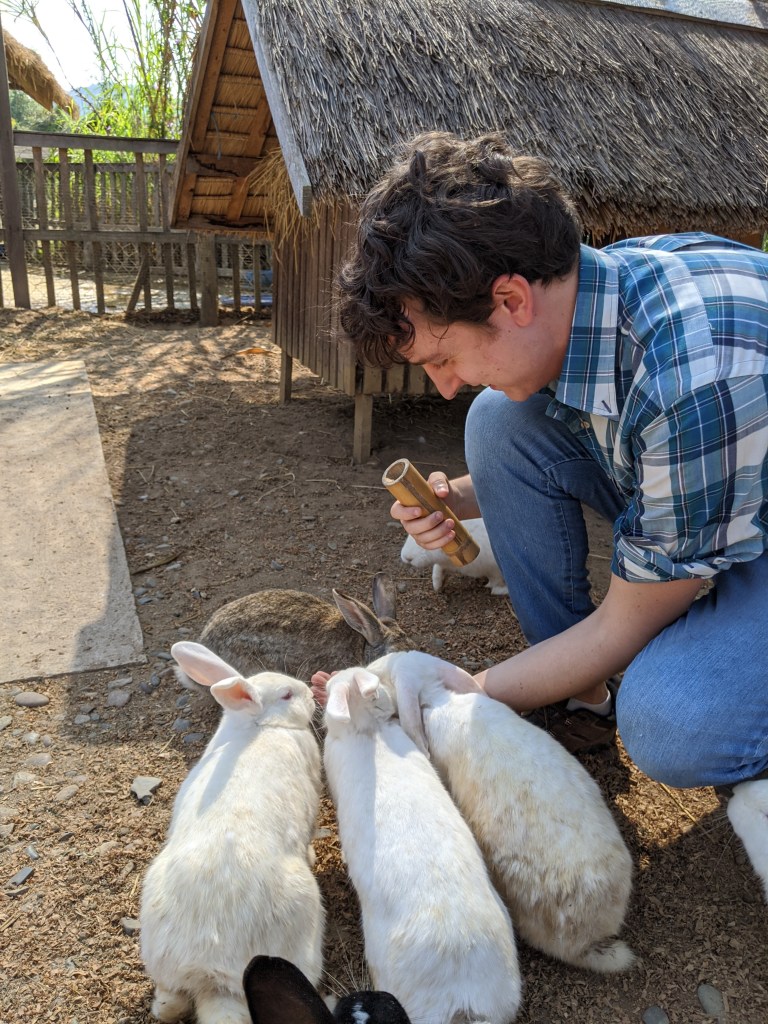
At the dairy farm, we were shown around by a young Swiss metalhead with a long, braided beard. We fed some ravenous rabbits who had trouble distinguishing our hands from the meal we were feeding them, we milked a water buffalo (much harder than milking a cow), we fed Ferdinand (the gentle giant buffalo bull) armfuls of napier grass, and we bottle-fed some greedy calves. After, we were treated to ricotta cake and spiced gelato made from the milk. I was very glad we fit our visit in before we left Laos. It’s incredible how much this one farm has changed the surrounding communities: providing jobs to locals, supplementing farmer incomes, and even increasing literacy with the local school-children through their programs. 

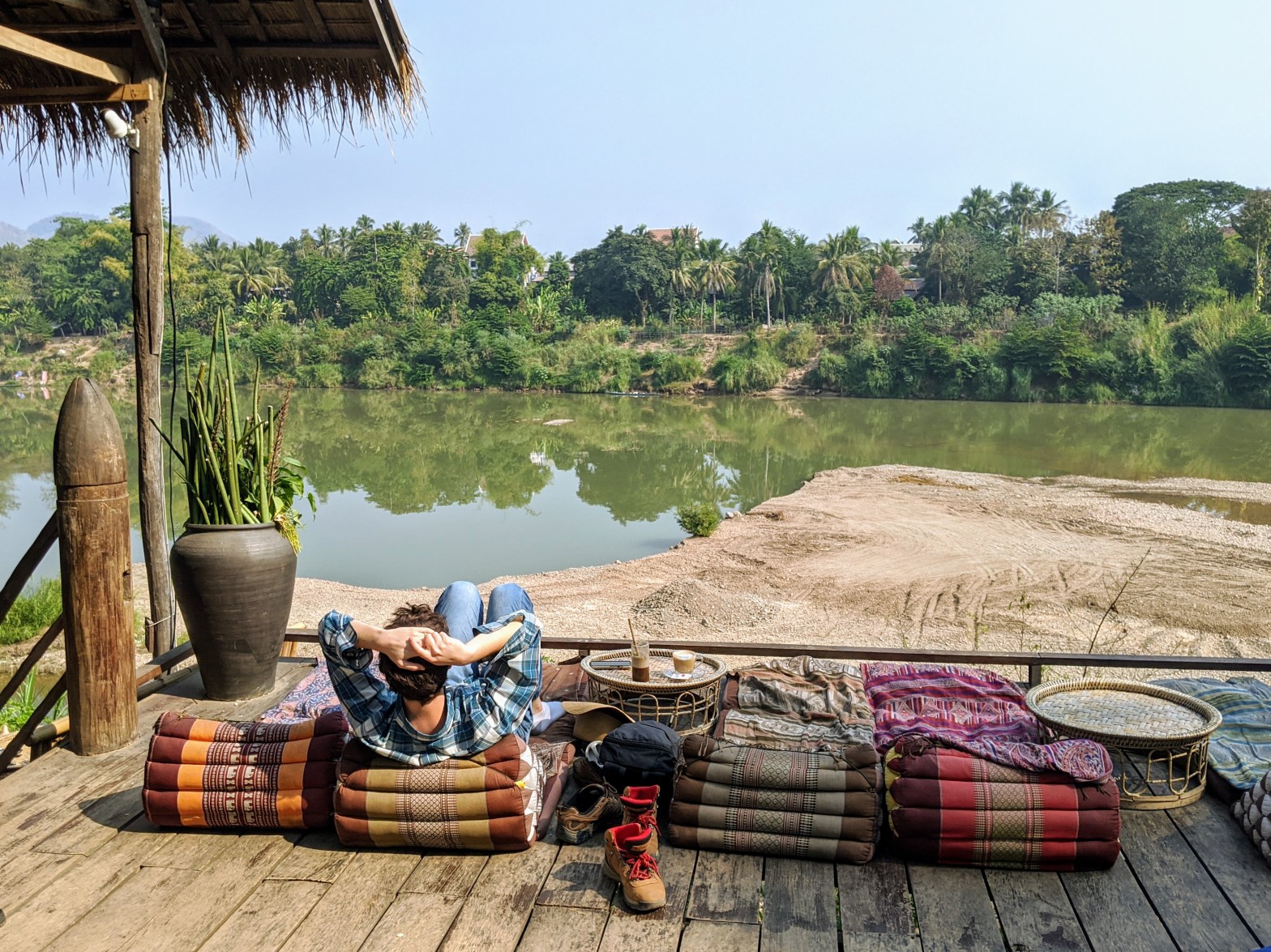
On the trip back to town, we stopped at a roadside joint by the river, and said one last goodbye to the Mekong. Next stop: Vietnam. 

Luang Prabang: Day 3

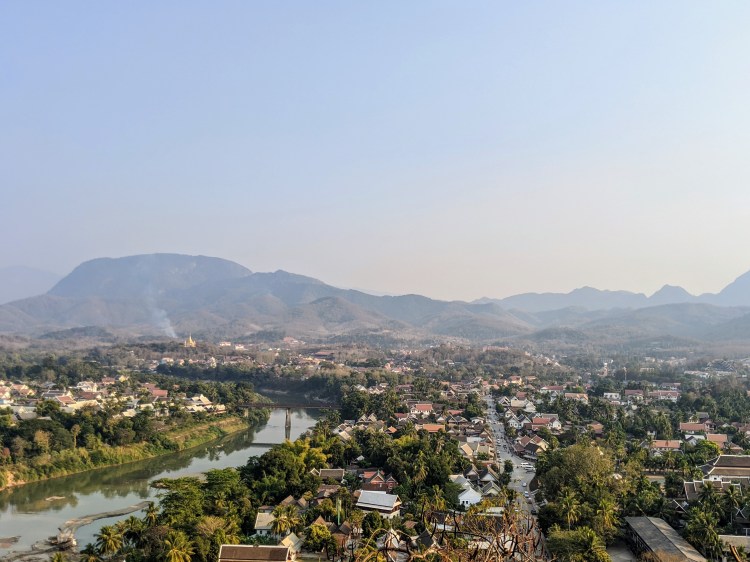
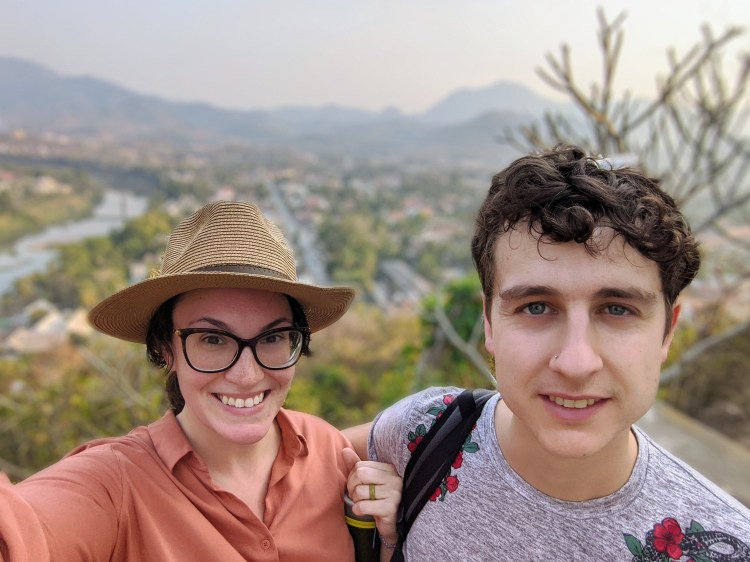
Compared to the Monk’s Trail leading up to Wat Pha Lat, Phu Si Hill was a breeze. Well, more like a wheeze; I did have to take a couple of breaks. The views of the surrounding city were more than enough dessert for eating my hiking vegetables, though. There’s only so many different ways to describe mountains and rivers and cityscapes, so I’ll save you the repetitiveness and say this: there were good reasons all the tourists had their cameras out. 

But Phu Si Hill isn’t just a vantage point, it’s also a temple. Aaron and I got in our ten minutes of mindfulness in the small shrine enclosure at the top. 

For those who don’t know, mindfulness meditation tries to ground you in the here and now, usually by having you pay attention to your breath. You may do it as follows: take a few seconds to find a comfortable position, set a timer for however long (if it’s your first time, I recommend just 3 minutes; you may quickly work your way up to 10 or 15 from there, but people often find 3 minutes with nothing but their thoughts, and the awareness of how scattered they are, uncomfortable enough) and close your eyes. Take a few deep breaths, and try to find the place it’s easiest for you to feel your breathing (for some, it’s the rising tummy or diaphragm, others feel the coolness in their nasal cavity, the Buddha chose his nostrils). Now, stay with the breath. You may say “in” and “out” as you follow your inhalations and exhalations, or you may count them, going up to 10 and then starting over. If you are in a truly peaceful mind-state, you may even try not to have your mind verbally assert itself, and instead just stay silently with the breath. This is literally all you will attempt to do until your timer goes off. I say “attempt,” because you will inevitably fail at this. You will be concentrating on your breath, counting your way up to 10, and suddenly find that you have actually spent the last 30 seconds thinking about the next item on your to-do list, or the embarrassing thing you said at the dinner party last night, or the cute co-worker you’ve been flirting with. This is ok. This is good, actually. This is your chance to practice what mindfulness actually is, by gently noting the distraction, labelling it “thinking” or “feeling,” and returning to the breath. As Jake from Adventure Time says, “sucking at something is the first step to being kinda good at something,” and never was this more true than for meditation. The more you suck at it, the better you’ll get at noticing and returning to the breath, which is the real practice (at least, at first). As you get better, try to stay with the breath second to second. Try to notice when the breath first enters, the interim before its exhalation, and the second it’s exhaled. There was a time in my life– recently, even– when I found this easy to do. But on this trip, every meditation has been a jumbled mess. I usually count my breaths, and I don’t think I’ve made it to 10 once without getting distracted. But this time, 100 meters up on Phu Si Hill, I ironically found myself a bit more grounded. 

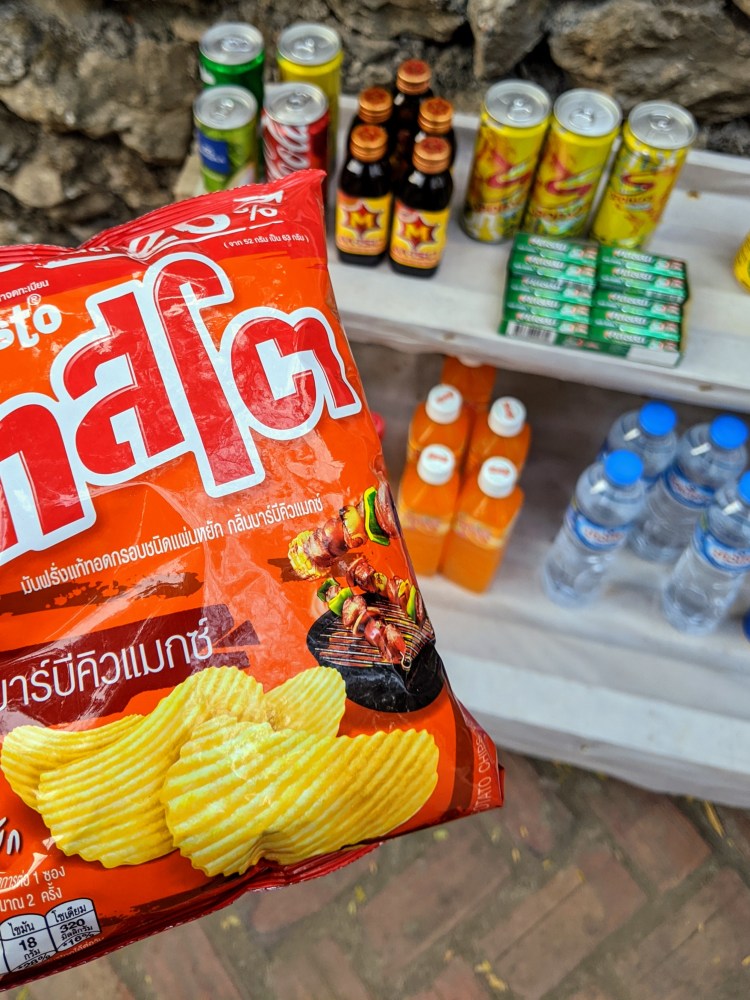
As we walked back down Phu Si, I noticed I was starting to feel a bit faint. The quick climb and lack of food was making my metabolism all wacky. We bought some chicken-kabob-flavored chips (because that’s a thing, apparently) and made our way to a cafe. I gulped down a very sweet chai latte and split a scone with Aaron. And then I felt very, very not good. Apparently, when your blood sugar is low, it’s actually not best to drink a cup of basically sugar water, because then your insulin gets very confused. At least, I think that’s what happened. I’m not actually 100% sure where I went wrong. All I knew was that both my brain and body felt very off. 

Despite this, we made our way to Bouang Asian Eatery, with the understanding that I might not eat anything or hold in what I already had eaten. Once we ordered, I was feeling well enough to have a plate of mashed potatoes. That was it. That was all I could actually eat. Aaron got a cheeseburger that I had one bite of before deciding it was too flavorful. Slowly, though, it got better. By the time we went to sleep, I was almost normal again. 

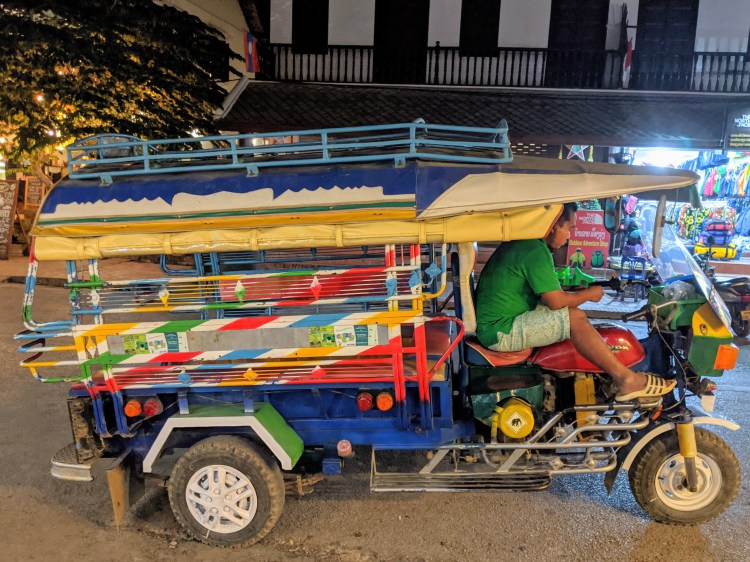
The drive to Tat Kuang Si, the noted and notable waterfall of North Laos, took about 50 minutes. We rode in a tuk-tuk down some bumpy roads, but Aaron and I both managed to avoid car-sickness. On the walk in to the falls, we passed by a bear rescue center. Moon bears, absurd little ursines with giant fur collars, are hunted for their parts, which are used in traditional medicine. I’m not sure what they’re supposed to cure, but I can’t imagine looking at one of these guys and thinking it was worth it. They’re panda-like, both in size and inherent comedy. We watched a couple of them struggle to fish treats out of a tree trunk and baby-talked them through our teeth. 

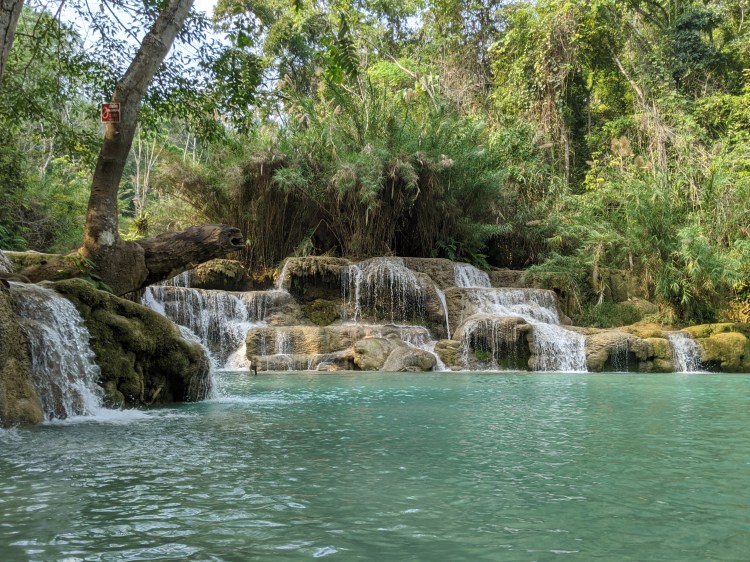
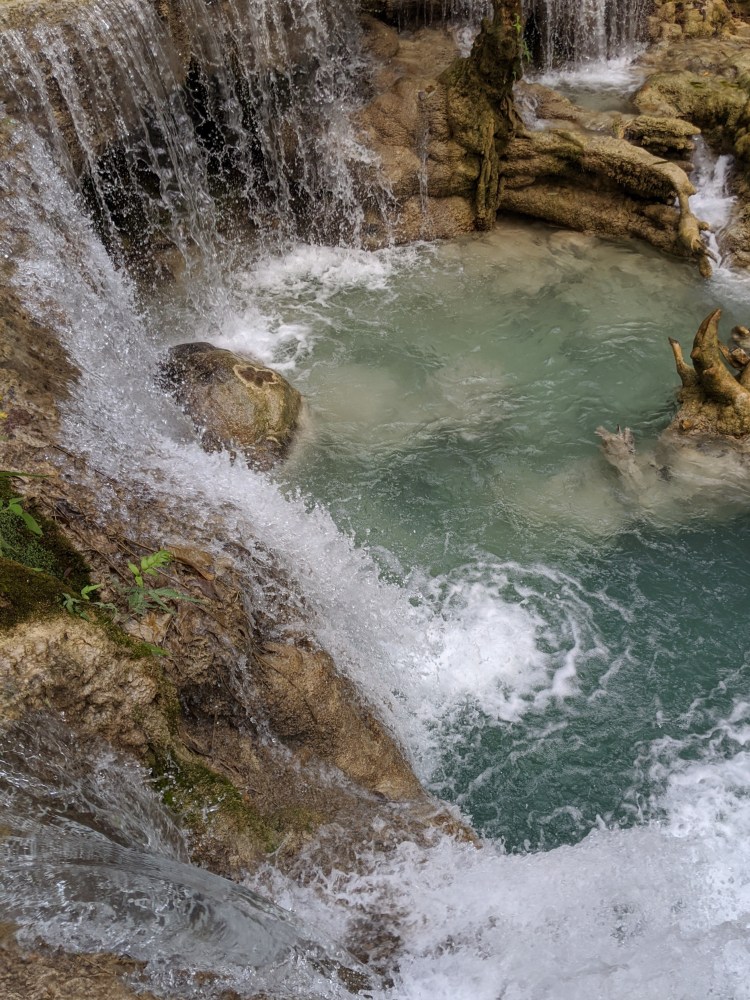
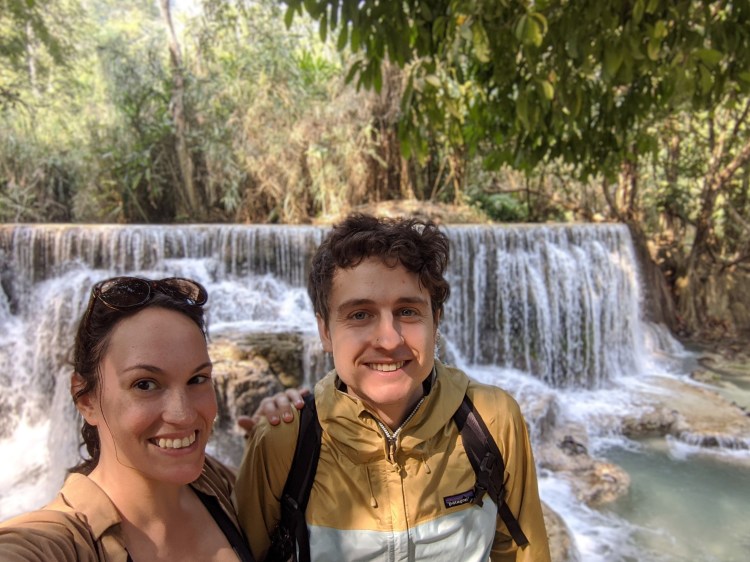
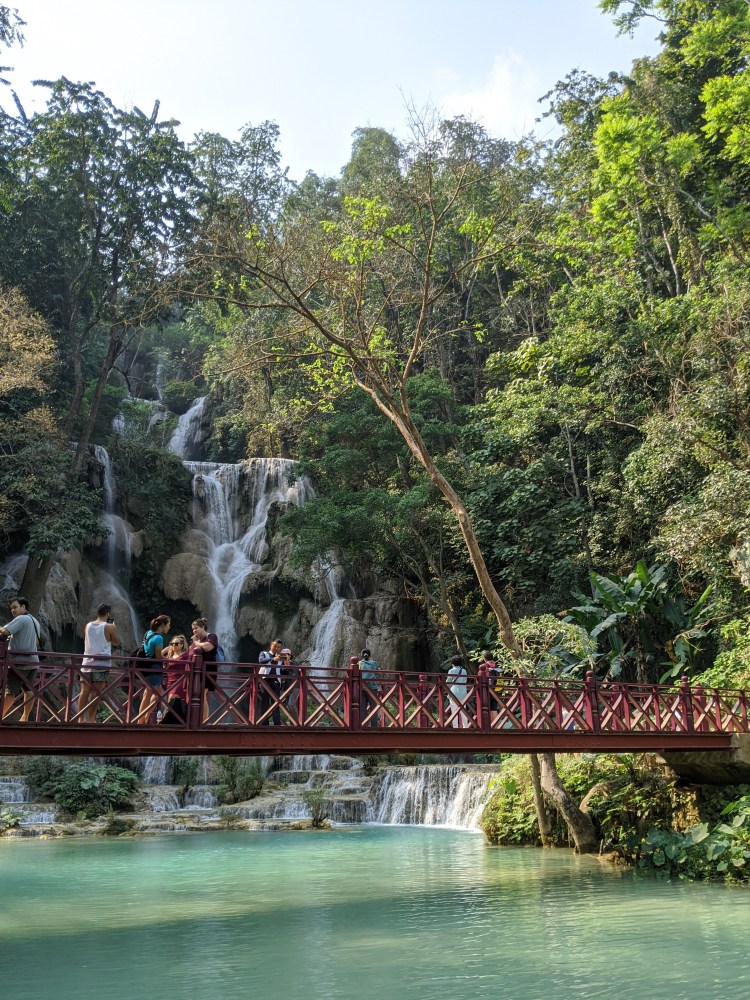
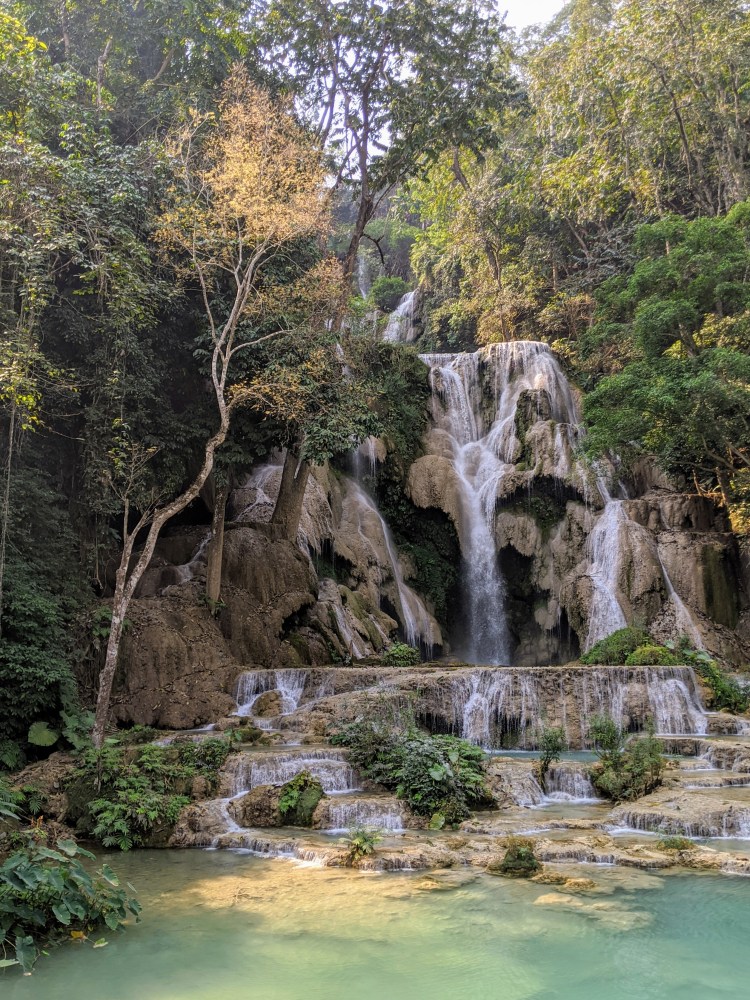
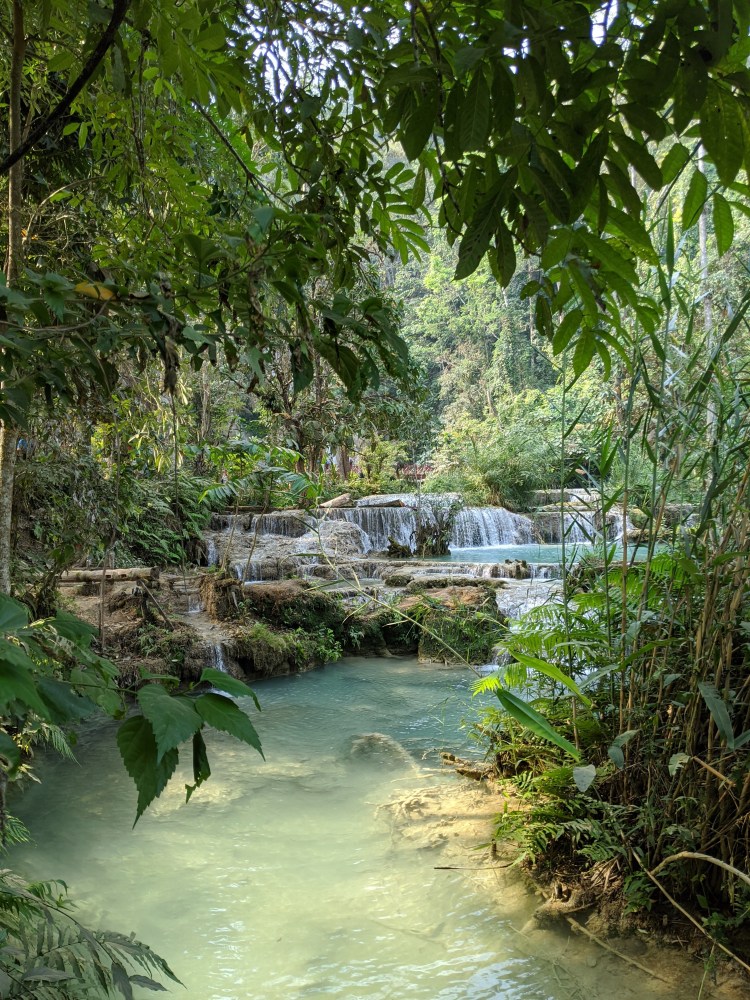
Just a bit further on, we encountered the falls. The semi-opaque water was colored bright jade by the limestone rocks it cascaded over; note that none of our photos were put through a filter. It pooled on many levels of the upward hike to the source, and some of these pools were swimmable. Hypothetically, they were swimmable, but Aaron and I discovered they were actually as cold as they were turquoise. We both took short dips, though, just to say we had. We meandered through the falls for a bit, stopping every now and then to take another 100 photos of her majesty, until it was time for lunch. 

Our tuk-tuk driver had already proved that his English was non-existent on the drive over (I’m not judging; he still spoke better English than I spoke Lao). We used google to translate that we were walking over to our lunch spot, and would be right back for the pre-arranged trip to Laos Buffalo Dairy. He looked at us confused, and waved over a friend. “Yeah, you pay him 100 thousand,” said the friend.  “Oh no, we already paid. Our lodge told us we paid for him for the day,” we responded, jovially. Always negotiate with a smile here. “No, you pay for him to come to Kuang Si. Now you pay more for him to wait for lunch and drive to Buffalo Dairy,” he said. “No,” we said, “there must be some mistake. Our lodge specifically said the amount we paid would get us to Buffalo Dairy as well, and that we had him for the day.” It went on like this until neither side was smiling. There were a lot of tongue clicks and rising “ooh”s, which, I gathered, was the Lao version of “I don’t know about all that.” Three things could have been going on here: 1) Our lodge screwed up in ordering him, and we way underpaid. This seemed unlikely to me after some googling of what it should cost. 2) He knew we were a bit stuck with him, and was trying to screw us. 3) What we paid was fair, but the plan had not been communicated to him ahead of time. Maybe he had made plans for the afternoon, and wanted a little extra to break them. Giving him the benefit of the doubt, we went with 3. It was not a very pleasant interaction, but we finally convinced him to at least wait for us to have lunch. As a sort of olive branch, he drove us the 1 mile to Carpe Diem Restaurant. 

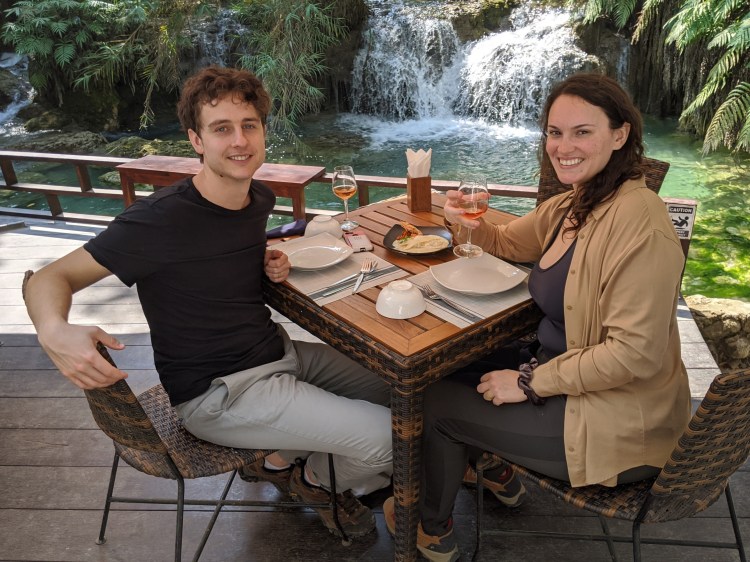
The restaurant is right by a portion of the falls. In fact, one of the decks was built over the water, with a cascade right beside it. This is where we were sat. If you ever find yourself in Luang Prabang, here’s a travel tip: make reservations– they are never necessary, but you will always get the best seat in the place. We sipped rosé and ate shrimp ravioli in a parmesan cream sauce followed by tofu green curry. The curry was a bit flavorless (sometimes they automatically hold the spice with westerners), but the ravioli was a revelation. It was not mentioned in the menu, but they served it with a dollop of a sweet, Thai-spiced, tomato chutney that really added something exciting to what would have otherwise been a standard, cream-sauced ravioli dish. The air was pleasant, the waterfall was pleasant, the conversation was pleasant. By the end, we were in good spirits and had decided to just let the driver take us back to the lodge like he wanted to and we’d figure it out. 

Luang Prabang: Day 2

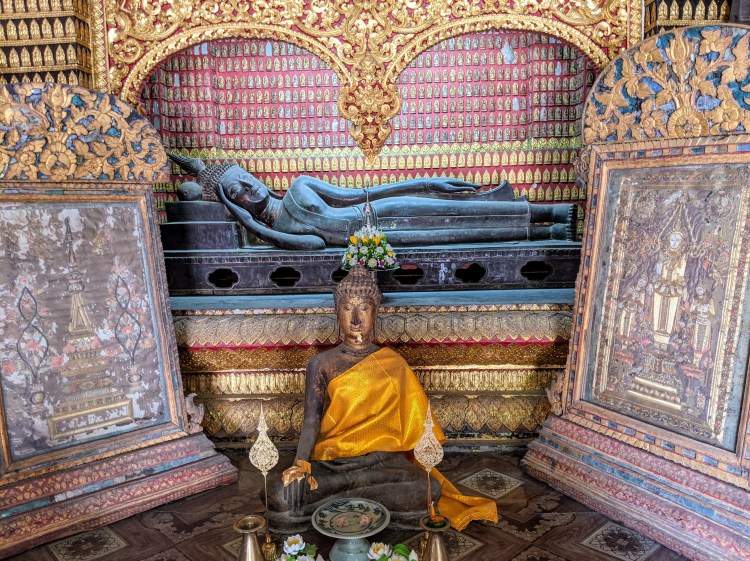
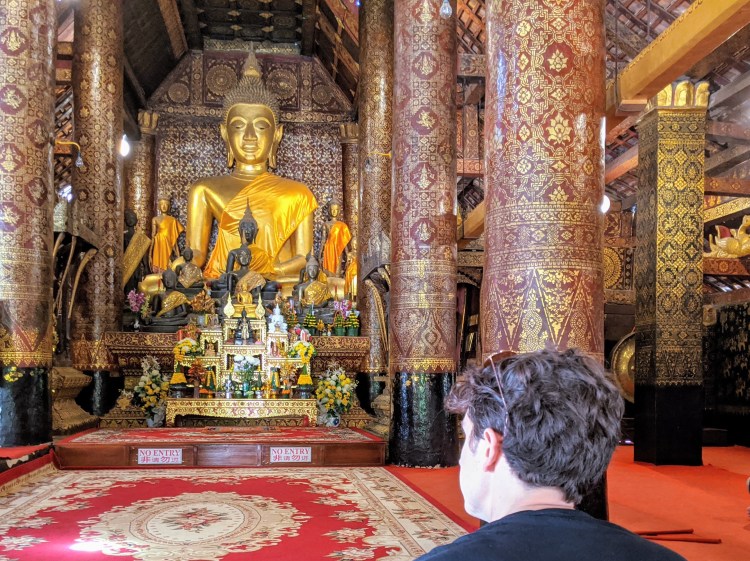
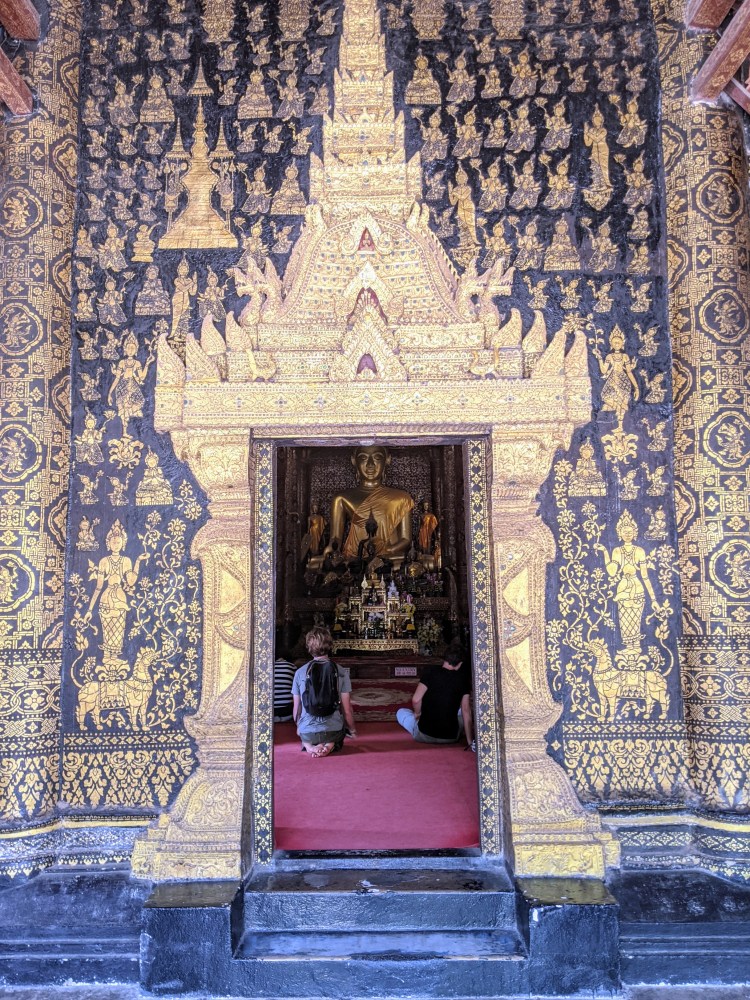
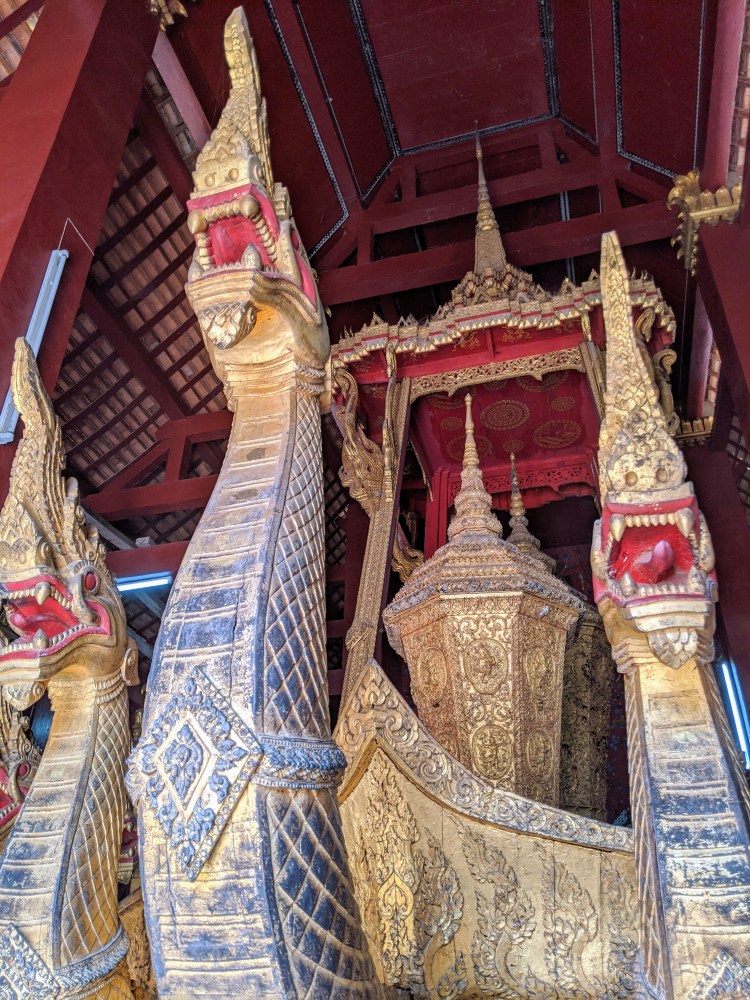
Wat Xieng Thong is a temple with a lot of historical significance for the Lao people. Prior to the establishment of the Lao People’s Democratic Republic (the current ruling body), it was a royal temple under the patronage of the king. It served as a place for Lao kings to be crowned, and still houses the funerary carriage and several royal urns. It also contains a rare Buddha in repose from the 16th century, when the temple was built. We saw all this and more during our visit. The wat (or vat, as they are sometimes called in Laos) was just as elaborately ornamented as the temples in Thailand, but there were quite a few differences to appreciate. Firstly, it was much darker than many of the temples we have visited; several of the buildings were covered in a black lacquer with ornate gold stenciling. Secondly, there wasn’t an excess of gold; instead, they used colored glass tiles to decorate their stupas (sidenote: I am still very unclear on when to call something a chedi vs. a stupa) and facades. The tiles refract light at slightly different angles, making everything they adorn appear to sparkle. 

After Wat Xieng Thong, we relaxed at Fan Dee. We found a tucked-away covered deck overlooking the river and had a drink. I had Beerlao, which tastes like any of your standard not-water-but-not-quite-beer beers. Aaron had a piña colada made with Lao Lao rice whiskey, the cheapest liquor in the world. 75 American cents will get you .7 liters of the 90-proof stuff. You get what you pay for with this one. 

For the evening’s events, we decided to grab a drink at Bio Bamboo, a restaurant recommended to us by the owner/barkeep of Icon Klub, then make our way over to Dyen Sabai for dinner. Those plans changed, however, when our tuk-tuk driver misunderstood and took us to Luang Prabang’s touristy bamboo bridge. English isn’t as pervasive here as it was in Chiang Mai, perhaps partly due to the fact that many tourists are French. Rather than correct him, we rolled with it. Dyen Sabai was directly on the other side of the bridge anyways. We passed the time with a drink and shared a tapas sampler at Paste. Paste was a little fussy for my taste, but the appetizers were some of the best food we’ve eaten. Luang Prabang’s food scene seems to be consistently beating out Chiang Mai’s. I wish I could tell you what we ate, but it was the sort of modernist fusion cuisine that read more like a novel than a menu. Something about quail eggs, maybe? 

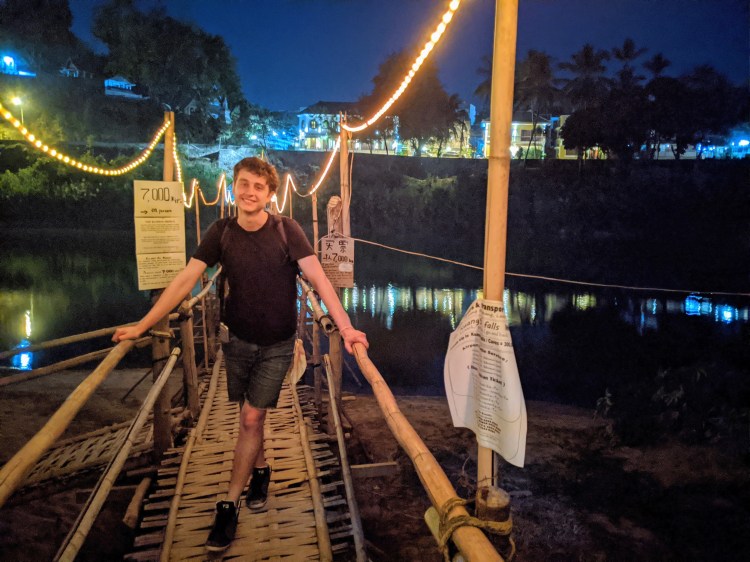
After a glass of wine, we walked across the tourist trap known as the bamboo bridge. It was, admittedly, fun, a little thrilling, and photogenic. Our restaurant was waiting on the other side.

Dyen Sabai had great atmosphere: roofed outdoor seating surrounded by dark wood and orange and red lanterns. We took advantage of their BOGO happy hour, first with pastis, then G & Ts.  Ever since our arrival Laos, I had been meaning to find somewhere that served one of my favorite Lao dishes. I first discovered it at Thip Khao, in DC. It’s a kind of dried beef or pork, with sesame and some sort of sweet glaze. Dyen Sabai had the pork version of it, and while it was not as good as Thip Khao’s, it was still chewy, sweet, salty, and delectable. Aaron and I shared some tofu red curry and sticky rice (the superior rice; always go with sticky rice) while we discussed the differences between Luang Prabang and Chiang Mai: the food is better in LP, the people are more friendly in CM. I blame the French influence. 

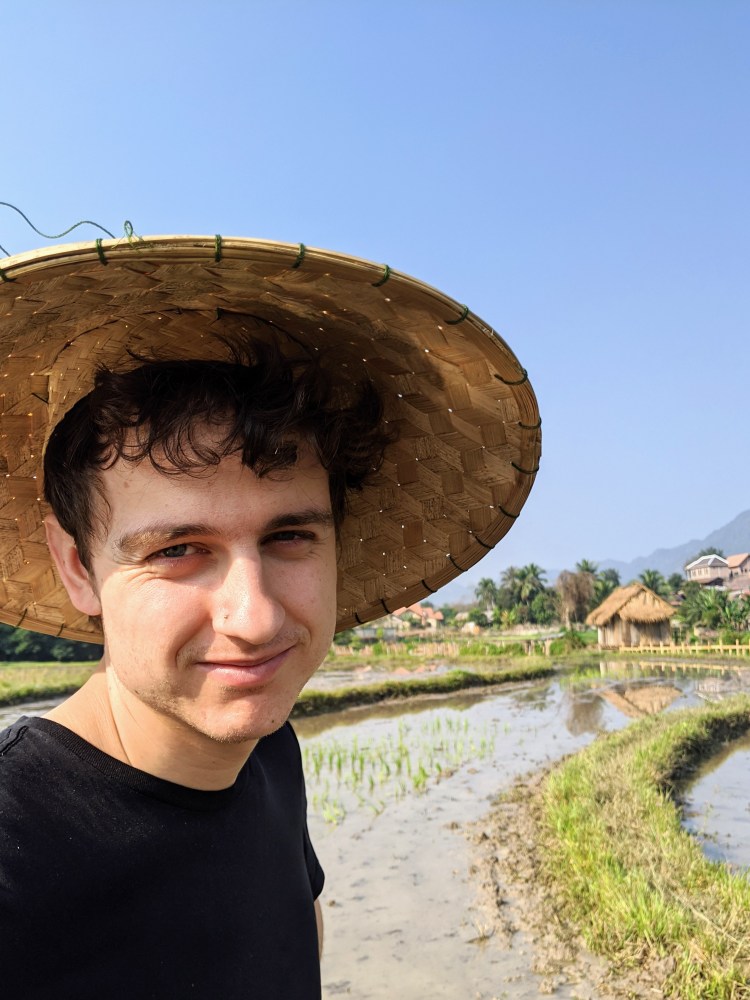
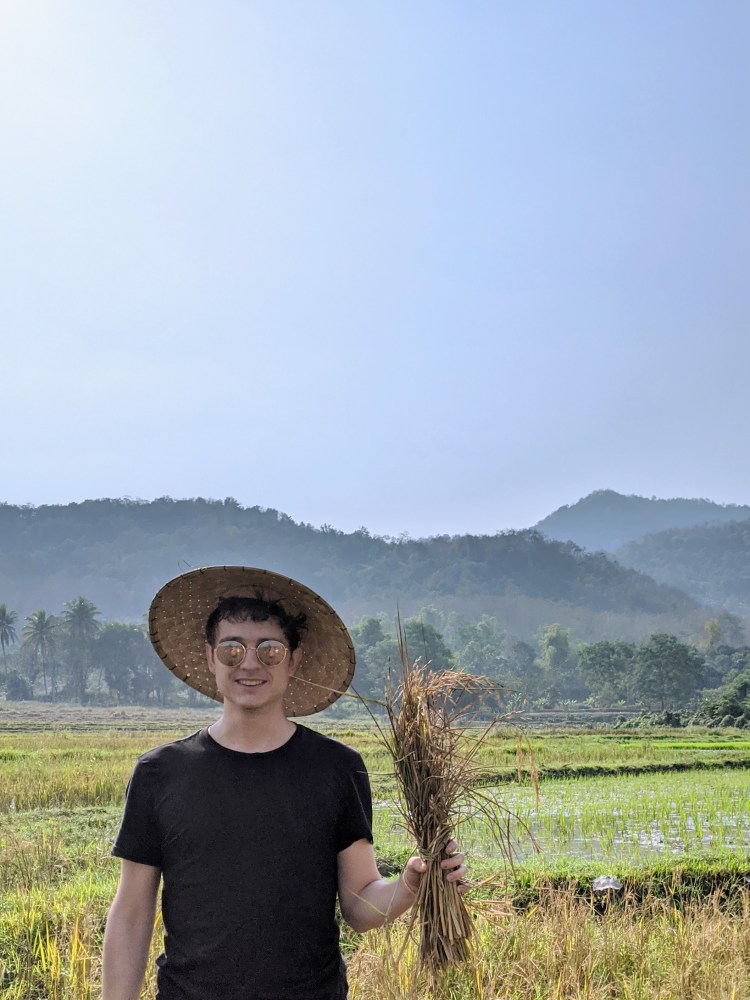
This morning, we woke early to catch our pre-arranged tuk-tuk to Living Land Rice Farm. Not early enough, however, because we had to give up on the omelettes we’d already paid for when our driver showed up. We arrived at the farm without incident, and were greeted by Din, our farm guide, a young, Lao dude with a sense of humor and a tour guide’s geniality. We were to be rice farmers for a day. He handed us some conical bamboo hats and gave us a spiel about the farm. It’s co-owned by 7 families, and includes farms for rice (obviously), sugar cane, pineapple, herbs, and vegetables. After introductions, we were taken to meet the bamboo weavers and given instructions on how to make a bamboo star. I made the best one, if I do say so myself. I have a bright future in bamboo handicrafts. Perhaps I, myself, am the bamboo star.

Din showed us how to place an egg in some water, pour salt until it floats, and then place rice grain from the last harvest in it to determine which to plant. The grains that float have air in them, while the grains that sink are good for planting. “Normally, it takes four months to grow and harvest rice, but today, we will do it in three hours. Magic rice,” Din told us. 

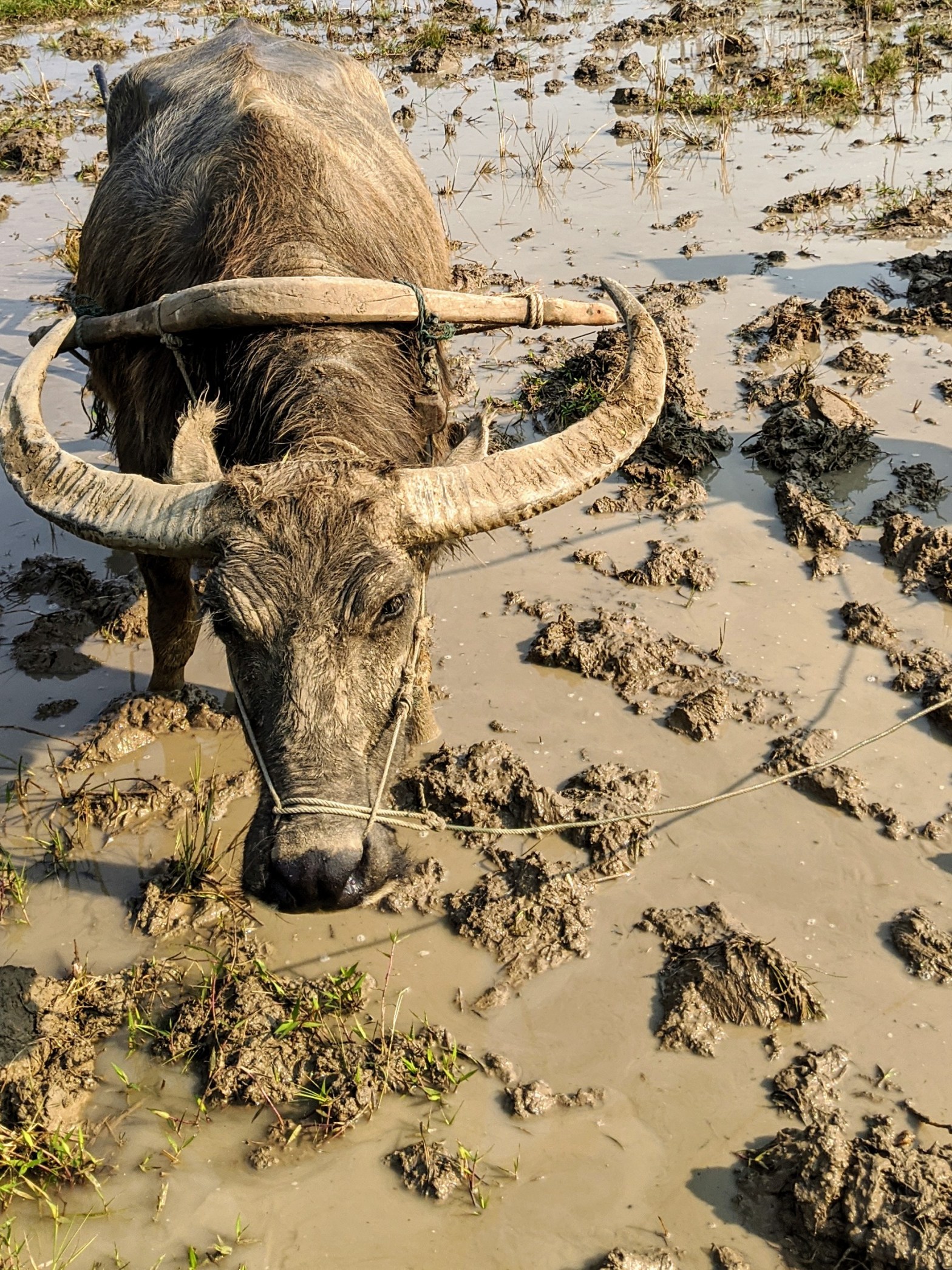
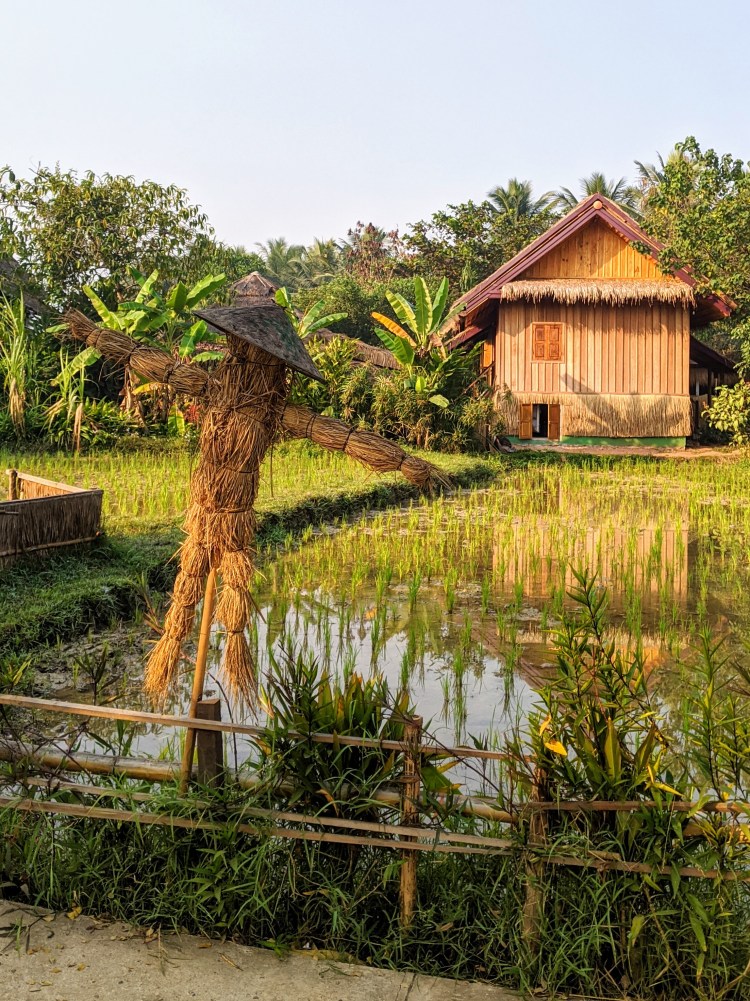
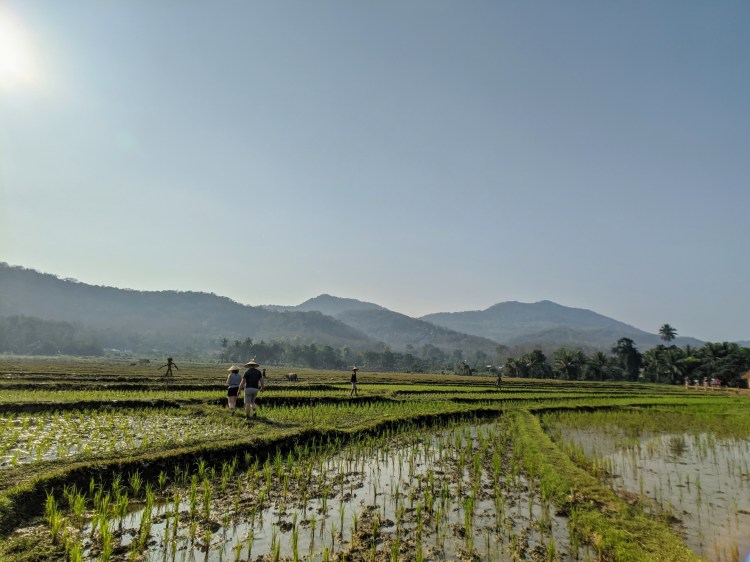
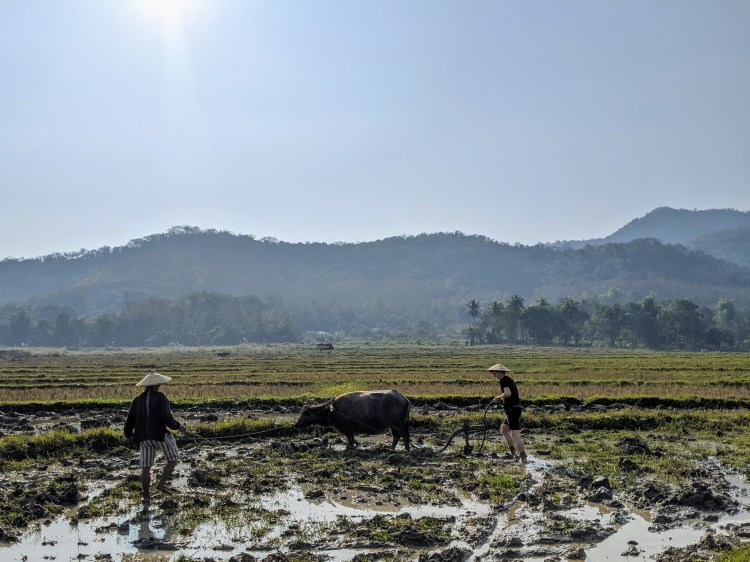
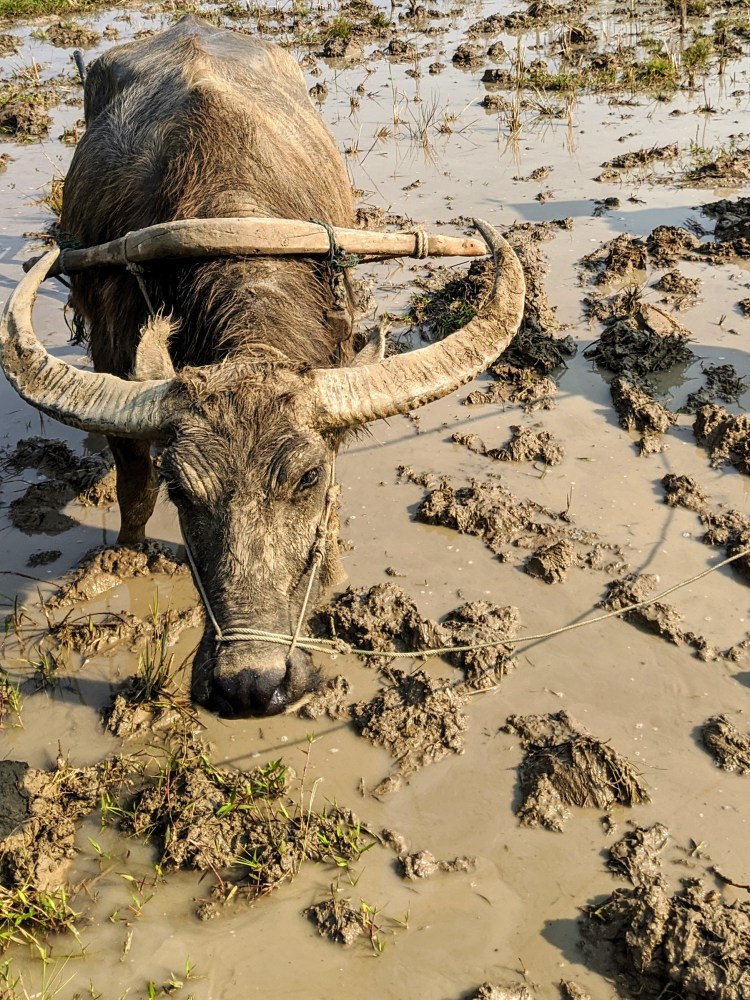
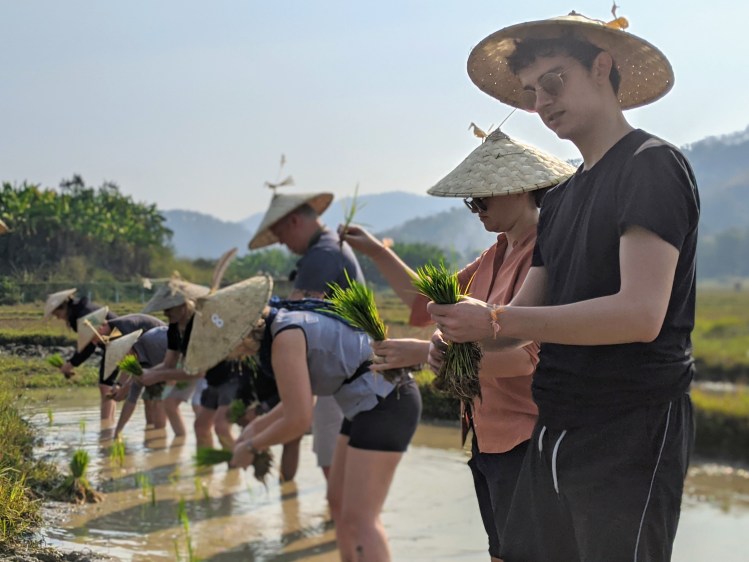
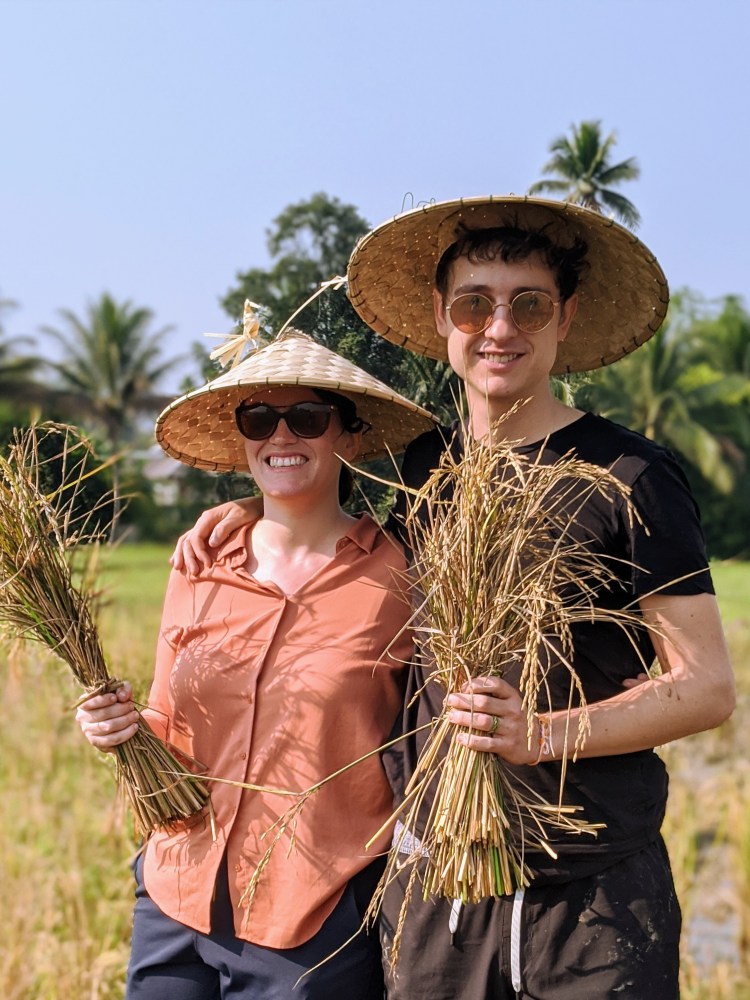
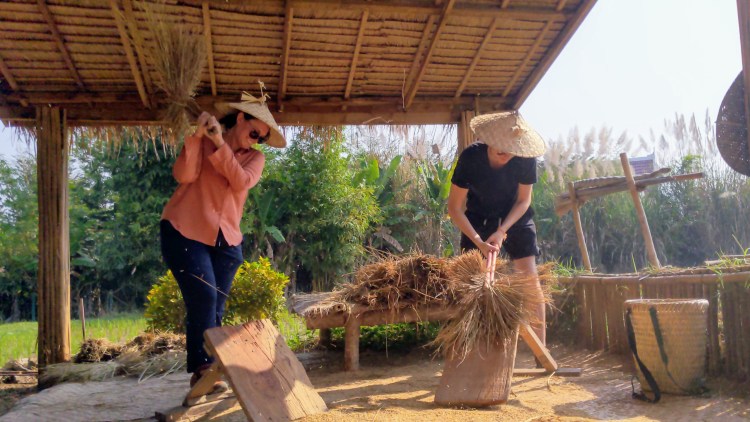
It was time to get dirty. We took off our shoes, and slogged into the nursery paddie, where Din taught us the proper technique for planting rice. Then, he showed us how to plow the leftovers from last year’s harvest using Susan, the beleaguered and adorable water buffalo. I volunteered Aaron as tribute and giggled as he struggled to set the pace with this giant beast. We planted, harvested, separated, husked, and ground the rice. All of this we did in the golden-lit surrounds of this large, open rice farm, actual farmers in the distance silhouetted against the deep emerald mountains. We were rewarded for our labor with fresh sugar cane juice and rice treats of every kind. Aaron and I were particularly greedy with ours, because of the skipped breakfast. 

For lunch, we finally made our way to Bio Bamboo. It’s a bit out of the way, even further from the main tourist area than our ecolodge. It’s also aptly named; everything was bamboo: furniture, yes, but also plates, serving mats, bowls, glasses, and tableware. Food was served in cooked bamboo, and cooked bamboo was served as food. We tried the recommended traditional Lao dishes, which I’m sure would have been magnificent if Aaron and I could have handled any more adventurousness in our food. As it was, we ate around most of it and wished we’d ordered vegetarian. The banana blossoms were about the only thing we could stomach. 

We returned to Fan Dee to rest up before our hike of Phu Si Hill, but that’s for tomorrow.

Design a site like this with WordPress.com
Get started