Siem Reap: Day 7

We took a nice long rest after our visits to Bayon, Baphuon, and Ta Prohm. The best strategy here, we’ve discovered, seems to be to go out early in the morning, and then hide in the pool or air-conditioned room until the sun leaves you alone. It was dinner-time before we finally decided to venture back into Siem Reap. 

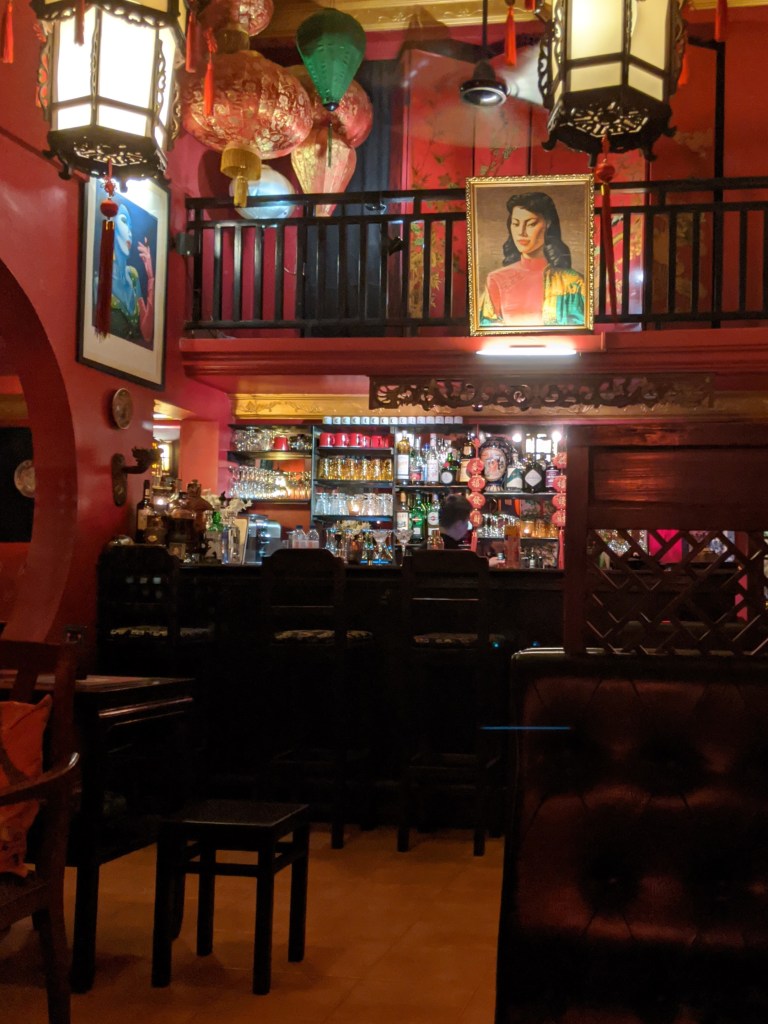
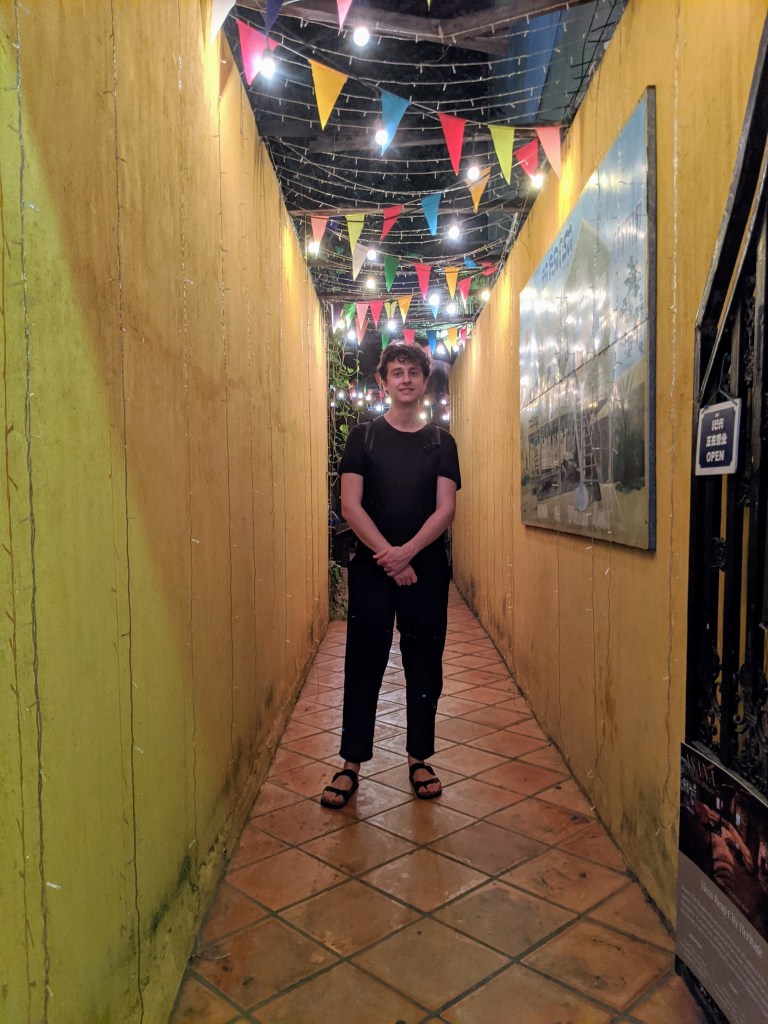
For dinner, we decided to check out Miss Wong’s. It’s actually more of a cocktail bar, but they serve dim sum as well. The interior was lit red by Chinese lanterns. Reproductions of Chinese Girl and the eponymous Miss Wong by king of kitsch, Vladimir Tretchikoff, hung high on its walls. The vibe was what I’m going to call “Singapore camp.” The dim sum menu was printed on fans. Our cocktails were a perfectly executed mojito and Moscow mule. The dumplings were so-so. All-in-all, I would say Miss Wong’s was well-worth the visit just for its decor. We went straight home to bed after, because we had another early morning planned the next day.

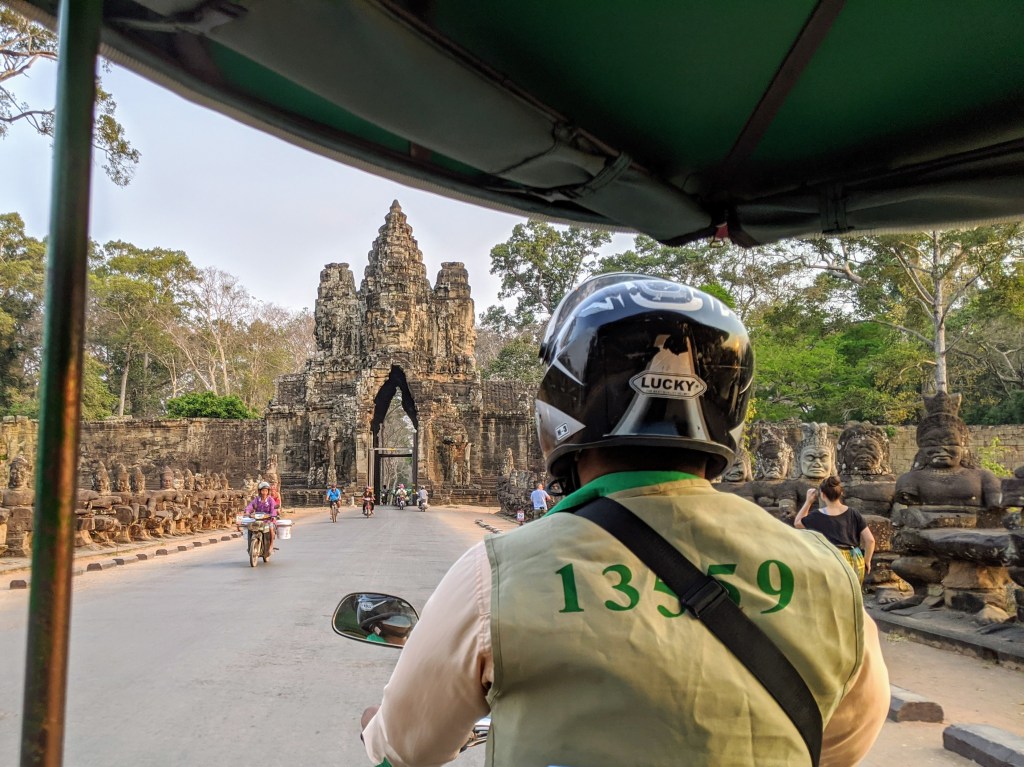
Thorn, our tuk-tuk driver from the previous day, picked us up at 6:30 again and drove us once more to Angkor National Park. This time, we were there to see Preah Khan and–the crown jewel of Angkorian temples–Angkor Wat. Thorn offered that Neak Pean was on the way to Preah Khan, so we asked him to drop us there first. I’m glad we went on a lark. 

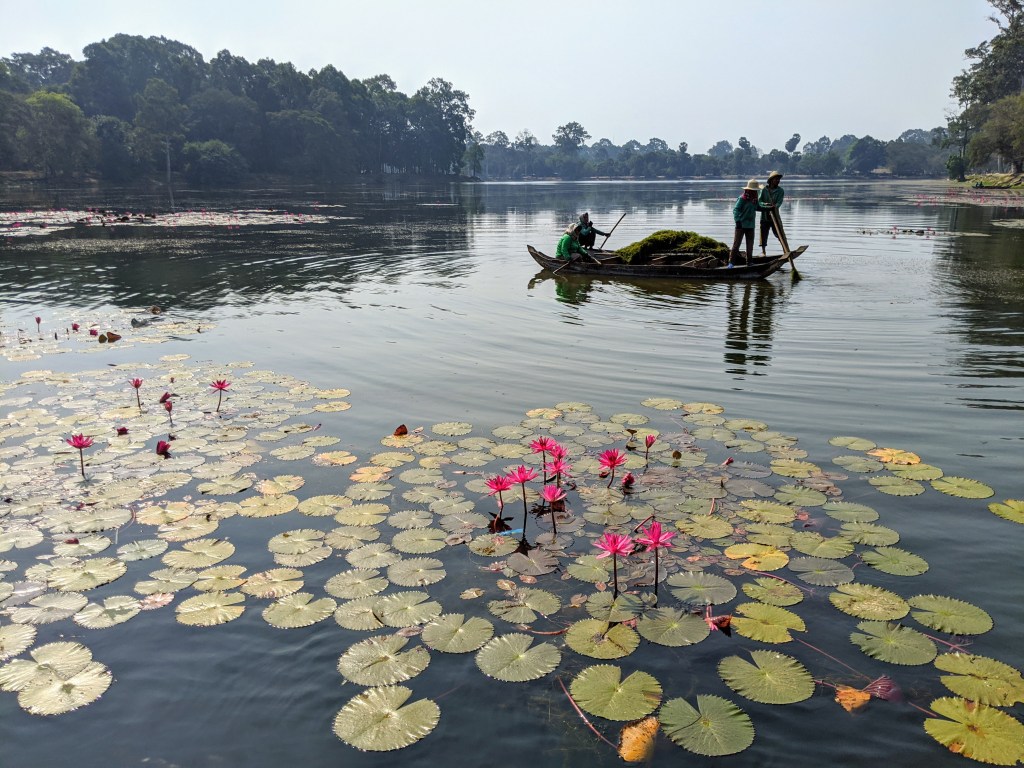
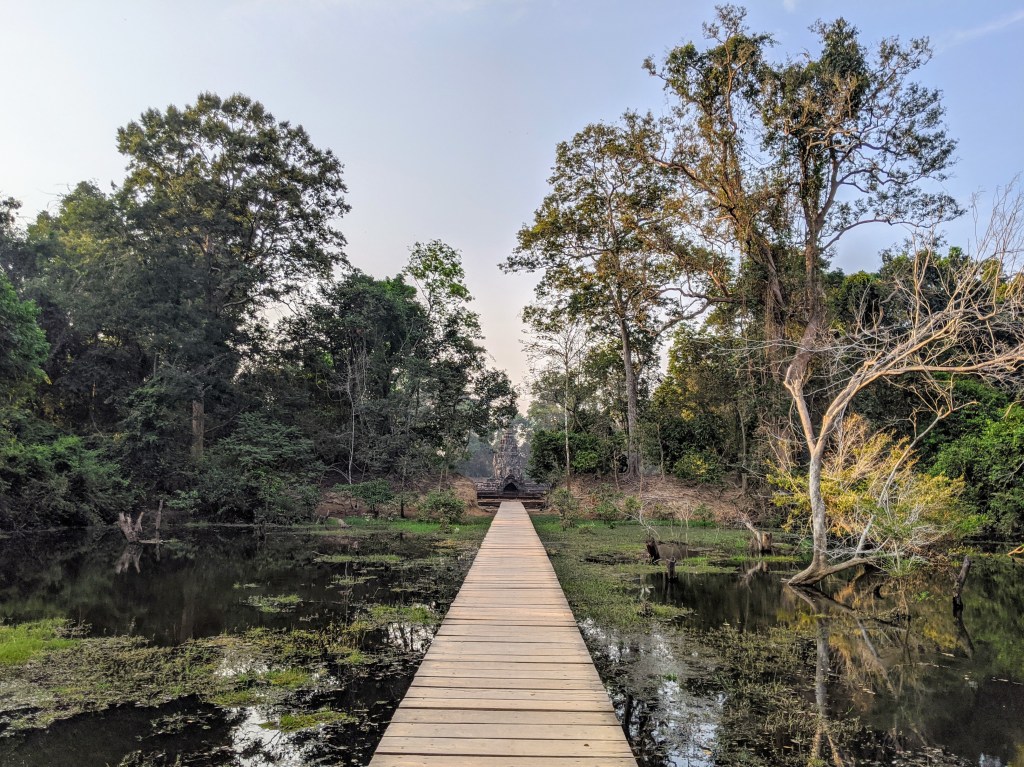
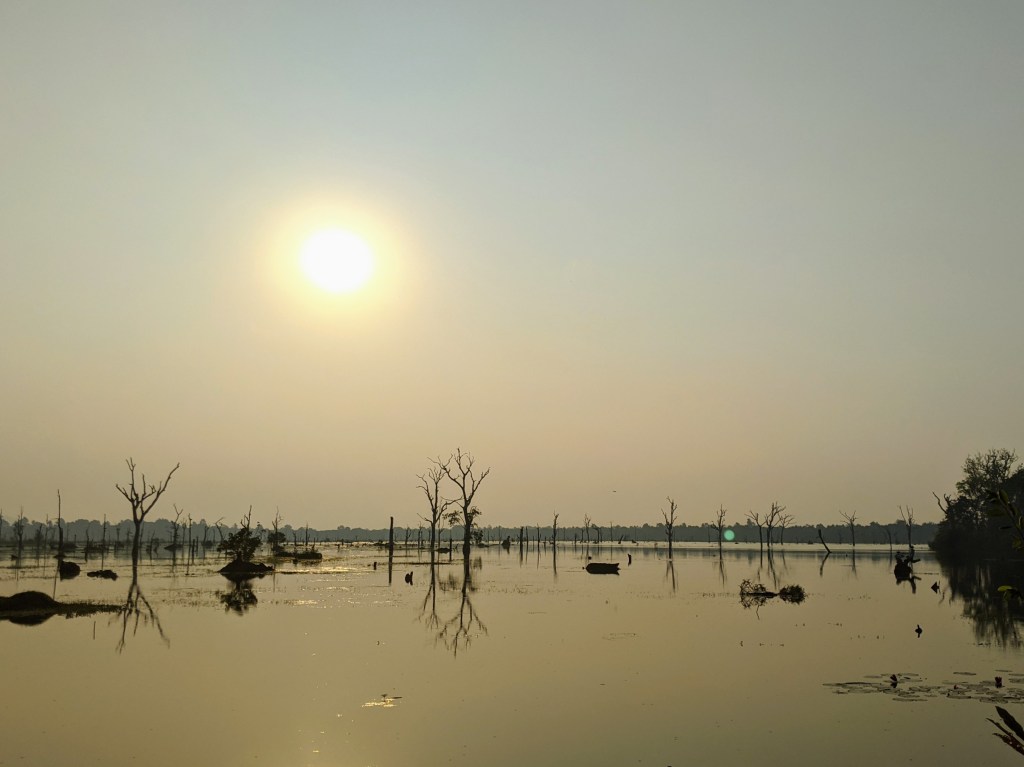
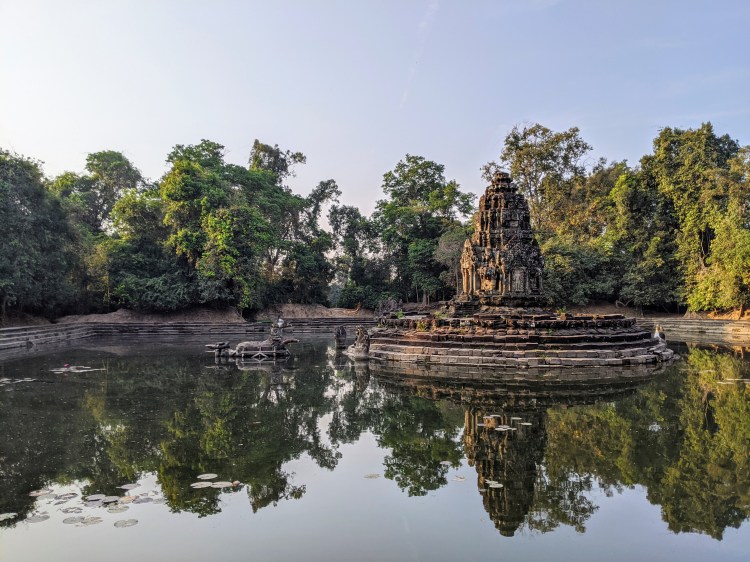
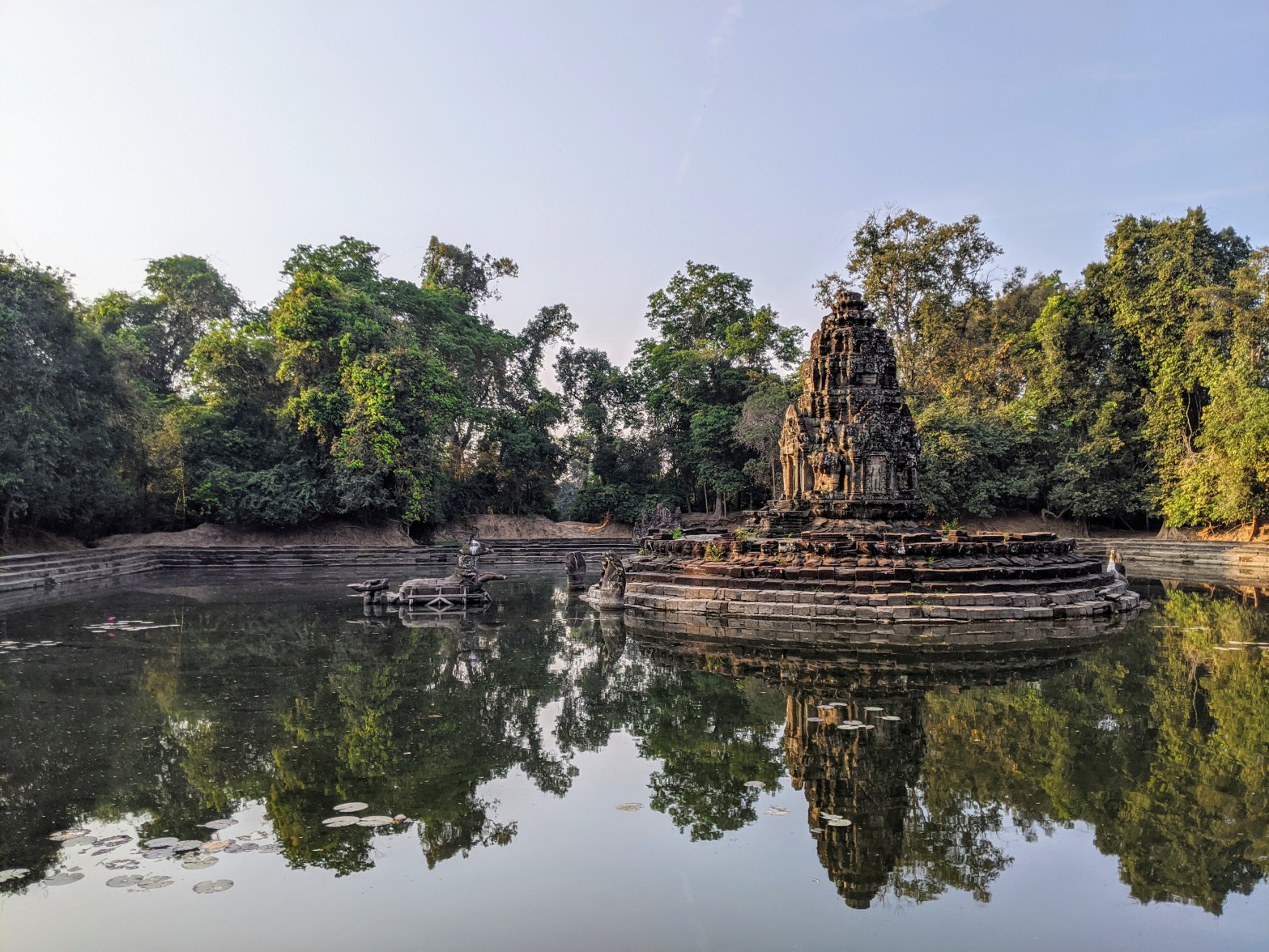
To get to Neak Pean, you must walk a dirt bridge that spans its enormous moat. Dead trees spookily dotted the distance, half-drowned in the murky water. The man-made moat was as big as a lake. It being early morning, we could hear a thousand different birdsongs in every direction as we crossed. Neak Pean is centered in a smaller, circular pond, surrounded by four rectangular pools in each of the cardinal directions. Visitors may only look at the small stone tower from the edge of this pond–no paths approach. To its right, a sculpture of a horse rose out of the water, with a real bird perched on its back. This is the last remaining of the four animal guardians that used to encircle the temple. Aaron and I were the only two people here, aside from a park worker sweeping the paths with a large besom and her two children. We stayed long enough to enjoy the solitude and see a few birds bathe in the temple’s many pools, then we walked the long bridge back across the moat to our tuk-tuk.

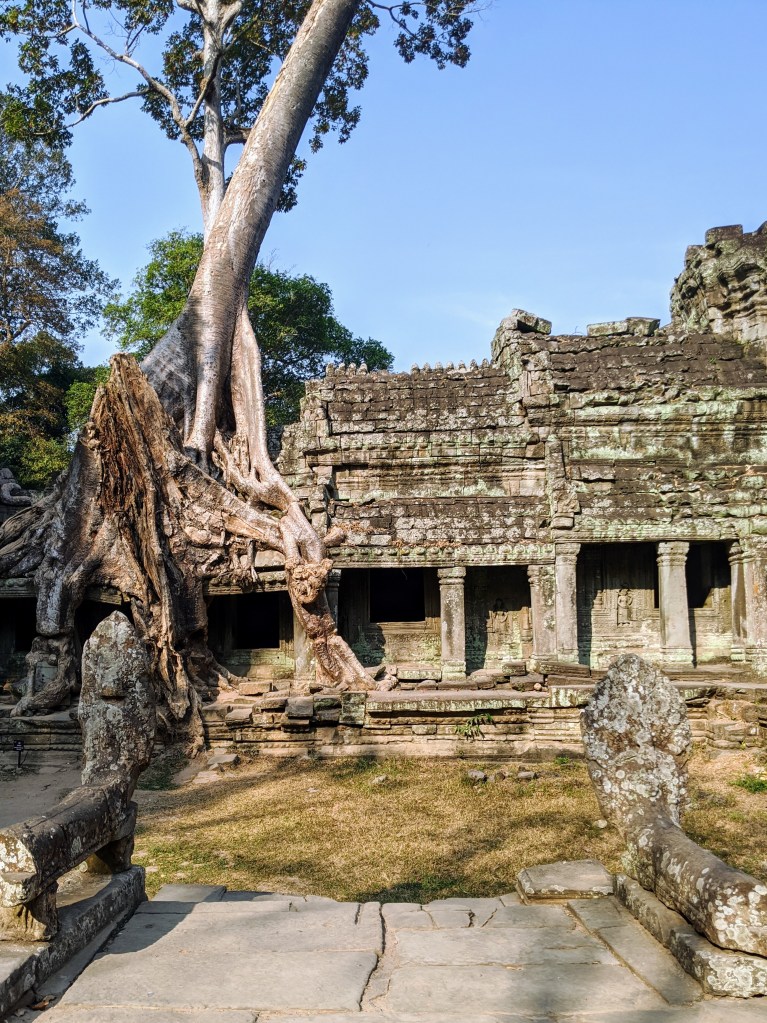
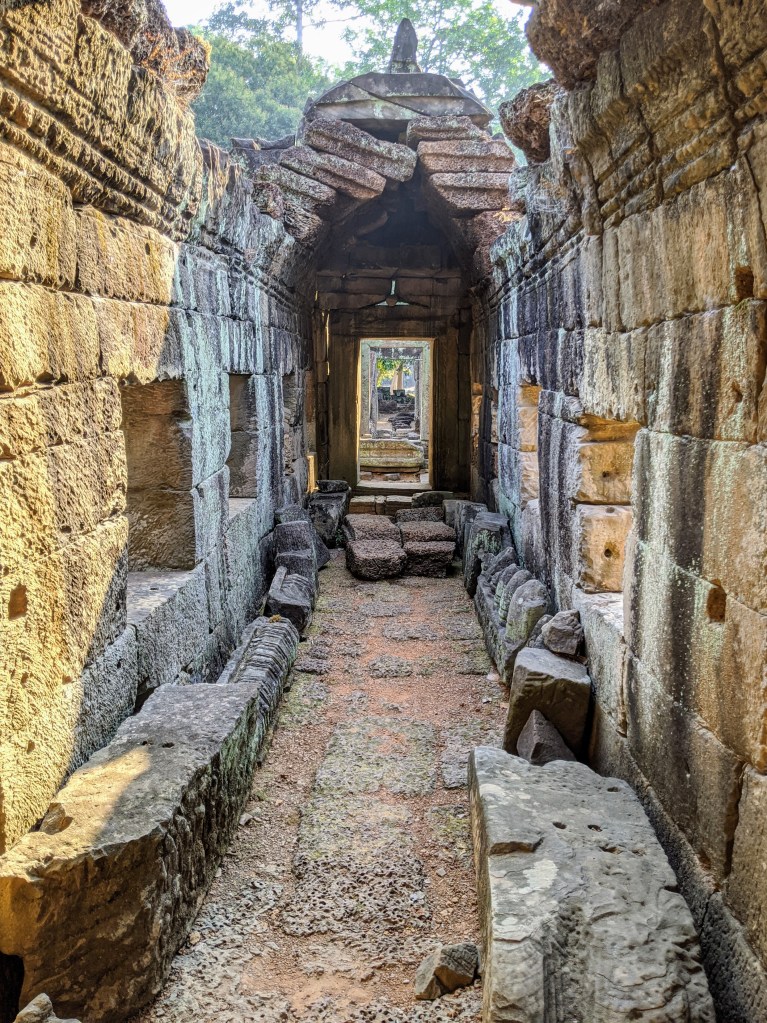
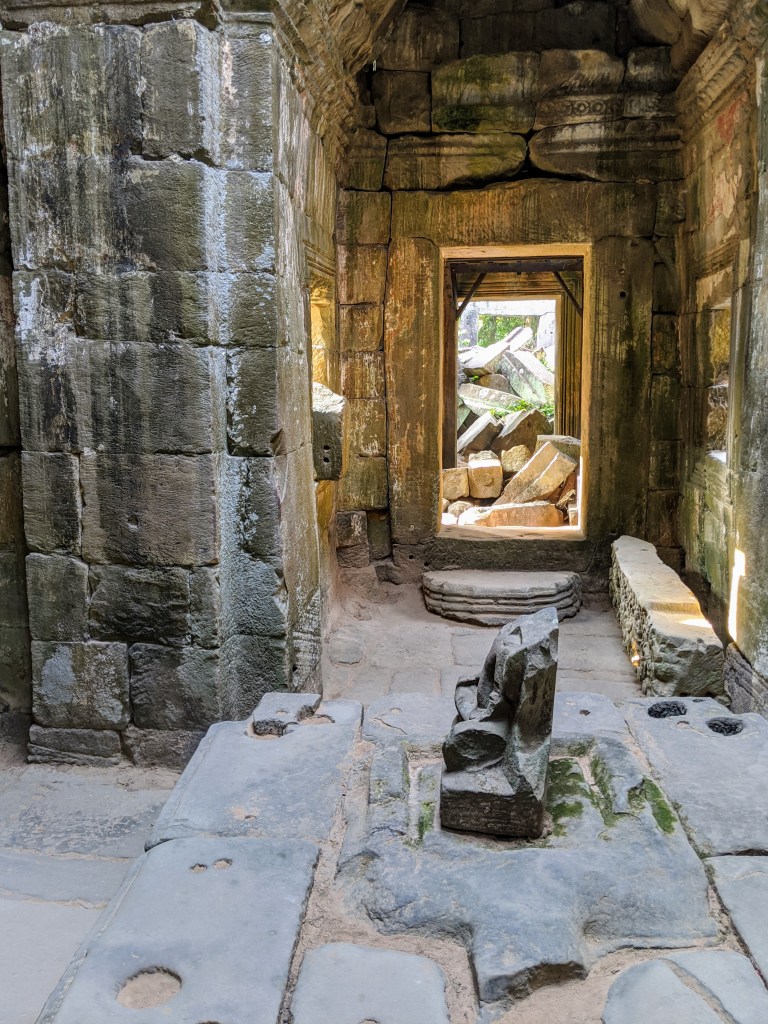
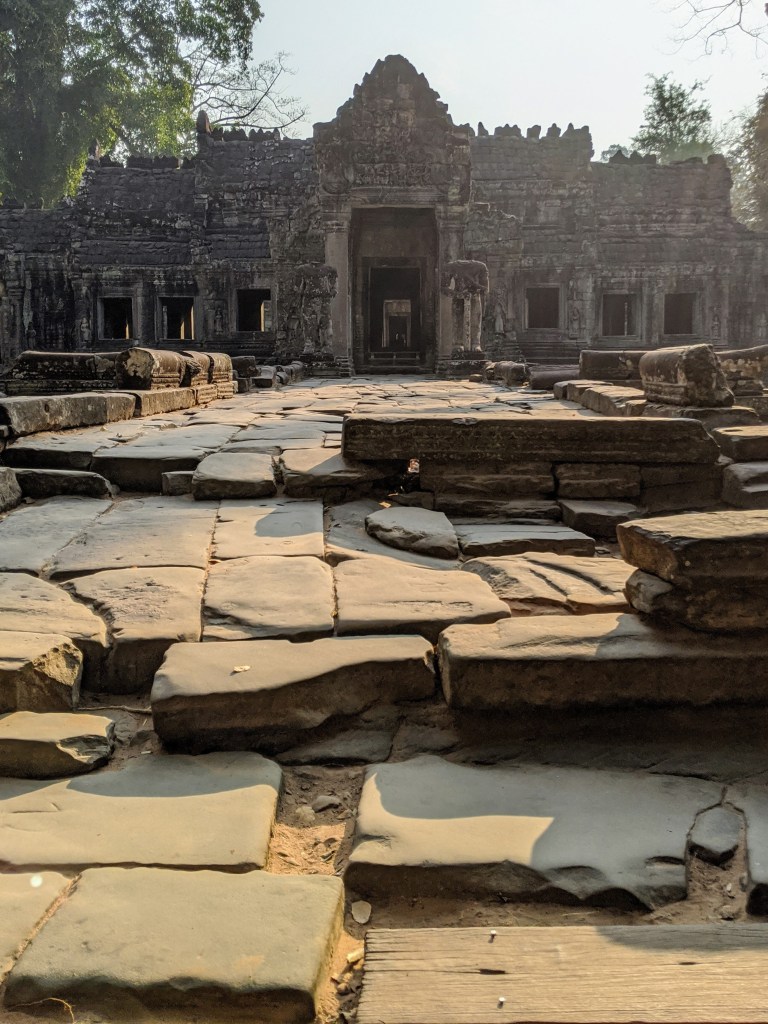
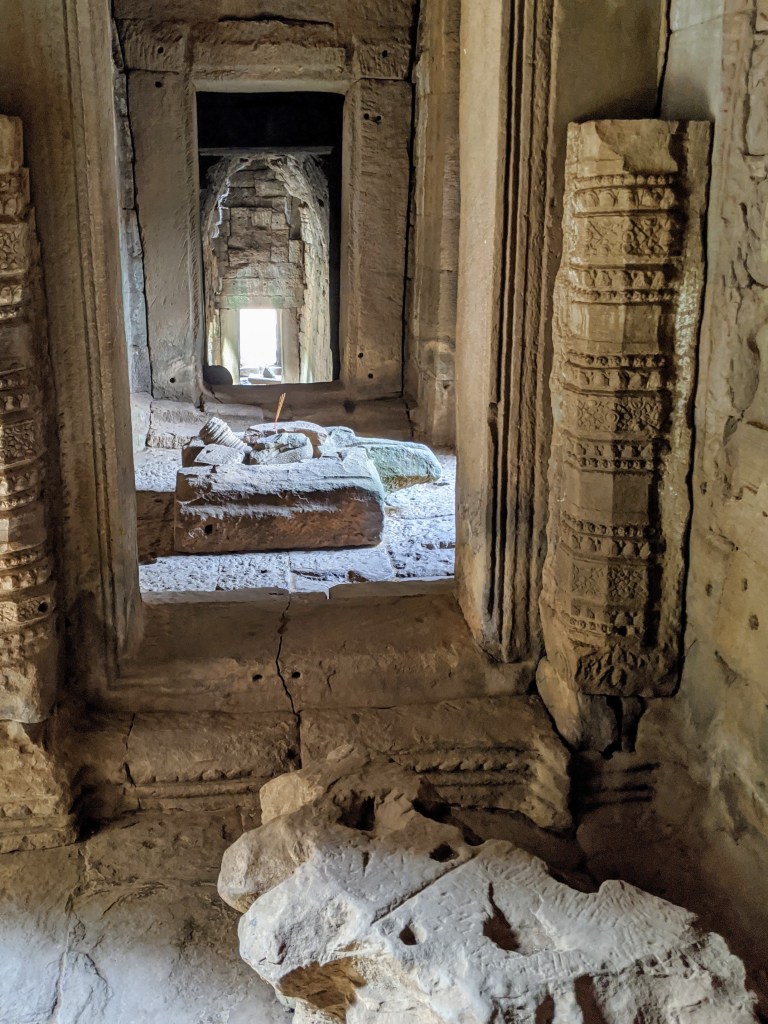
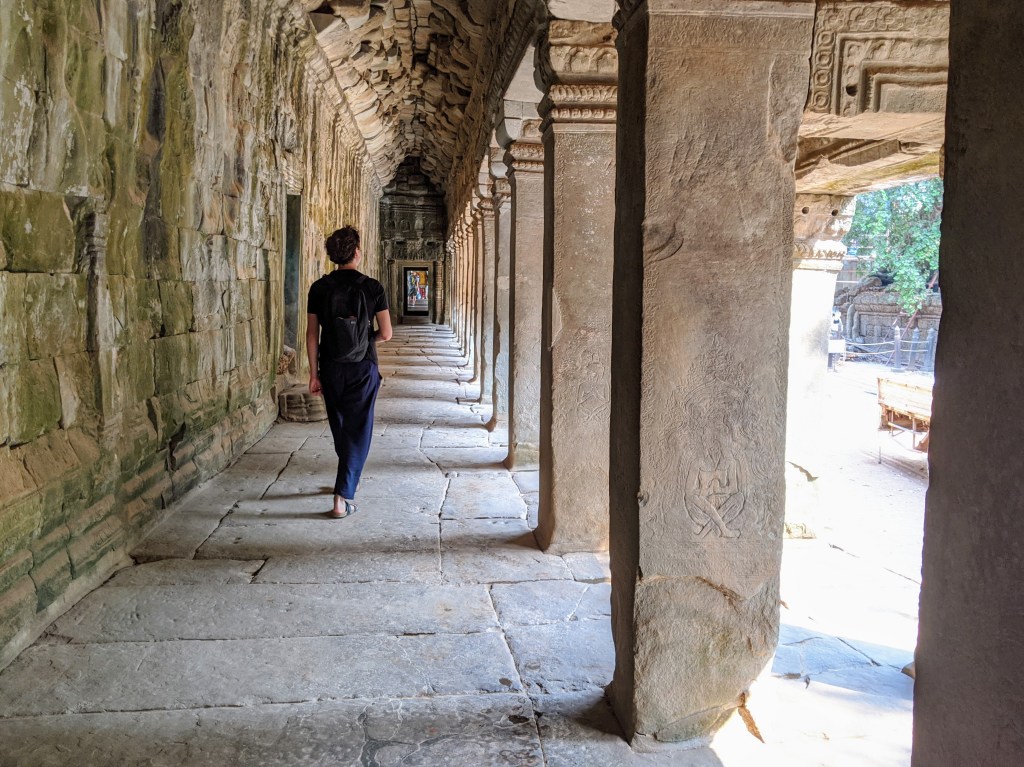
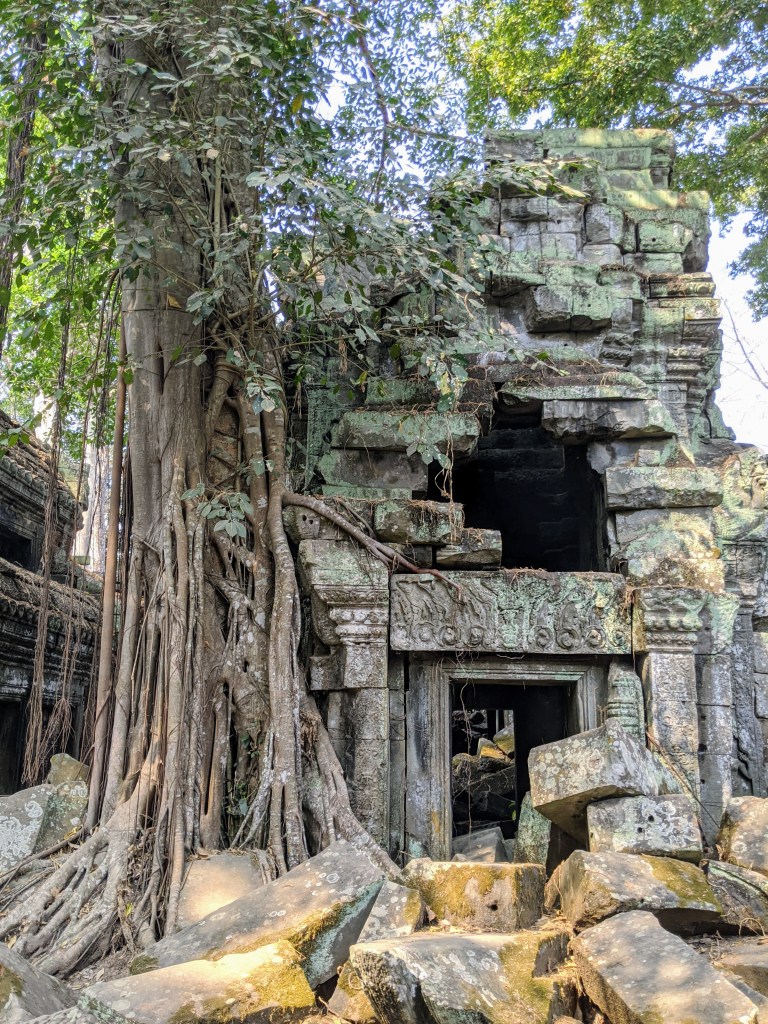
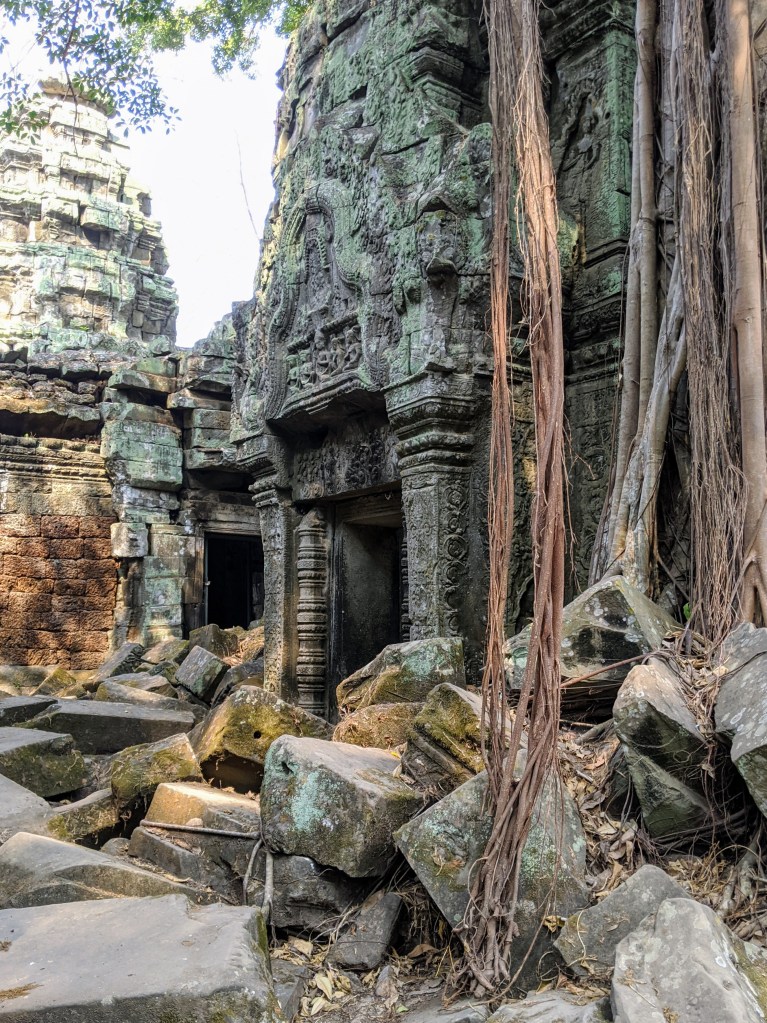
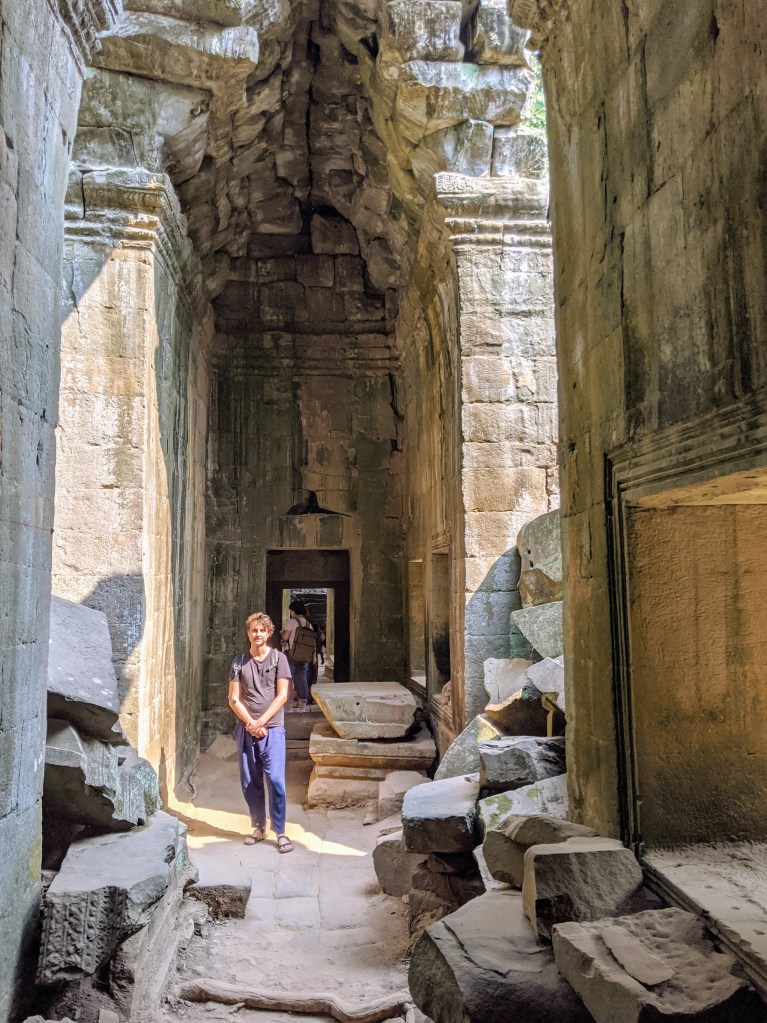
A short ride later, we arrived at our first scheduled destination: Preah Khan. This temple was built in the 12th century by King Jayavarman VII, who was responsible for the construction of many of Angkor’s most famous temples. Preah Khan is large and mazelike, and unlike other temples, there is as much to explore inside its halls as outside. Like nearby Ta Prohm, Preah Khan has been encroached on by nature. But, like Bayon, much of its original structure is still standing. Aaron and I spent a few hours here. We took awkward, high steps over the tall sills of its doorways. We hopped between the stone lips around its tomb-like inner structures. We found bats on the ceiling of its remotest corners. We explored in the truest sense of the word–and we did it together; I felt like a kid playing make-believe with her best friend. We had to cut our fun short, though. We needed to ensure we had enough time to fit in one more temple, before the heat became unbearable.

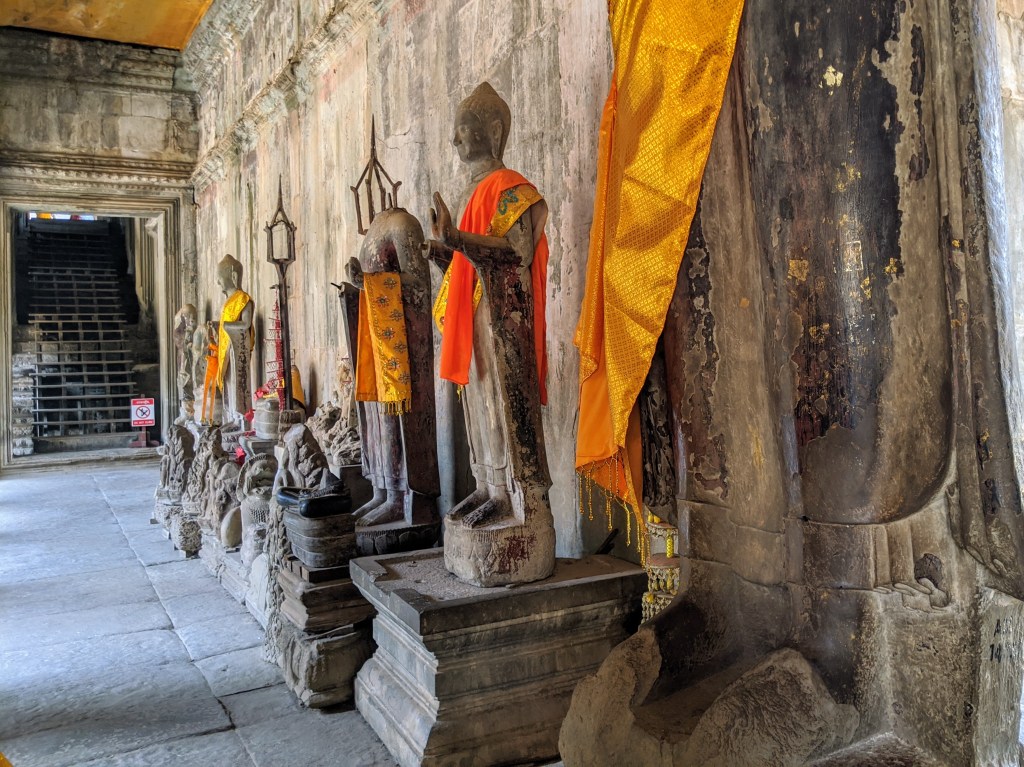
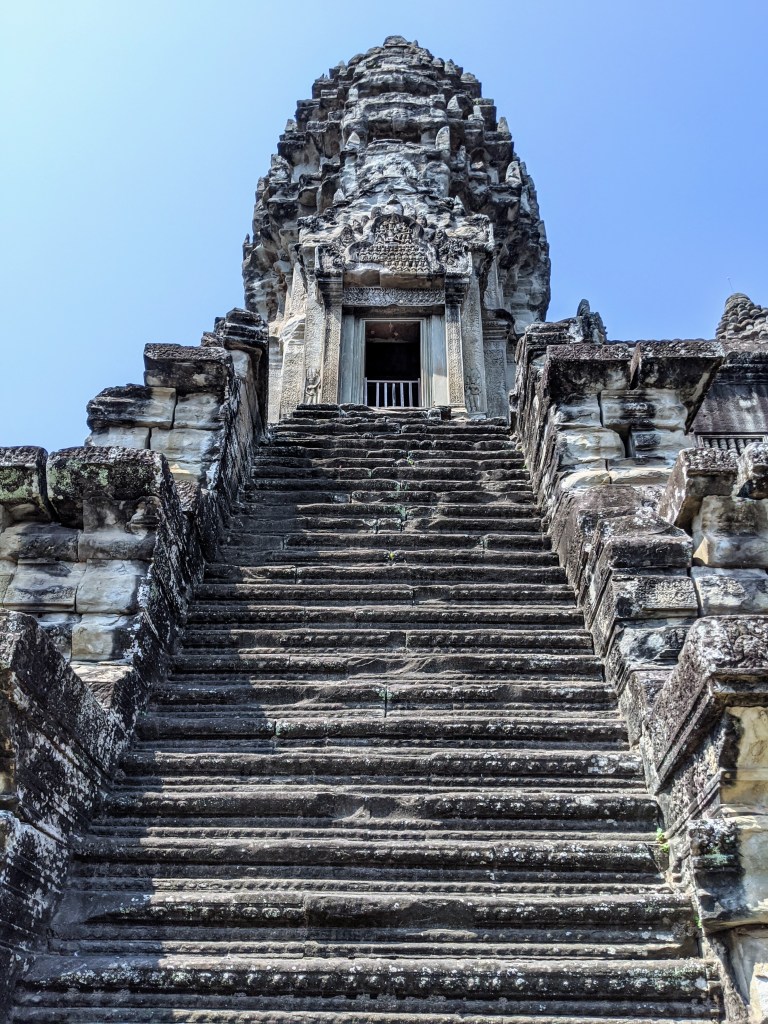
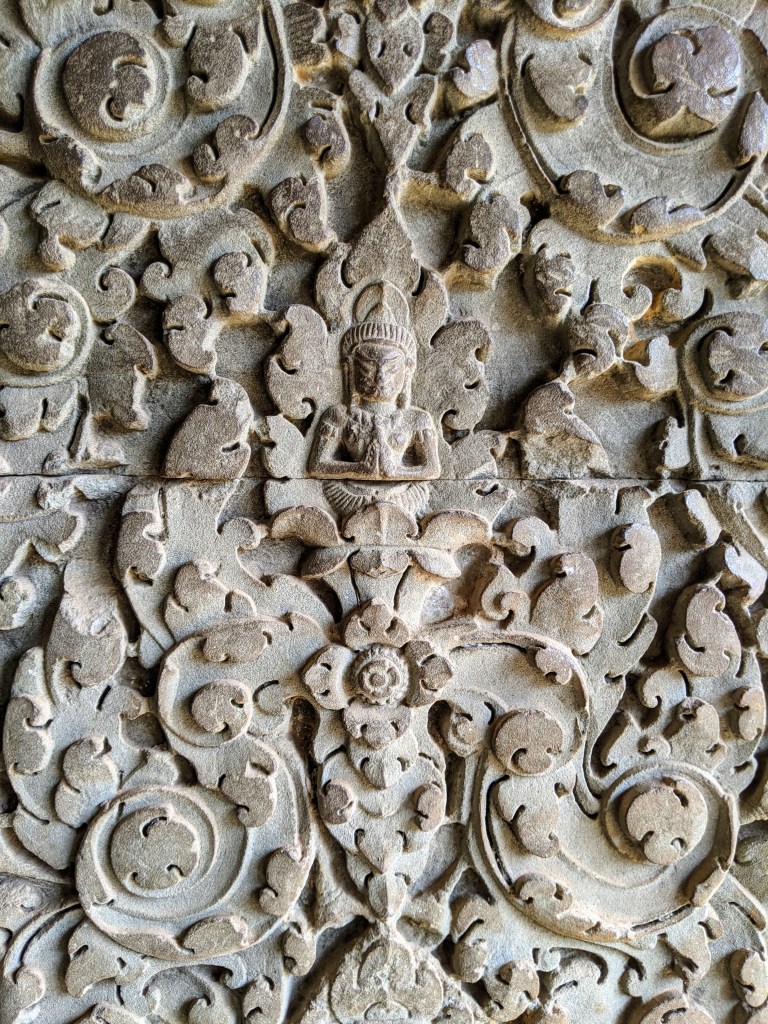
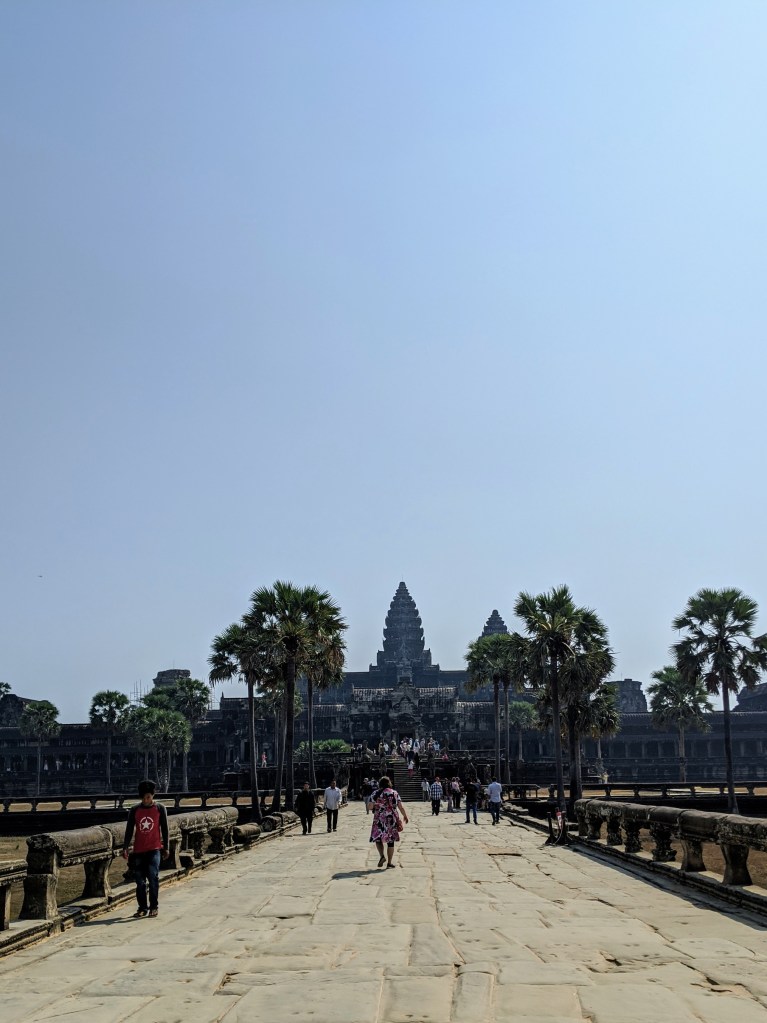
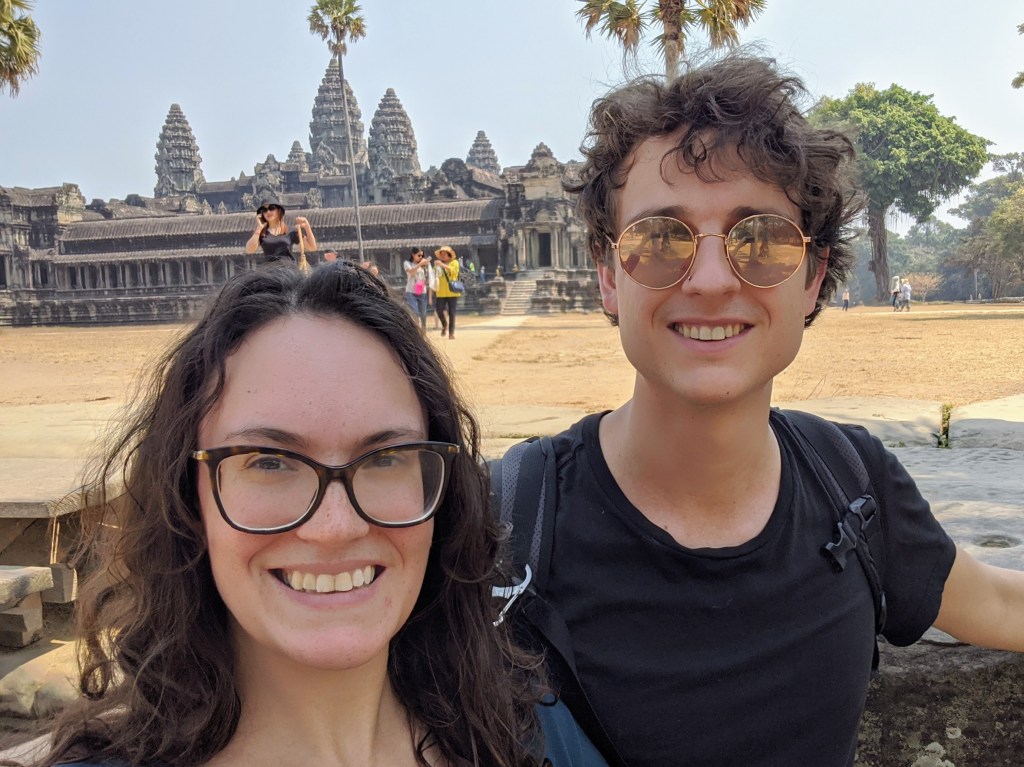
We saved, if not the best, then certainly the most famous temple for last. Angkor Wat is the largest religious monument in the world. The temple is such a source of fierce national pride for the Cambodian people that they put it on their flag. It has been continuously attended to since the 15th century. Two-and-a-half million tourists visit Angkor Wat every year. And I thought it was…  ok. As with many over-touristed sights, it was a bit disappointing. It was crowded. It was hot. It had neither the derelict allure of Ta Prohm and Beng Mealea, nor the artistic merit of Bayon and Banteay Srei. We walked along its outer wall, examining its unimpressive bas-reliefs, some of which looked like they were done by children. I know I sound like a spoiled brat, but this is what Siem Reap does to you. I’ve been spoiled by the abundance and quality of the city’s other temples. Some of the bas-reliefs were much higher quality than others, a function of the fact that the temple has been through several phases of construction throughout its centuries. Aaron and I spent more time with these, playing the same “spot the guidebook’s description” game as yesterday. Then, we explored its vast interior and unsheltered courtyards until we were too sweaty and tired to continue. We certainly didn’t see every nook and cranny of this temple, but I think we saw enough to get the picture. 

Lunch was at Spoons Cafe, a two-dollar-sign joint that serves as a training facility for EGBOK, or “Everything’s Gonna Be OK”. EGBOK is an international non-profit that empowers underprivileged youth with vocational training, mostly in the hospitality sector. We ordered some coconut and corn dumplings that were a bit too sweet for my taste (others would find them scrumptious, I’m sure), and fried red snapper with mustard vinaigrette that was very much to my taste. Even fish-hating Aaron enjoyed it, I think. After lunch, we returned to the hostel to recover. 
Siem Reap: Day 6

Aaron and I were feeling a bit lazy this night. We’d spent all afternoon floating in the pool, after our visit to Apopo, and we weren’t about to change our pace. We walked two buildings down from our hostel for some very decent sushi at Shin Sushi. Shin is a thin, long restaurant, and from what I could tell, the only seating was at the bar. So, I ordered a wasabi martini, because when in Rome… Asian music videos were playing on a TV behind the bar, and I was entranced. Aaron kept trying to talk to me, and I’d get distracted by an extremely ethnically-ambiguous man in a polyester shirt half-rapping and dancing at me. To be honest, I was probably a little over-served. That wasabi martini was only the latest in a series of drinks that started at the pool. I confessed to Aaron that I was feeling a bit tipsy, and, like the bad influence that he is, he suggested another bar.

We strolled through the night market on our way to Asana Wooden House. It was the tamest night market we’ve been to, but most of the stalls were more like shops than actual street stalls. It reminded me of the French Quarter in New Orleans: some authenticity mixed with a lot of tourists and tourist-centered businesses. In fact, Siem Reap has reminded me often of New Orleans. It’s got a very hot, very humid climate, its people are fun and friendly, it’s maintained its charm despite the tourists, and it’s heavily French-influenced. Well, all that and there’s a big drinking culture.

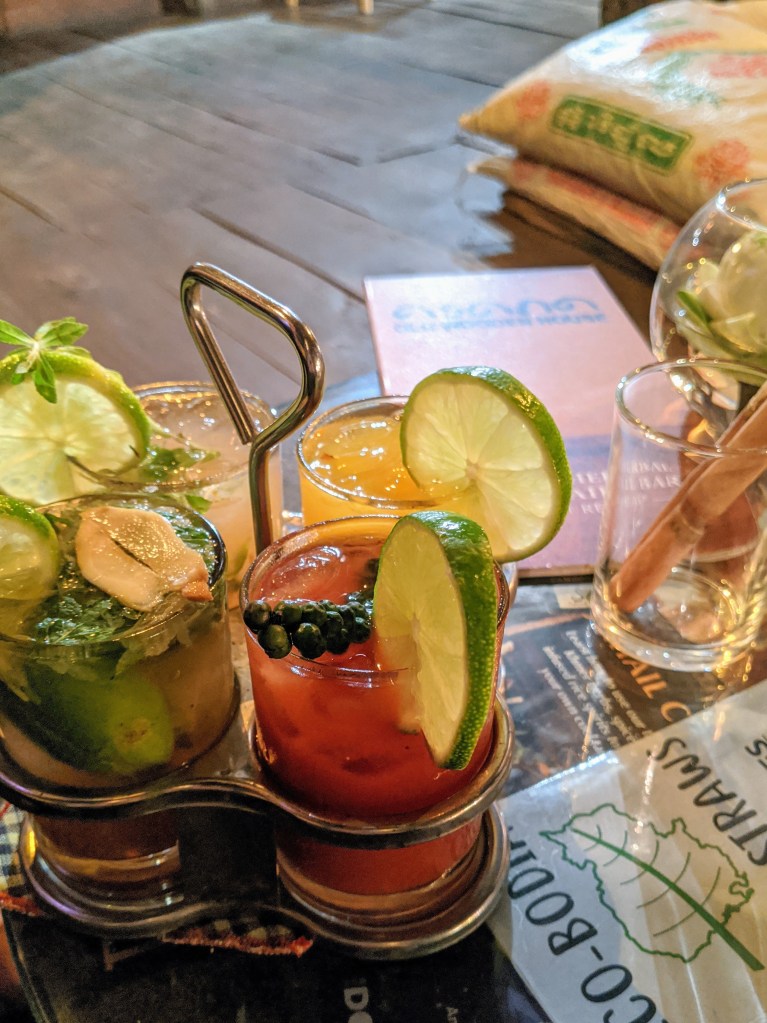
Asana Wooden House is aptly named. It’s a traditional wooden house, with both an upstairs and downstairs bar. Aaron and I found a cozy corner upstairs, near a window opening. Like many places here, Asana didn’t have air conditioning. The aesthetic of the traditional wooden house added a lot to the atmosphere for me (the tipsiness didn’t hurt). Aaron and I ordered a Khmer Cocktail Sampler, which included four different cocktails with a Cambodian twist (think bloody mary with kampot pepper). But, they were half the size of normal cocktails, and we split it. Really, if you think about it, we only had one more cocktail each… They were delicious. We let loose in a way we haven’t done in a while, having silly, half-drunk conversations about knowledge, philosophy, and books we were reading (file under “you know you’re a nerd when”). It was a lovely evening in a lovely place with a lovely person. 

We arranged to have a tuk-tuk pick us up at 6:30 AM. Fortunately, despite the fact that it had been a bacchanalian night, it had also been an early one. Not to say we got a full night’s sleep or anything, but we were both able to marginally function. We needed to wake early, because we had a full morning of temple-touring before us, and we wanted to be done by the time the temperature started breaking 90 degrees. 

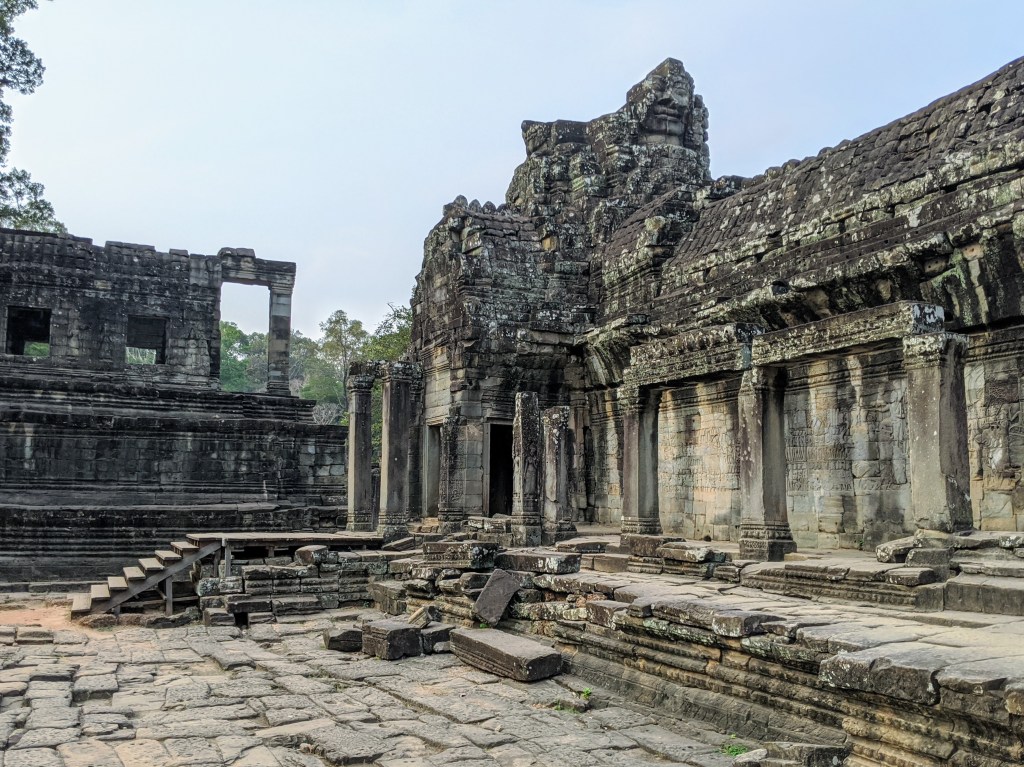
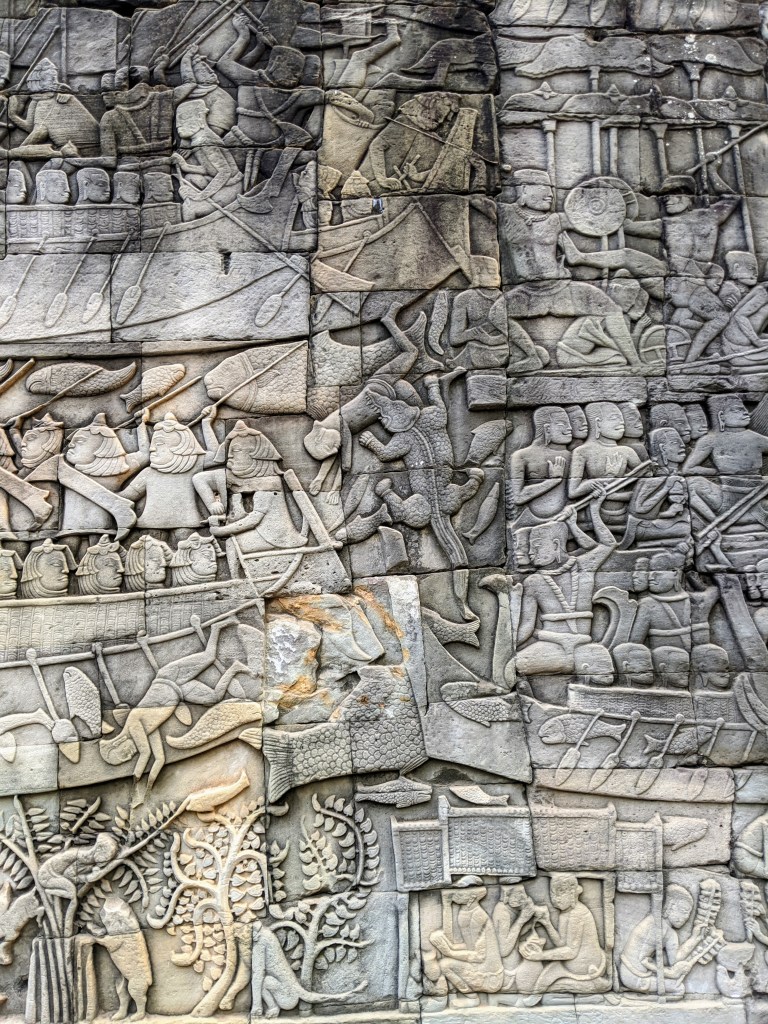
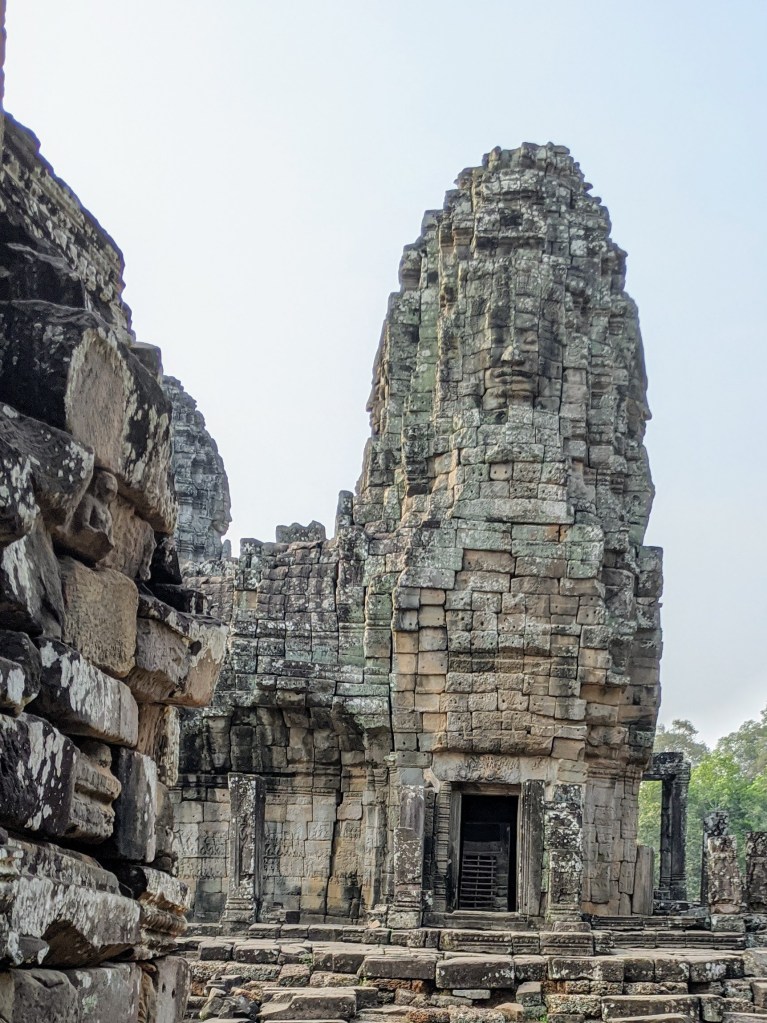
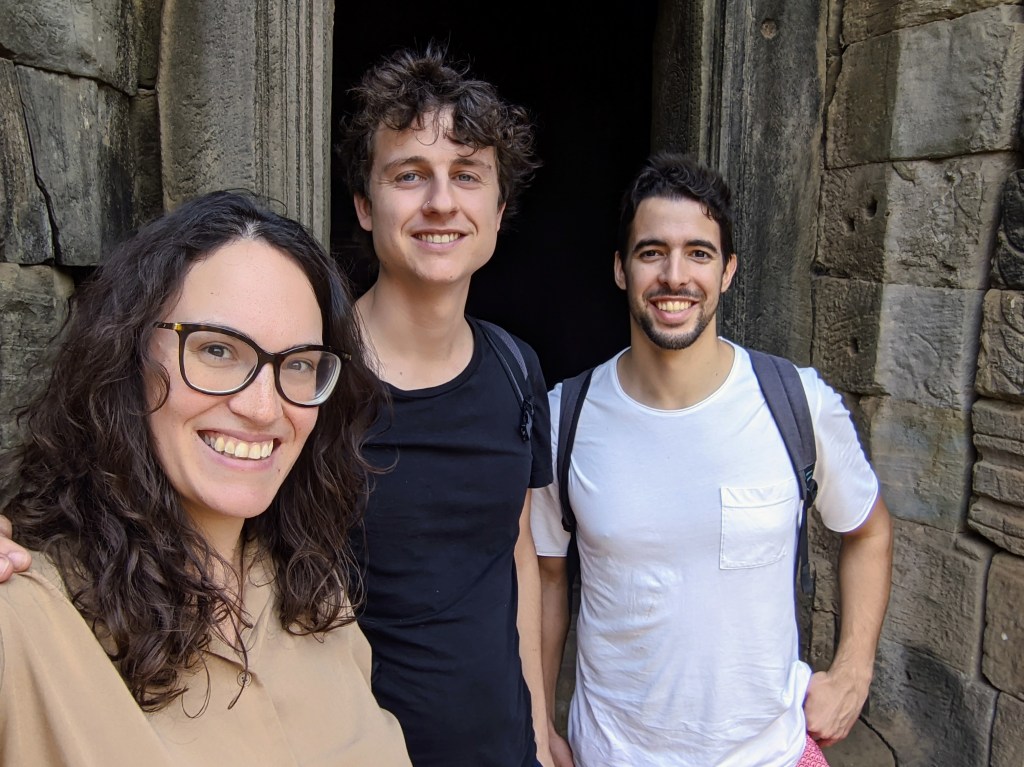
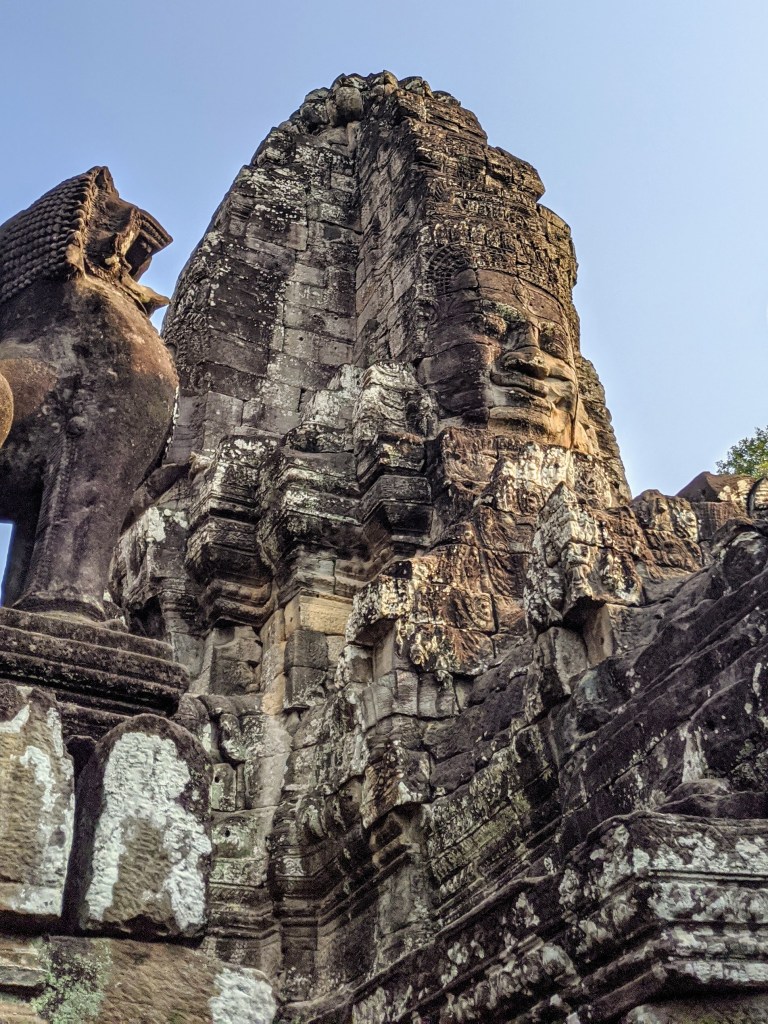
First up was Bayon, the second-most famous of Angkor’s temples. Bayon is also called the temple of faces, because it has over two hundred enormous countenances carved into its rocks, towering over its visitors. I was struck by their peaceful smiles, an odd expression for ancient carvings. Very few sculptures, carvings, statues, etc. are smiling. It was a bit unnerving. Aaron and I circled Bayon’s outer walls first, examining its bas-relief scenes. I read the short descriptions our guidebook provided for each, and we made a game of trying to find the figures the less-than-helpful entries pointed to. Often, along the way, we’d find something surprising that the guidebook was mum about. Some of the panels were more aesthetically impressive than others, but all of the carvings were marvels. Halfway through our self-guided tour of the bas-reliefs of Bayon, a young Portuguese dude approached us. He had overheard me reading the guidebook and wanted to know if he could tag along and hear the descriptions, too. The three of us found, in no particular order: a crocodile eating a man, a woman giving birth, a man lifting three dwarfs, a shrimp, “legions of concubines” (our guidebook’s wording), and a few Khmer soldiers getting drunk after a military loss. Then, we made our way to the main structure. The temple itself was less impressive, with many of its halls blocked off by fallen stones or “No Entry” signs, but the stones were cool and the structure shaded us. 

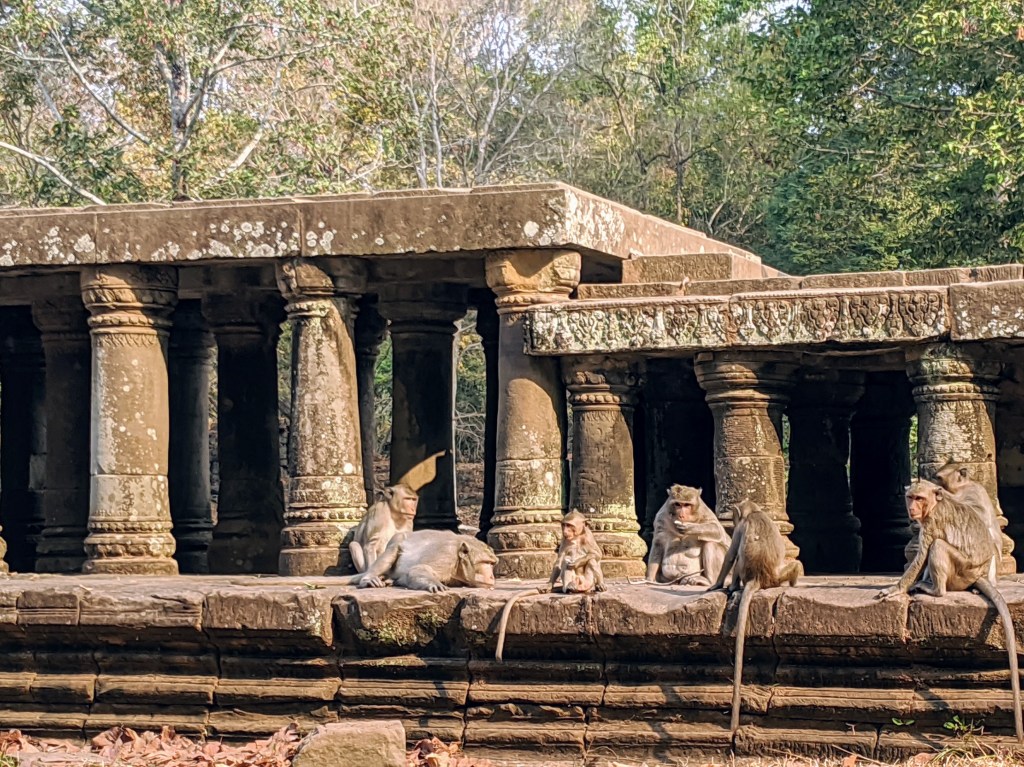
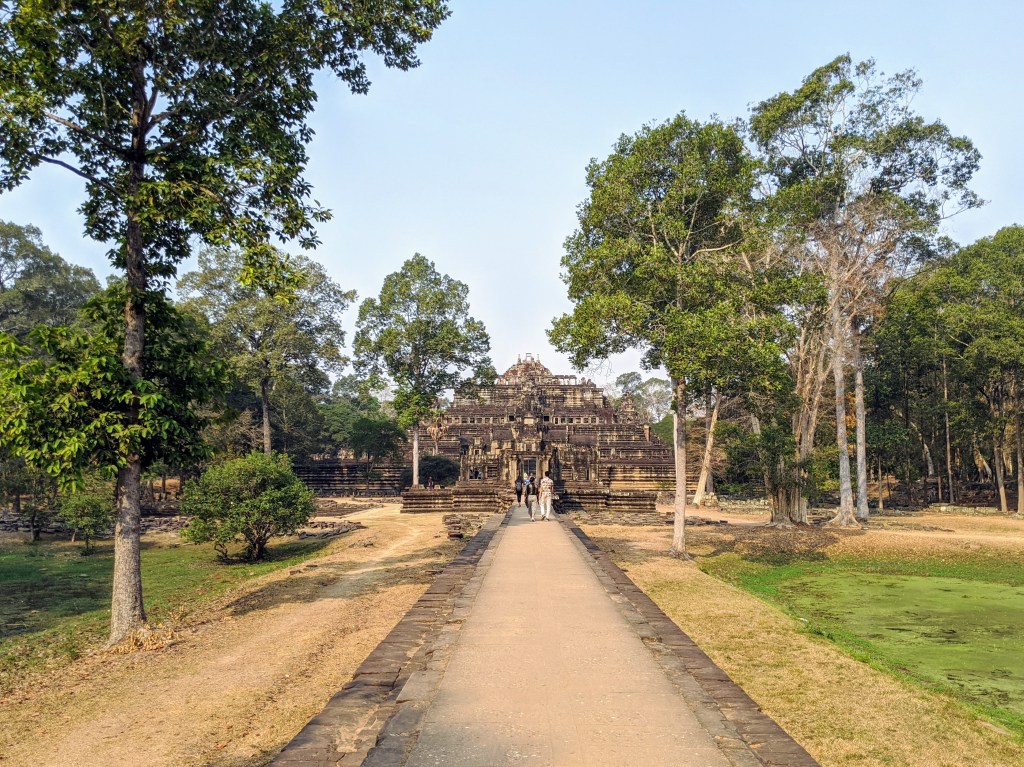
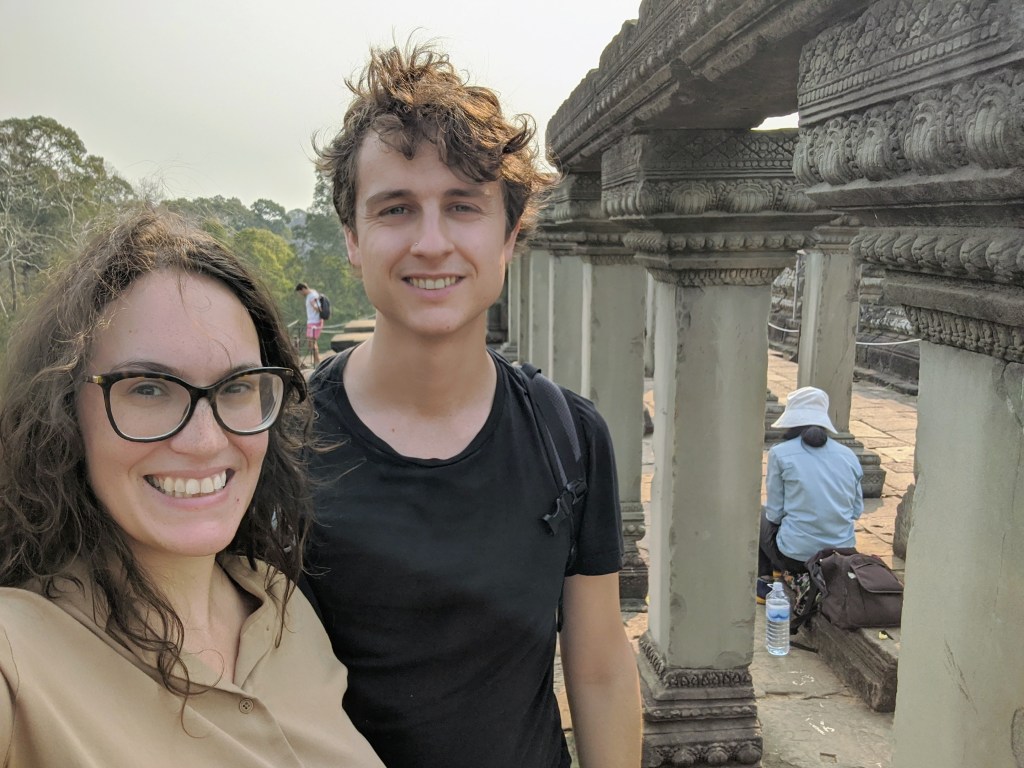
Just up the road from Bayon, still in the temple complex of Angkor Thom, lies Baphuon. Baphuon was partially reconstructed from over 300,000 stones after Cambodia’s civil war. From afar, it just looks like a few, very tall piles of rocks. We approached via a long, stone bridge that made walking there feel like a pilgrimage. On either side of the bridge, a troupe of monkeys groomed and caused trouble. “Hold on to your wallets,” our Portuguese friend Bernardo warned us when he saw them. Monkeys in tourist areas have been accidentally trained to steal, by tourists who offer them treats in exchange for their iPhones back. What starts as curiosity becomes ingrained by the reward of food. Our visit to Baphuon’s structures was brief and arduous. We made quick work of the first level, then climbed the steep, ladder-like stairs to its second level. We stayed long enough to catch our breath and take a selfie, then climbed back down. We had another, more hotly-anticipated temple to get to. 

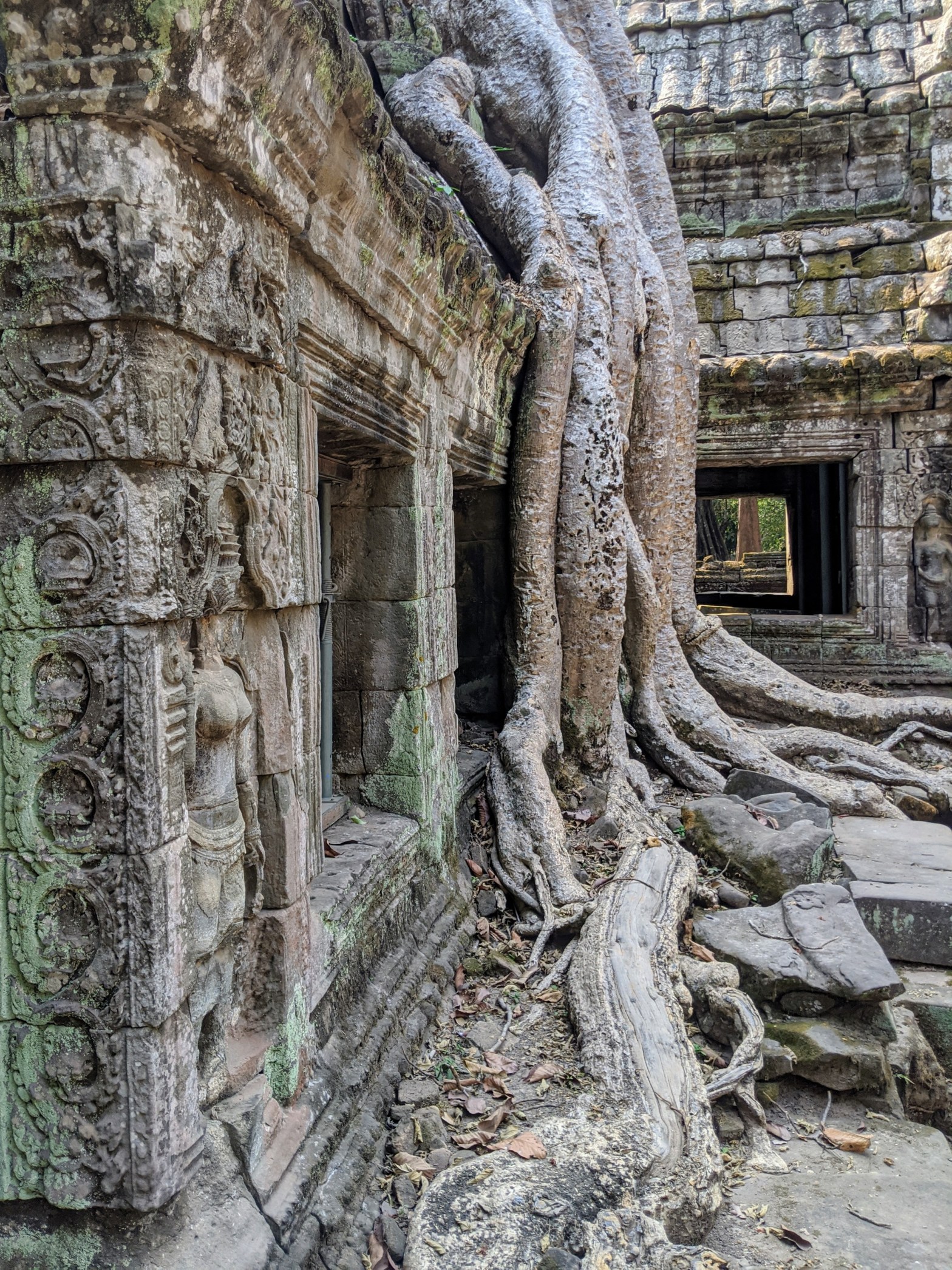
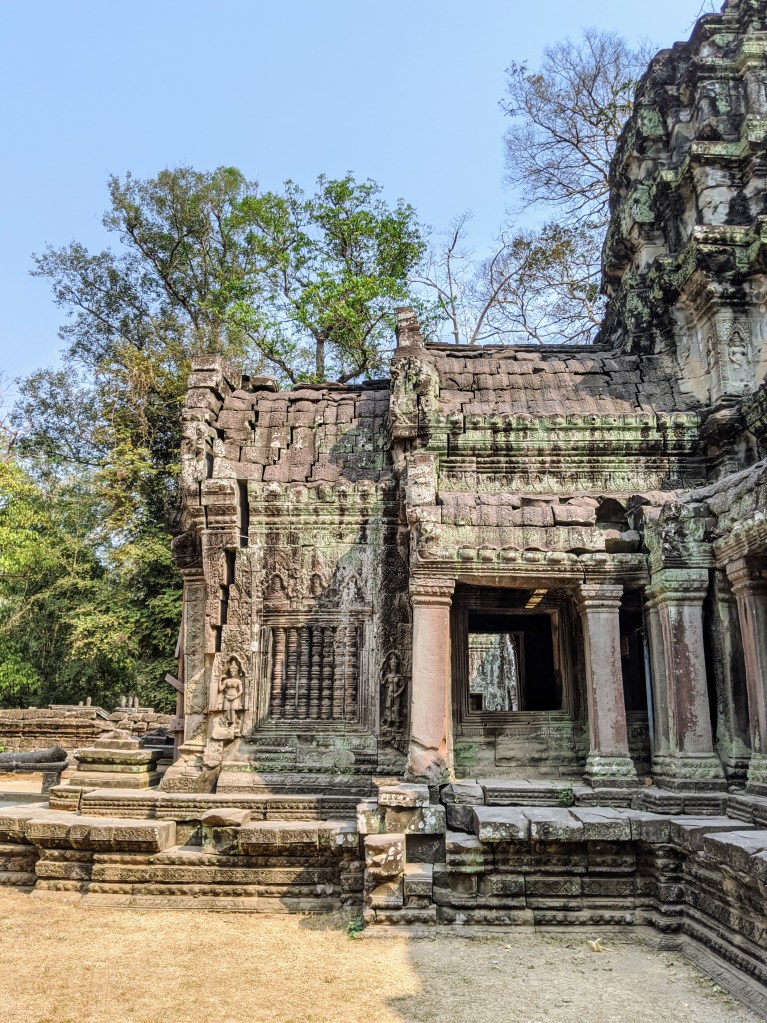
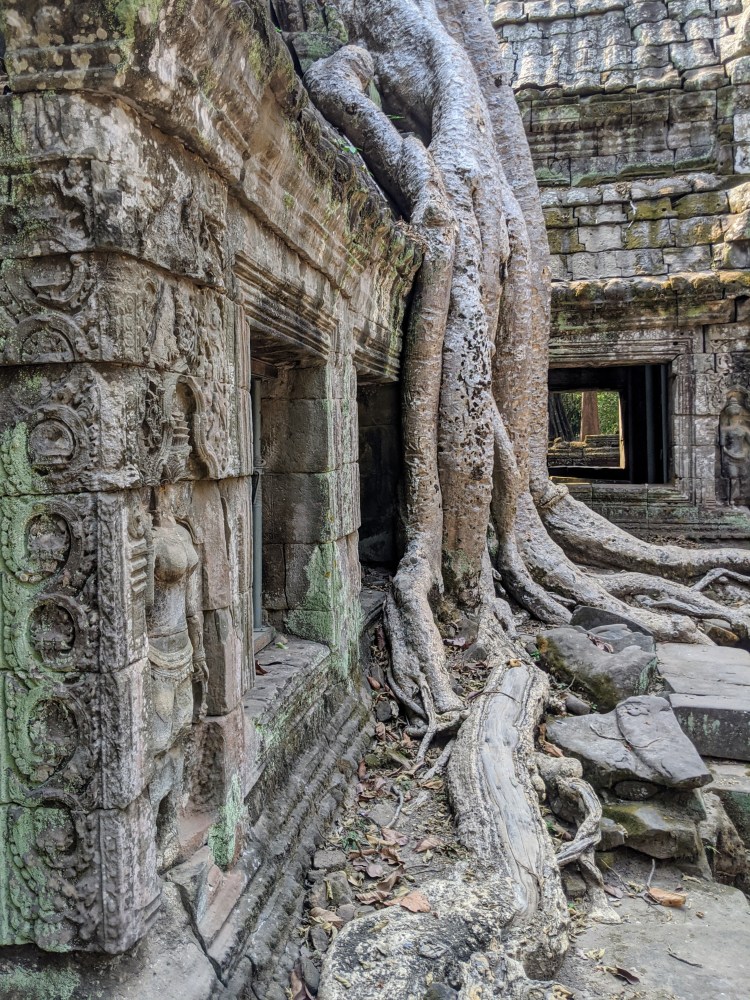
Ta Prohm is called the “Tomb Raider Temple,” because–you guessed it–parts of the movie Tomb Raider were filmed there. The temple is a testament to the triumph of nature over man’s best laid plans. Ta Prohm was once one of the largest temples in Angkor, requiring over 80,000 attendants. Now, giant tree roots strangle many of its fallen stones, and lichen smothers its door-jambs. It’s a ravished, romantic ruin. It is also, unfortunately, not a secret. It may have been a function of the time of day, but there were significantly more people at this temple than Bayon, and Bayon is, I think, the more famous of the two. It’s large and labyrinthine enough, though, that with a little effort, you may find a secluded corner to explore on your lonesome. The many trees that have taken root in its halls make it one of the shadiest temples in Angkor park. However, we were fast approaching the hottest part of the day, and temple fatigue is all too real; Aaron and I left after a short, albeit adventurous, exploration of its towers and halls. 

All that temple exploration had really worked us up an appetite. We had our tuk-tuk driver for the day, Thorn, drop us at The Sugar Palm for lunch. The Sugar Palm had a gorgeous front courtyard, with a stepping-stone bridge across a koi pond, leading to its bamboo interior space. We ordered the vegetarian platter. As we’ve travelled, we’ve discovered that, for the large part, we both find meat kind of gross. The platter was a sampling of some of their signature dishes: eggplant with fermented soybeans, vegetable amok (a Cambodian traditional dish involving curry cooked in banana leaves), and spring rolls. Aaron didn’t like the fermented soybeans, and I didn’t really like the amok, but I think that had more to do with personal taste. The meal was prepared and seasoned well, and the spring rolls were excellent. 

After lunch, we walked back to our hostel for some much-needed R&R after such an eventful morning.

Siem Reap: Day 5

We let the sun dry us when we were done swimming, and returned to our room to ready ourselves for dinner. A tuk-tuk brought us to Mahob Restaurant, which is a bit north of Siem Reap, between the city and the Angkorian temples. We sat under a jackfruit tree in its front courtyard. I don’t know if it was the days of heat or if we were both hangry, but neither Aaron nor I were in a good mood. We got in several heated debates over very dumb stuff throughout dinner, and kept having to check ourselves when one of us got a little too grumpy. But I have to say, I’m pretty proud of our meta-communication here. I’d disagree with something Aaron argued, and then he’d say “You know what? This is getting elevated. Let’s talk about something else.” Or I’d get sensitive about something he said and I’d let him know, acknowledging that I was being sensitive. Despite our irritability, we managed to get along–or, if not “get along”, get through it. I picked at our beef and ants stir-fry, which was pretty much the same as the dish we got at Marum, only with thicker beef. Our grilled broccolini, however, I devoured greedily. Something about this heat makes me really appreciate vegetables.

Aaron navigated us to Hive the next morning for our first cup of the day, then we sauntered (in this heat, most walking is sauntering) over to lunch at the Village Cafe. The Village Cafe looked like someone picked it up in Paris and dropped it in the middle of this street in Cambodia. Black-and-white-striped, upholstered cushions sat on French cafe chairs at French cafe tables on French cafe tiles. The only clue that we were still in Siem Reap was all the tropical foliage potted throughout the cafe. It was a very quaint and charming aesthetic; I plan on keeping in mind in my decorating future how well “Parisian” pairs with “jungle”. We ordered a tapas plate to share. The rosemary chorizo was a highlight, but the bruschetta was only so-so, and the arancini were a bit flavorless. We had another unfortunate mix-up with Visa while paying, also. Our waiter kept insisting we pay twice, even though I showed him my online statement stating that our credit card had already been billed. It was a rather unfortunate social interaction, so we weren’t in the best of moods when we left. 

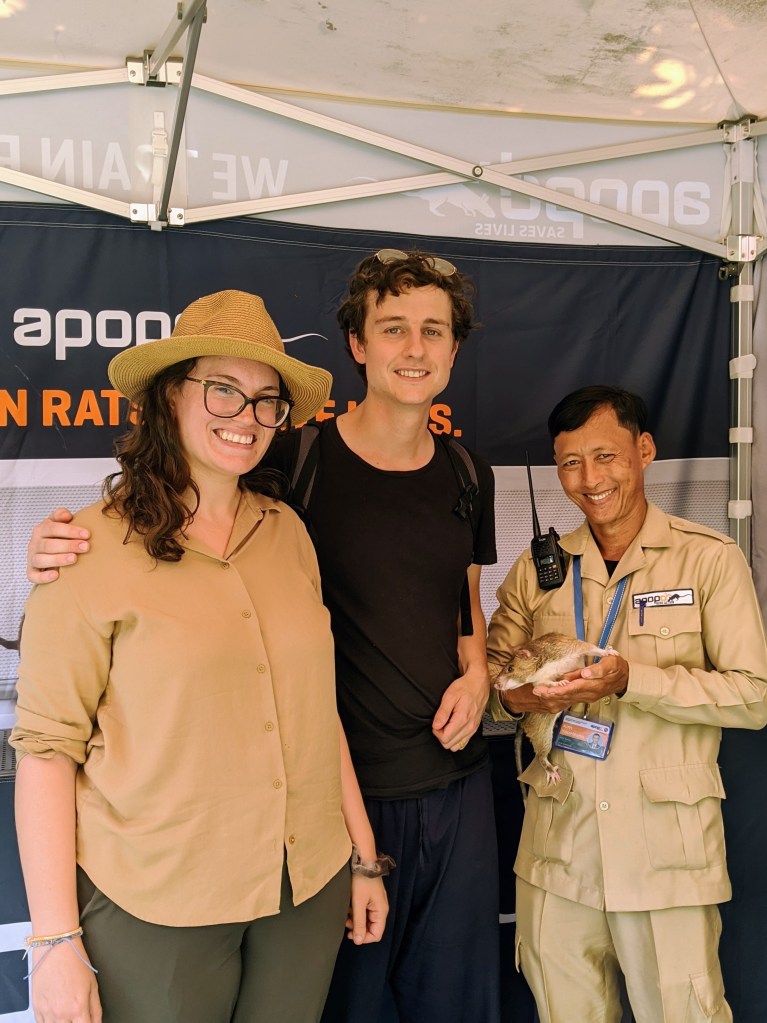
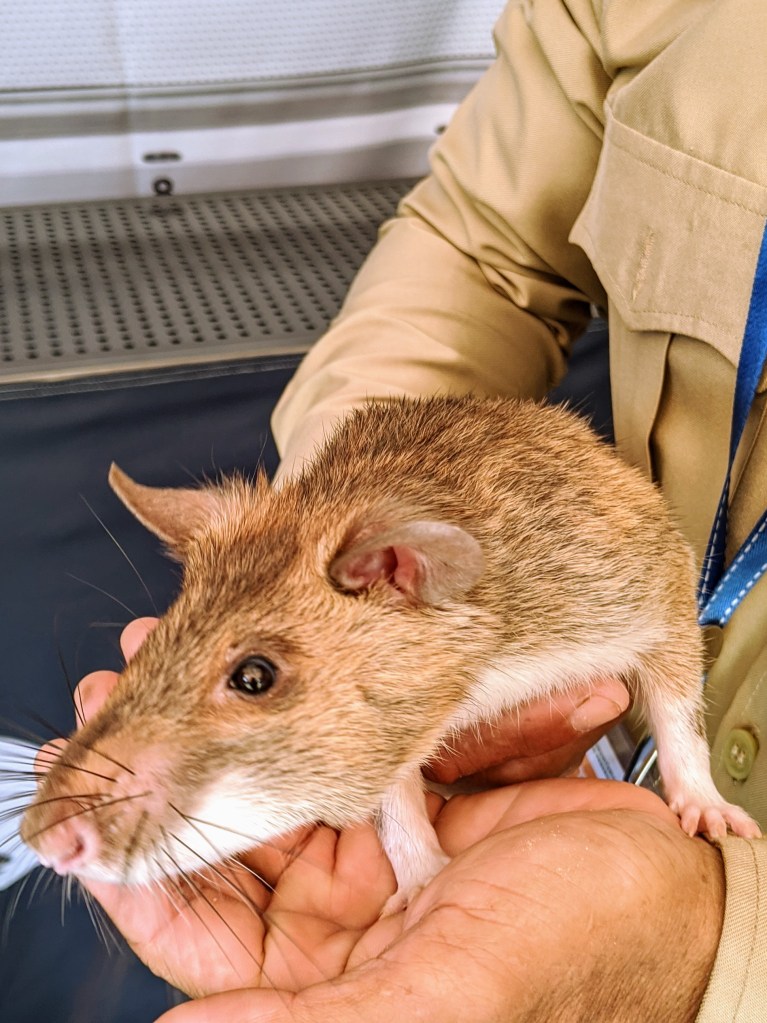
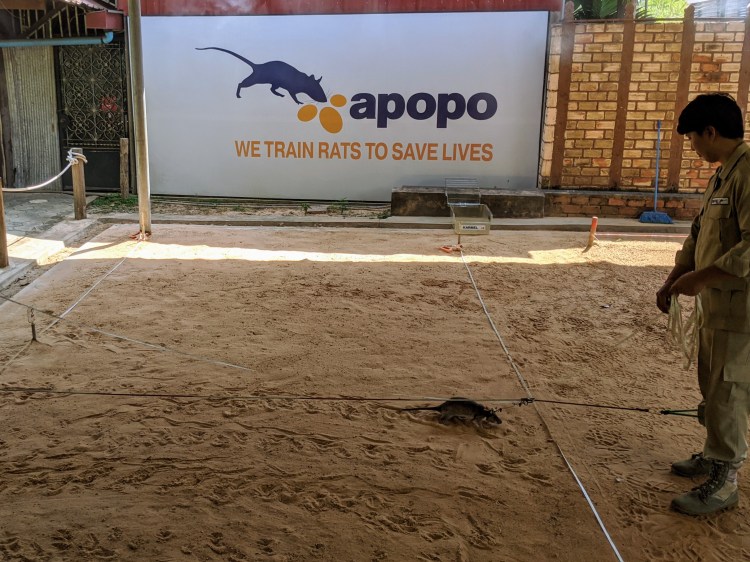
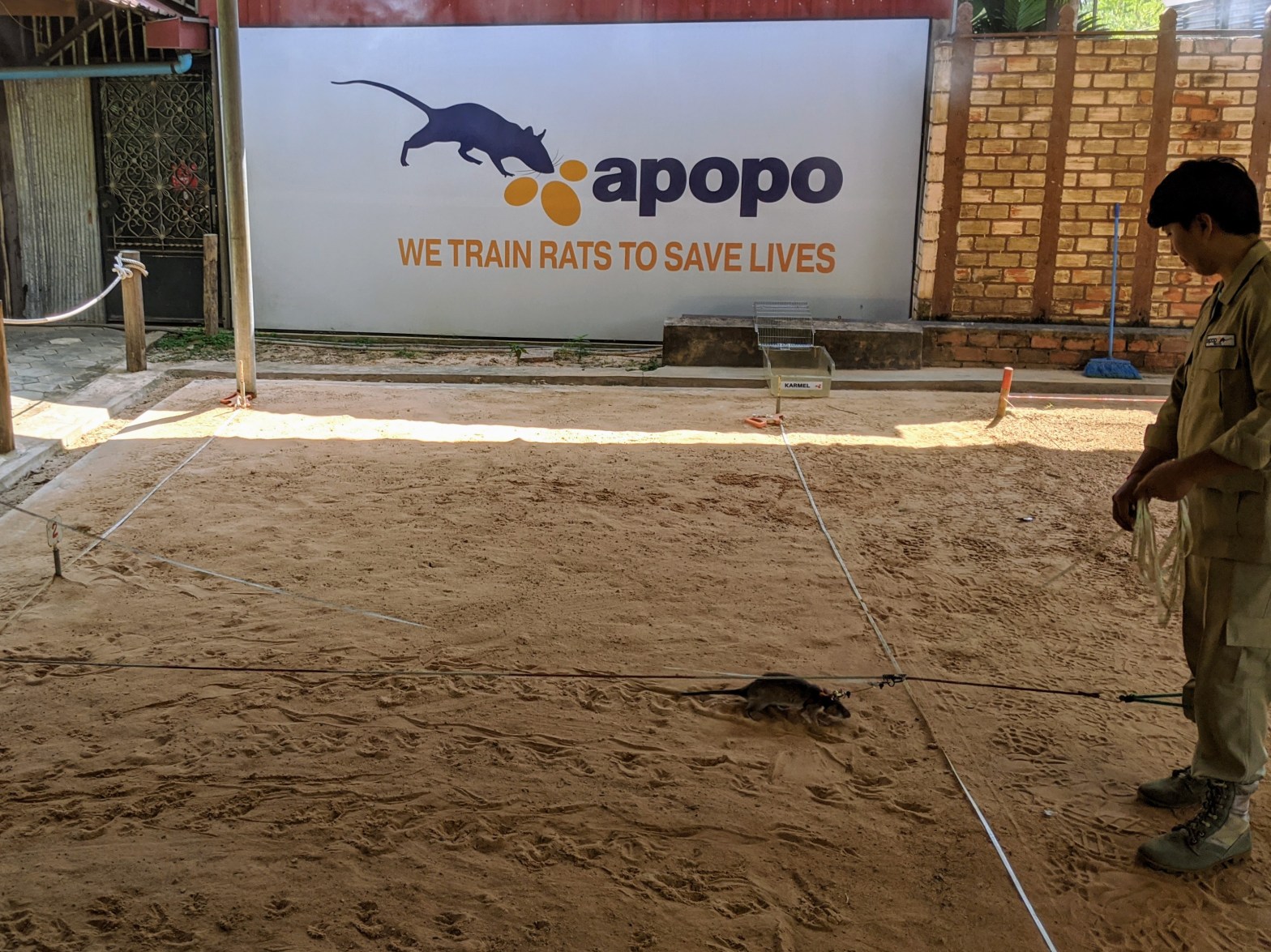
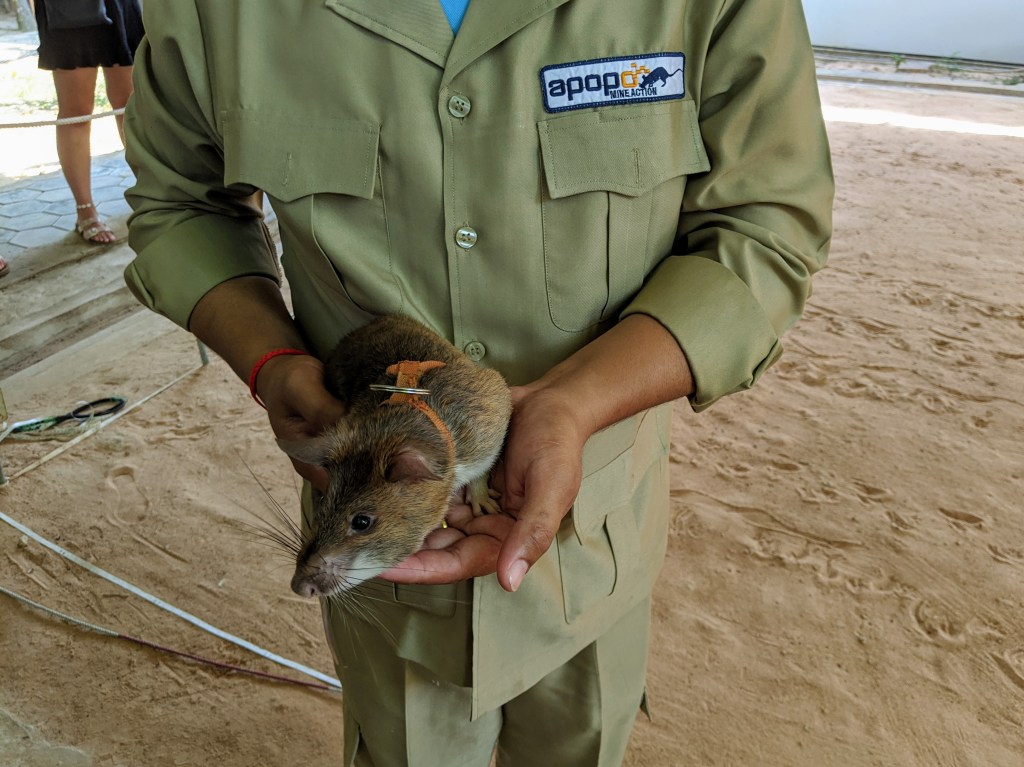
Our next destination was going to remedy that. We were dropped off at the Apopo Visitor Center. Apopo is an organization helping to de-mine Cambodia through rats trained to sniff out unexploded ordnance. They began in Tanzania, where giant pouched rats were trained to smell tuberculosis in samples with a speed and accuracy greater than the current medical tests. The operation then expanded to Southeast Asia, where unexploded ordnance continues to be a life-or-death issue for many rural people. Cambodia has between four and six million unexploded mines dotting its countryside, leftover from three decades of war. An estimated 40,000 people in Cambodia live as amputees from setting off one of these mines or bombs. Most affected are young boys, who often die in explosions when they uncover one of these devastating weapons and try to make it a toy. One of Apopo’s HeroRATs, as they are affectionately named, can de-mine in 30 minutes an area that would take four days by metal detector. It’s safer, because they don’t weigh enough to set off the explosives, and more accurate, because they don’t smell metal, they smell explosives. 

After a brief Q and A about the organization, we were shown examples of unexploded ordnance, and then given a demonstration. Karmel, the giant pouched rat, was a pro. It took her no time at all to find the mine. She worked diligently and with a purpose. As an animal behaviorist, I was impressed with her training. The tour ended with an inspirational video about the rats and their handlers. It worked on us. We “adopted” a HeroRAT in my nephew’s name. 

We returned to our usually scheduled program of beer and swimming pool after a short tuk-tuk. Well, first I argued with Visa for an hour, but that’s just my life now, I guess.

Siem Reap: Days 3 & 4

When we finally made it back from our temple tour, I was suffering from heat exhaustion. I could feel my pulse in my forehead, and each thump was agony. My face was red–not pink, red. I was sweaty and gross and very unhappy. I felt nauseated and tired and sick. So, you can perhaps understand why I chose to sit it out for a day. By the next morning, I was definitely feeling better, but I was still coming off of being sick from the week before. I still had the cough. And on top of that I was dehydrated and not 100% recovered from walking around a temple in the late afternoon sun for hours. Day three was, essentially, spent in bed resting.

I did manage to make it to brunch, at least, at Sister Srei. It ended up being one of the best meals we’ve had here: eggs benedict and potato rosti. But after that, I decided that I needed A/C on me for a full day. Aaron joined me when he felt like it, and went out to the pool or to get coffee when he didn’t. He brought me food, because he is an actual angel. And by day four, I felt good as new. 

We kicked it off with breakfast at Little Red Fox. It’s a small, two-story cafe that’s known for its specialty coffee drinks and bagels, so we got both. Aaron had a vegan, cinnamon-coconut mocha drink and I went with a lemongrass and ginger coffee. Both were addictively delicious. As were our bagels, which we shared. The bacon-and-egg bagel was salty and filling, but the asparagus-and-snap-pea bagel with pesto cream cheese was on another level. Fresh and herb-y, it was the sort of bagel you appreciate in a hot, hot, hot place like Siem Reap.

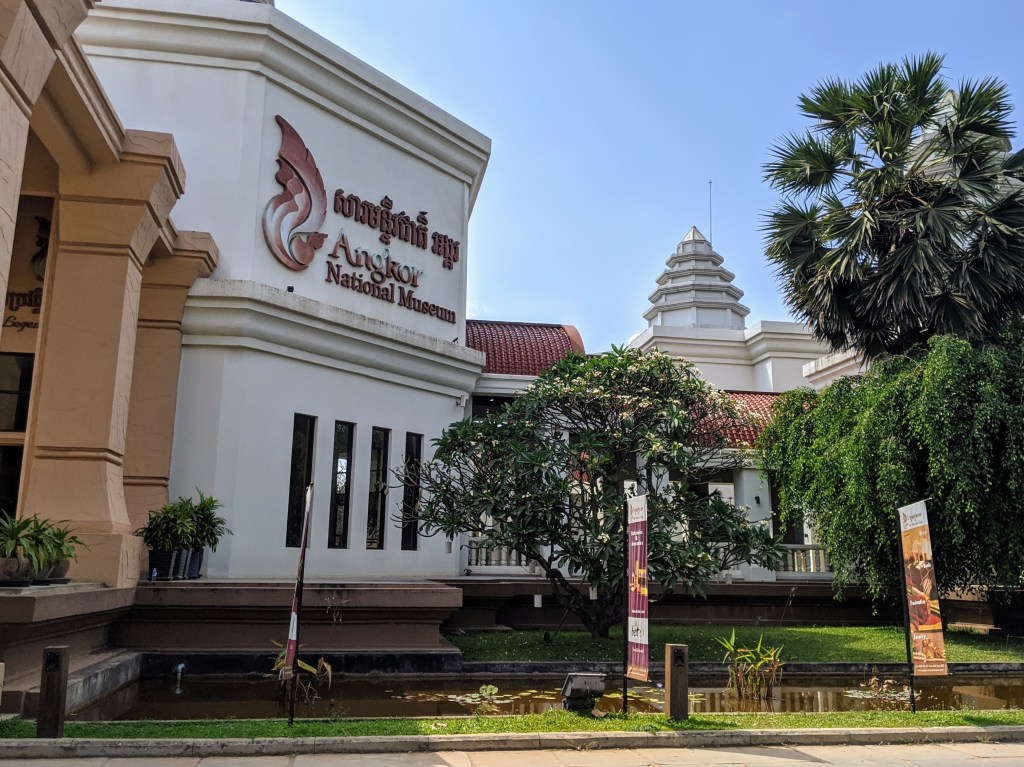
After breakfast, we Grabbed (capitalized because we used Grab, an Uber-like Asian app) a tuk-tuk to the Angkor National Museum. We watched a largely-uninformative introductory video. Then, we were let loose on the museum, which spans three different floors and several galleries. The first was also the best: the Thousand Buddha Gallery. It contains one thousand ancient Buddha statues. Or at least, I think it does, given the name; I didn’t actually count them. We took our time choosing our favorites from among our thousand (probably) options, and learned about the different types of statue. The majority of Buddha statues can be classified by his bodily position and hand gestures. There are sitting Buddhas, which are usually used to depict moments of meditation or teaching (hands resting palm up=meditation, hand touching earth or forming a circle with the fingers=teaching). There are standing Buddhas, which are usually depicted with their palm out, indicating a warding off of suffering or fear. And there are Buddhas in repose. These are rarest, and depict the Buddha’s death. Most of the seated Buddhas have a many-headed, hooded serpent cradling the Buddha. This is Mucalinda, king of the naga, who sheltered the Buddha from the elements during his achievement of enlightenment. Serpents have a completely different role in Hinduism and Buddhism than in Christianity. Every temple we have visited has had naga guarding its entrance, for example. 

The Thousand Buddha Gallery led to a few galleries detailing the Khmer empire’s history, religious beliefs, and kings. There were also galleries devoted to Angkor Wat, Angkor Thom, steles, and the apsara (beautiful, heavenly, dancing nymphs who adorn the Angkor temples.) We strolled through all of them, stopping every now and then to pick a favorite or read the plaques. I learned a lot about the Hindu pantheon and iconography just from looking at all the statues. There’s Vishnu, with his four arms, each holding a different symbol of his Godhead. There’s Shiva, with his five faces and bow. And there’s the elephant-headed Ganesha,  the monkey-king Hanuman, and the eagle-faced Garuda. All of these icons make several appearances in the temples, as well. Aaron and I resolved to do some Wikipedia scanning, when we got the chance, to learn more. 

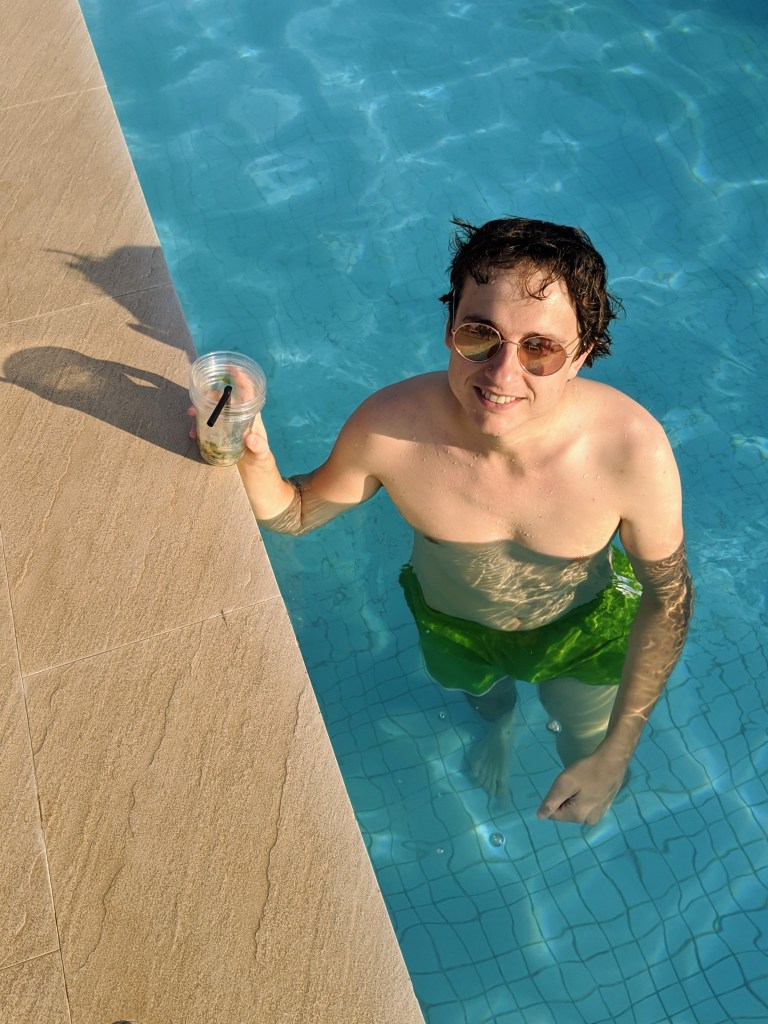
We ended our afternoon with a dip in the rooftop pool and a can of cold beer in our hands. 

Siem Reap: Day 2

Dinner was at Marum. Marum Restaurant is a modern, wooden structure with a lush, tropical courtyard illuminated by string lights and table lanterns. At night, Siem Reap gets cool enough to tolerate, so we sat under what I think was a lime tree and ordered some modern fusion. We started with a jackfruit and lotus hummus that was a little dry, but tasty. For the main event, we split stir-fried beef with tree ants, which is a local specialty. It tasted like regular stir-fried beef, only the tiniest bit crunchier. Ants don’t really have a taste. Also, they’re a carbon-neutral source of dense protein, so stop judging. We finished our meal with mango sticky rice–this time made with dark sticky rice, which seems to be the convention in Cambodia–and a pandan cream sauce. Pandan is a leaf that tastes a bit like vanilla and is used as a dessert flavoring in Southeast Asia. We first learned about it in Arm’s cooking class in Chiang Mai, but I hadn’t seen it anywhere since, so I was happy to find it on the menu. I made friends with a cat while Aaron got the check, and then we split to make our show on time. 

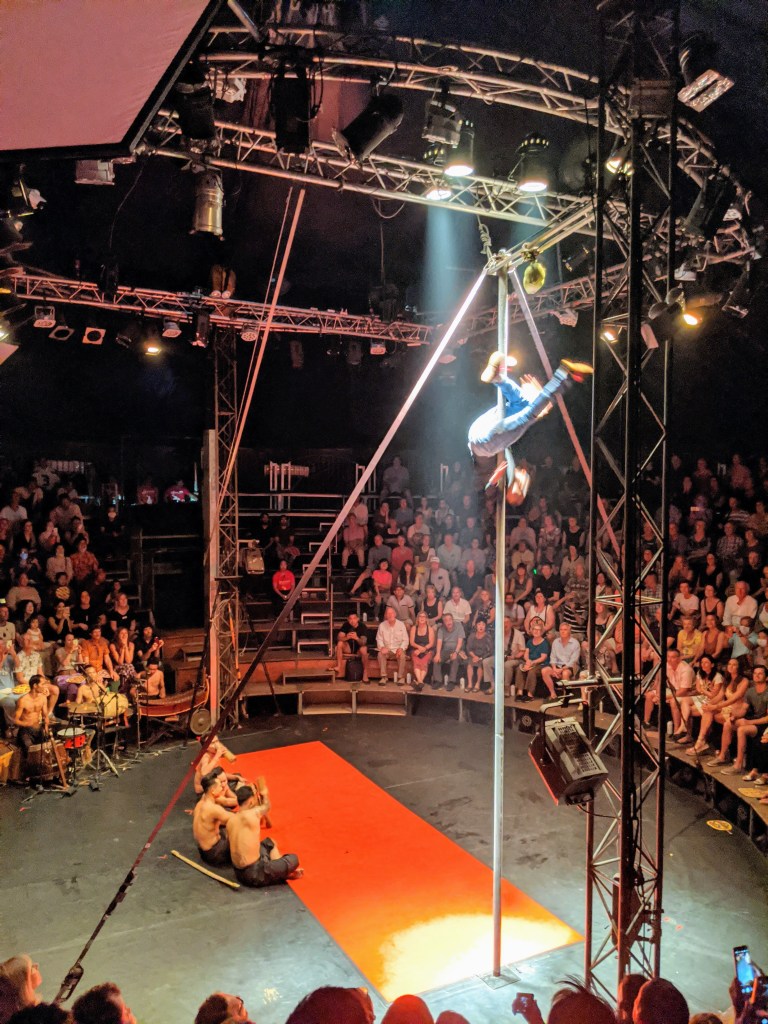
We had tickets to Phare, The Cambodian Circus. We made our way to our seats in an intimate arena-style theater. The show was even better than I had expected. There’s a lot of signs for it around the town, so I was afraid it was a bit of a tourist trap, but I couldn’t have been more wrong. These were genuinely talented performers and acrobats (they weren’t bad on the eyes, either), executing genuinely challenging and awe-inspiring feats of dexterity. They juggled fire, rode unicycles, walked tightropes, balanced on all number of precarious things (including each other), climbed ladders leaned against nothing, flipped, jumped, contorted, and danced. I was impressed both by their talent and their range. Each performer seemed to be a master of several different arts. As well, you could tell they were all pushing themselves; some of the more difficult acts had moments of slight clumsiness that let us know they weren’t only giving us their most polished stuff. These moments only added to the intimacy, though, and pulled me into the show. I found myself rooting for them, when they indicated some upcoming, extremely difficult feat to the audience. When the tightrope walker had a unicycle brought to him, it took him a full forty-five seconds to psych himself up for the balancing act. We were all clapping and cheering him on. The whole show had the feel of a party. The performers made you feel like you weren’t just watching–you were invited. Aaron may have enjoyed it even more than I did. After, he was Googling when the next show was, so we could see them once more before we left.

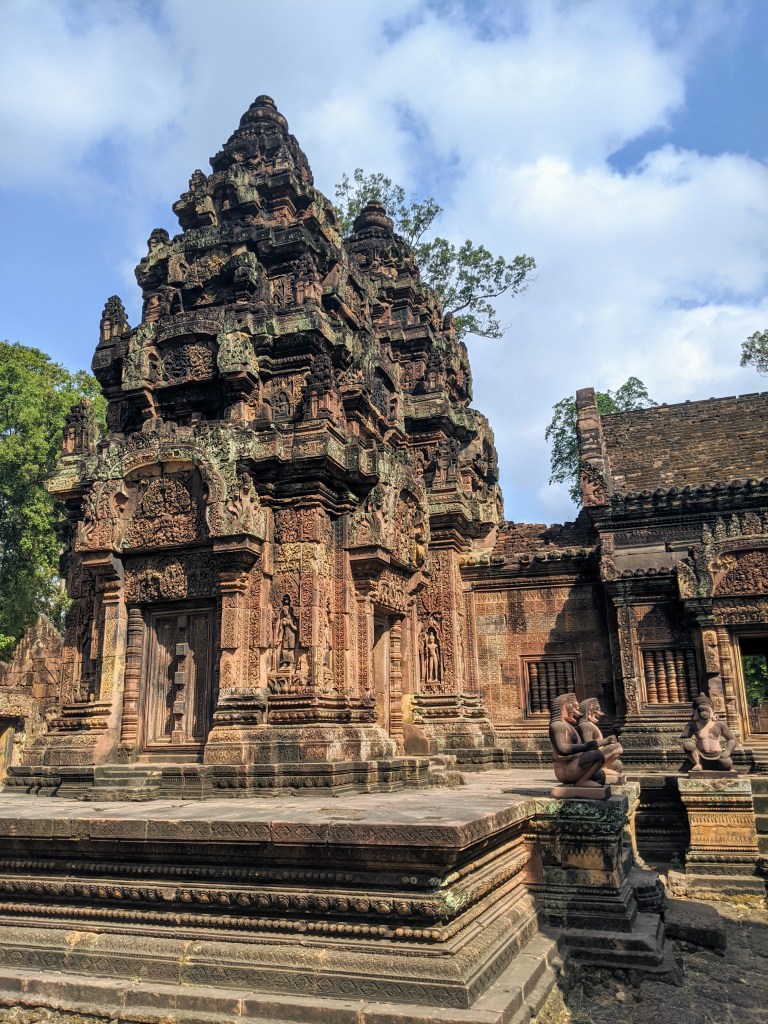
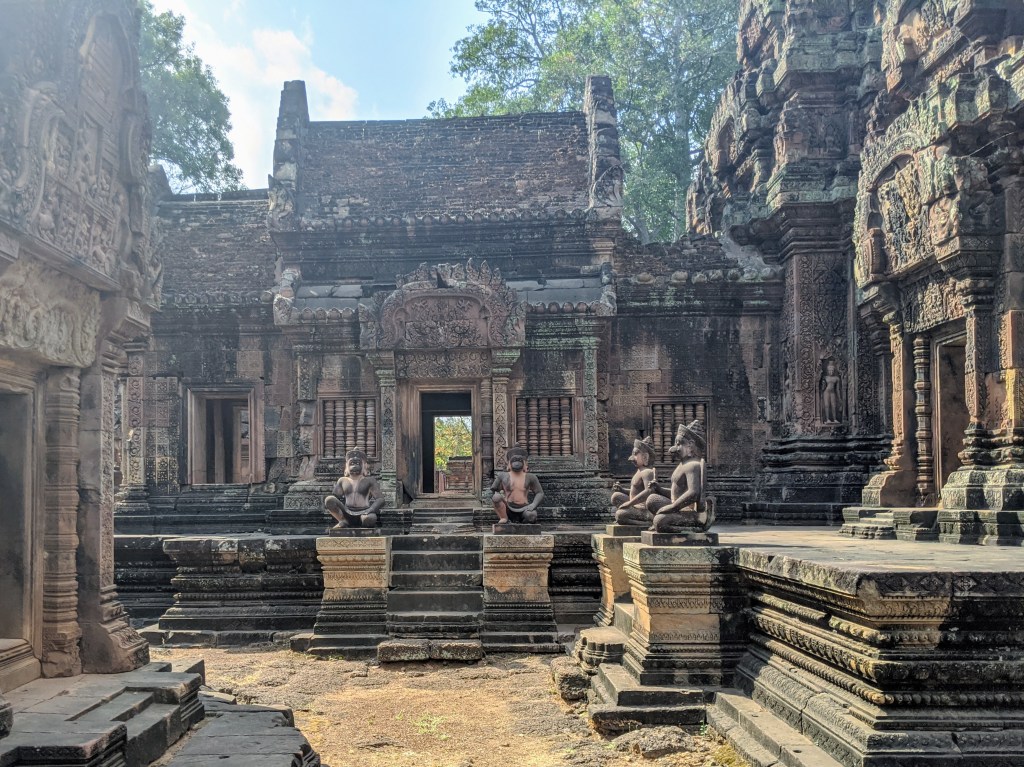
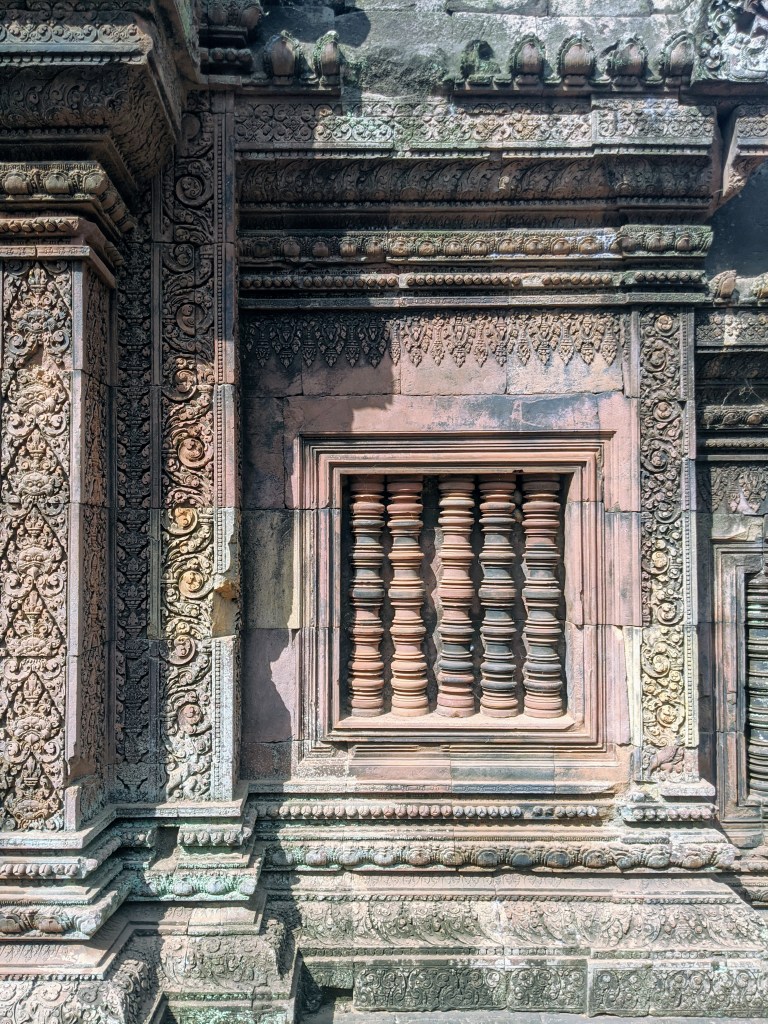
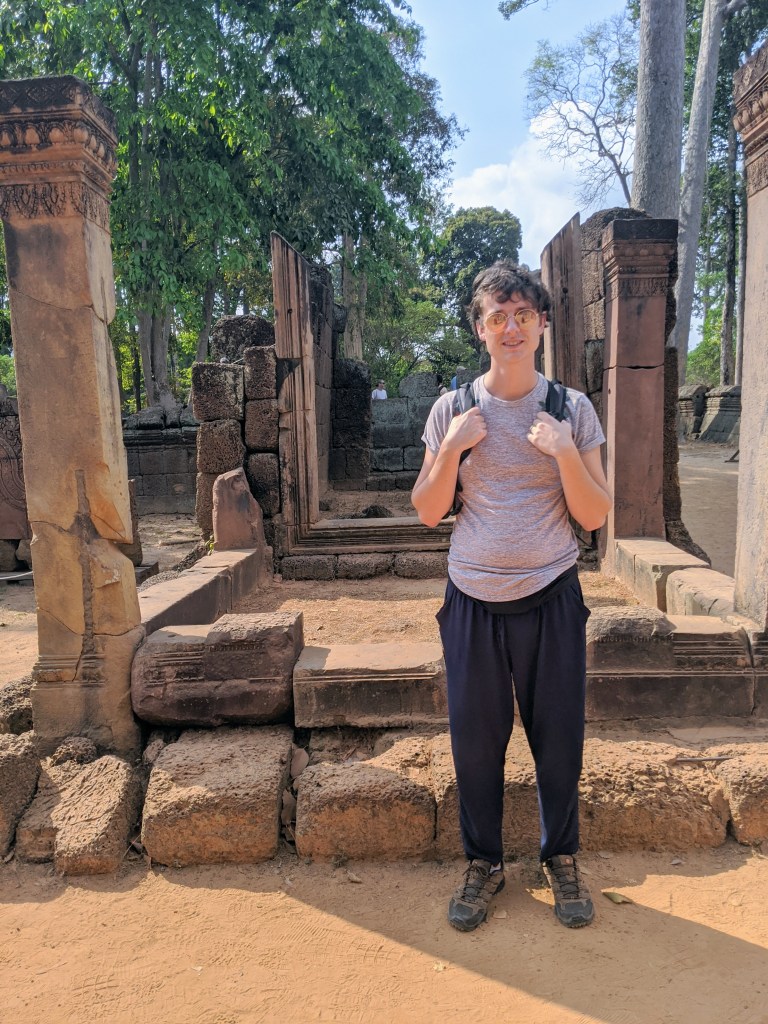
We awoke early the next morning to meet our van driver and fellow tourmates. For Valentine’s Day, we had decided to celebrate by visiting two of Siem Reap’s most famous temples with a tour our hostel had organized. After yet another hassle with Visa at the ticket counter, we were driven out to Banteay Srei. Banteay Srei is an ancient Hindu temple outside the main Angkor temple complex. Built in the 10th century, it is dedicated to Shiva, and known for its intricate stone carvings. Every inch of every pink, sandstone structure was covered in them. The temple itself was small and many sections were roped off. It’s also not all original; when the temple was restored in the 1930s, several replacement stones and figures had to be made, including the interesting guardian monkeys outside of the central building. Nonetheless, we enjoyed our first Angkorian temple, and it whetted our appetites for more. 

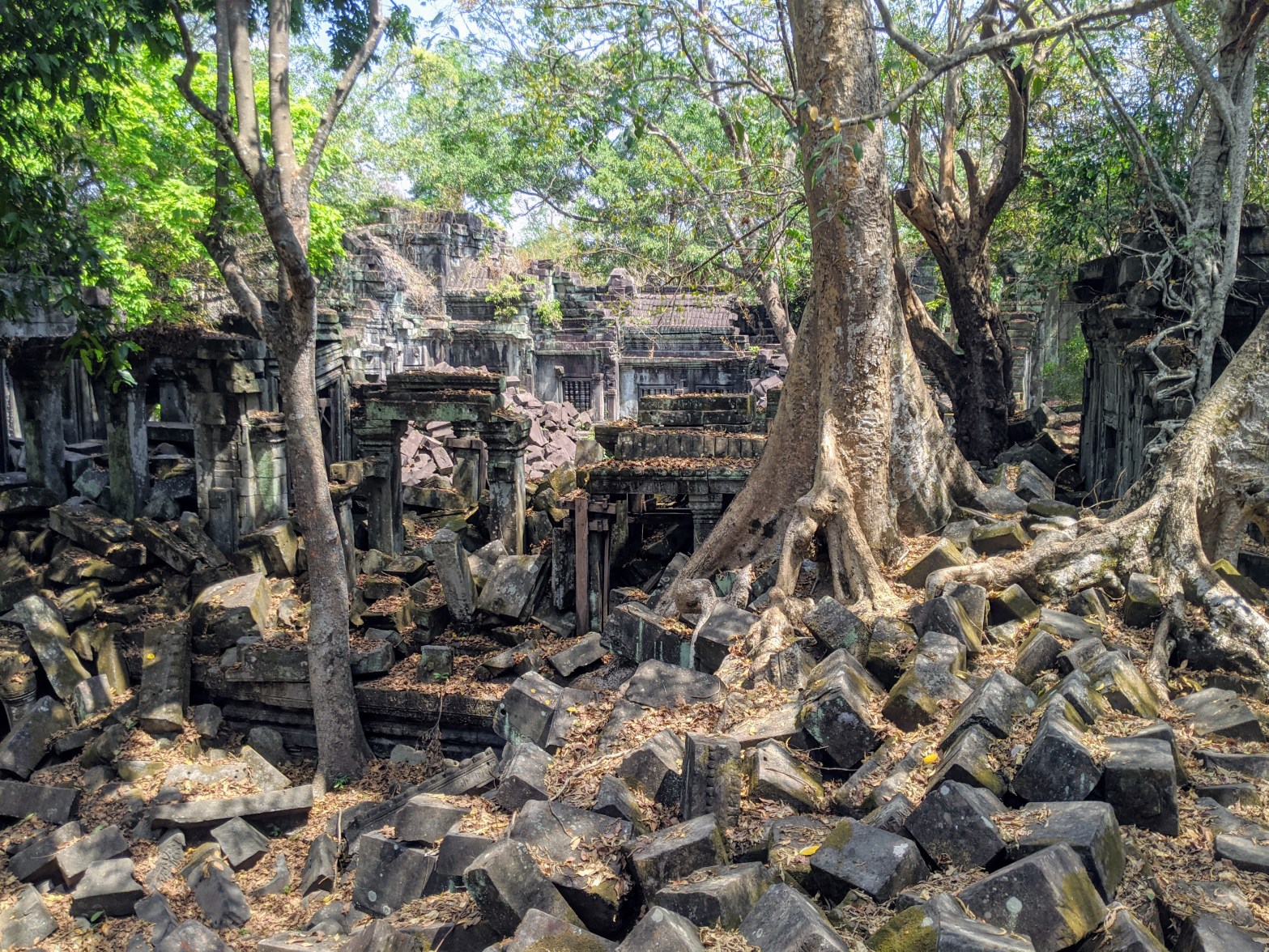
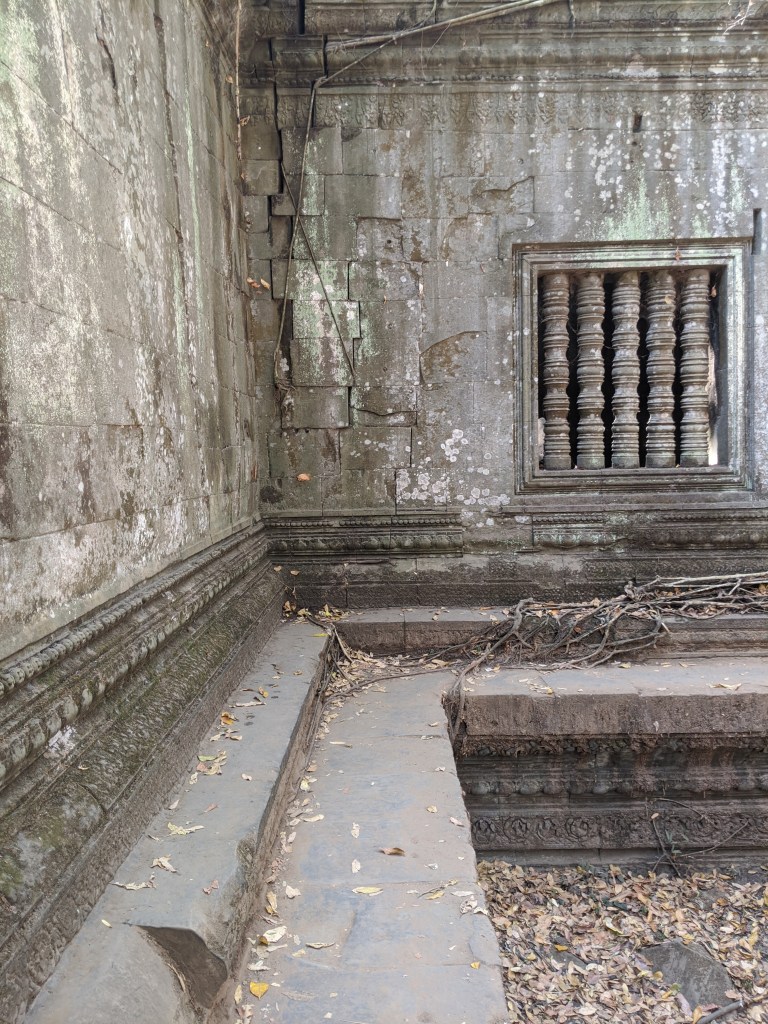
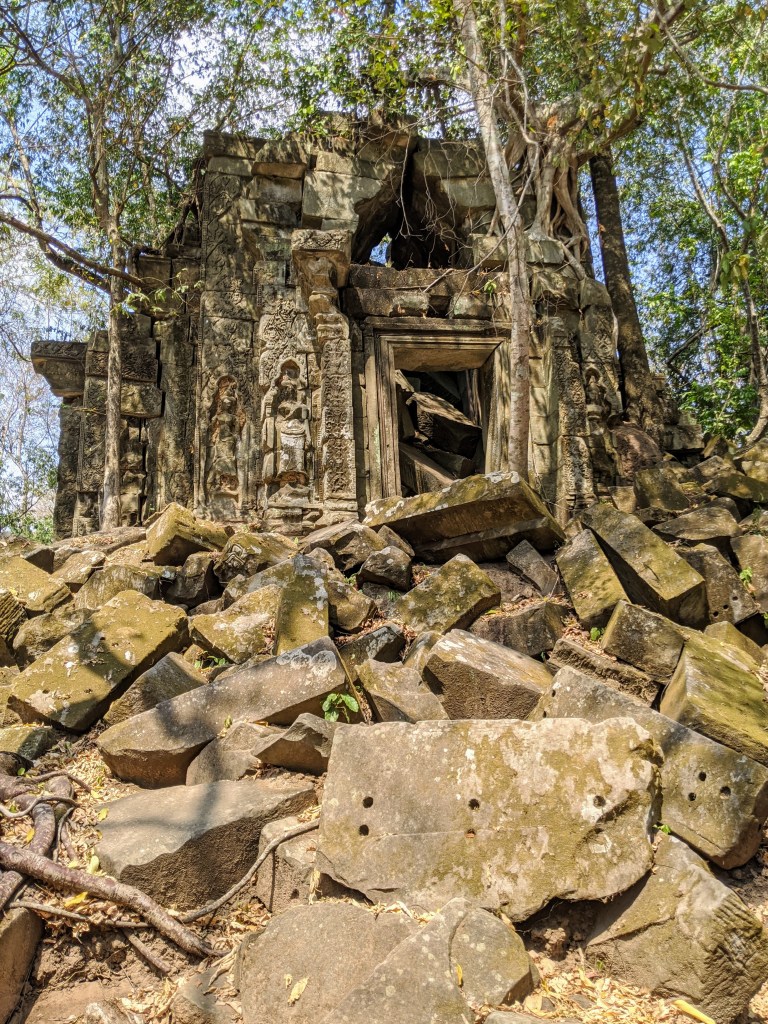
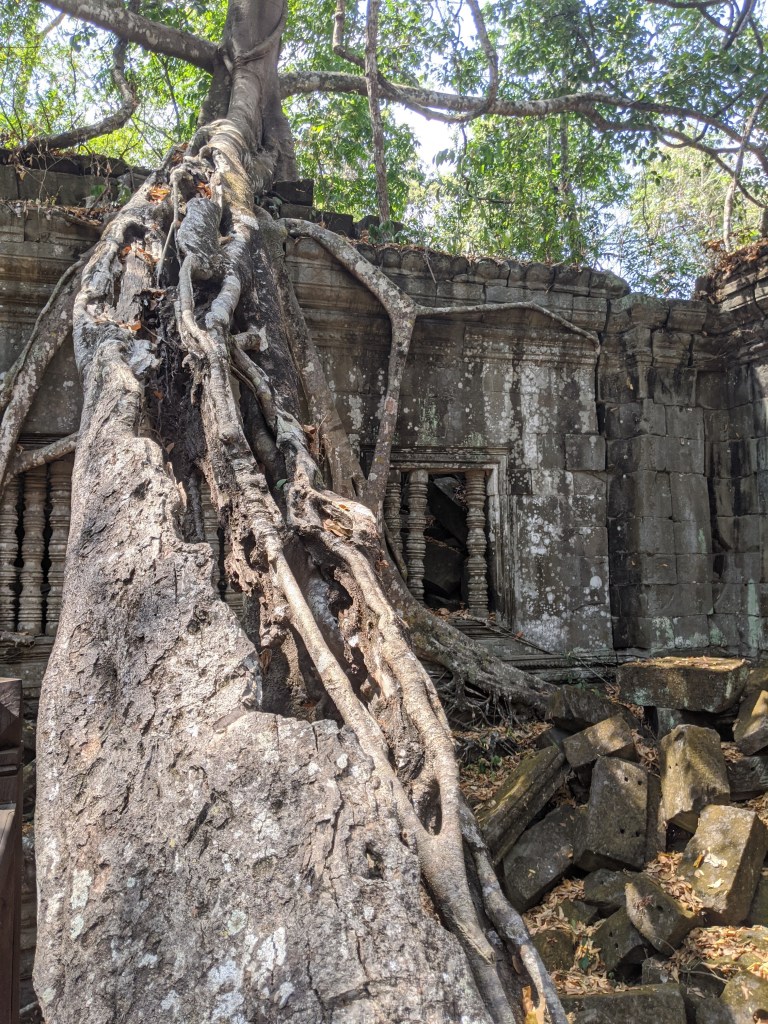
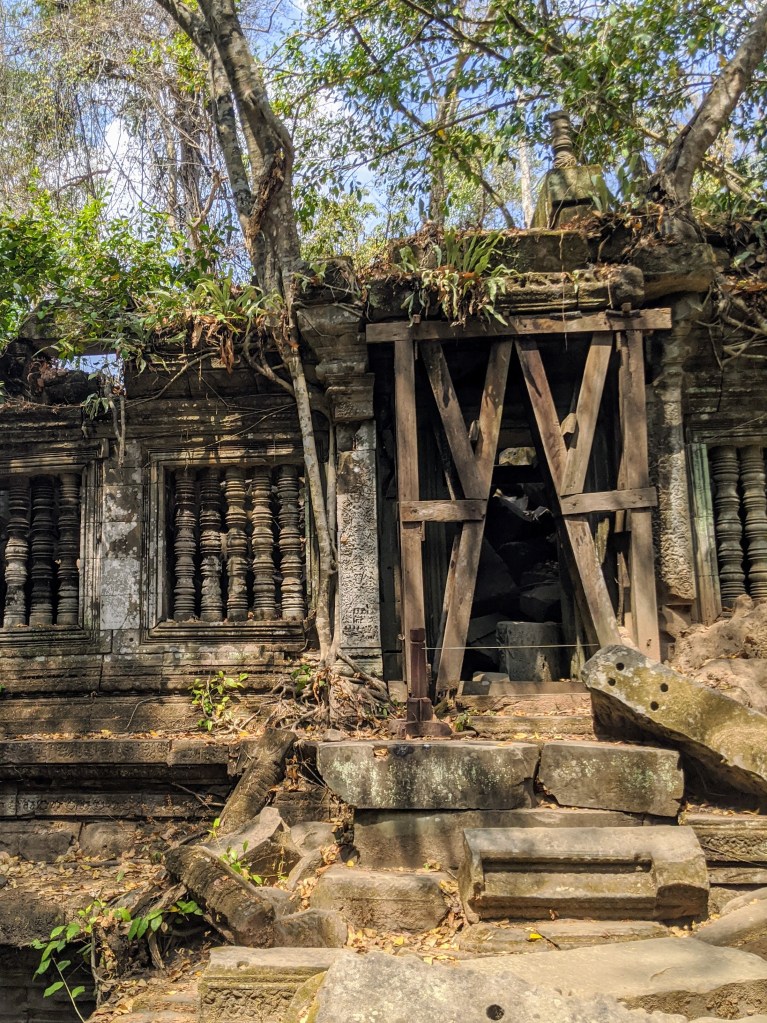
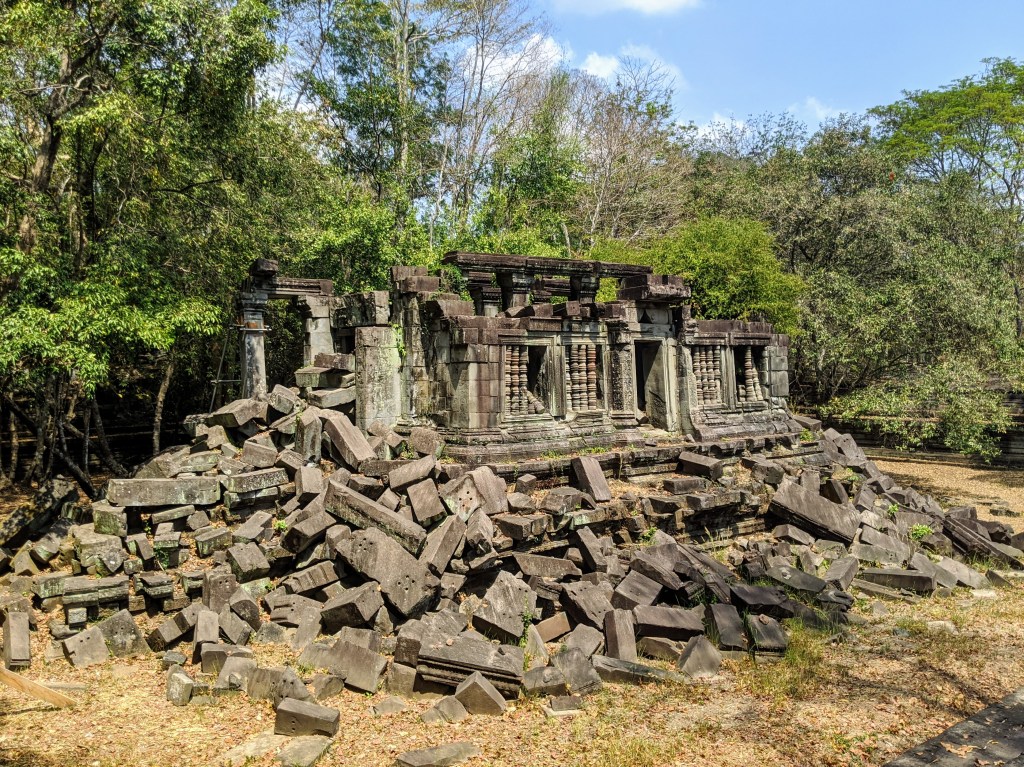
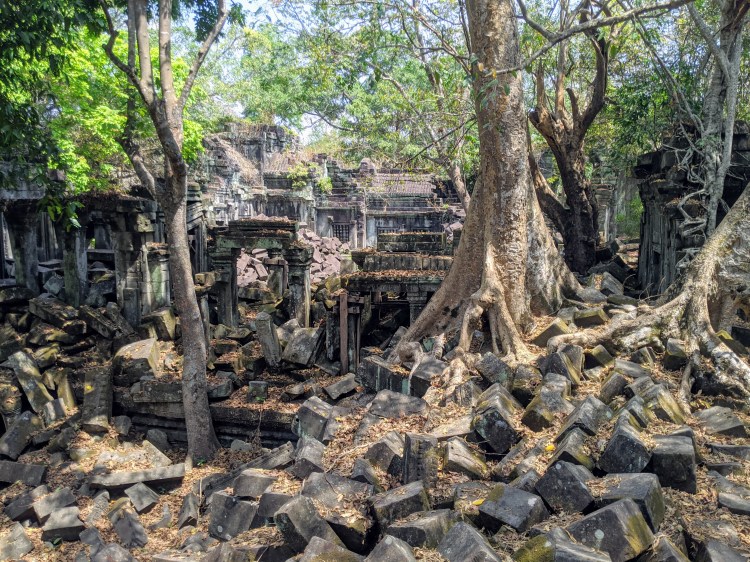
After an unremarkable lunch, we got what we were after: Beng Mealea. This is a giant, ruinous (but not ruined!) temple, also outside of the main park. Half of it is just heaping piles of gigantic, stone bricks. Tree roots strangle several of its doorways. A spider the size of my fist had set his trap in the corner of a window opening. Aaron and I spent a couple of hours exploring its labyrinthine halls and courtyards, climbing up its piles of deconstructed buildings, and under its still-standing archways. Everywhere we looked, nature was reclaiming the land. Nature was also about to reclaim me if I didn’t get some A/C ASAP. By the time we were done exploring, it was 95 degrees and my head was throbbing. I spent the ride home miserable and heat-sick, desperately pressing a plastic water bottle to my face. But I’d do it again, because Beng Mealea was unforgettable. It felt like a fever dream, like I’d stumbled into an Indiana Jones movie. It was oddly romantic, also, sharing that adventure with Aaron. A perfect Valentine’s. 

Siem Reap: Day 1

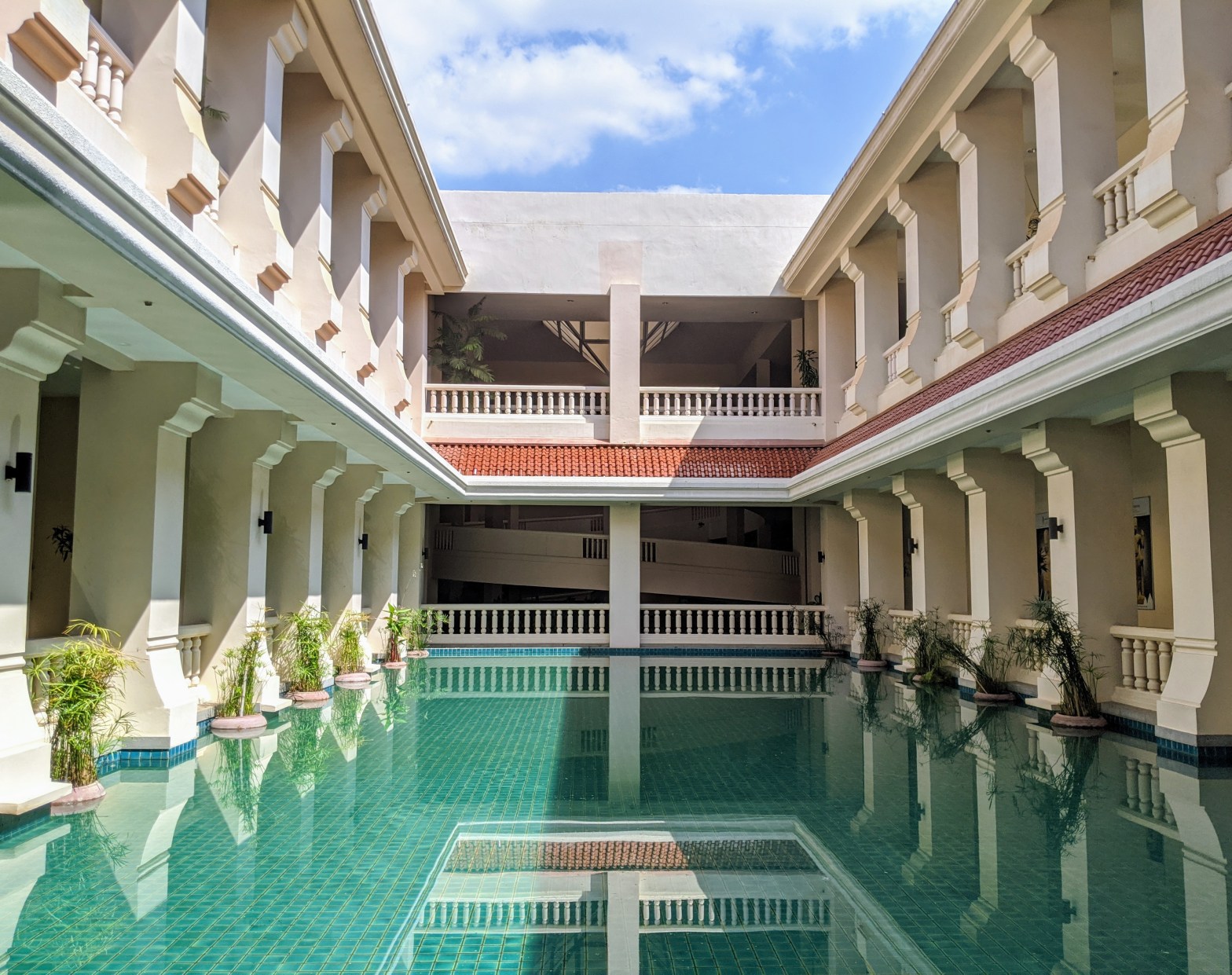
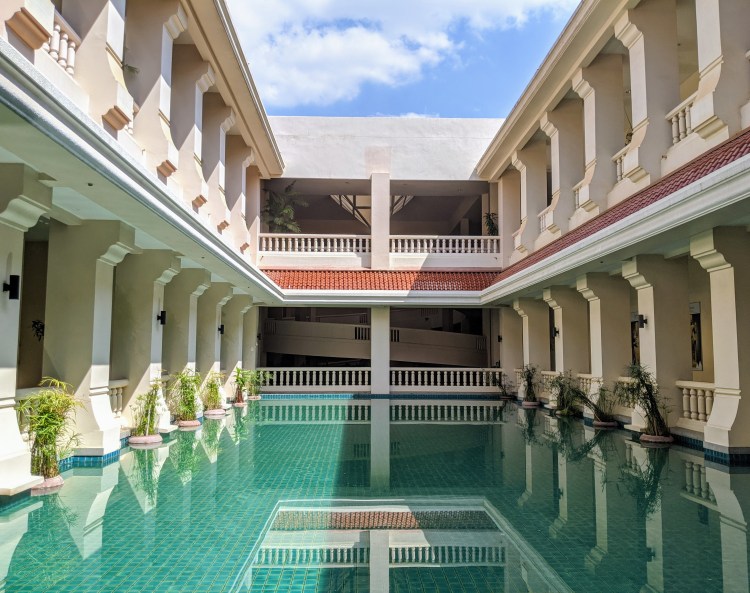
In order to get to Siem Reap from Ho Chi Minh City, Aaron and I had to take two seven-hour buses with an overnight layover in Phnom Penh. These buses had pretty inadequate air conditioning, so when we finally arrived, we were overheated and exhausted. Fortunately, the hostel that greeted us, once the tuk-tuk drove us from the bus station, was clean, comfortable, and well-appointed. Onederz Hostel is one of the best hostels in the world, and consistently makes every flashpacker list. It has everything: two outdoor pools, a bar, a cafe, a small restaurant, movie night, tours, and tons of other little perks and activities. Most importantly, it’s air-conditioned, which is never a guarantee in Cambodia. It’s also packed with young, hip travellers (like yours truly?). It seemed like a fun and happenin’ place to set up base. 

Our first meal in Siem Reap was a short walk from Onederz, but even a short walk after dark is enough to get you sweating here. And after being on that hot bus all day, I wasn’t doing well. Mamma Shop was a cute little Italian restaurant, but it was also, unfortunately, full. The host told us we would be seated very shortly, though, so we decided to wait in the miserable heat. We weren’t even sure we would be seated inside once we did get a table, so we were mentally preparing ourselves to continue to be this hot. Then, a table freed up inside. The room was covered with signs about child safety. Child trafficking is a huge issue here, and the tourism industry can be a major contributor to it. Childsafe is an international organization that (in addition to a lot of other projects) gives out posters to hotspots educating tourists about the problem. “Children aren’t tourist attractions,” read one poster, which further explained that the majority of “orphans” aren’t actually orphaned and advised tourists not to visit orphanages. Another counter-intuitive poster explained that giving money to panhandling children contributes to child slavery, and offered alternative ways to help. It felt good dining in a place that was so earnestly trying to contribute to a greater good. We had some handmade blue cheese gnocchi (amazing!) and a stuffed flatbread with smoked mozzarella and mushrooms (less so), then we went home and collapsed. 

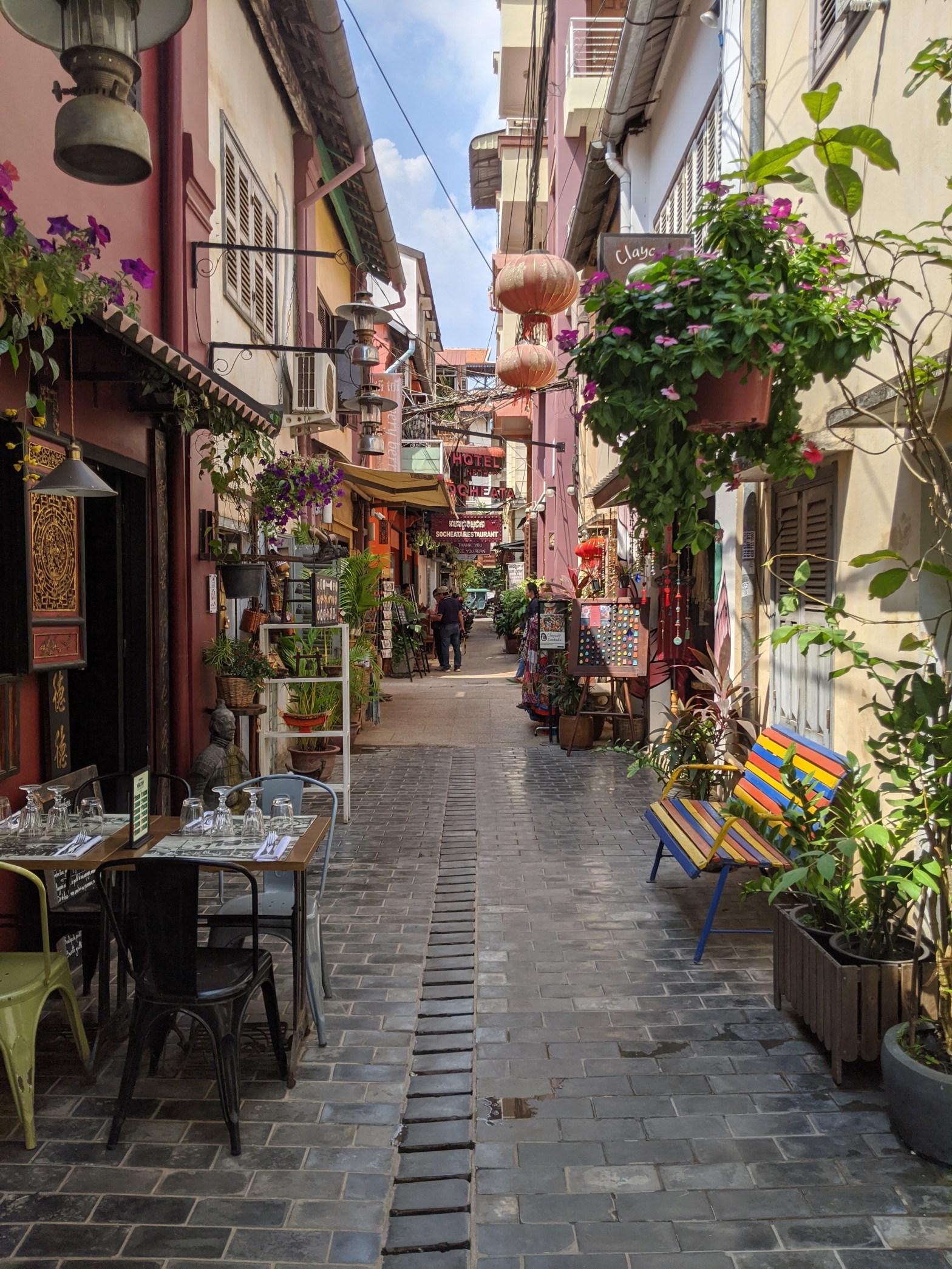
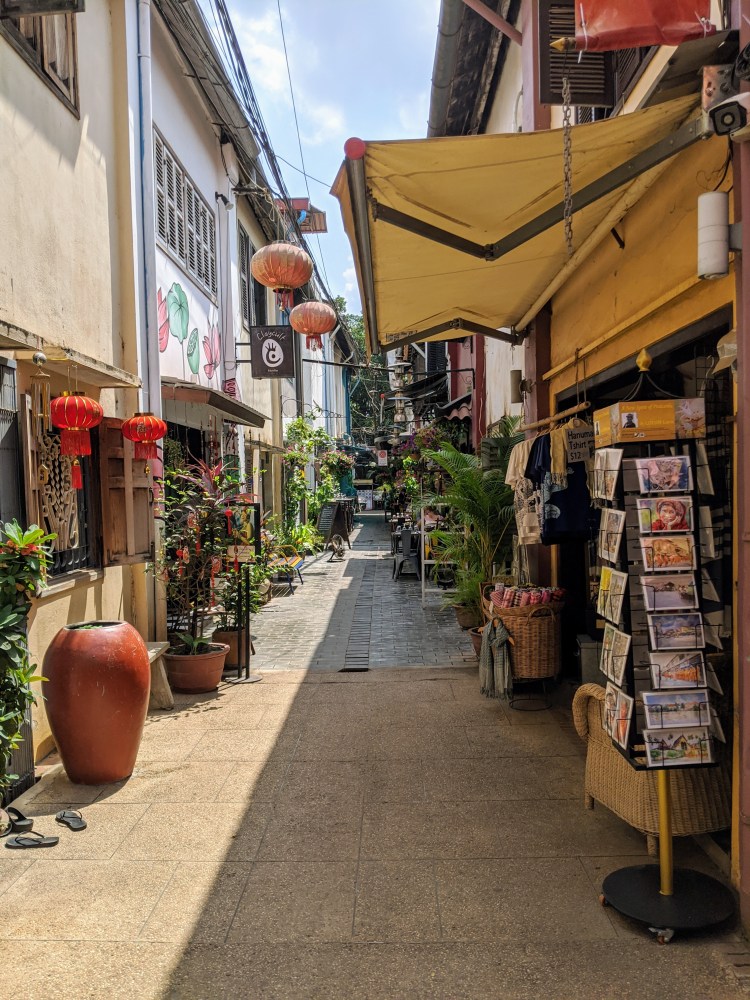
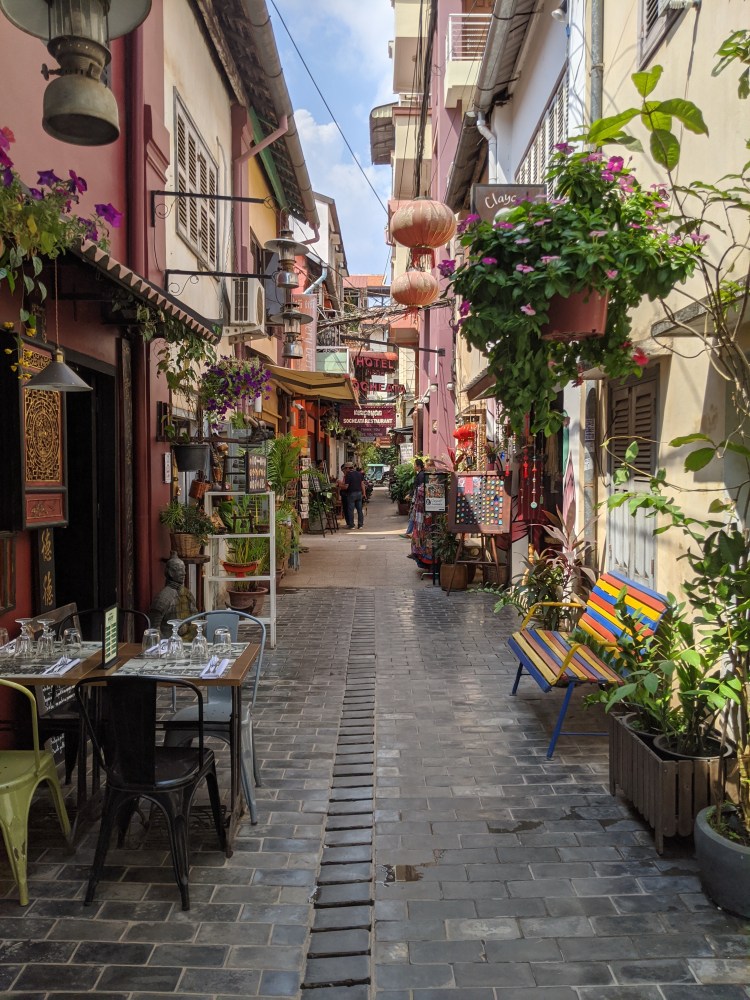
The next morning started with some very decent hostel lattes, then a walk down an adorable, very-French-looking alleyway to our chosen lunch spot, Le Malraux. The alleyway was the perfect setting for this international cafe. We chose a spot inside, but, like most places here, it wasn’t air-conditioned. The food made up for this oversight, though: goat cheese croutons in a salad with mustard vinaigrette and salmon cooked perfectly en papillote (in this case, banana leaves). I also had a four-dollar bottle of sparkling water, which Aaron gave me no end of grief about. Four dollars is a lot here. You can get a beer for 50 cents. Paying four dollars for a sparkling water here would be like paying twenty dollars for it in the US. I was thirsty, though, and I knew we would somehow manage to weather that financial storm. When it came time to pay, though, our card was denied. This has happened every single time we have tried to use this card. After we lost our first credit card, we had Visa send us an emergency card. They sent us a card 1) with no chip, 2) that expires in one month, and 3) that apparently gets flagged every time you use it. I have spent more time on the phone with Visa than I have with both of our parents combined. Sigh.

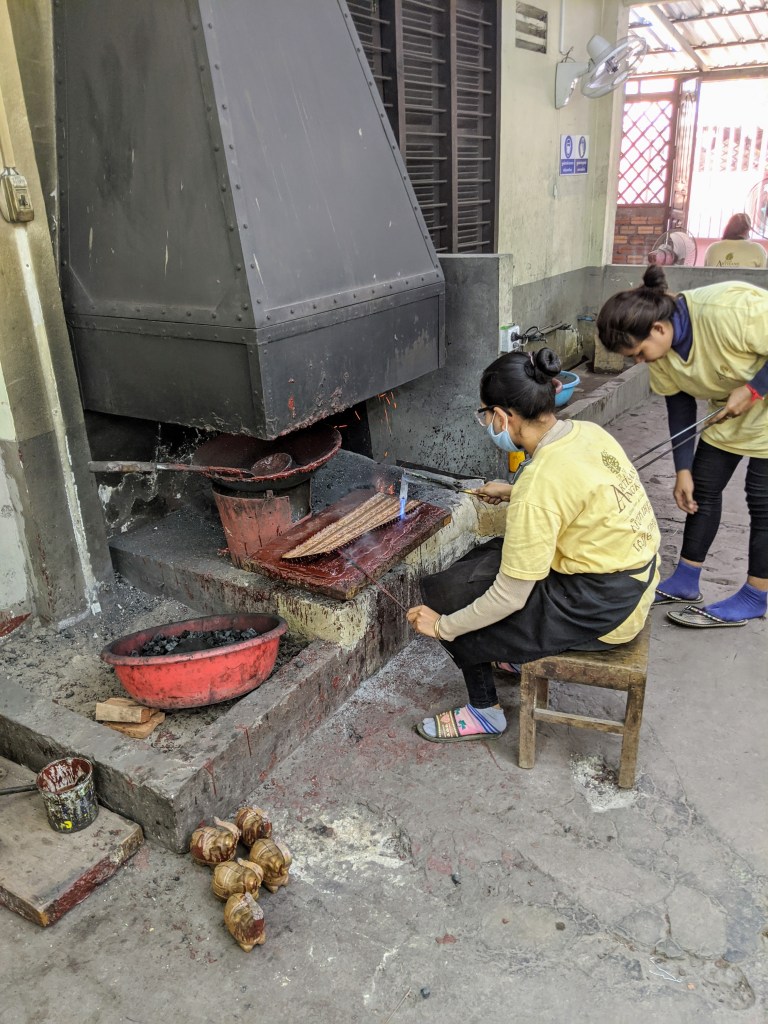
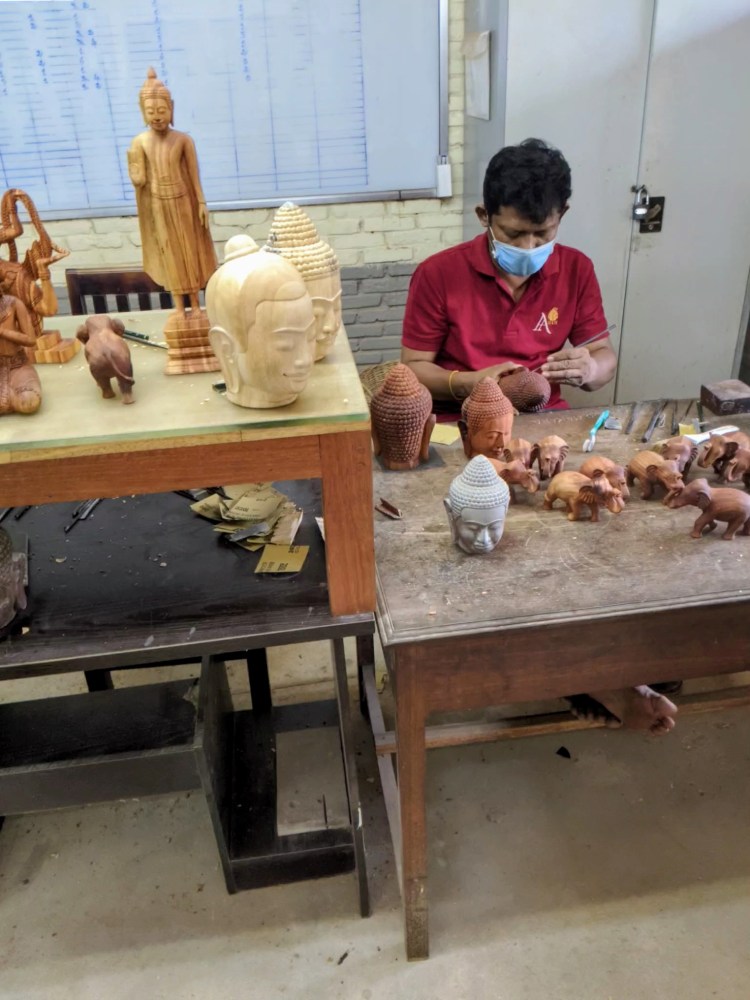
After lunch, we strolled over to Artisans Angkor, a shop and several studios run by an organization that teaches locals traditional craft techniques. We were given a free tour of the studios, and were awed by the skill and diligence of these master craftsmen. We saw woodcarvers freeing elephants from their rosewood cocoons, and silkweavers dying ikat designs onto thread and then using a traditional loom to weave that thread into a gorgeous scarf. We saw painters smearing acrylic banyan trees onto delicate silk canvasses. We saw wooden boxes leaved with gold and lacquered with black borders. It was a really rewarding and interesting tour, but it was also hot as hell. The tour ended in the shop where all those goods we saw being made were sold. The shop was indulgently frigid–a clever ploy to keep you shopping, I think. But we’re the kind of people who complain about paying four dollars for a water bottle, so it didn’t work on us. Besides, we had two pools to return to.

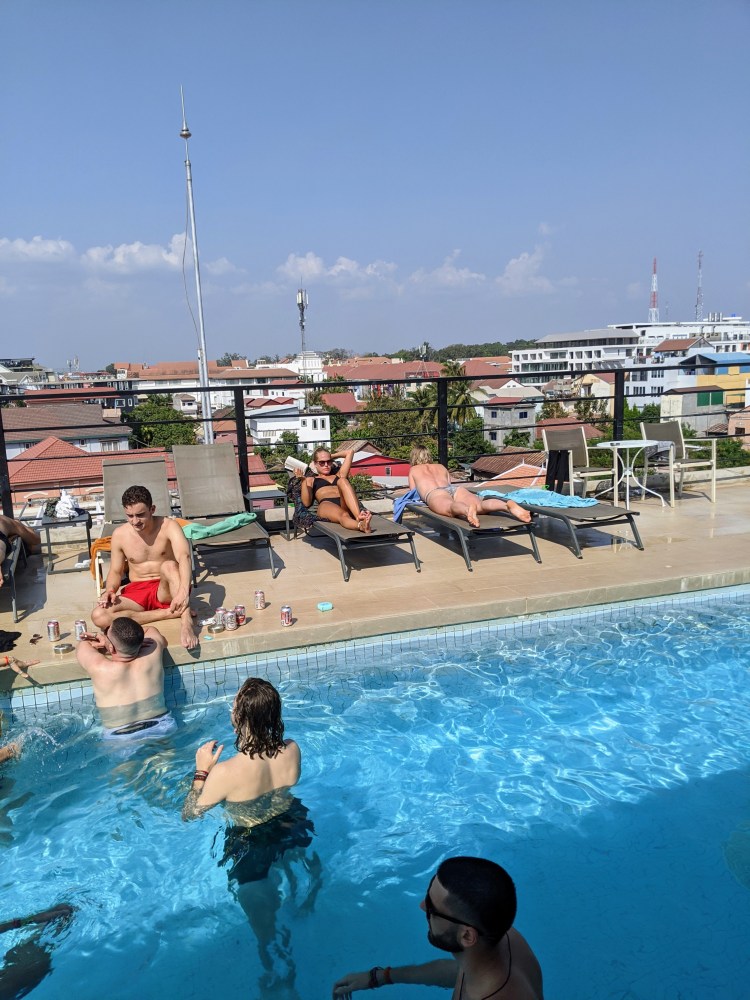
The rooftop of Onederz is six floors up, and there’s no elevator. It wasn’t until we got up there that we realized the only bar was on the bottom floor. But Aaron was a good sport and made the hike a second time in order to get us a six pack. We cooled off with our cheap Cambodian beers in the rooftop pool and decided where to go to dinner. 

On Illness

Apologies for the long lapse in posts. Aaron and I have both been… ill. I hesitate to say more, because I’m afraid with the panic we’ll be quarantined when we do finally make it back to the States. They closed school for two weeks in Hanoi. Everyone is wearing masks. Restaurants have signs telling Chinese people they won’t be served. It’s bananas. Not to mention the news cycle you guys are probably being exposed to. Both of us have had several loved ones calling us, worried sick we’re going to end up hospitalized–or worse.

Here’s what we know so far: 1) it’s worse than the flu, 2) it’s a lot worse than the flu for people over 60, and 3) it’s not nearly as bad, and maybe even slightly better than the flu for younger people. And it’s everywhere over here. It’s both worse and better than you think. Because the numbers you’re reading make it seem like it’s somewhat uncommon, but also extremely deadly. In actuality, it’s freakin’ everywhere, but not that deadly. They don’t test people for it, because then they’d have to report that it’s everywhere and tourism would drop. But the people who are dying from it are either old or have weakened immune systems. Every now and then a healthy 21-year-old dies from it, but every now and then a healthy 21-year-old dies from the flu or strep also. 

Whether what Aaron and I had was it is hard to tell. We had a pretty nasty cold with some very specific symptoms. But we’re ok now. We holed up in a hotel room for a little over a week, partly because we needed to, partly because we didn’t want to get other people sick, and partly because we didn’t want an angry mob after us. We watched movies and played video games and ordered in. We rested. And now, we’re all better. Better than we even were before we were sick. We needed that rest.

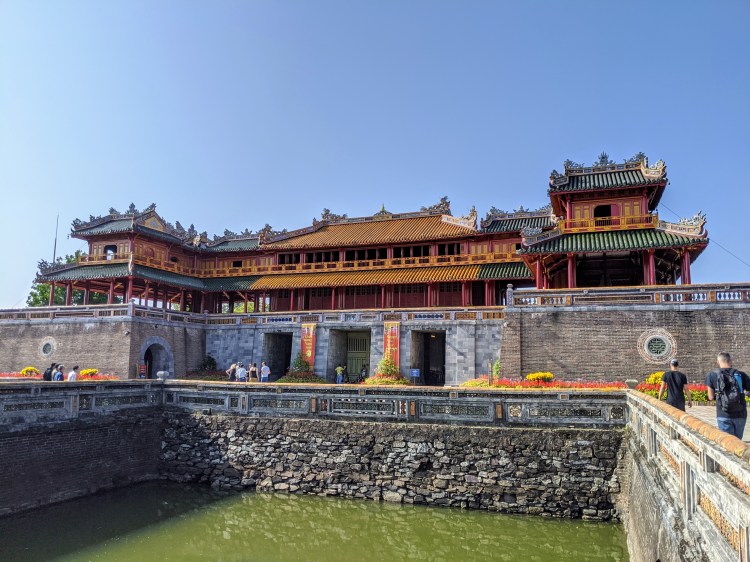
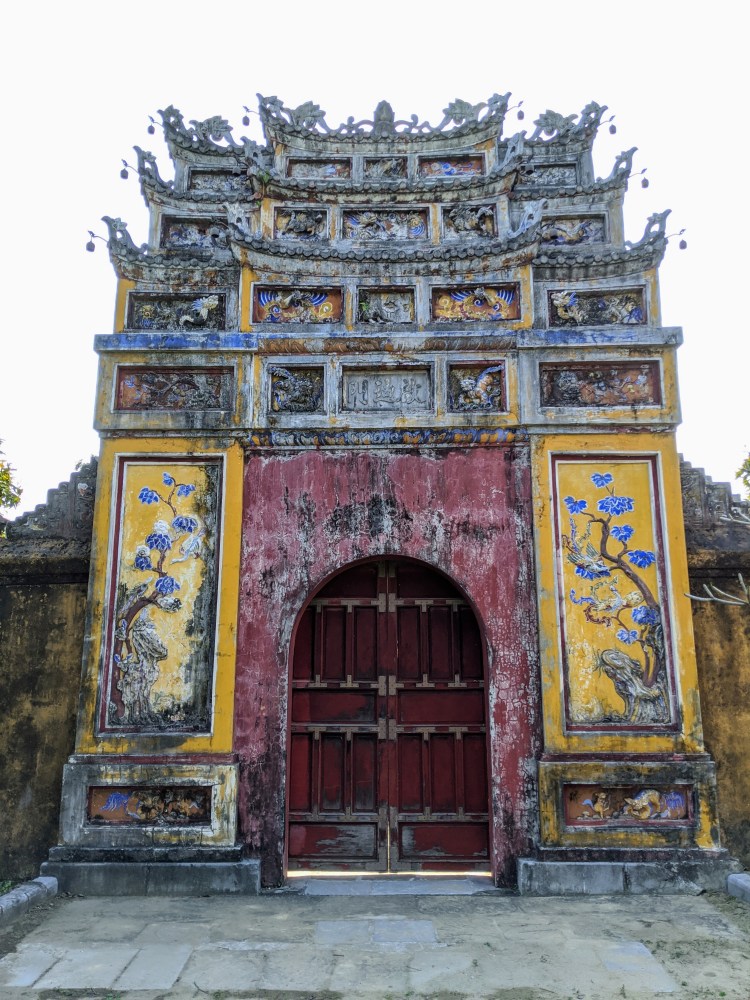
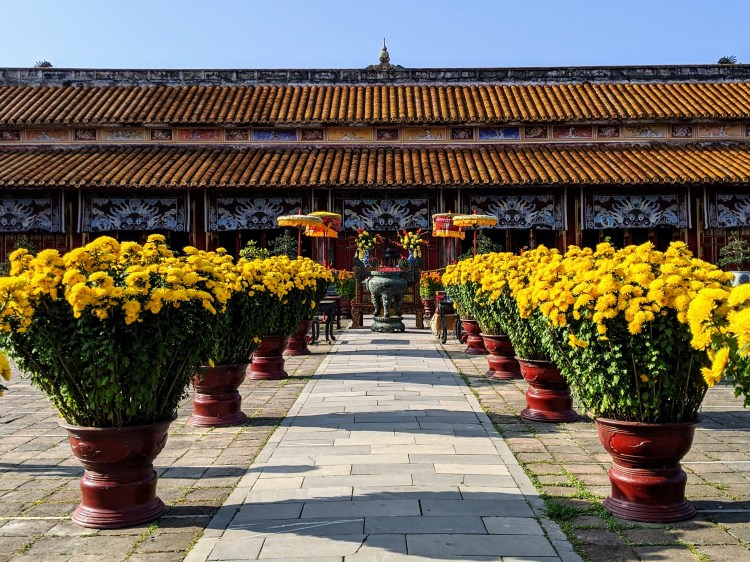
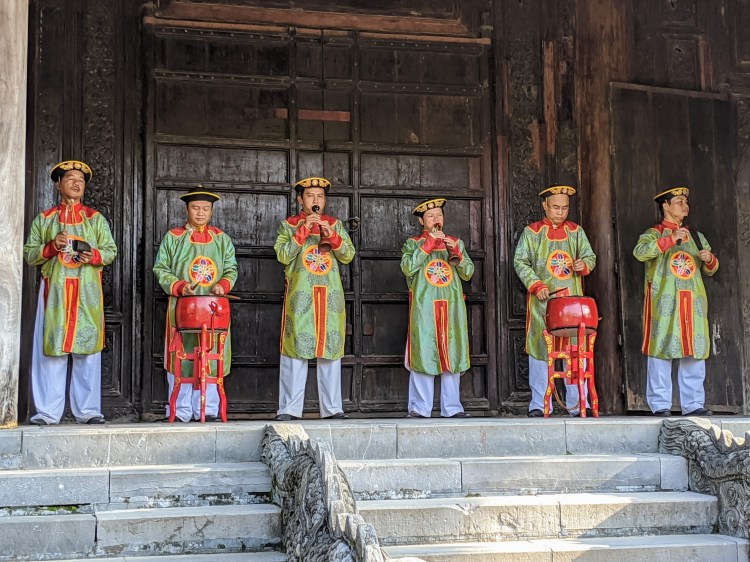
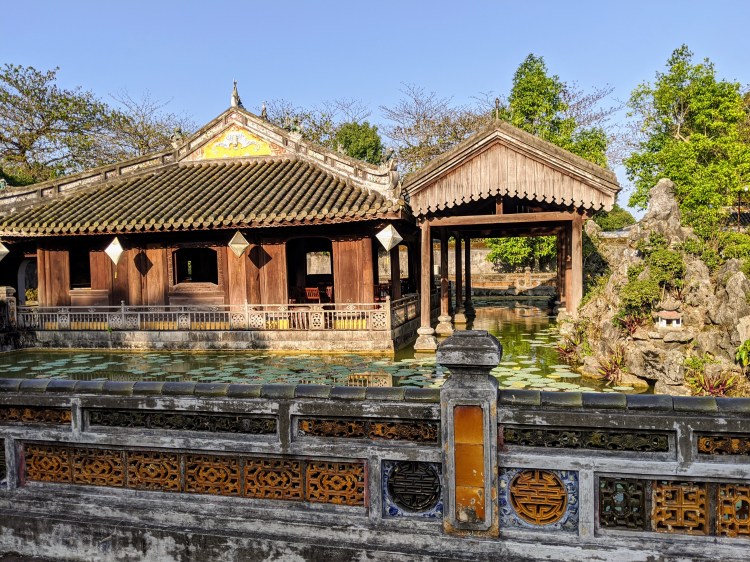
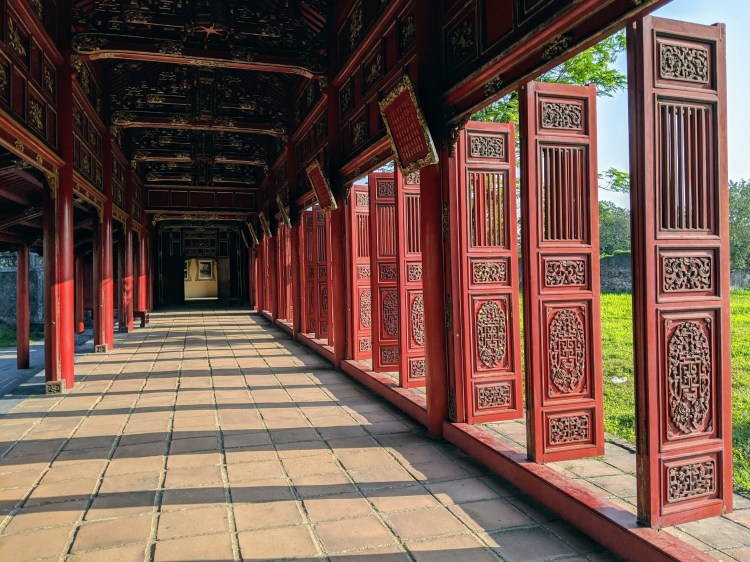
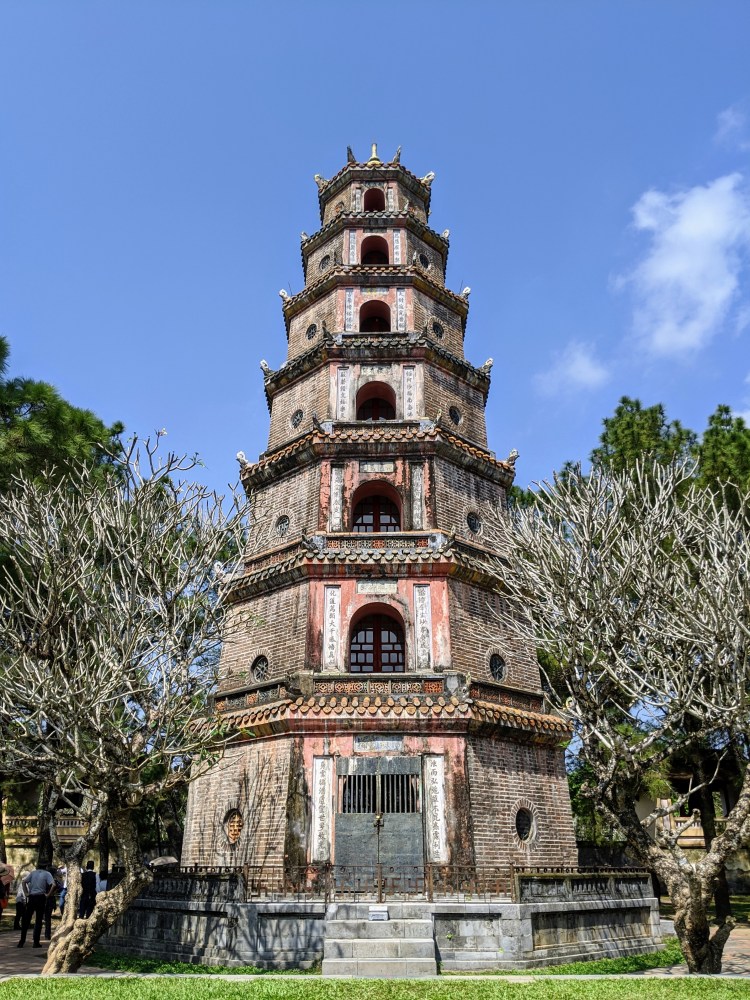
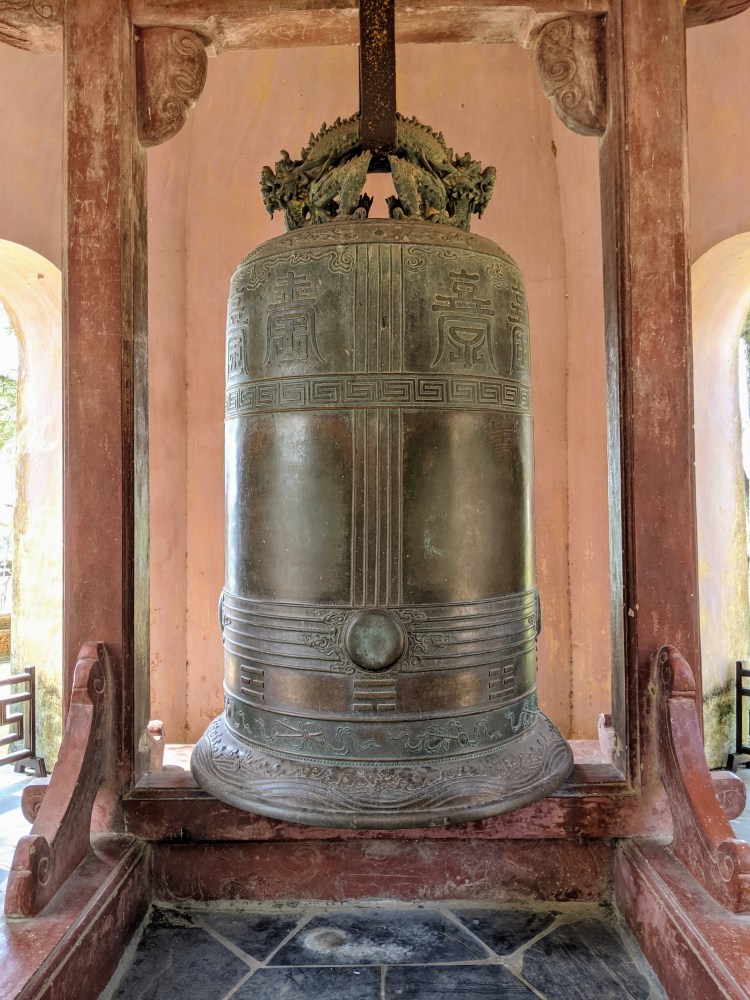
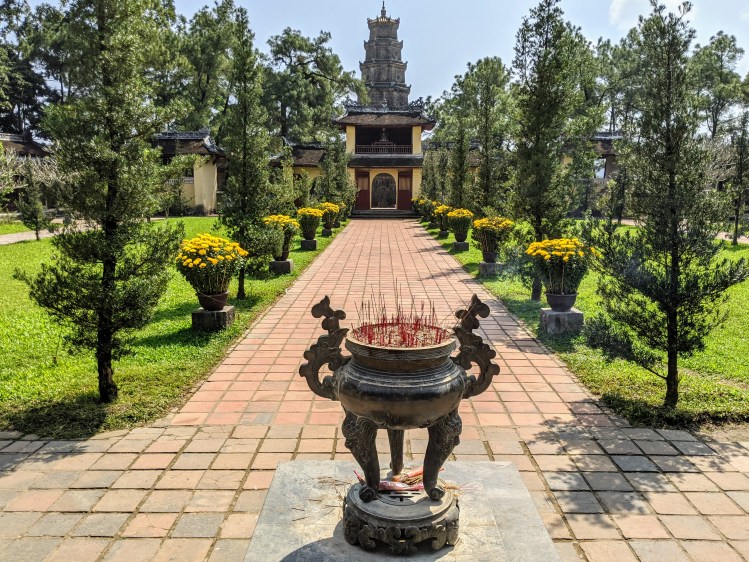
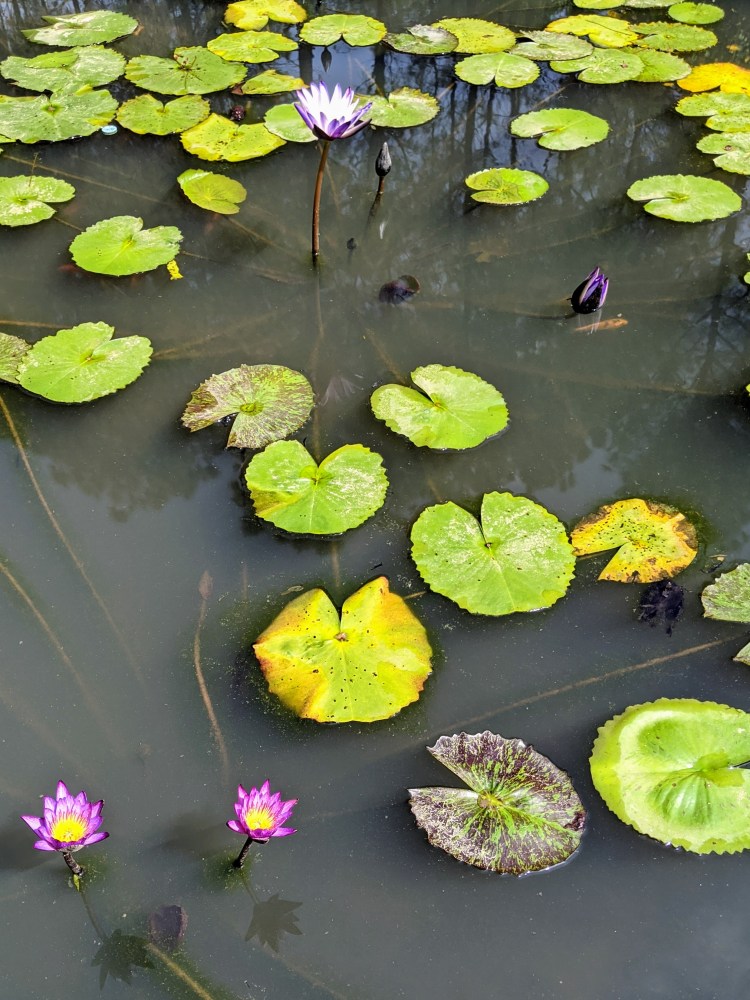
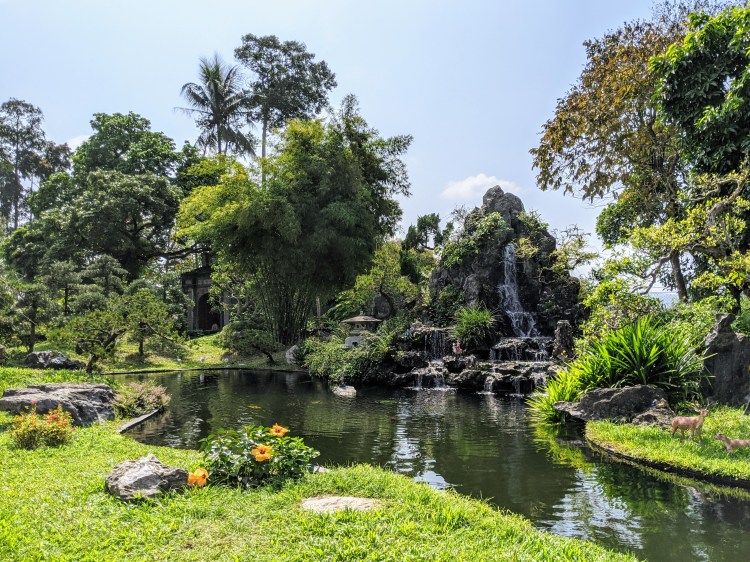
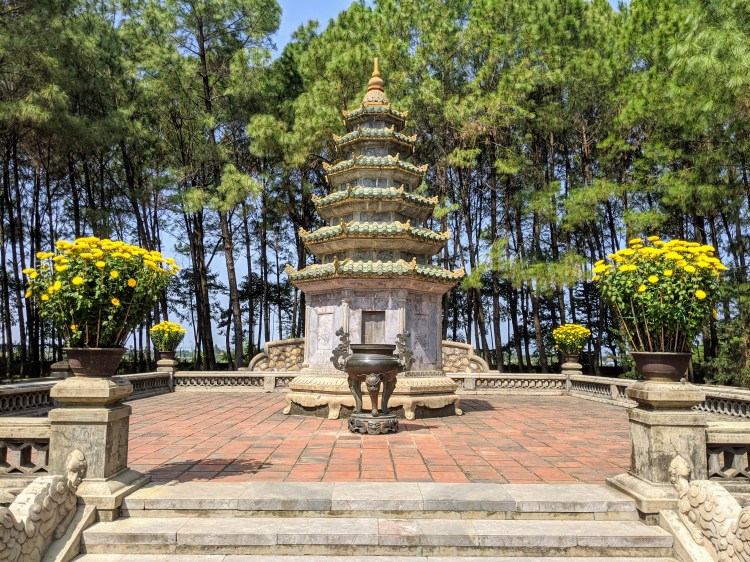
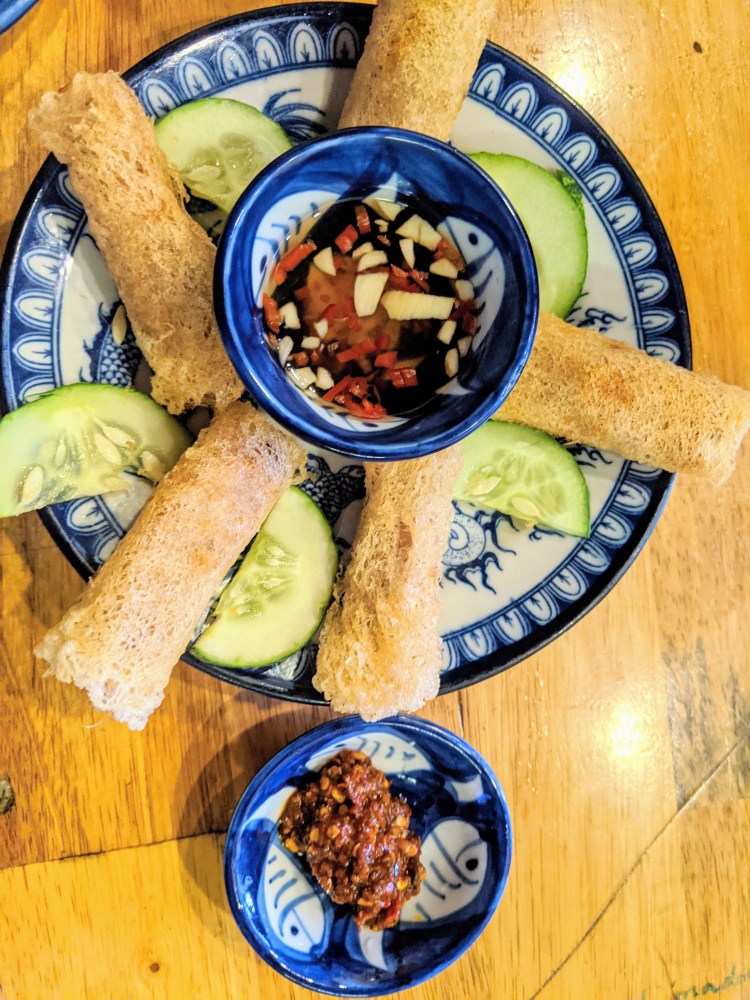
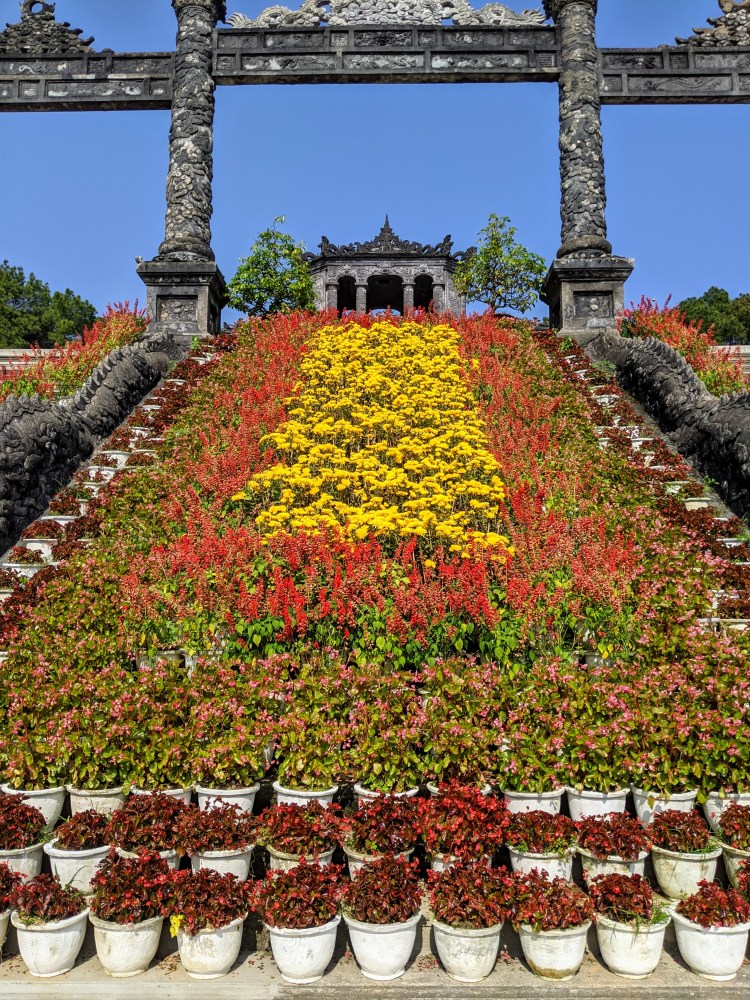
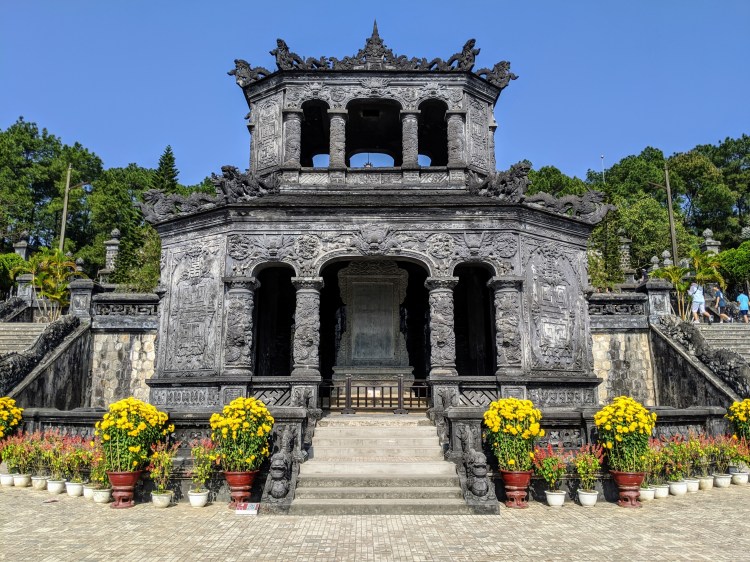
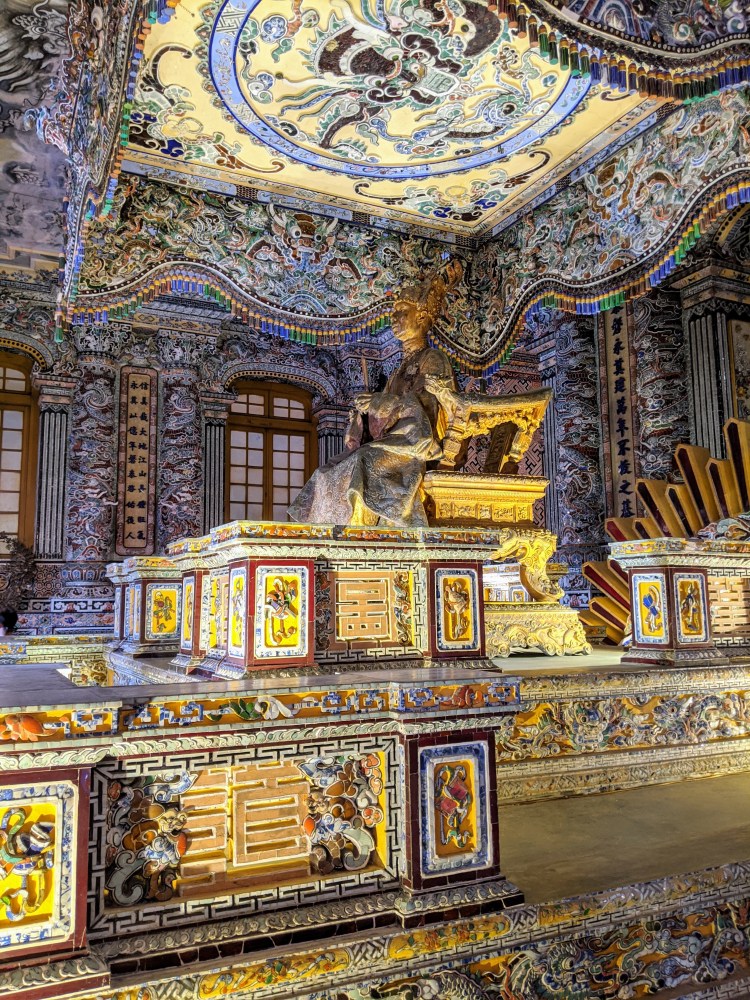
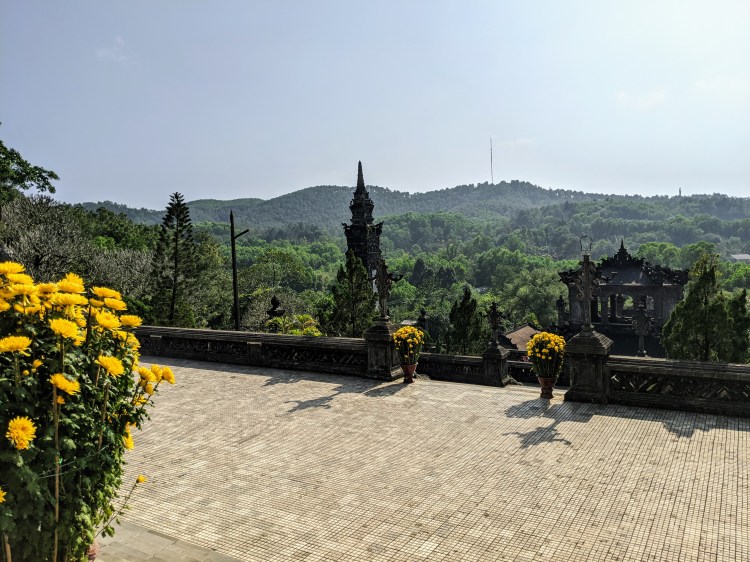
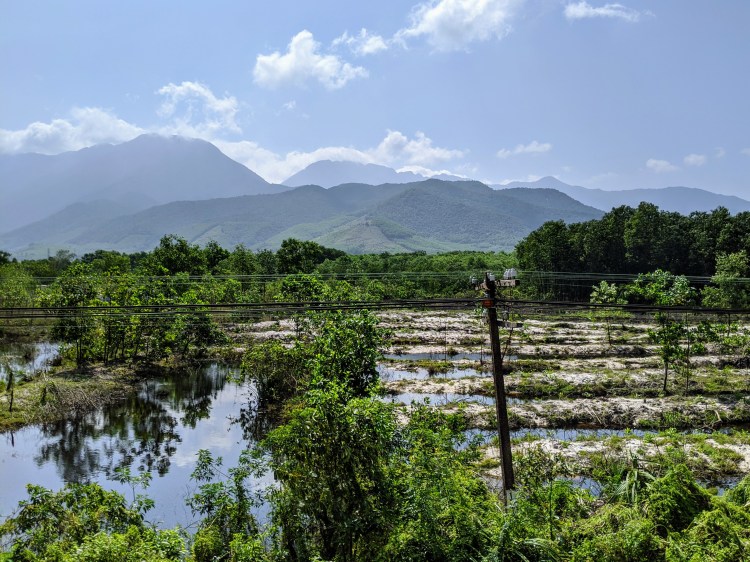
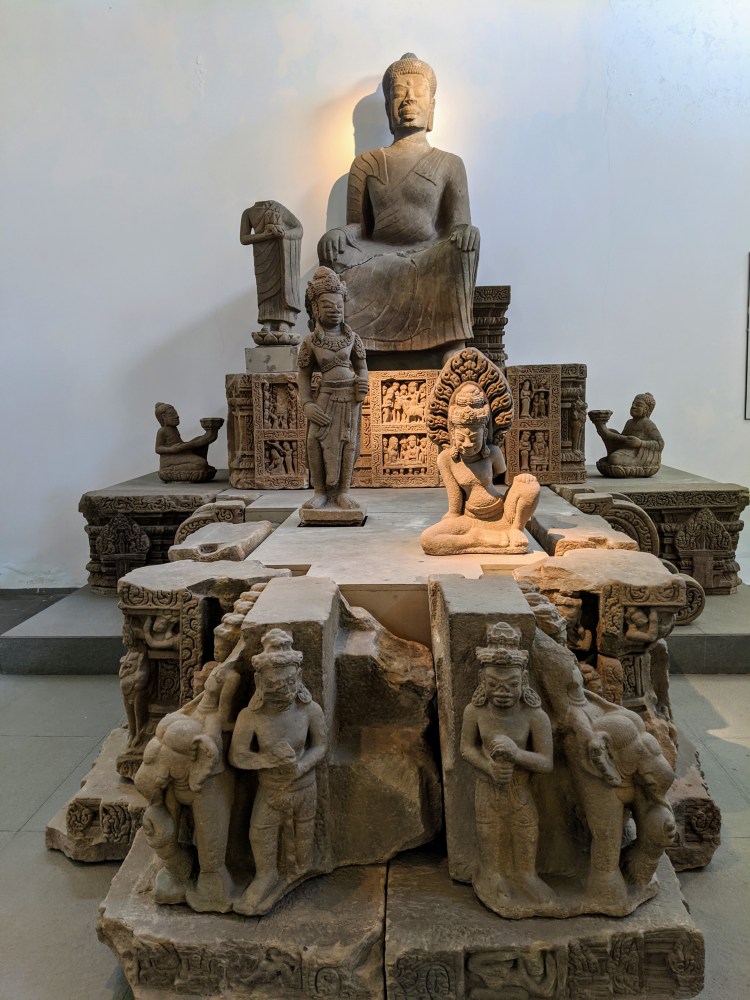
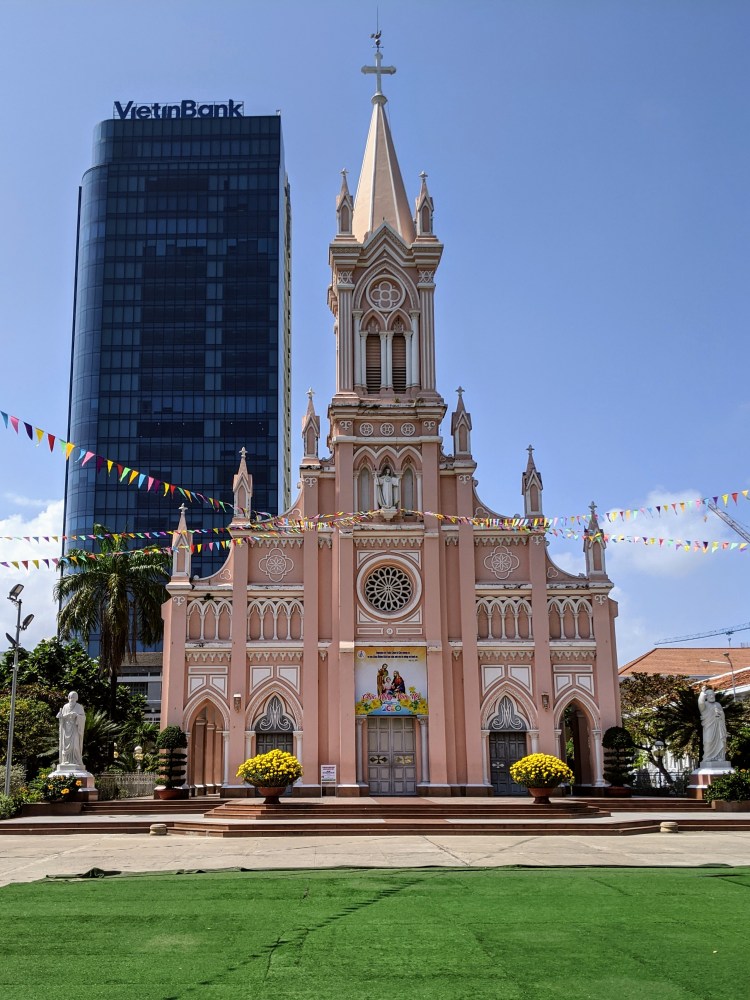
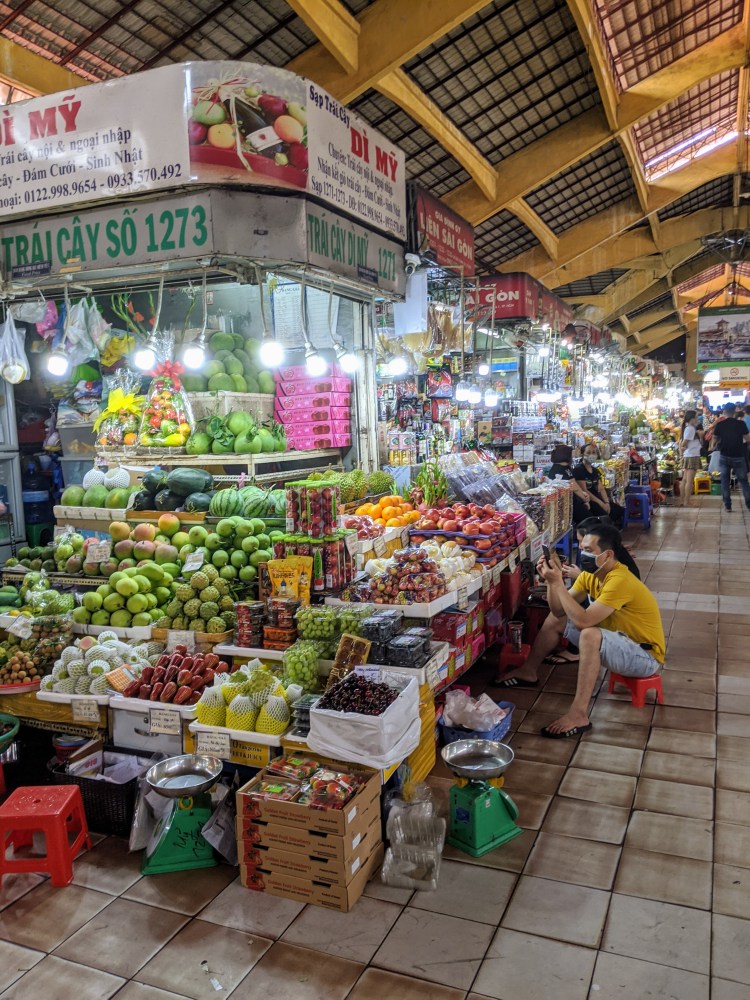
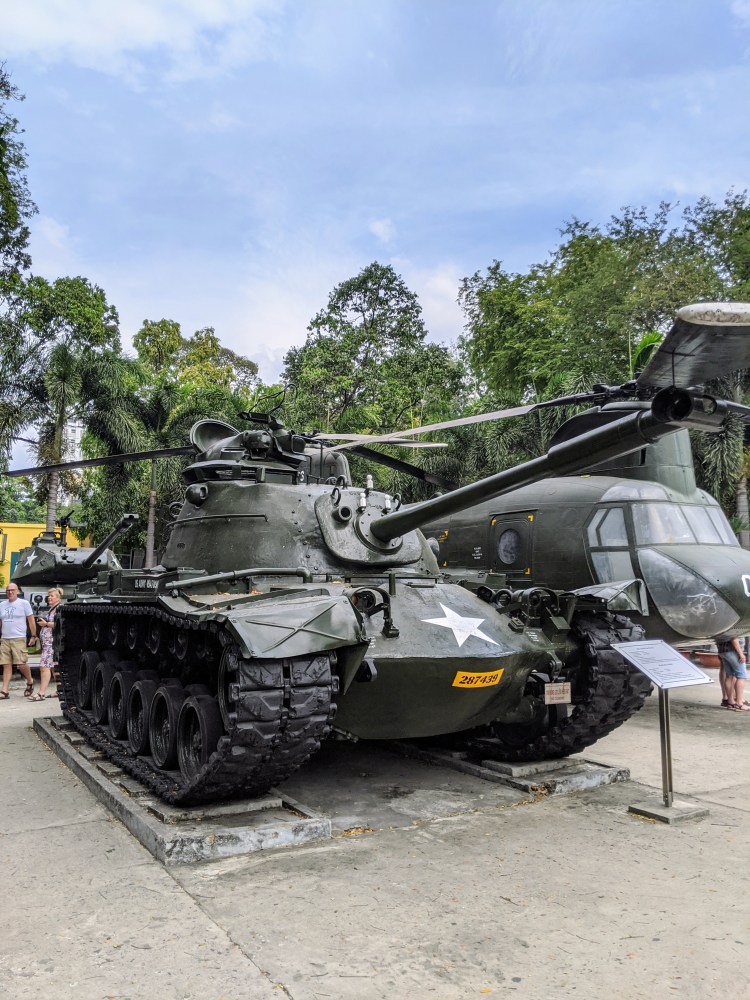
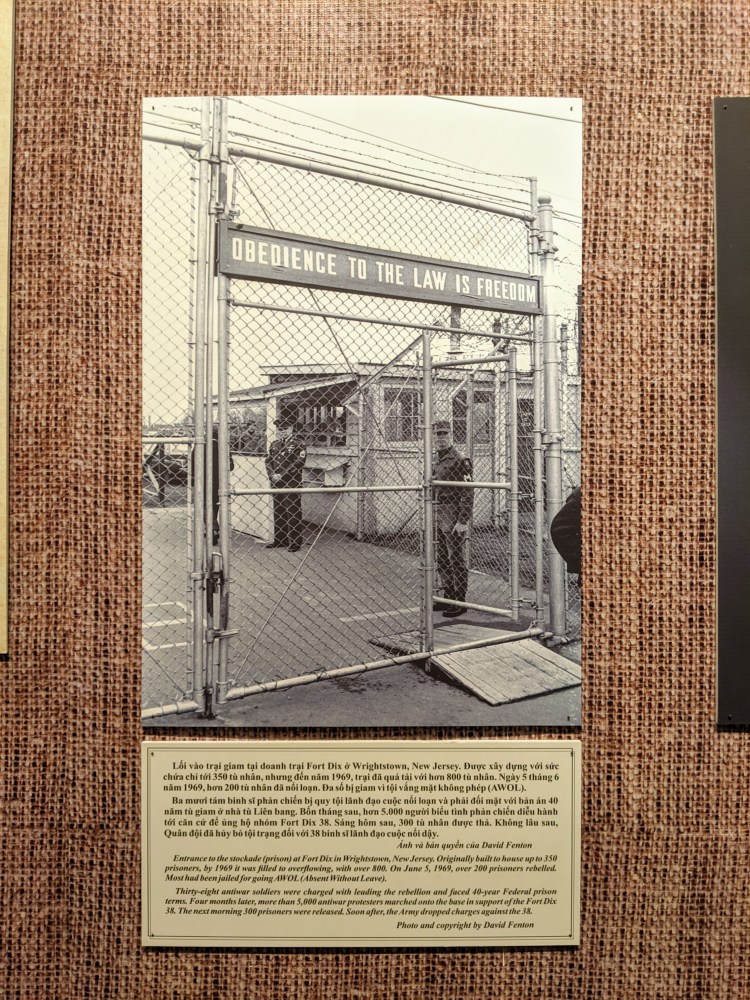
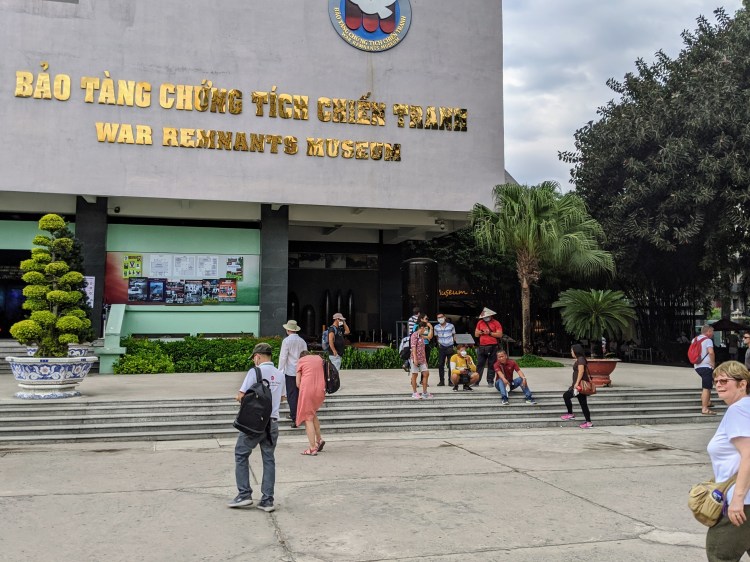
Here are some pictures from Hue, Danang, and Ho Chi Minh City, which I will probably never get around to doing posts for. I don’t remember them well, and I was too busy feeling crummy to write about them while I was sick. I apologize. In Hue, we visited the Imperial Enclosure, Khai Dinh’s Tomb, and the Thien Mu Pagoda. In Danang, we went to the Museum of Cham Sculpture before gorging ourselves on some truly bomb tacos at Taco Ngon. In Ho Chi Minh City (most of the locals also call it “Saigon”) we ran into the Aussies from our cruise on Halong Bay. After a farewell breakfast with them (they were flying out that day) we cut through the central market and made our way to the War Remnants Museum. This museum had exhibits on Agent Orange and war crimes committed by the US, and it was fair in its portrayal of resistance and protest in the US. We’re in Siem Reap now, and I should have my first post about this fascinating city up tomorrow. Aaron and I are both loving it.

I’m looking forward to the rest of our adventure. And now, I’m ready for it.

Hoi An: Highlights Reel

Best Experiences: Anna

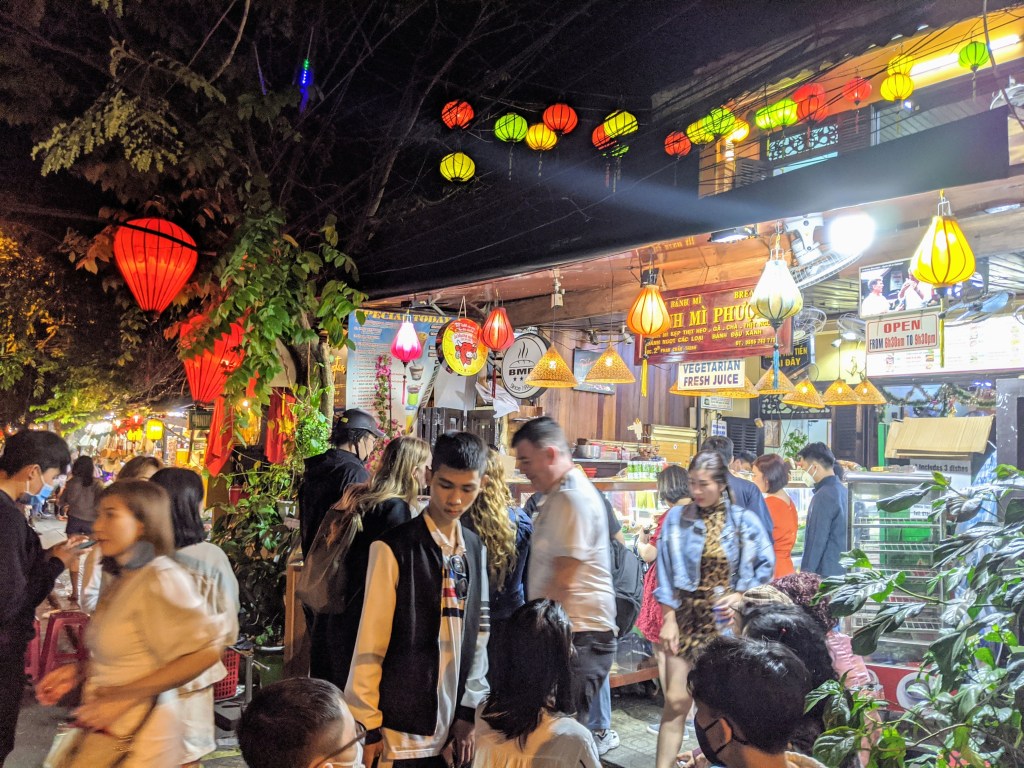
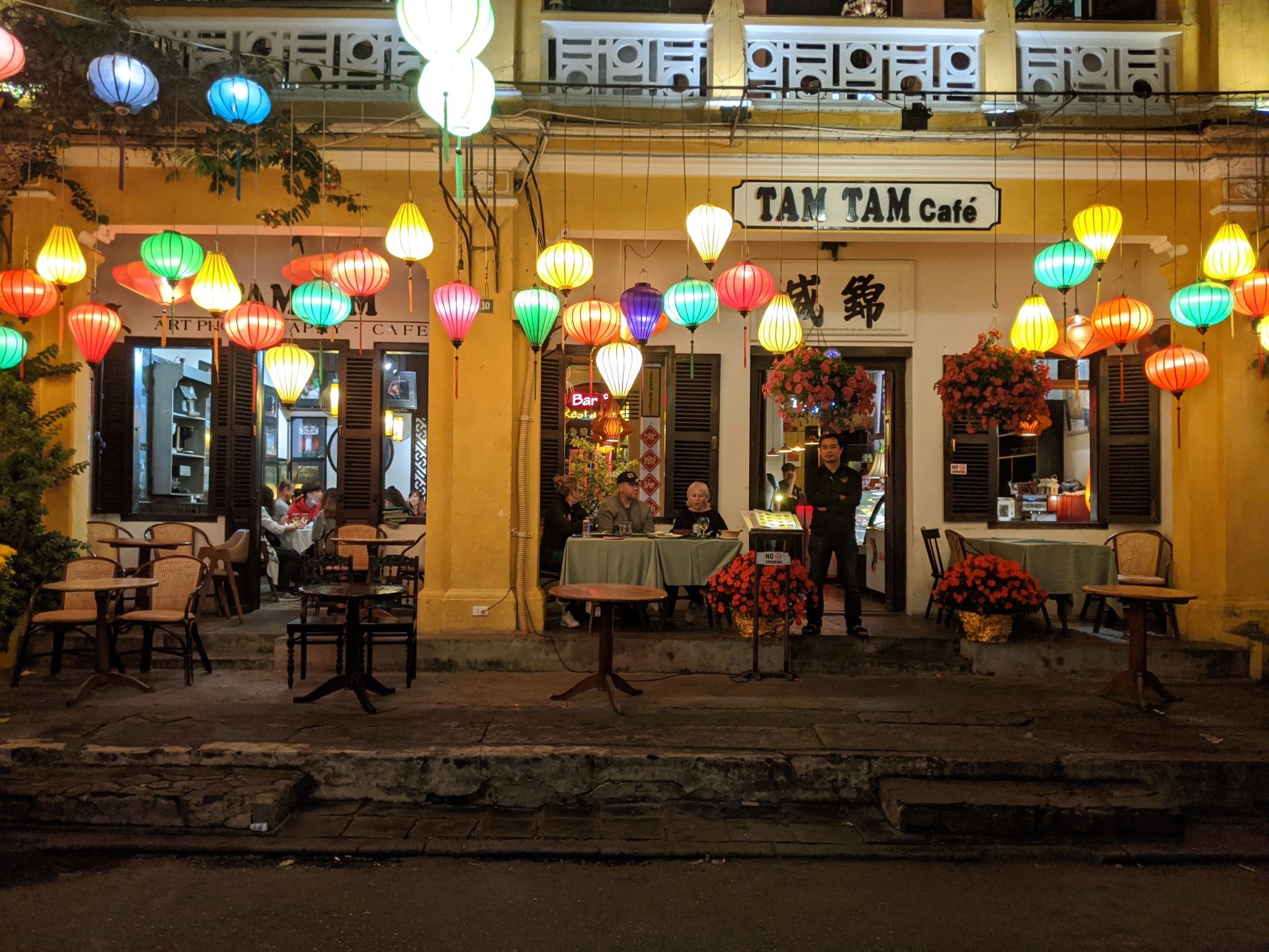
  1. Strolling through the enchantingly-lit streets at night. It’s not called the city of lanterns for nothin’.
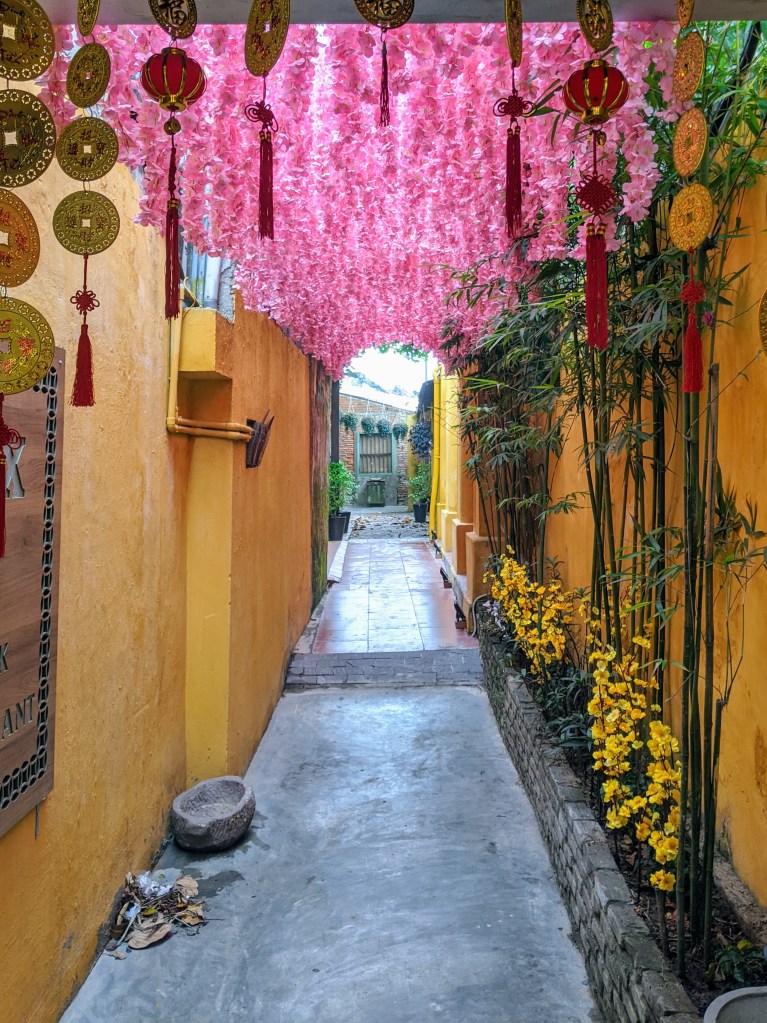
  2. Strolling through the charmingly-sunny streets during the day. The best part of Hoi An is just the town itself. The yellow, French-colonial cafes lining the river, the botanical touches on every shopfront, the meandering alleys leading to secret courtyards: it’s beyond romantic. 
  3. Riding the scooter to An Bang Beach, through town and across the rice paddies.

Best Experiences: Aaron

  1. Scooting through rice paddies, eyeing all of the cows and buffalo.
  2. The lantern-lit boat ride down the Thu Bón River.
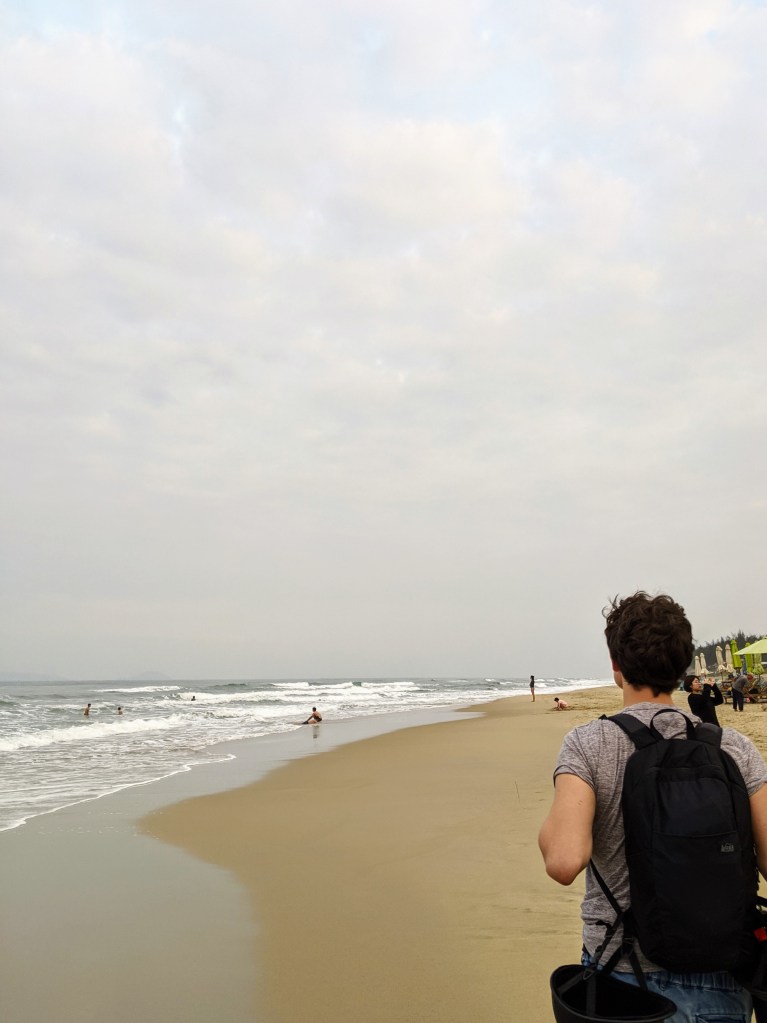
  3. Relaxing on An Bang beach with drinks in my hand and Big Thief in my ears.

Best Meals: Anna

  1. Hoi An had consistently the best food we’ve had on the trip. No place was number 1, but everywhere was great. My favorite meal, though, was probably the four-hour-long marathon session of eating and chatting and drinking beer on Artspace’s patio. Our wagyu burger and carbonara pizza were delicious and it was good craft beer, but most of all, Aaron and I just had a great time connecting under the mild sun.
  2. Ganesh Indian Restaurant was a small space, but it was packed. The food is why. Our shahi paneer was both creamy and piquant–a difficult culinary feat to pull off.
  3. The dried-beef and green mango salad, crunchy crab wontons, and white rose dumplings at Cargo Club: it was our first real meal here and we ate it looking out at Hoi An’s picturesque riverscape. 

Best Meals: Aaron

  1. Artspace for pizza and burgers. The food was good, but the conversation was great. One of those times where I really appreciated being with someone who speaks my language.
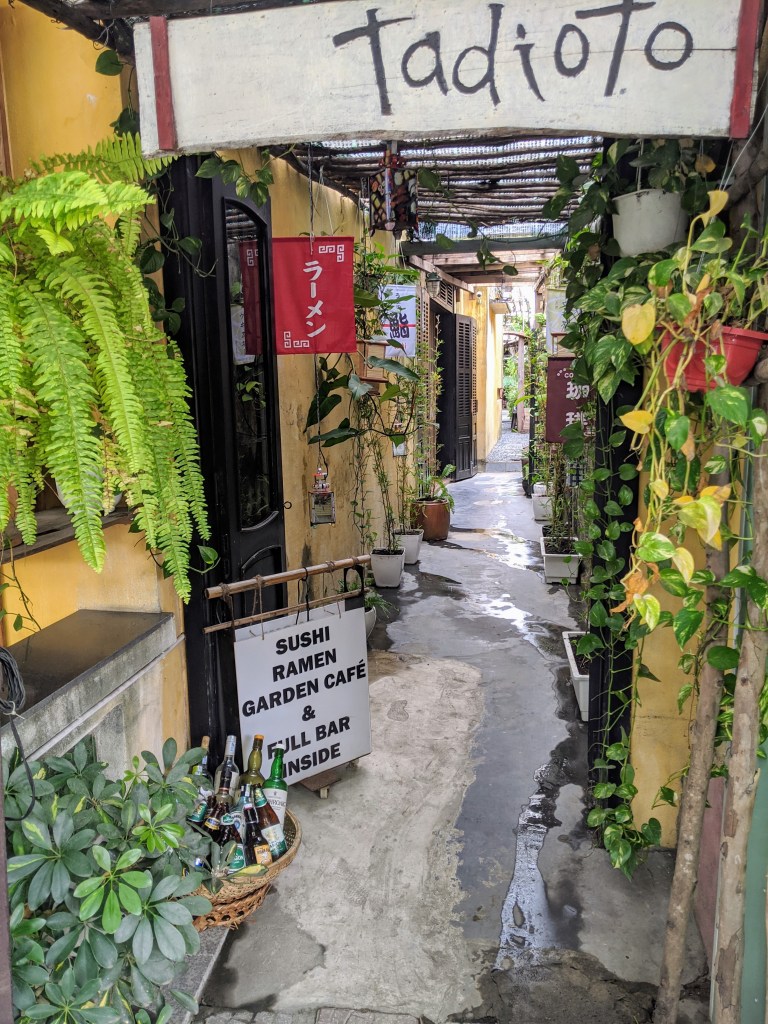
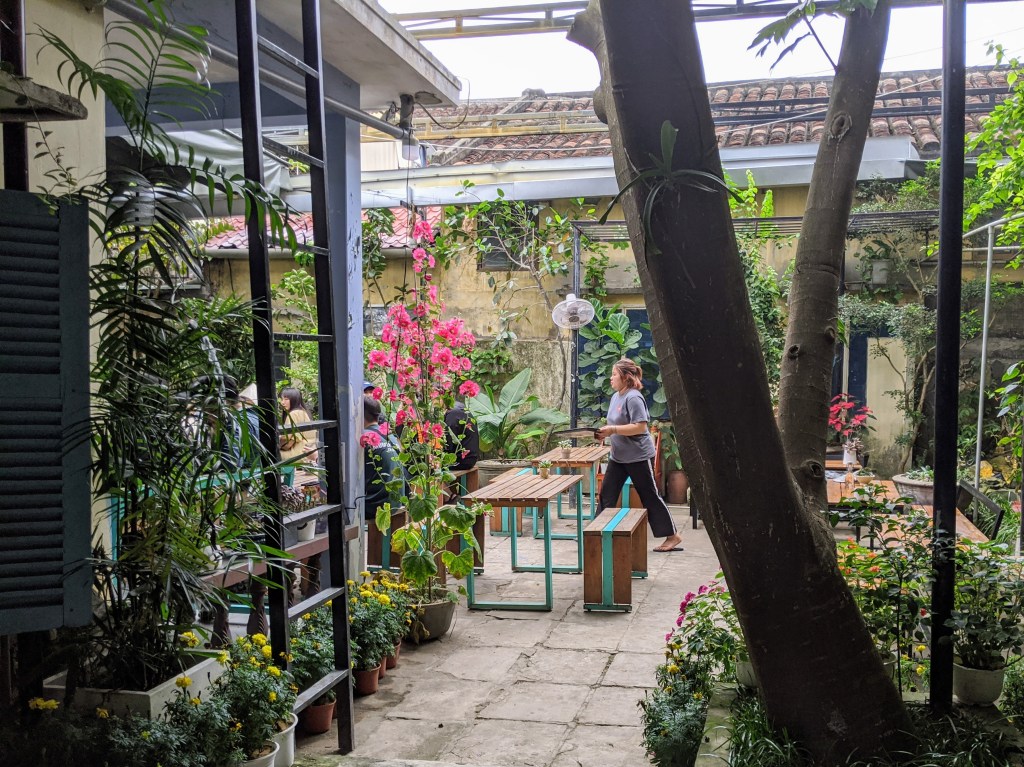
  2. Tadioto Roll at.. Tadioto. Fresh fish and a lovely courtyard. I’ve missed sushi more than just about anything.
  3. Fatfish Restaurant in Da Nang. There seems to be a correlation between pizza and good conversation, which is of course the tastiest part of any meal.

Blooper Reel

  1. When we arrived at Deckhouse on An Bang beach, they were packing in the beach chairs. In the hopes of getting an ocean view, we insisted on being seated on the upstairs deck. The hostess warned us it was windy, but I was not to be deterred. We were up there for maybe 15 minutes before I had to find someone to lower the plastic sheeting to block us from the wind. 15 minutes after that, we just went downstairs.
  2. Trying to help our friend from Saigon recreate his pictures from 50 years ago. He had very specific ideas about where he should sit and where we should take the picture from, but then would frown and fuss that every picture looked nothing like the original. He was so sweet and we wanted so badly to please him, but the pictures were just impossible to recreate the way he wanted them. I think he thought we were stupid for not being able to do it. 
  3. Sand crabs scare me. They are fast, and they are camouflaged, and they scare me, ok? So we didn’t walk down My Khe at night.

Hoi An: Days 6 & 7

We left Phin Coffee this morning in time to fit in lunch before our fitting appointment at Yaly Tailor. Lunch was a bit outside of the main drag, at Vegan Zone. For you vegan skeptics out there, know this: our meal was one of the best we’ve had on the trip. Our potato cakes were richly creamy on the inside (how do they do it without cream?!) and satisfyingly crunchy on the outside. Our lemongrass tofu was a distinctly flavorful, zesty curry with perfectly-simmered, toothsome tofu. It was delectable and filling and completely vegan.

We arrived a bit early for our Yaly appointment. Although we were satisfied with our lunch, we couldn’t resist the temptation of another cheese plate from Hill Station while we passed the time. I stayed to finish paying while Aaron left to make his slightly earlier appointment. 

When I was walking over to Yaly, I got a text from Aaron. It read: “Anna, I don’t like it…” Crap. I thought this might happen. He had picked a bold, pink, floral brocade. It was a statement. And now that he had the suit on, he was having second thoughts. But you can’t just not buy a suit that’s been tailor-made for you. Maybe I could convince him to give it a chance? It honestly did look great on him. But with that kind of suit, you’d have to feel confident in it to pull it off, and it was clear he was miserable. My dress was what I thought it would be, essentially. Deep red lace with an off-the-shoulder, sweetheart neckline and slitted sleeves that fell all the way to the floor. It was romantic, it was dramatic, and it was (a little) cheaply-made. I made a few requests of my tailor (take it in at the waist, bring the center slit higher, etc.), and she told me I could come in for a final fitting the next day. 

Aaron and I convened at a coffee place to discuss options. It boiled down to this: Aaron is red-green colorblind. “Why”, I hear you ask, “is this a relevant detail?” Well, he originally wanted a royal blue suit with a floral pattern. Blue is a color he sees clearly. But they didn’t have blue. What they had was a pastel pink background with a green and dark pink floral pattern. So, to him, it looked like a gray suit with darker gray stuff on it. I would like to take this opportunity to point out that I told Aaron he was not going to be able to see the pattern when he chose it, but he did not heed my warning. The suit wasn’t what he was going for. To me, it was a fun, funky, well-fitted suit, but to him it was a boring blah suit. He didn’t feel good in it, so it didn’t matter if he looked good in it. He finally decided to return to Yaly and come clean. They were able to work out a fair deal, and all was well that ended well. 

We tried to trek to Cafe Zoom for dinner. We’d passed it on our way to An Bang Beach a few days earlier and our guidebook had recommended it. When we arrived, though, it was closed. That was after we spent a half hour trying to find the dang place (don’t trust Google maps if you ever try to go there yourself). I was hungry, we were sick of wandering; we’d already walked forty minutes just to get here. We gave up and ate at the first place with people in it. The food was not poisoned and the beer was potable. It did the job. 

It had been a semi-emotionally-draining day: the kind of day that’s not so bad you need to go home and have a good cry, but not so good you can go home totally sober. We found a cozy couch at White Marble and shared a bottle of rosé. We played “how well do you know me?”–always just an excuse to get to know each other better–until we got distracted by a discussion about movie critique (why are all the best-of lists disproportionately comprised of pre-1975 movies, despite the fact that the vast majority of movies have been released after this date?). We also had another cheese plate. What? Don’t look at me like that. We walked home together, still deep in conversation about Aaron-and-Anna-kind of things. 

After our usual morning pick-me-up, we rented a scooter for the day. This was to be our last full day in Hoi An, and we didn’t want to waste time walking to the beach. Hoi An was the perfect place to rent one, too. Traffic was sparse and slow, and drivers here seemed to actually care if they lived or died.  

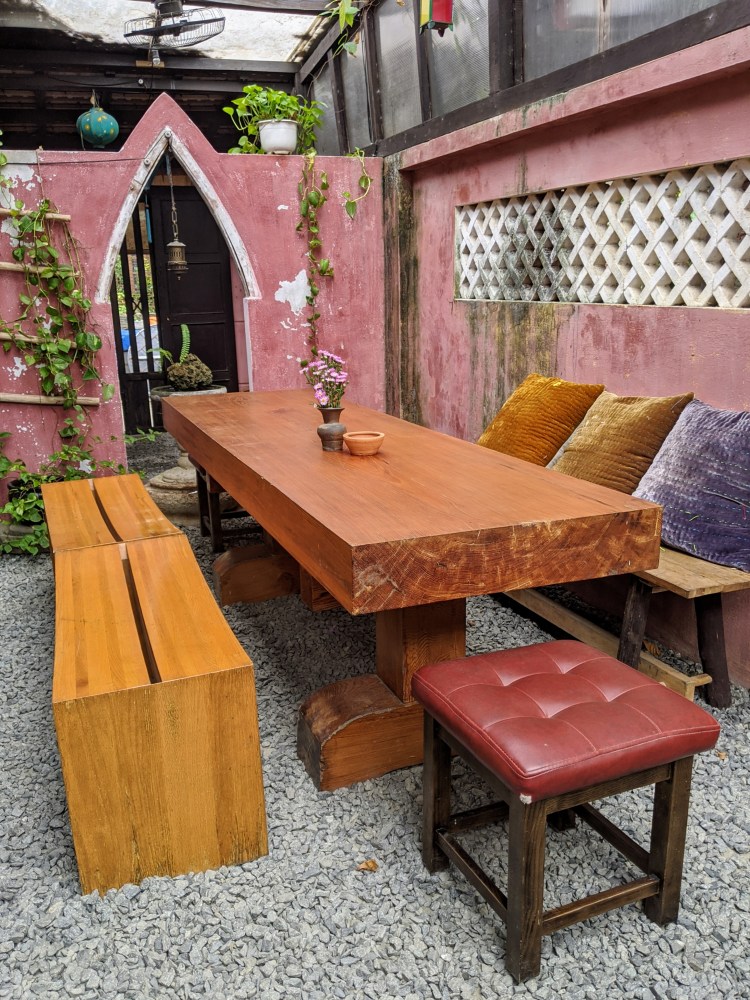
Our first ride was to Tadioto, the Hoi An branch of the pretentious cocktail bar we’d sipped passion fruit mojitos at in Hanoi. This one was tinier and had a pretty, gravel-pathed courtyard surrounded by painted, romantically-deteriorating concrete. We found a table in it and gorged ourselves on edamame and maki. The menu had the same masturbatory treatise on the opening of this Grand, Bohemian Experiment, but I found it less annoying with a belly full of yummy sushi.

We wove through the paths we’d previously walked, between rice fields, on our way to An Bang beach. This time, we took the long, scenic way, veering off in whatever direction that beckoned, chasing the  sunlight glinting off the flooded fields. We’d occasionally pass another scooter, but usually it was just us and some lone, conical-hatted farmer in the distance. Once we’d got ourselves good and lost in the bright, vernal patchwork of paddies, we googled our way out of it. We took the main stretch all the way to the beach, where our parents will be happy to learn we parked the scooter for most of the afternoon. 

We also parked our butts for most of the afternoon on some beach lounge chairs, underneath a palapa-like sunbrella. I nursed a couple of mojitos and enjoyed the susurrus of the waves petting the sand. Aaron listened to an audiobook. When we got bored, we worked a crossword together, but mostly we just laid there. 

When afternoon turned to evening, we took one last stroll along the shore and watched the light become a golden haze. We turned around when we reached a tacky, abandoned construction project that looked like a life-sized version of a cartoonish, mini-golf castle. On the way back, we witnessed some playful puppies chasing and tackling each other. We simultaneously started googling “dog cafe” with the names of all the towns we were visiting next. Sometimes, I miss our puppers so much it physically pains me.

We rode the scooter back to town and grabbed some coffee, then had dinner at Banh Mi Phuong. There was a line halfway down the block for this place, which is widely recognized as one of the best banh mi joints in Vietnam. It carries the Anthony Bourdain seal of approval. This banh mi experience was much better than our first one and much more flavorful. Aaron loved his, but I got kind of grumpy when the tofu and avocado sandwich I ordered was avocado-less. It still tasted good, but it definitely could have used some of that cool creaminess an avocado would have added. Also, the sandwich had two ingredients; y’all didn’t think it was worth mentioning that you were out of one of them when I ordered it?

After our discussion about movies and best-of lists the other night, Aaron and I had decided to try to work our way through Empire’s list of the 100 Best Movies of All Time. It was the only list we could find that didn’t seem biased against comedies, action, or movies produced after the 70s. Working our way from the bottom and skipping anything we couldn’t easily stream here, our first movie was Lost in Translation. We snuggled up and tried not to identify too hard with Scarlett Johannsen and Bill Murray’s overwhelmed loneliness in a country so different and far from home.

Hoi An: Days 4 & 5

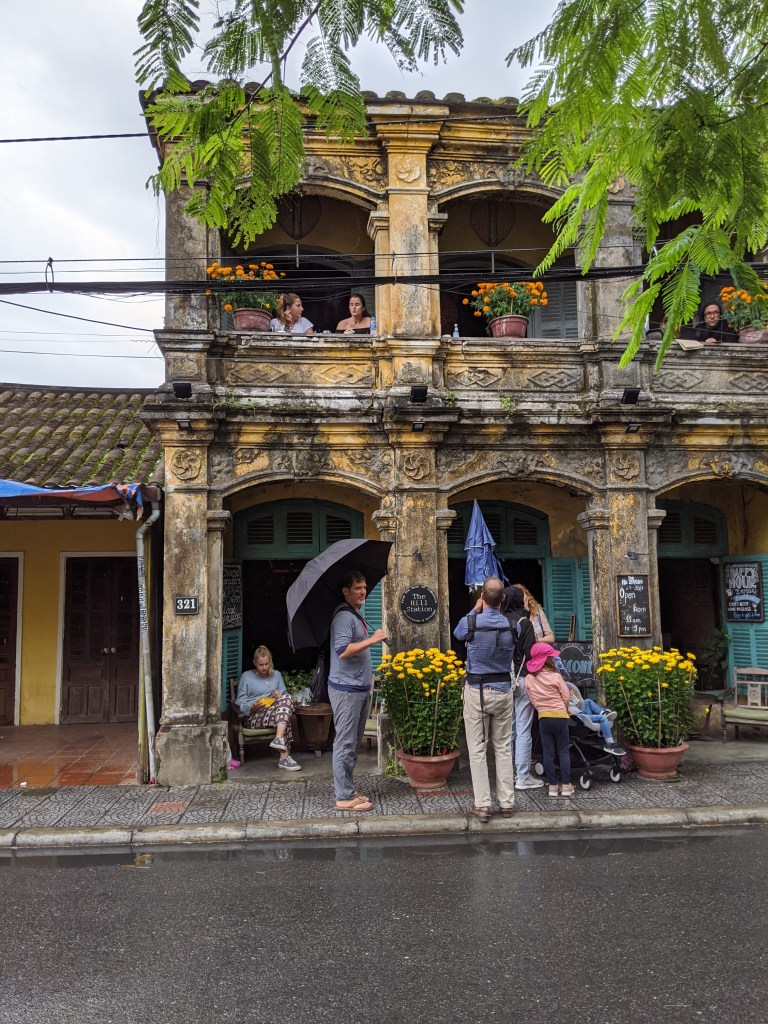
I love cheese. It’s my favorite food. It’s my desert island food, you know? Southeast Asia does not love cheese. There is a dearth of cheese. It’s not really a staple of any dishes here. Most East Asians are lactose intolerant, and historically, cows were for working, not milking. I have loved the food here, but I have really been missing cheese. You can, therefore, imagine how psyched I was to find a cheese board at Hill Station. And it was dang good cheese, too, paired with apricot preserves, hazelnuts, and raisins. Aaron and I sat in the historic surrounds of Hill Station’s second floor (the restaurant inhabits an old mansion) and really appreciated cheese for a minute. You don’t know what you’ve got til it’s gone. They also had an authentic, anchovy-based Caesar salad. The only other time Aaron and I have had Caesar dressing here, it tasted more like mayo. This salad was crisp and had giant shavings of aged parmesan on top. 

As we exited Hill Station, I noticed a sign for Yaly Tailors across the street. Hoi An is known for its hand-made, bespoke clothing, and Yaly is The Tailor in town if you want anything fancy. Aaron and I both had something fancy in mind, so we stepped inside and browsed the fabrics. Aaron gravitated to floral brocade, and I fell for a wine-red lace. The attendants set our expectations at a realistic level when we told them what we had in mind: no, they would not hand-embroider a complicated floral pattern onto Aaron’s suit, and yes, they could make a dress that would somewhat resemble the Zuhair Murad gown I showed them, but it wouldn’t be a $3,000 dress, and it wouldn’t look like one either. They took all of our measurements, and told us to come back in a couple of days for a fitting.

For dinner that night, we had Indian again. It has been our go-to whenever we’re craving something that isn’t East Asian. Well, it and pizza. Ganesh Restaurant was small, but very busy when we arrived. We would not have been seated had we not had a reservation. That might be the first time on this trip I can really say that. We shared a shahi paneer and some garlic naan, and it hit the spot. Aaron and I were both practically licking the bowl. Indian food is the best of both worlds: spices and flavor, but also cheese and cream.

We fell asleep early that night, bellies full of paneer.

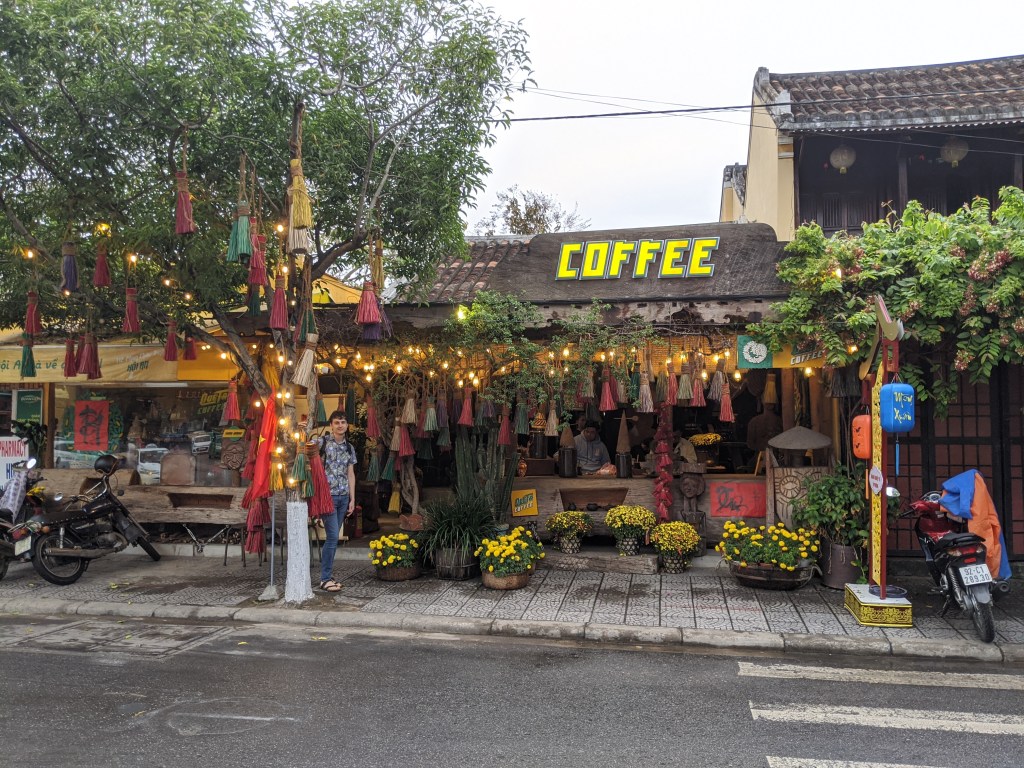
The next morning, we switched up our usual routine and walked to Queta Cafe, instead of Phin. It was a small, jungly spot with green bamboo cups and dried bamboo straws. We sat in front of an old loom that took up most of the cafe’s right half. The coconut coffee was delicious, but, if I’m being honest, the all-wood aesthetic didn’t do it for me as much as Phin’s secluded courtyard. It’s one thing to evoke nature in your design, but it doesn’t compare to the actual experience of sitting in a garden. 

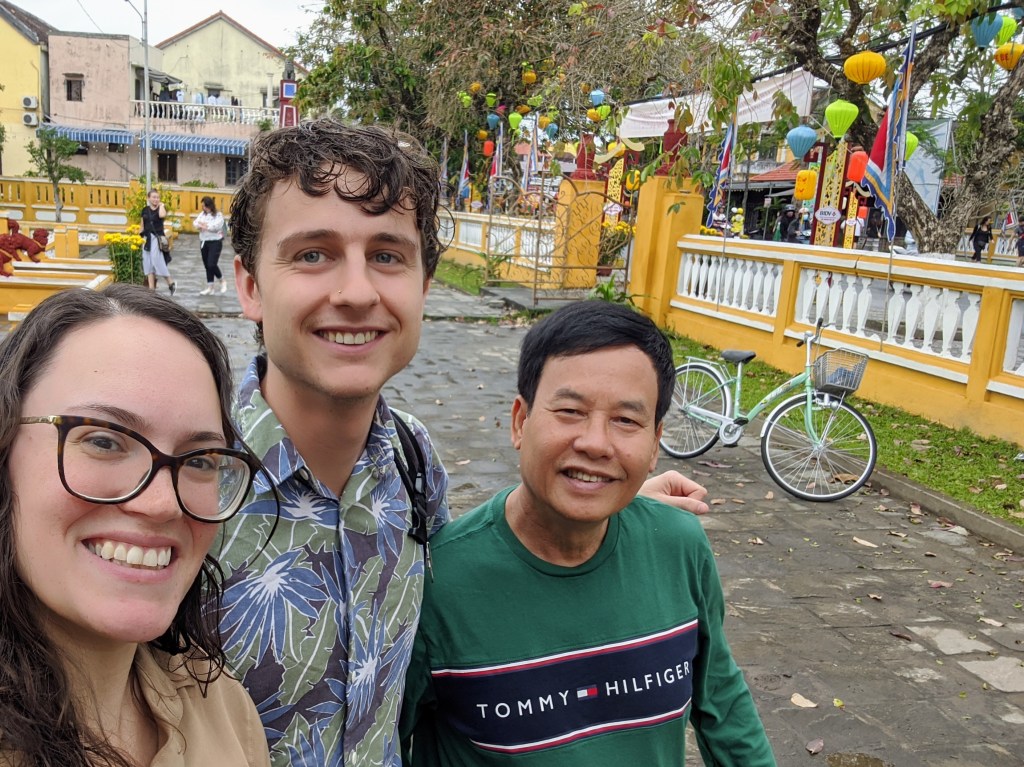
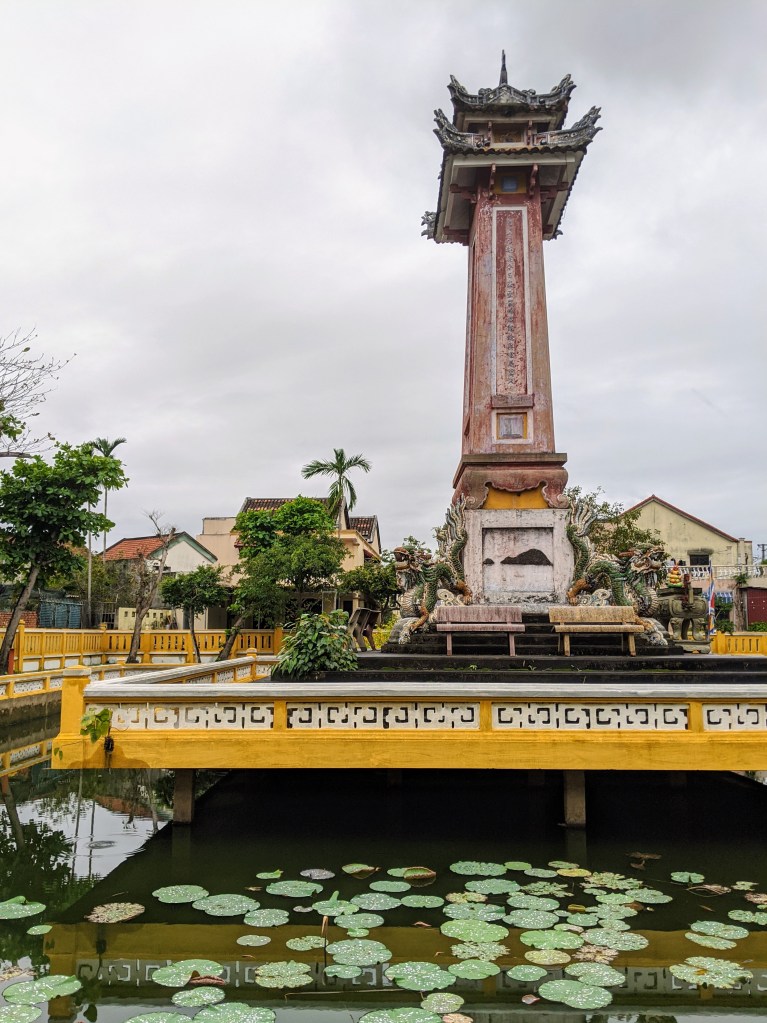
On our way to our first stop of the day, we passed by a photoshoot waiting to happen: a monumental monolith, surrounded by koi ponds. I stopped to grab a shot, when a middle-aged Vietnamese man waved us over. He spoke broken English, but we managed to get the gist. When he was 14, he lived in Hoi An, and he had taken a number of photos at this monument park. Now, he wanted to re-create them, 50 years later. At least, he said 50 years later. That would have made him 64 and I wouldn’t have pegged him a day over 45, but they say people have a hard time determining age in other races. Race is a social construct, I know, but that doesn’t change the fact that Lucy Liu is 51 and Halle Berry is 53 and neither of them look over 27 to me. We did our best to help this man, despite his insistence that he took the photos in particular spots and from particular angles that did not match the photos we were looking at. He paid us back by taking some good shots of us, too. In the end, we all took a photo together. Maybe in 50 years we’ll all return to re-create it. 
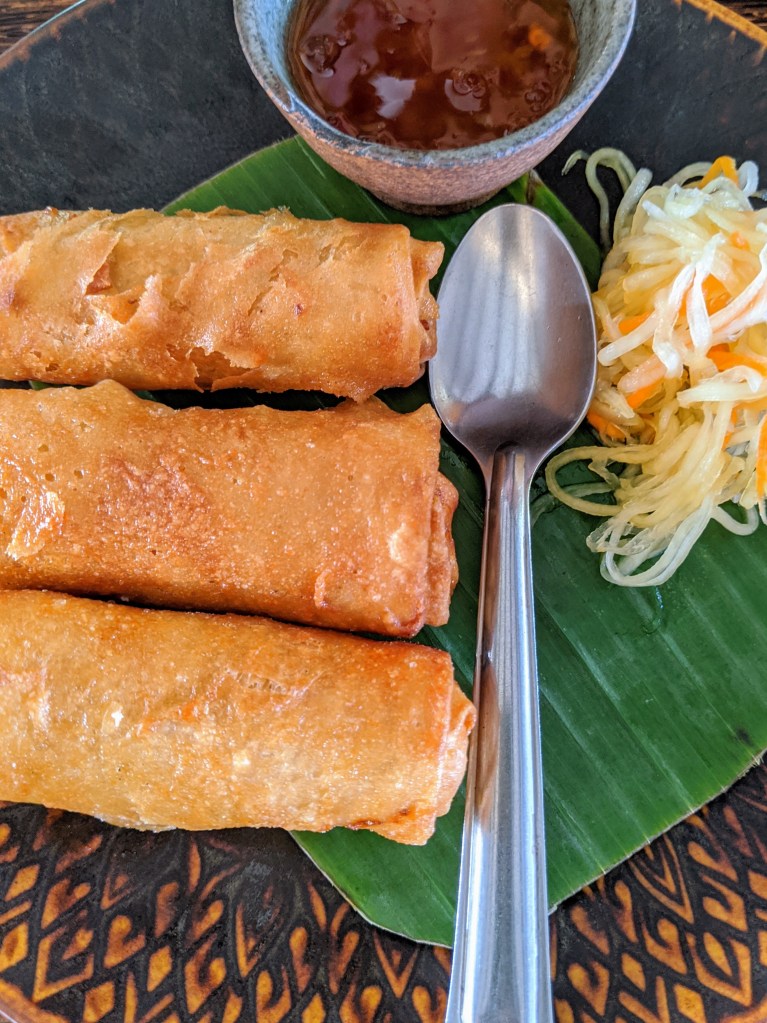
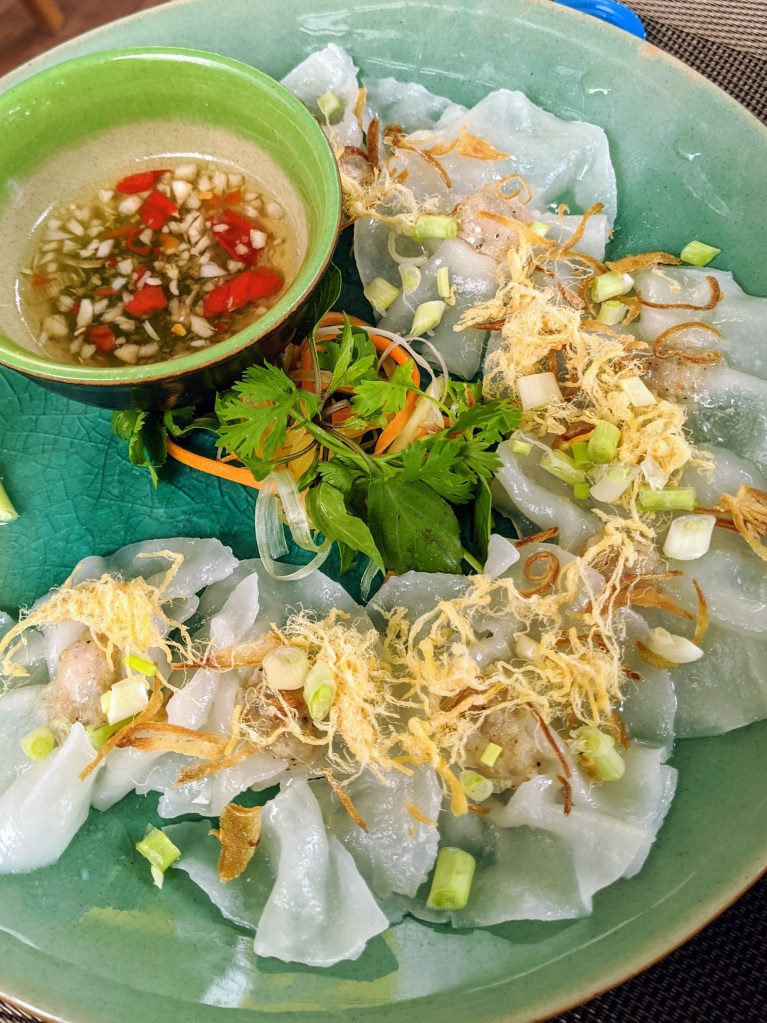
For lunch, we made the hike out to Spice Viet for some white rose (Hoi An’s signature dish) and fried spring rolls, then we dipped back to Old Town to do some touristy exploring.

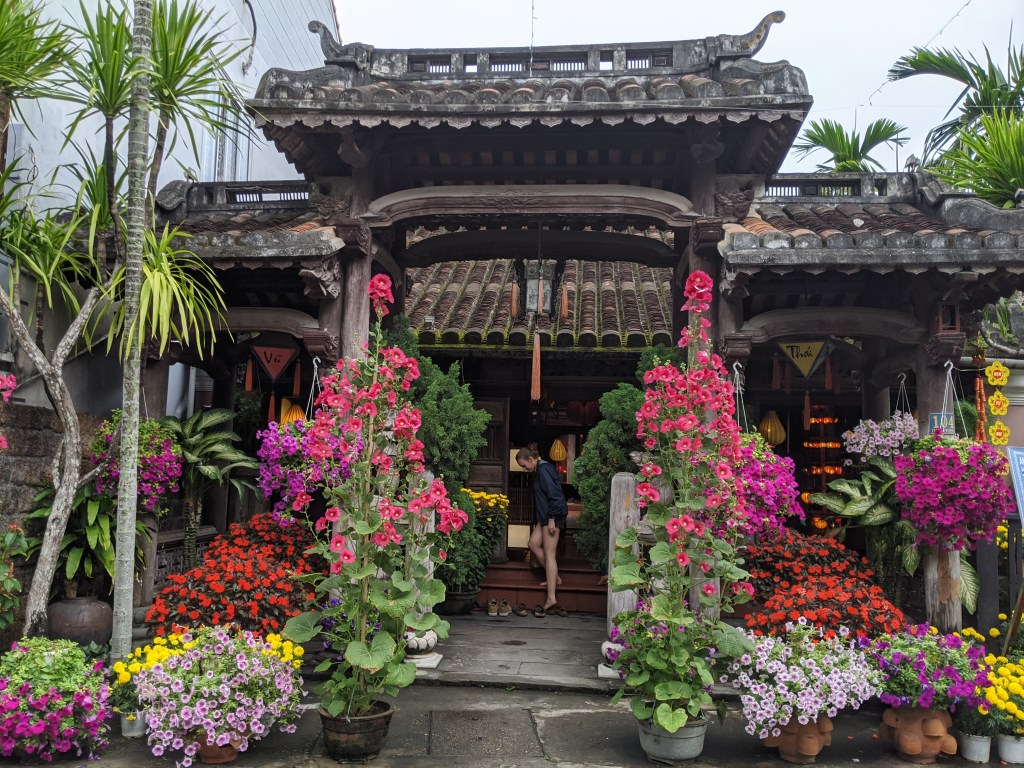
We popped into an ancient house for what we were told was a free tour. Our guide told us about the meaning of the fish and dragons that her great grandfather carved into the beams and pillars (fish is for luck, dragon is for strength). Another man showed us how ancient drills worked and the traditional method for making silver jewelry. It was all very interesting, until the other shoe dropped and they both started pushing us to buy something from the little gift shop in the back of the house. Nothing is ever really free. We thanked them for the tour, dropped some money in the donation box, and skedaddled.
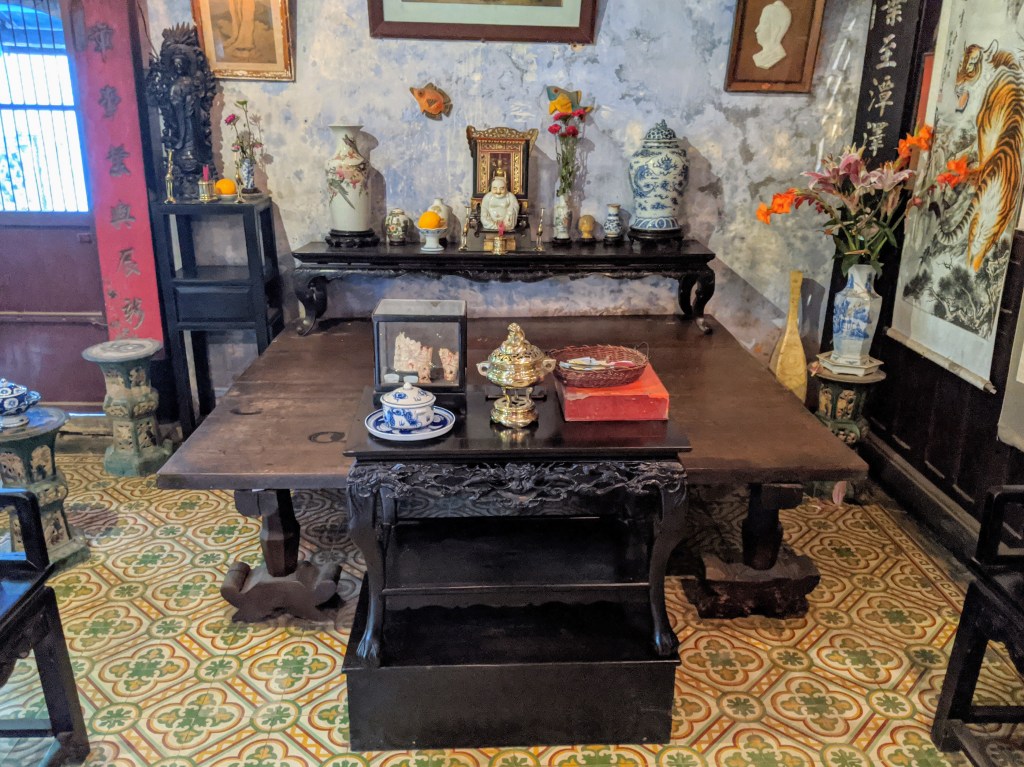
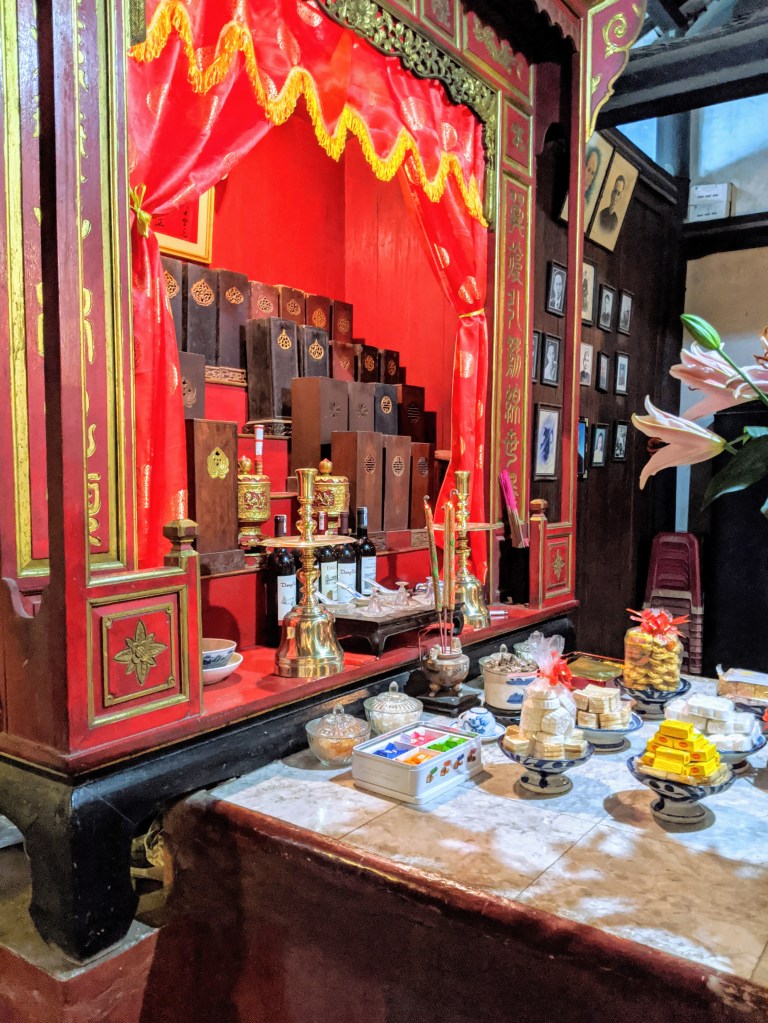
Next, we stopped at the Tran Family Chapel.  This Ancestor Worship Hall has examples of Japanese, Chinese, and Vietnamese influence in its architecture. After admiring the Tran family’s shrine and its many urns, our guide showed us a coin game. Two ancient coins, one side painted white on each, are thrown into a bowl. If one lands yin (the dark side) and the other yang (the side painted white), this will bring you luck. You have three chances to throw them. Mine worked the first time, Aaron never got it after three throws. Some people have all the luck. After this, our guide tried to sell us a lot of stuff, so we scrammed. Noticing a theme here? This time we’d even paid admission. 

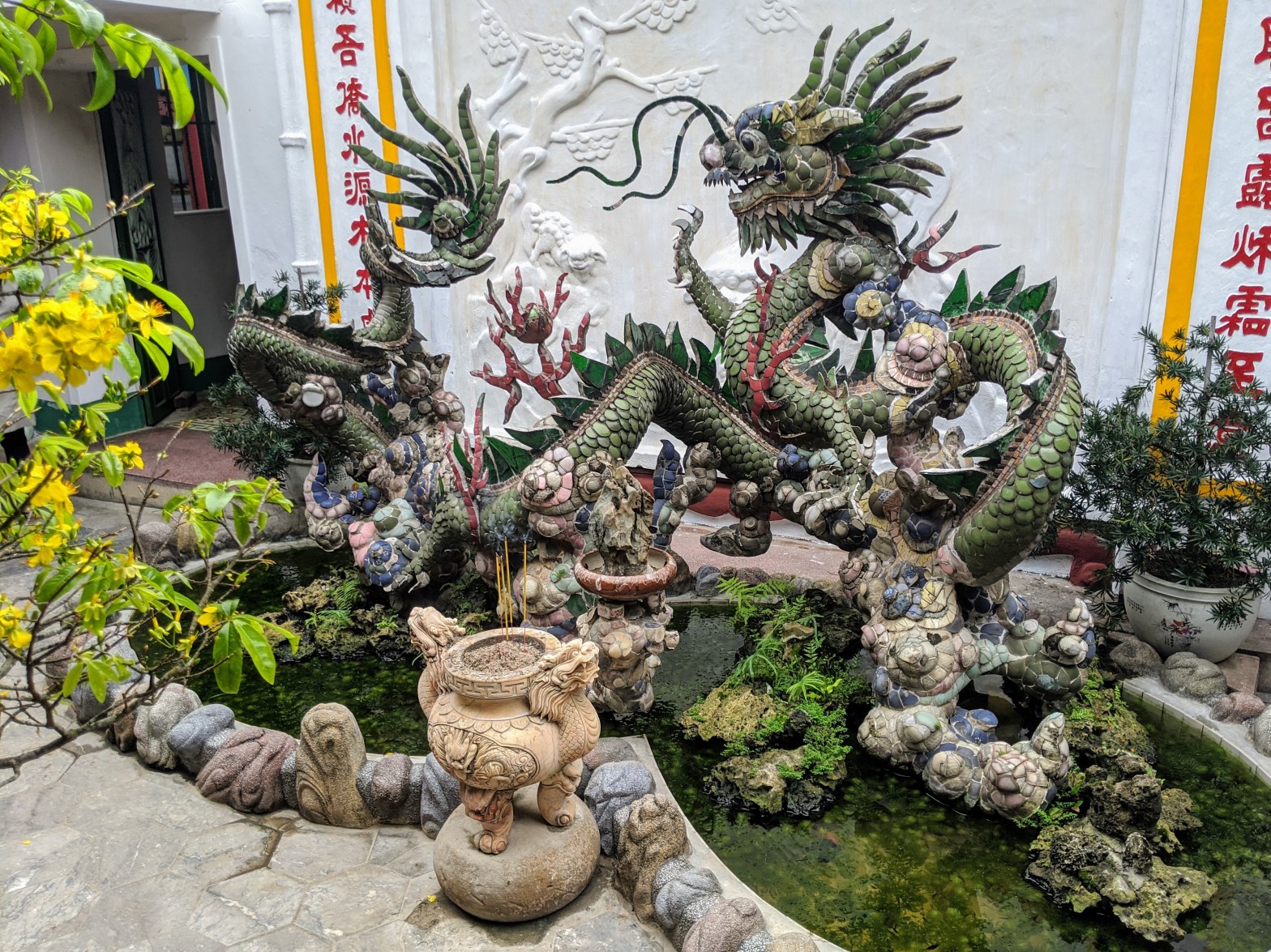
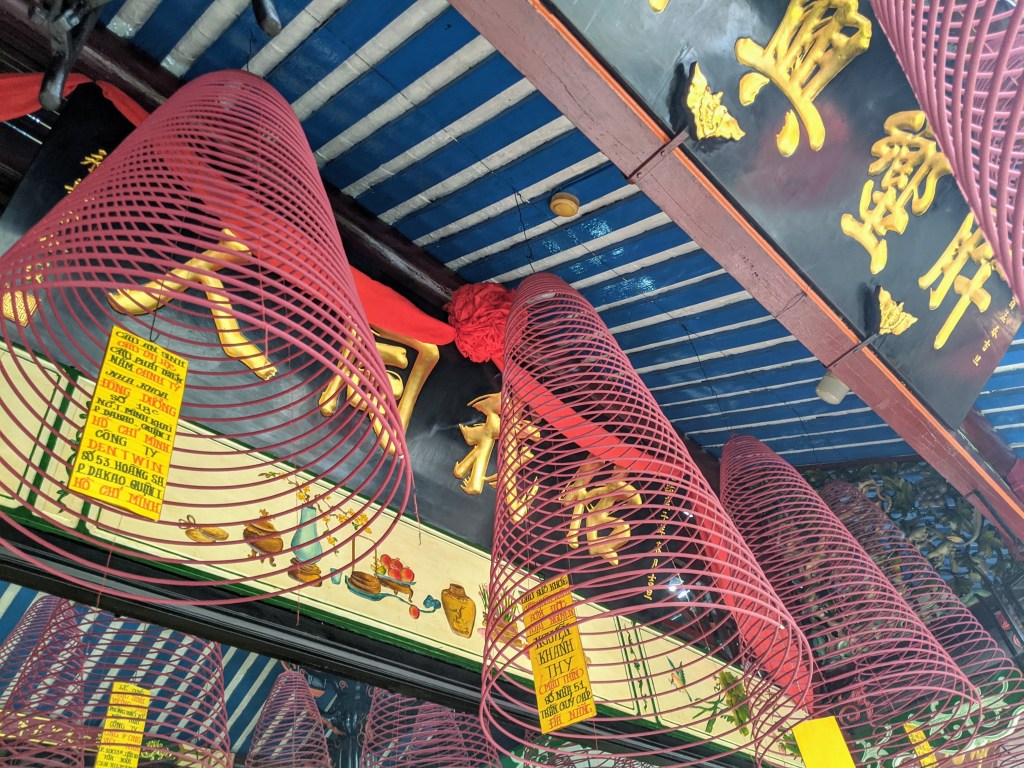
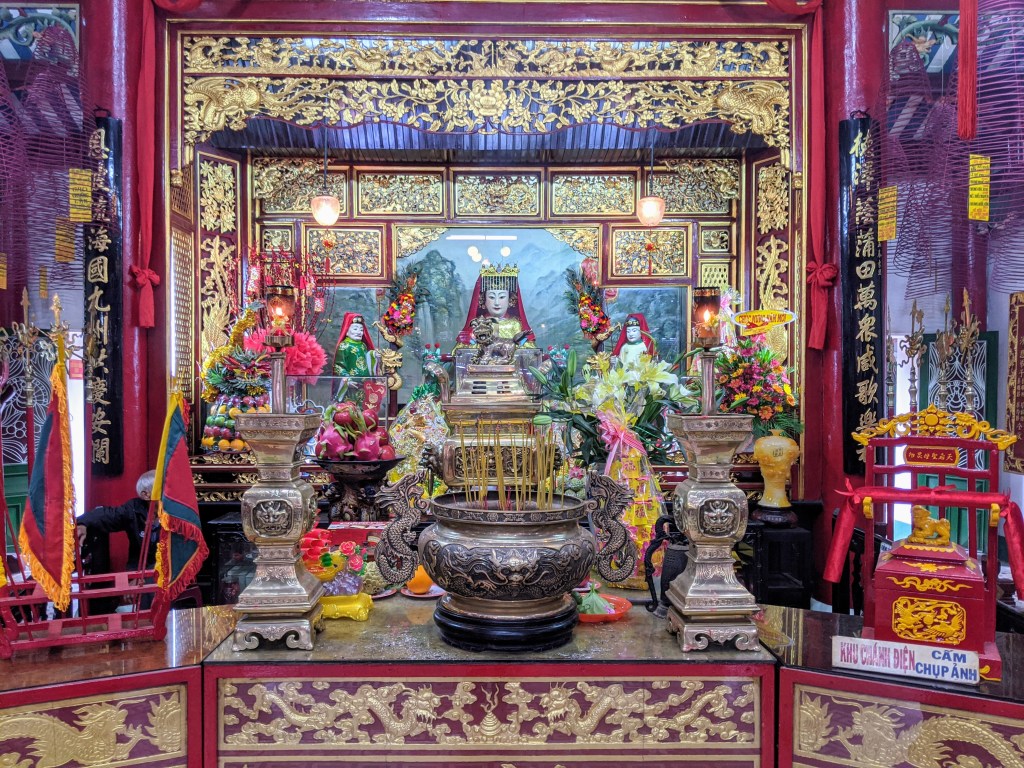
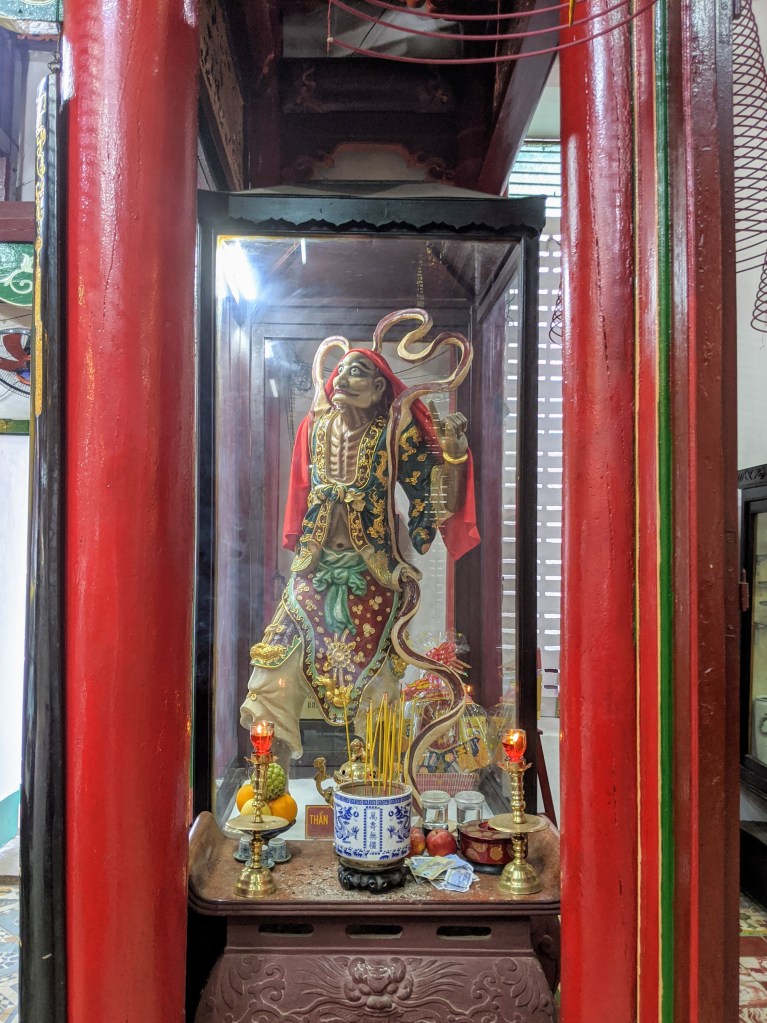
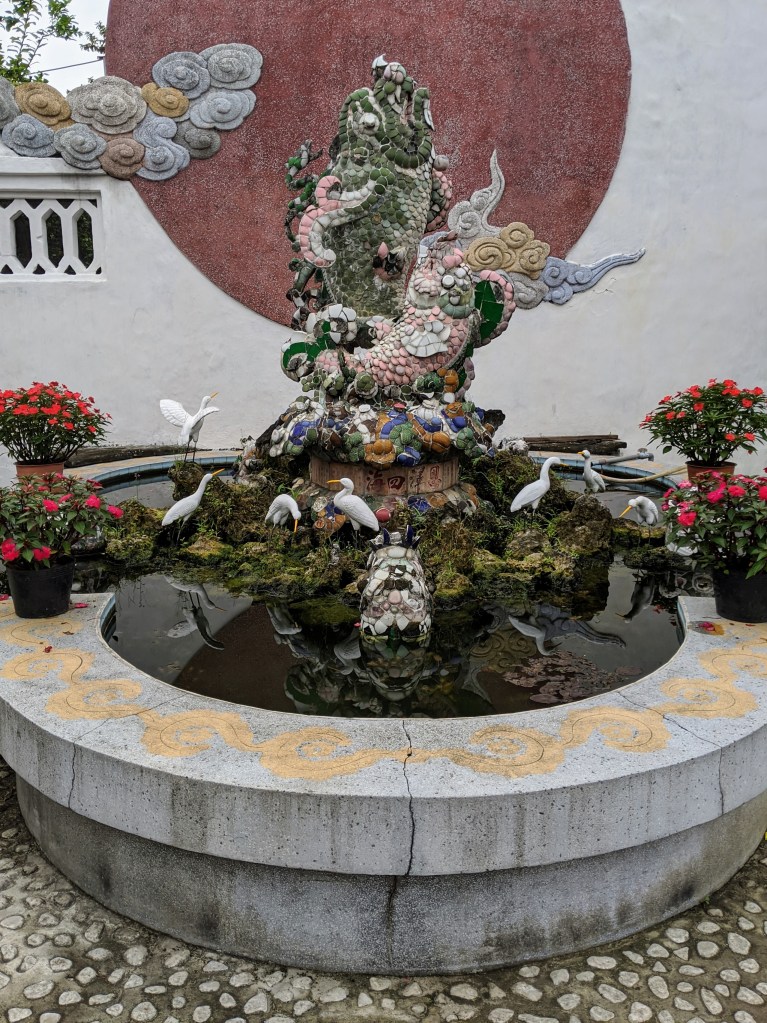
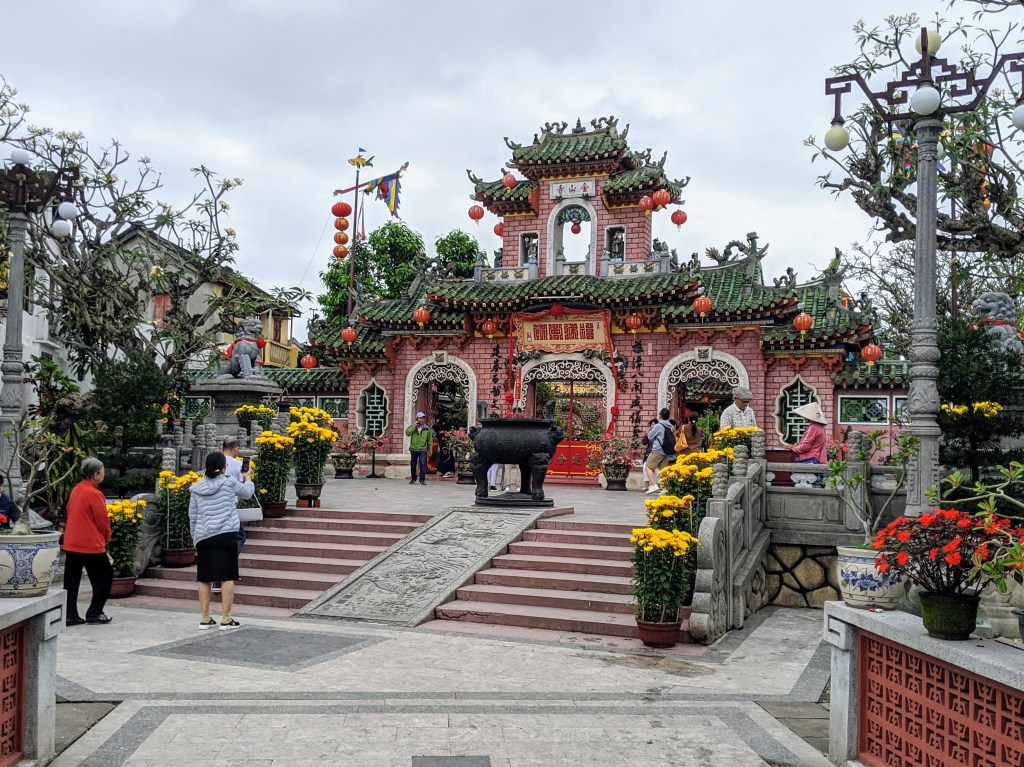
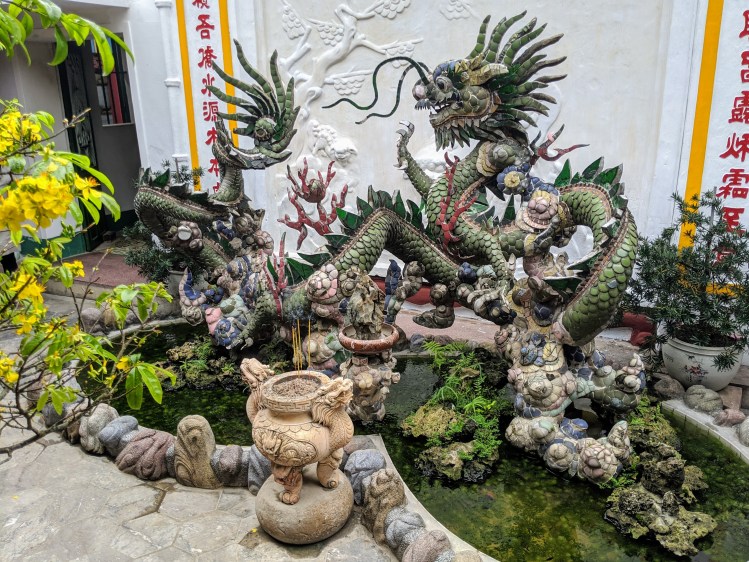
Next up on our highlights of Hoi An tour was the Assembly Hall of the Fujian Chinese Congregation. Once a guildhall, the building was transformed into a temple for worshipping the Chinese goddess of sailors and seafarers. As you enter, a magnificent, mosaic, sculpture/fountain depicting a fish jumping from the water hints at the theme. The temple itself was also gorgeous, as were the grounds. Dozens of flowering, bonsai bushes dotted it’s courtyard. 

Lastly, we hit the Tan Ky house, a preserved, 18th-century merchant’s residence. The woman who took our tickets offered us a free tour, but we had learned our lesson by now. This house reminded me a lot of the ancient house we visited in Hanoi, only less extravagant. It was a bit of a let down; maybe, if we’d had the tour…? 

We finished the day off with a drink at Dive Bar (the cheekily-named watering hole of a scuba diving tour company), and an overpriced, overwrought dinner at a restaurant I won’t even name. 

Design a site like this with WordPress.com
Get started